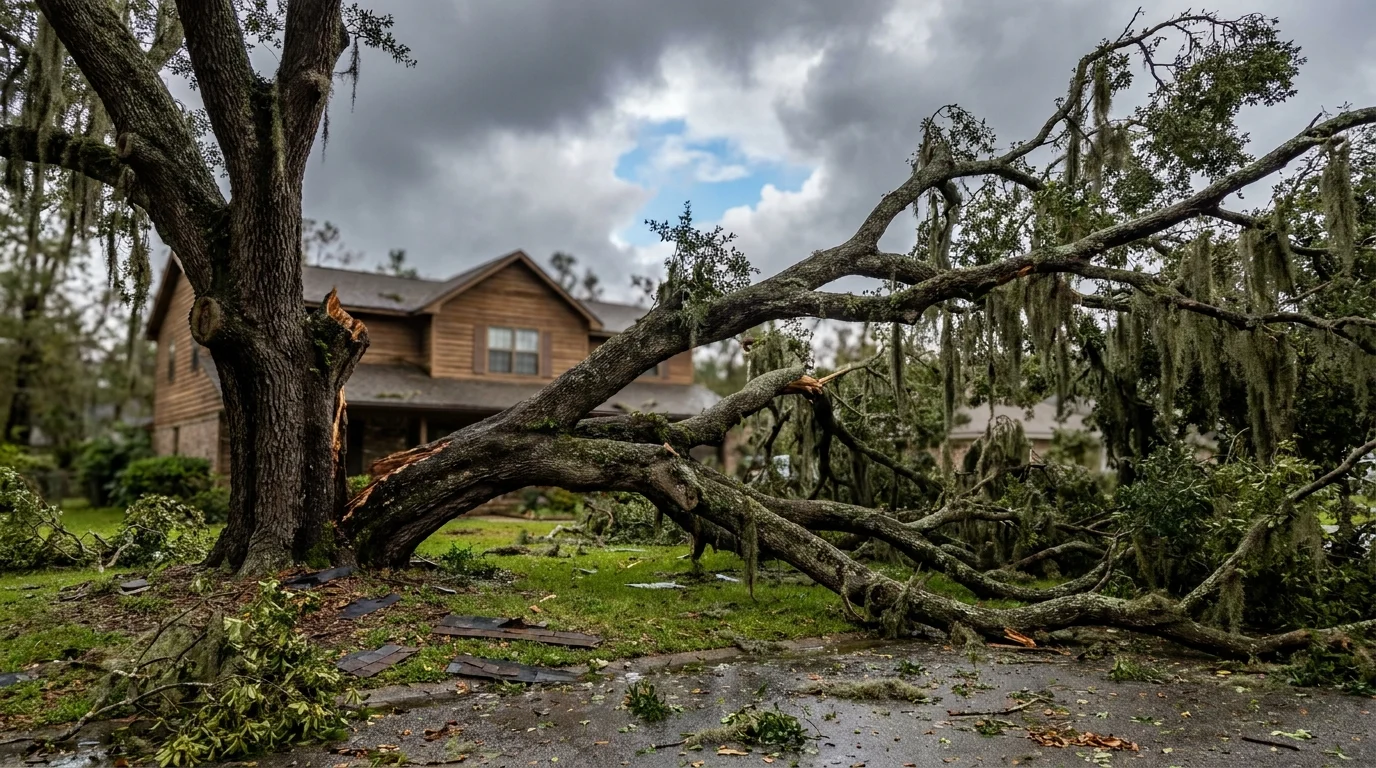
When should a palm be trimmed, and how many fronds can come off before it becomes a problem? We hear that question around Guyton, Rincon, Springfield, Bloomingdale, Richmond Hill, Pooler, and Savannah more often than you might think. Around here the palms we trim most are the native Sabal palm (Georgia’s state tree, the cabbage palm) and the occasional Canary Island palm someone planted for show. We take off dead fronds and the old fruit stalks, and we leave the crownshaft and every green frond alone, because over-cutting starves the tree. One more thing worth knowing: Fusarium wilt spreads on dirty saws, so disease transmission between palms is a real risk when tools are not cleaned between trees. That is a big reason we sanitize our pruning tools before every palm.
How to trim a palm tree isn’t the same as pruning a live oak or pine. A palm’s terminal bud is its central growing point, so trimming should protect it. The goal is simple, remove dead, broken, or unsafe growth without stripping away the green fronds that keep a healthy palm going. Coastal Georgia heat, sandy patches, heavy clay, summer storms, and hurricane season all change the picture.
A palm that needs a little cleanup is one thing. A tall palm near a roof, driveway, or power line is another.
Key Takeaways
- Remove fully brown, broken, or hazardous dead fronds, not healthy green ones.
- Late winter and early spring often work well for routine palm maintenance.
- Check palms before hurricane season and after hard summer thunderstorms.
- Sandy soil, wet clay, wind exposure, and nearby structures can raise the risk.
- Leave climbing, storm damage, and palms near power lines to a licensed and insured crew.
How to trim a palm tree without harming it
Palm trimming should be light-handed. Healthy palm fronds help the tree photosynthesize, even when they don’t look perfectly tidy. Removing too much green growth at once is over-pruning, which can stress the palm.
Start with clearly dead fronds or unsafe growth
Look for dead fronds that are fully brown, broken, hanging loose, or brushing a roof or walkway. Remove dead fronds that create a clear safety hazard or block necessary access. Flower stalks and fruit stems can also be removed if they drop fruit, make a mess around a pool, or draw pests toward the house.
Leave green fronds with only brown tips in place. Those tips don’t mean the entire frond is dead. Removing dead fronds too soon can reduce the palm’s useful canopy.
When homeowners ask us how to trim a palm tree, we tell them not to turn it into a skinny pole with a small tuft on top. That over-trimmed look might seem neat for a week, but it takes away too much living growth.
A palm should keep a full, natural skirt of green fronds. Clean doesn’t have to mean stripped bare.
Avoid cuts that create a bigger problem
At the crown, the terminal bud is the palm’s growing point. Unlike hardwood branches, palm trunks don’t seal over pruning wounds in the same way. Deep cuts, gouges, and pulled-off leaf bases, often called boots, can leave lasting damage.
Never cut or damage the terminal bud. A Fan palm may naturally hold old leaves for a while, while a self-cleaning palm sheds older growth more readily. Don’t assume every species will drop old fronds cleanly.
Use clean, sharp pruning tools for accessible work. Pruning shears can handle small material within safe reach, but a pole saw doesn’t make roof access, climbing, or overhead cutting safe. Eye protection, gloves, and stable access are essential safety equipment.
We also wouldn’t recommend improvised ladders, climbing spikes, or reaching with a saw from a roof. A dead frond can be heavy, and it rarely falls where you expect. If the palm is tall or the work calls for climbing, tree trimming and pruning is the safer way to preserve the tree and protect the space around it.
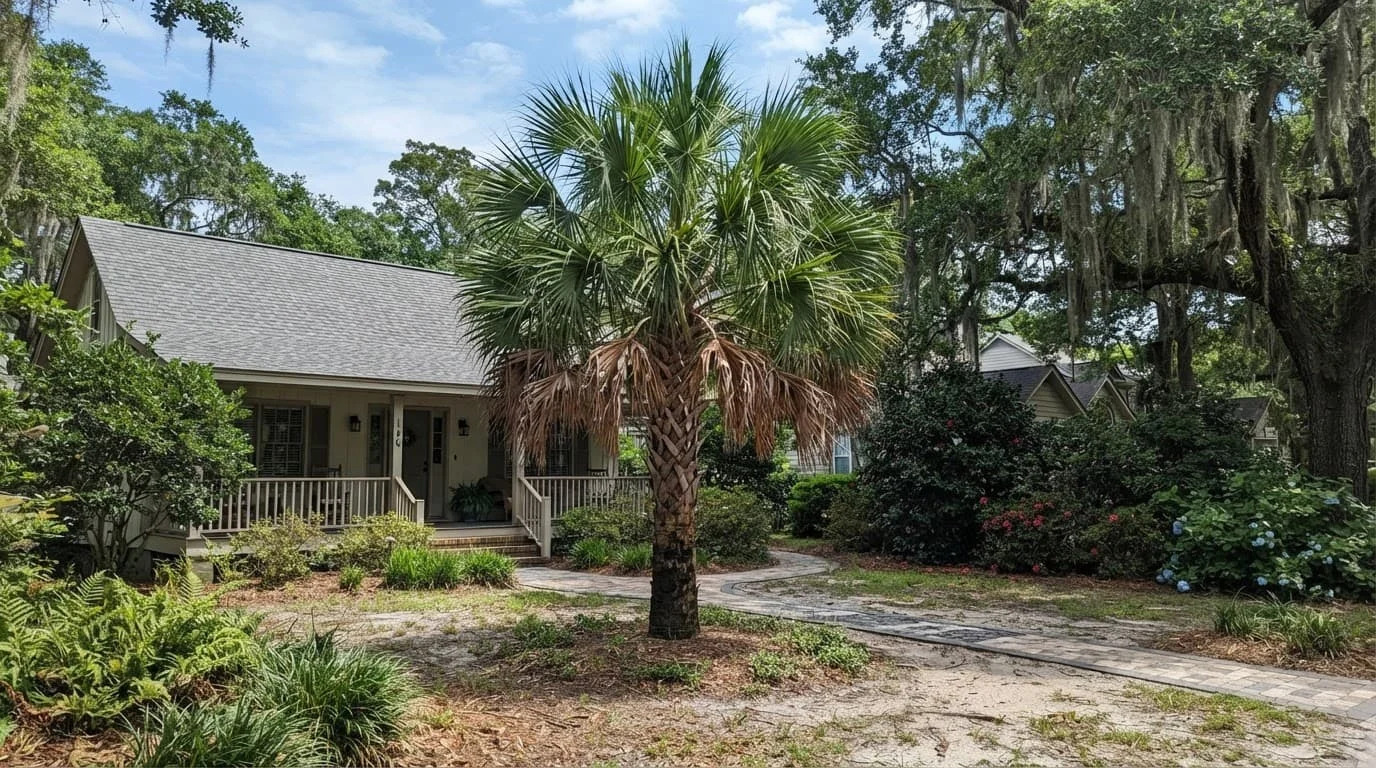
When palm tree trimming makes sense in Coastal Georgia
Late winter or early spring is often practical for routine trimming. The right schedule varies by palm type, growth rate, and site conditions. Date palms may follow a different pattern than other palms.
A few dead fronds can be removed outside the normal seasonal window when they create a clear problem. If dead fronds could hit a person, vehicle, roof, or walkway, deal with them promptly.
Inspect before storms, then look again afterward
The Atlantic hurricane season runs June 1 through November 30, according to the National Weather Service hurricane safety guidance. In Guyton and the Savannah area, summer thunderstorms can also bring sharp wind gusts with little warning.
Give palms a good look before storm season. Check again after a hard storm passes through. Inspect torn fronds, the crown, and the terminal bud, or growing point.
Avoid unnecessary heavy trimming right before severe weather. A “hurricane haircut” means removing healthy green growth without a good reason. Over-pruning won’t make a palm stronger before a storm. Remove obvious hazards, but don’t strip healthy growth because a storm is in the forecast.
Know when trimming isn’t the answer
A leaning trunk, soft spot, crack, fungal growth, or loose crown may point to a bigger issue than dead fronds. These signs call for assessment by a certified arborist, not routine tree care.
Trimming can’t fix failing roots or a weakened trunk. Keep people clear of the area when the palm’s condition isn’t plain, and get it assessed. A palm can sometimes be saved. Other times, taking it down is the honest answer.
What local soil, storms, and property rules change
Palms in Effingham County and greater Savannah don’t all grow under the same conditions. One yard may have loose sand that dries quickly, while another holds water in heavy clay after every hard rain. A Queen palm and a Fan palm may also differ in growth habits and retained fronds.
Sandy soil can give a poorly rooted palm less resistance when wind pushes against it. Clay soil can stay wet too long, adding root stress and drainage trouble. Poor drainage or wind exposure can also damage the crown around the terminal bud, the palm’s growing point. The same general rule applies to any planting: choose trees that fit the soil, site, and climate, as outlined in UGA’s guidance on matching plants to site conditions.
Location changes the risk
An open-yard palm has room to move and shed fronds. A palm beside a pool screen, fence, roof edge, parked cars, or narrow driveway needs more planning, since dead fronds can land on people or property. These features also limit access and affect the surrounding landscape.
High winds can split fronds, snap stalks, shift a palm in the soil, or damage the crown. Practices from South Florida, including a heavy hurricane haircut, aren’t a substitute for choosing a suitable planting site or inspecting hazards. These concerns are common after thunderstorms and tropical weather, especially on exposed lots around Richmond Hill, Pooler, and Savannah.
In newer subdivisions, check HOA rules before arranging major trimming or removal. If a palm is large, protected, or tied to a development project, ask your county or local authority whether permits apply. Not every palm needs one, but guessing can cost you time.
DIY palm trimming or professional help: what happens on the day
Basic palm tree trimming on a short palm may be manageable for a careful homeowner. Reachable dry fronds, no nearby hazards, and solid ground are essential. For this low-risk work, pruning palm trees from the ground can be reasonable. Use clean, sharp pruning tools and proper safety equipment. A pole saw still requires stable footing, adequate clearance, and appropriate training. Keep your feet on the ground when possible.
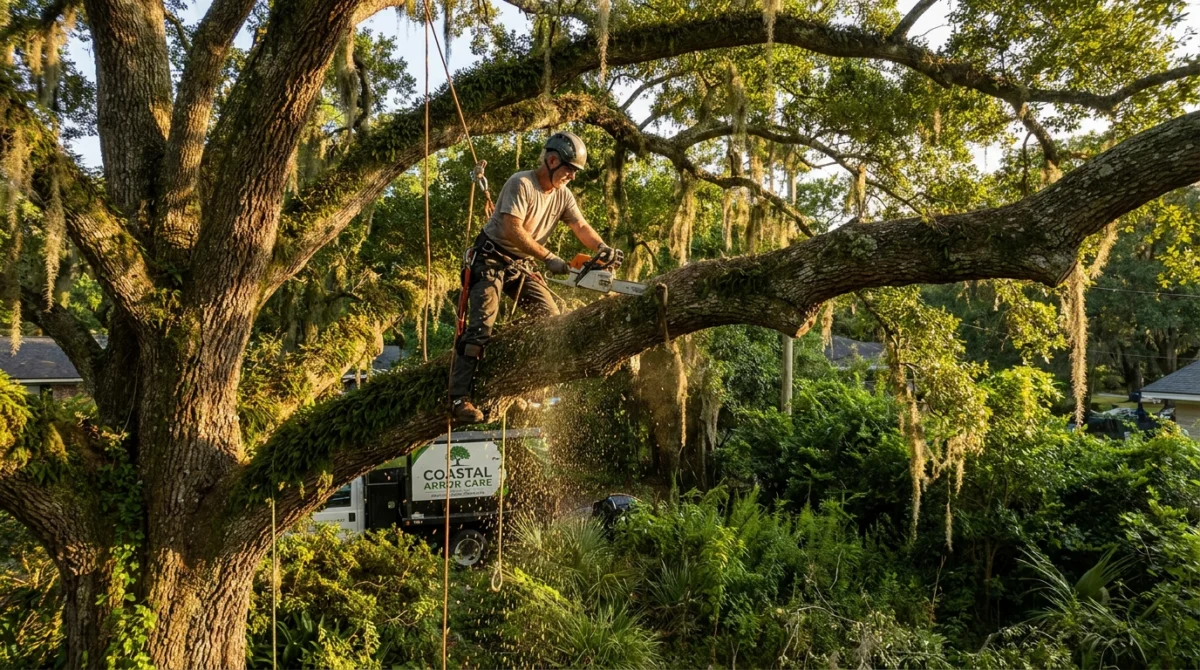
Tall palms are different. So are storm-damaged palms, palms beside homes, and anything near lines, fences, or pool enclosures. A professional arborist should handle work involving climbing, rigging, or constrained access.
A careful job starts before the first cut
When we arrive, we assess the palm, its crown, the ground around it, and what’s underneath. A certified arborist can help evaluate structural concerns. We talk through the work before cutting. That includes identifying dead fronds, checking where debris can land, and protecting roofs, fences, pavers, plants, flower beds, and the surrounding landscape.
Safe access equipment matters. Access planning and controlled lowering are important parts of responsible tree care, protecting both the palm and the property. We remove what needs removal, clean up the area, and leave the healthy green growth that still belongs on the palm.
We don’t treat every palm as a removal job. If the tree can remain healthy, we will talk plainly about keeping it. If the palm is beyond saving or poses an immediate risk, tree removal may be the safer next step.
When to call a tree crew for palm tree trimming or storm damage
Call promptly if dead fronds hang over a roof, block a driveway, or cover a walkway. A palm touching a power line isn’t a homeowner job. Stay back and contact the utility provider when energized lines are involved.
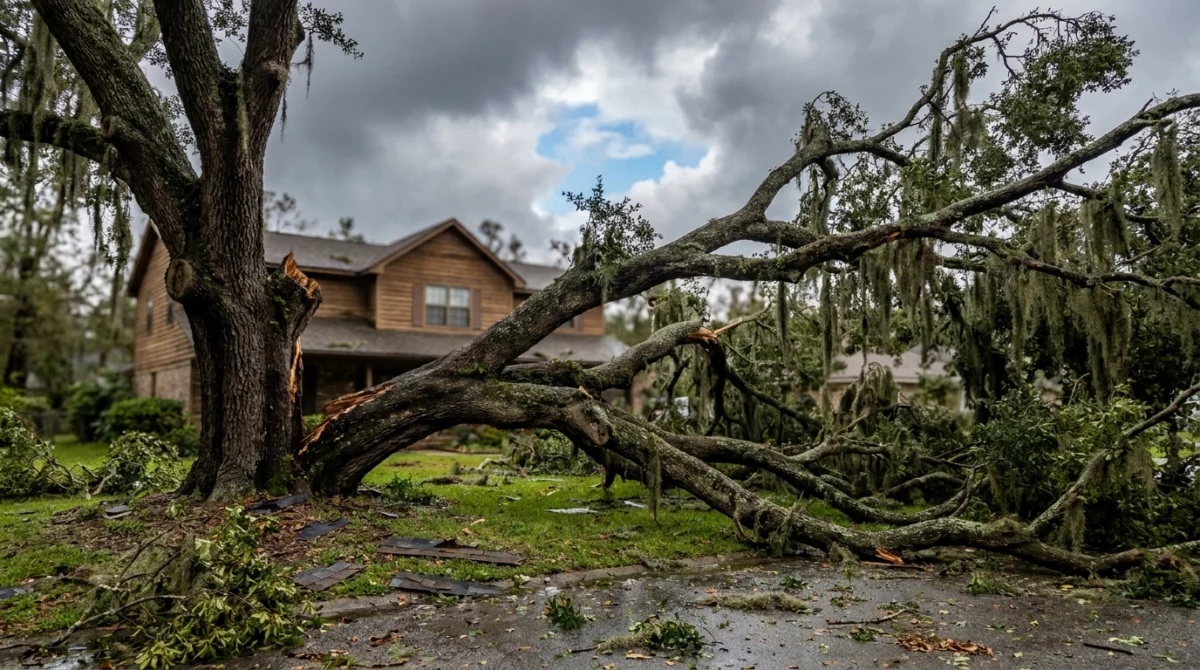
A cracked trunk, hard lean, shifted root plate, or damaged crown calls for an assessment by a professional arborist. After a storm, palm fronds can remain caught high in the canopy and fall later.
Don’t give a palm a “hurricane haircut” by stripping healthy growth before a storm. Emergency hazard removal is different from routine heavy pruning.
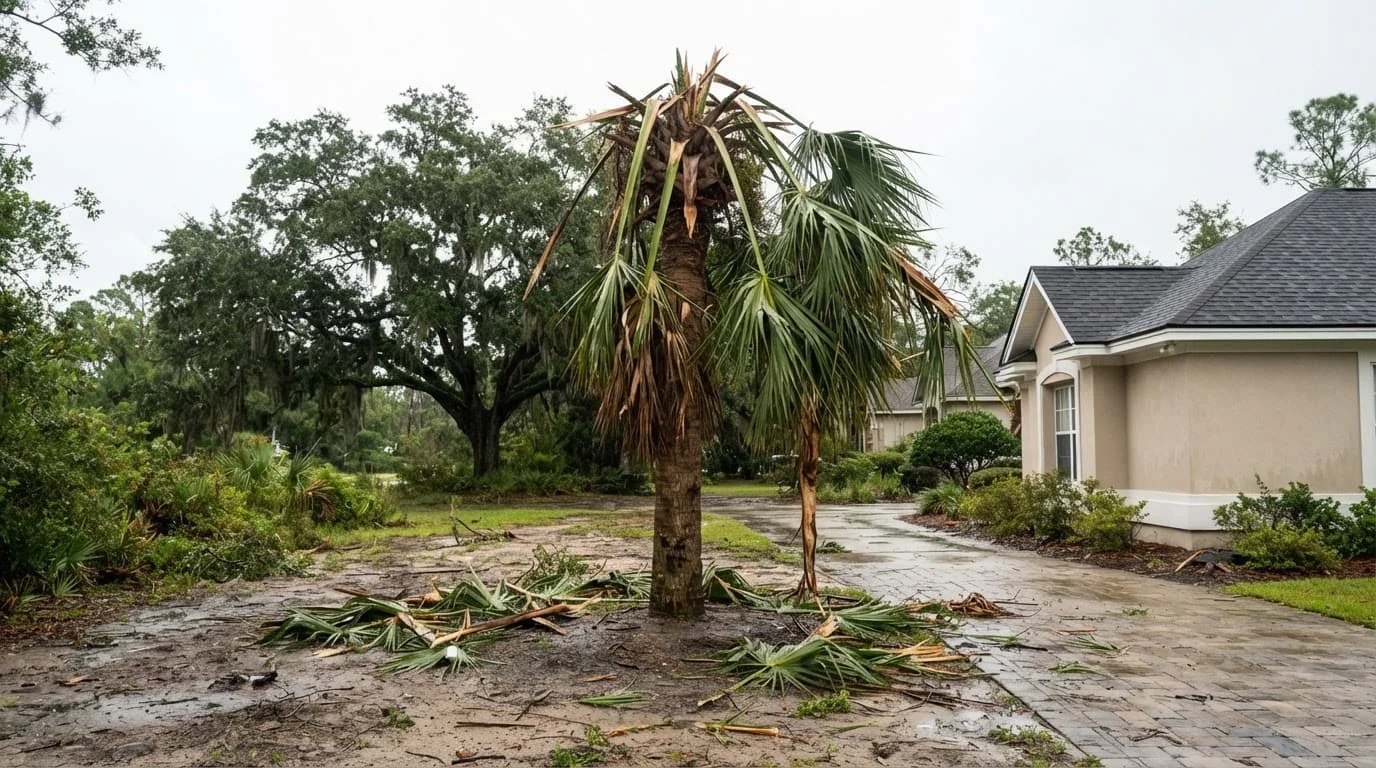
Keep children, pets, and vehicles away from an unsafe palm. Never stand beneath hanging growth or try to pull it down with a rope. For fallen trees or storm-related hazards, our storm damage and emergency tree service can help with the cleanup and the next safe step.
If removal leaves a stump in the way, stump grinding can be added afterward. LoyalTree LLC is family-owned, based in Guyton, licensed and insured, and serves Effingham County, Richmond Hill, Pooler, Savannah, and nearby coastal communities.
Frequently Asked Questions
Can palm fronds be trimmed during hurricane season?
Dead fronds or dangerous growth shouldn’t be ignored because it’s hurricane season. Routine work should be planned with care, especially when severe weather is close. For a tall palm or one near a structure, let a crew inspect it before storms arrive.
Should green palm fronds ever be removed?
Healthy green fronds should usually stay in place. They feed and protect the palm. A self-cleaning palm may shed old material naturally, but it still needs inspection and safe cleanup. Removal makes sense when a green frond creates a real safety or clearance issue.
Why does a palm have brown tips after trimming?
Brown tips can come from dry weather, salt exposure, a nutrient deficiency, cold, root stress, or normal aging. Potassium or magnesium issues are possible, but appearance alone can’t confirm the cause. Cutting off tips may improve appearance, but it won’t solve the underlying problem.
Can a damaged palm recover after a storm?
It depends on the trunk, roots, crown, and growing point at the top of the palm. A palm with broken leaves may recover after careful cleanup. A crushed crown, soft trunk, serious lean, or uprooting may mean the palm needs removal.
Do palm species affect trimming decisions?
Yes. Date palms, a Queen palm, and a Fan palm can differ in height, retained leaf bases, and growth habit. Those features affect inspection and trimming decisions, so species identification helps determine the safest approach.
What pruning tools are suitable for palm maintenance?
Use clean, sharp pruning tools for reachable material, and avoid climbing or cutting near utility lines. Tall palms, unstable growth, and other hazards require professional help rather than ground-level DIY work.
How often should a coastal Georgia palm be inspected?
Look at it during normal yard work, before hurricane season, and after strong thunderstorms. Taller palms and palms near homes need more attention than open-yard palms. Regular tree care should match the palm’s size, condition, and location, since there isn’t one schedule for every property.
A careful trim keeps the palm stronger
The best approach is usually modest: remove dead, broken, or hazardous growth, and keep healthy green fronds where they belong. Tall palms and storm-damaged palms deserve the same caution as a leaning pine or heavy live oak limb.
Local ground conditions and storm exposure can change the risk from one yard to the next in Guyton, Rincon, Springfield, Bloomingdale, Richmond Hill, Pooler, and Savannah. As a family-owned company with 20+ years of hands-on tree care experience, we give straight answers and take care around your property.
If you need palm tree trimming, an inspection, or a storm-related assessment, request a free estimate.