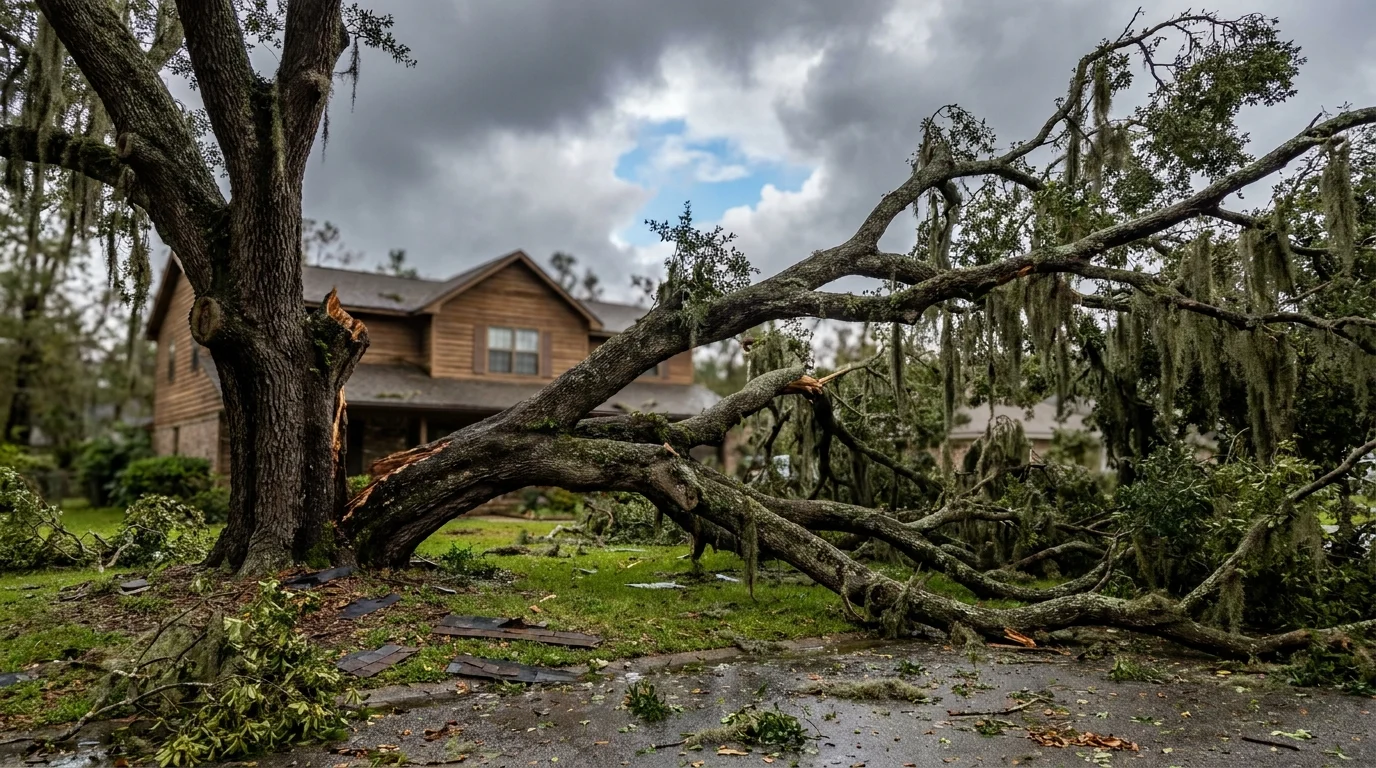
Drive through Guyton, Rincon, Springfield, Bloomingdale, Richmond Hill, Pooler, or Savannah, and you’ll see them: large live oaks spreading over older homes and wooded lots. People often ask us, how long do live oak trees live, because these trees can outlast the house beneath their branches.
A live oak can become a lasting part of a property, but age alone doesn’t determine whether it’s safe. An older tree may be solid, while a younger one may have hidden decay, damaged roots, or weak limbs overhead.
When protecting a valued live oak, the key is spotting trouble early and making a sound decision before storm season.
Key Takeaways
- Live oaks can live for many decades and sometimes several hundred years in good conditions.
- A large tree isn’t automatically dangerous, and a younger tree can still have serious defects.
- Roots need space, stable soil, and protection from trenching, fill dirt, and construction damage.
- Dead limbs, cracks, root damage, sudden leaning, and mushrooms near the base need attention.
- Careful pruning can preserve many oaks, but severe decay or unstable roots may make removal safer.
How Long Do Live Oak Trees Live in Georgia?
So, how long do live oak trees live in Georgia? A southern live oak, Quercus virginiana, can live for generations. In favorable conditions, some live several hundred years.
An oak tree lifespan depends on genetics, soil, water availability, root space, storms, disease, and care. An open yard with undisturbed roots often offers better conditions than pavement, fill dirt, or construction damage.
Acorn production can offer a maturity or health clue, but it doesn’t diagnose tree condition by itself. Good care also helps protect a tree’s long-term health.
A live oak tree’s age and present condition are different questions. A 150-year-old oak with a sound trunk and stable roots may have many good years ahead. A younger tree with major decay at the base may not be safe near a home.
Species identification matters when comparing Quercus virginiana with a white oak or a red oak. Their growth habits, structure, and care needs can differ.
We don’t guess tree age by looking at the canopy alone. Canopy size, crown spread, oak tree growth, trunk circumference, growth history, aerial photos, and site history can suggest tree age. They can’t prove an exact number. An increment borer may provide more information, but invasive testing isn’t automatically necessary.
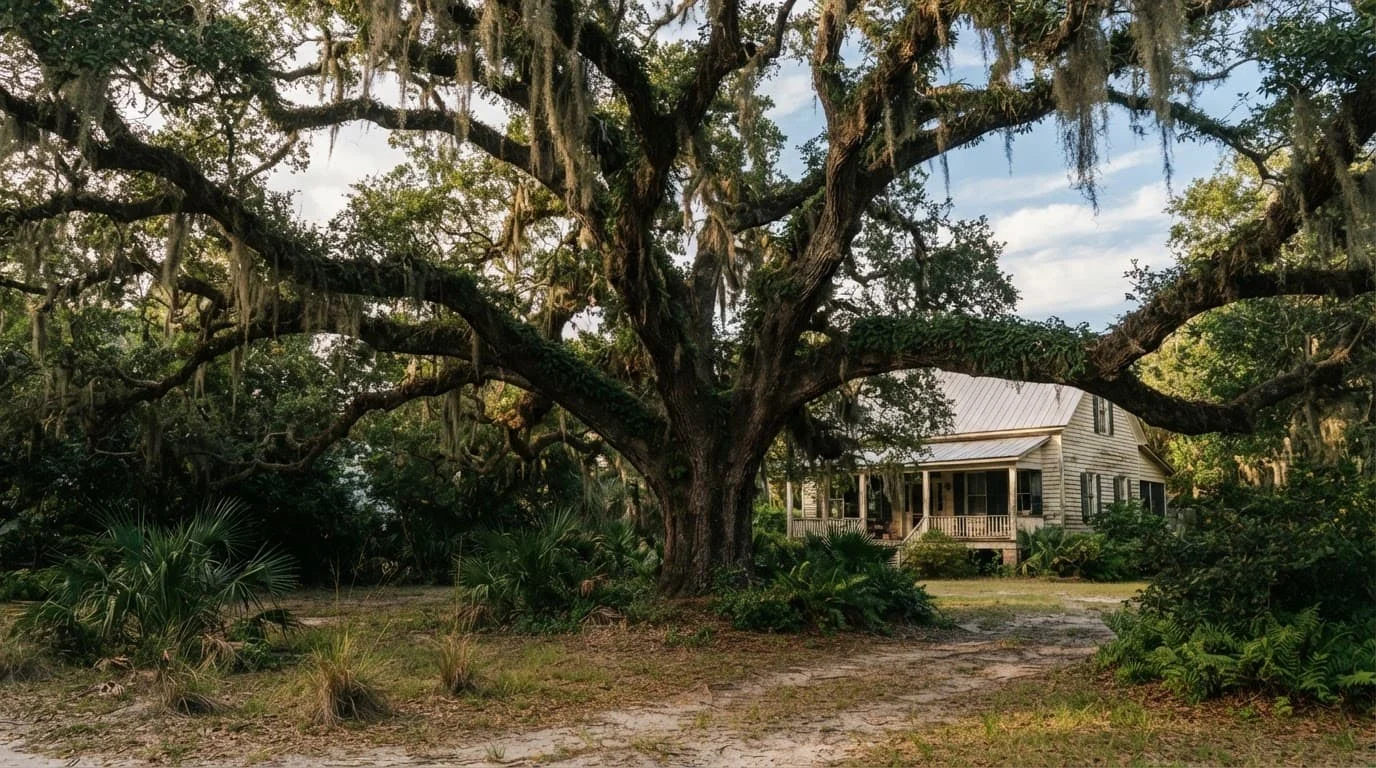
Celebrated old oaks, including Seven Sisters Oak and Angel Oak, show why these trees hold a special place in the South. Their durable timber was also valued for shipbuilding and used in vessels such as USS Constitution. For homeowners, the tree’s current condition matters more than a celebrated name or estimated age.
Live oak is well suited to much of the state, and the University of Georgia includes it in its Landscape Plants for Georgia guide. Still, the right species in the right place can develop problems when roots or structure are damaged.
At LoyalTree, we are family-owned, licensed and insured. Mike Williams brings 20+ years of hands-on tree experience to the work, and we give neighbors a straight answer about what we see.
How to Keep a Mature Live Oak Healthy and Safe
The first goal with a mature live oak tree is usually preservation, not removal. We look for trouble early and protect the tree when that is the reasonable choice.
Protect the Root Zone
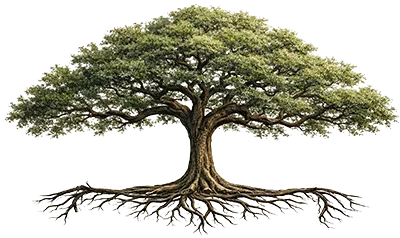
Most of the roots that matter are close to the surface, especially where soil depth is shallow or has been altered. Use the crown spread as a practical visual guide, and avoid trenching, grading, fill dirt, compaction, or heavy equipment beneath it.
Mulch helps hold moisture and protect the soil. Keep it shallow and spread it out, but keep it away from the bark. A mulch volcano holds moisture against the trunk and can invite decay.
During long dry stretches, water deeply and slowly, adjusting for weather, drainage, and site conditions. Watch closely after drought, landscaping, or construction. Leaf thinning and dieback sometimes show up months after root damage happened.
Use Pruning With a Purpose
Good tree trimming and pruning removes deadwood, clears limbs off roofs, improves clearance, and addresses poorly placed branches before they become bigger problems. It is not about stripping out the canopy.
Avoid topping a live oak. Cutting major limbs back to stubs can leave large wounds and trigger weak regrowth. Don’t climb a big oak with a chainsaw or make large cuts without the right training and equipment. That job gets dangerous fast.
Warning Signs That a Live Oak May Be in Trouble
One isolated symptom in a live oak tree doesn’t automatically mean removal is necessary. Several signs together, or a sudden change, deserve a closer look.
These signs can point to tree decline: thinning foliage, unusual dieback, large dead limbs, loose bark, deep cavities, cracks, and damaged or exposed roots. Also watch for mushrooms near the base, soil heaving, a fresh lean, and decay in the trunk or major limbs.
Limbs rubbing a roof or reaching toward a power line shouldn’t be ignored. If a branch is near energized lines, contact the utility or a qualified tree professional. Keep people, vehicles, and pets away from a tree affected by active wind or other hazards.
Storms often expose a weak point that was already there. A branch that fails in high wind may not have been healthy before the storm arrived.
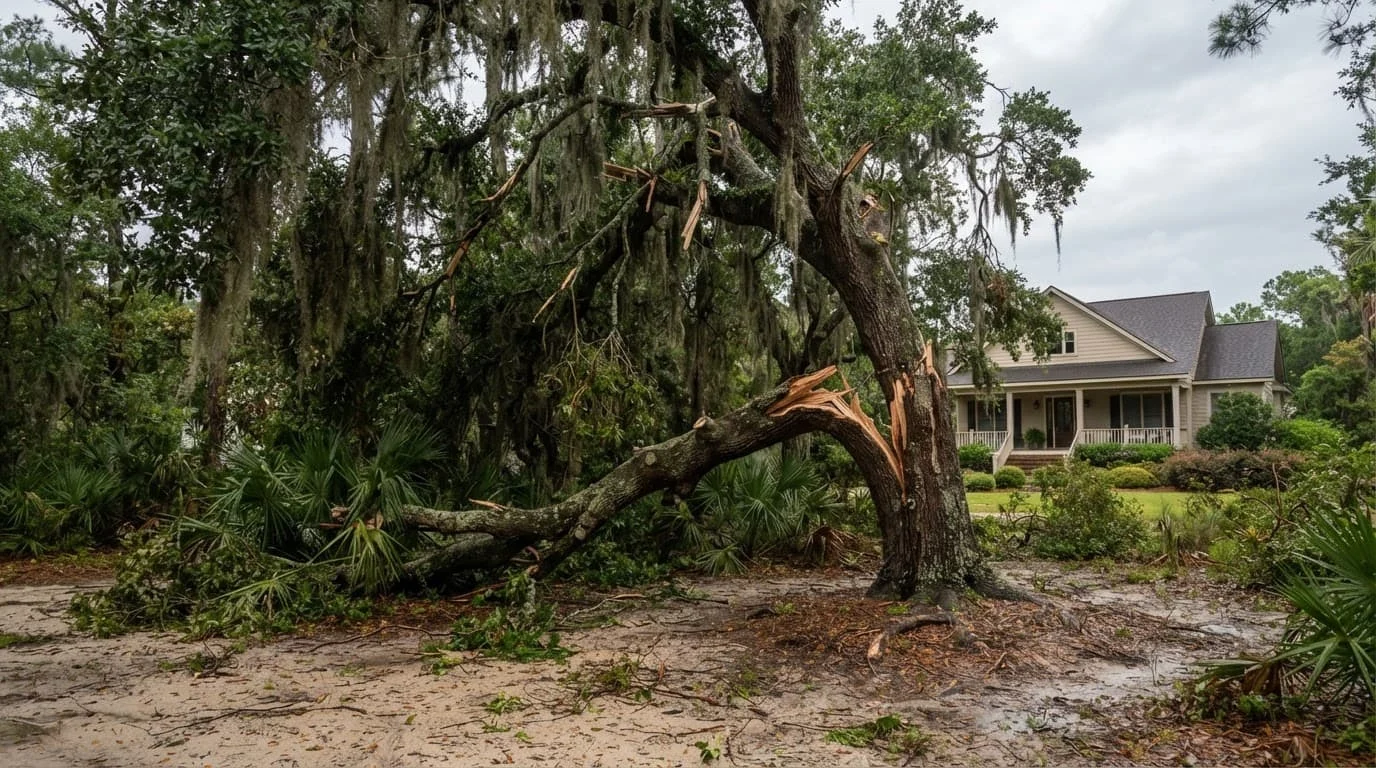
Don’t stand beneath hanging limbs to inspect them. A better view can wait. A falling branch cannot.
When a Live Oak Can Be Saved, and When Removal Is Safer
A live oak tree may be preserved when the defect is limited, the trunk remains sound, and the roots are stable. Selective pruning can reduce weight on a weak limb. In some cases, cabling and bracing may help.
Cabling and bracing are support systems installed in selected weak branches or unions. They limit movement but do not make a tree failure-proof. They are one tool among several and aren’t right for every tree.
Removal becomes the responsible choice when decay is extensive, the tree is badly split, roots have failed, or the risk cannot be managed. A compromised limb over open woods poses a different concern than one over a home, bedroom, driveway, play area, or busy road.
When a tree must come down, careful tree removal can take it apart in sections while protecting the house, fence, and surrounding yard as conditions allow. We will also discuss cleanup and whether stump grinding makes sense afterward.
Live Oak Care in Effingham County and Coastal Georgia
Our local soil and weather make tree care a little different here. Sandy soil can drain fast and shift around roots. Clay soil can hold water longer than it should. Both can create trouble if grading changes or water starts collecting near the trunk.
Older lots in Guyton, Springfield, and Savannah often have mature live oak trees and water oaks with root systems in place for decades. Newer subdivisions in Rincon, Bloomingdale, Pooler, and Richmond Hill may have tighter building areas, HOA rules, and young trees dealing with compacted soil.
Identify the oak first, whether it’s a white oak, red oak, or live oak. Growth habit, tolerance, and structural concerns vary, so care advice should follow the assessment.
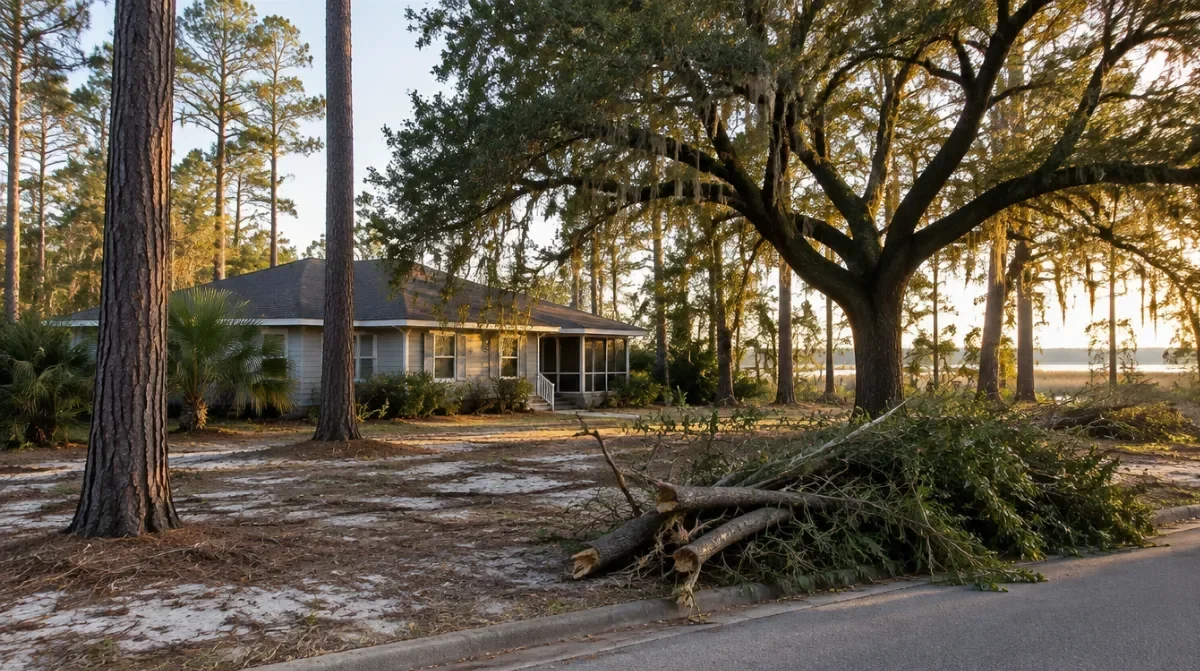
Loblolly and slash pines are part of the picture too. They can snap or uproot during heavy wind events, especially when the ground is saturated. Live oaks often handle wind well, but large horizontal limbs can still fail because of decay, poor attachment, or extra weight.
Hurricane season runs from June through November. Summer thunderstorms can also bring strong wind with little warning. Checking mature trees before severe weather arrives gives you more options than waiting for a limb to land on a roof.
If a tree falls, splits, or leaves a large limb hanging after a storm, keep clear and call for storm damage and emergency tree service. Never try to pull a loaded limb down with a truck or rope.
Permit and protected-tree rules can vary by county, city, neighborhood, and HOA. Confirm the requirements with the right local office or association before scheduling work. Don’t assume rules in one neighborhood apply across Effingham County or the Savannah area.
When to Call a Tree Professional for a Live Oak
Call for an assessment when a live oak tree leans more than it used to, drops large limbs, develops a new crack, or shows decay near the trunk. Root damage, mushrooms at the base, thinning leaves, and branches over a home or driveway are also good reasons to have someone look.
Don’t climb a mature oak, run a chainsaw from a ladder, pull on a hanging limb, or inspect storm damage while winds are still high. Those are not DIY jobs.
When we visit, we talk through what you’ve noticed and inspect the trunk, branches, roots, and nearby targets. Then we explain whether pruning, support, monitoring, or removal makes the most sense. If removal is needed, we can discuss cleanup and optional stump grinding at the same time.
For homeowners in Effingham County, Richmond Hill, Pooler, Savannah, and nearby communities, you can request a free estimate when something about your oak doesn’t look right.
Frequently Asked Questions
Can a live oak tree be too old to keep?
Age alone isn’t a reason to remove a live oak. We look at the tree’s current structure, decay, root stability, location, and what could be damaged if it fails. An old tree can still be sound.
How often should a mature live oak be inspected?
Give your tree a visual check after storms, drought, construction, or major canopy changes. A professional assessment makes sense when warning signs appear or when the tree stands near something important.
Is Spanish moss harmful to a live oak?
Spanish moss uses limbs for support. It doesn’t feed on the tree like a parasite. Heavy moss can add weight to an already weak limb, but moss alone doesn’t prove the oak is unhealthy. A few things make southern live oaks such long-lived trees: they hold their evergreen foliage year-round instead of shutting down each winter, their wood density is among the highest of any American hardwood, and a young tree sends down a taproot before it spreads the wide, shallow roots you see on mature specimens. They are at home across hardiness zones 8 through 10, which covers all of coastal Georgia. A certified arborist can estimate the age of a big oak with an increment borer, but around here most people just want to know whether the old tree in the yard is healthy, and that is a question we can usually answer on site.
Should live oak roots be cut during landscaping?
Avoid cutting major roots whenever possible. Root loss can affect tree health and stability, especially in sandy soil or on a disturbed lot. Plan planting, drainage, trenching, and construction around the root zone before work starts.
A Long Life Starts With Honest Care
Protected roots, sensible pruning, storm awareness, and timely evaluation can support a longer oak tree lifespan. Care should reflect tree maturity, and catching tree decline early helps keep a valued tree manageable, even when defects exist.
We look for ways to preserve a tree when it can be managed. Living landmarks such as Seven Sisters Oak show how much these trees can mean to a community. Live oaks also have a heritage tied to shipbuilding, and the USS Constitution reflects that historic strength. When removal is safer, we explain why in plain English. LoyalTree is family-owned in Guyton, licensed and insured, with Mike overseeing work in the field and Mary keeping communication and scheduling on track.
If you are concerned about a live oak on your property, request a free estimate.