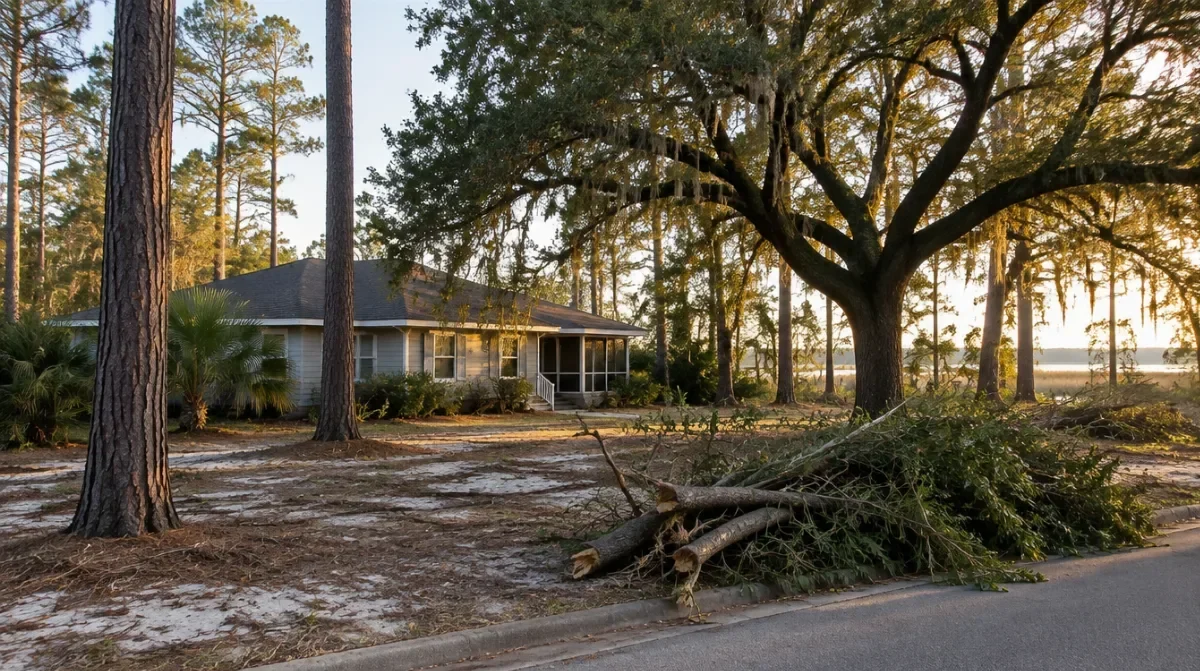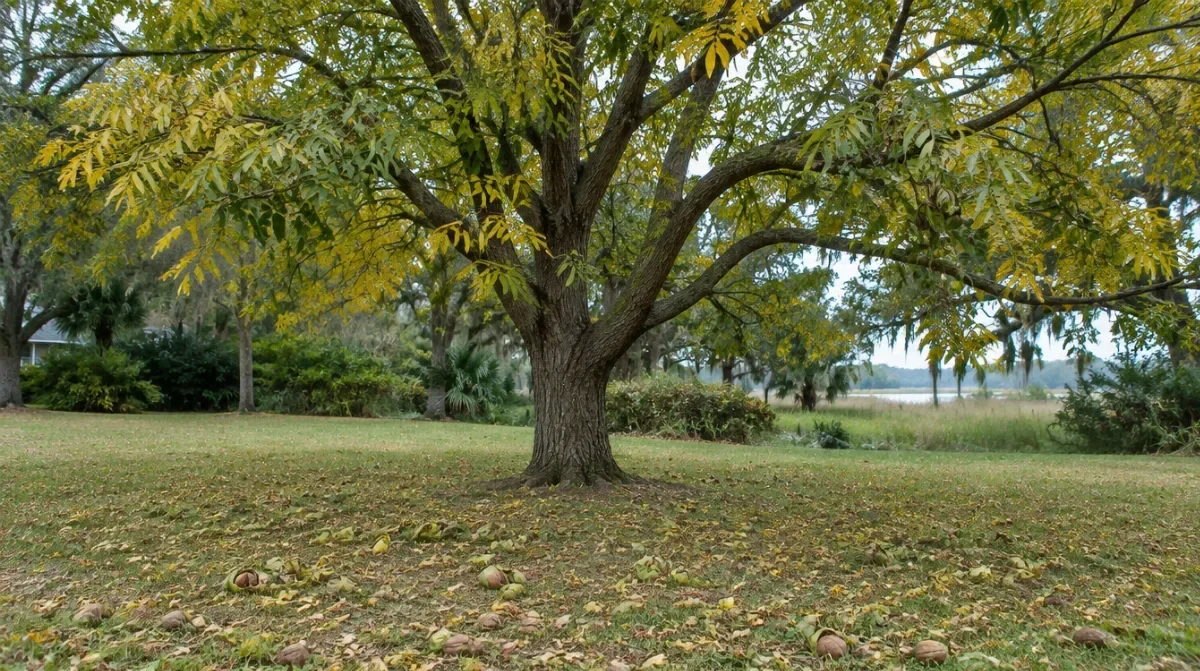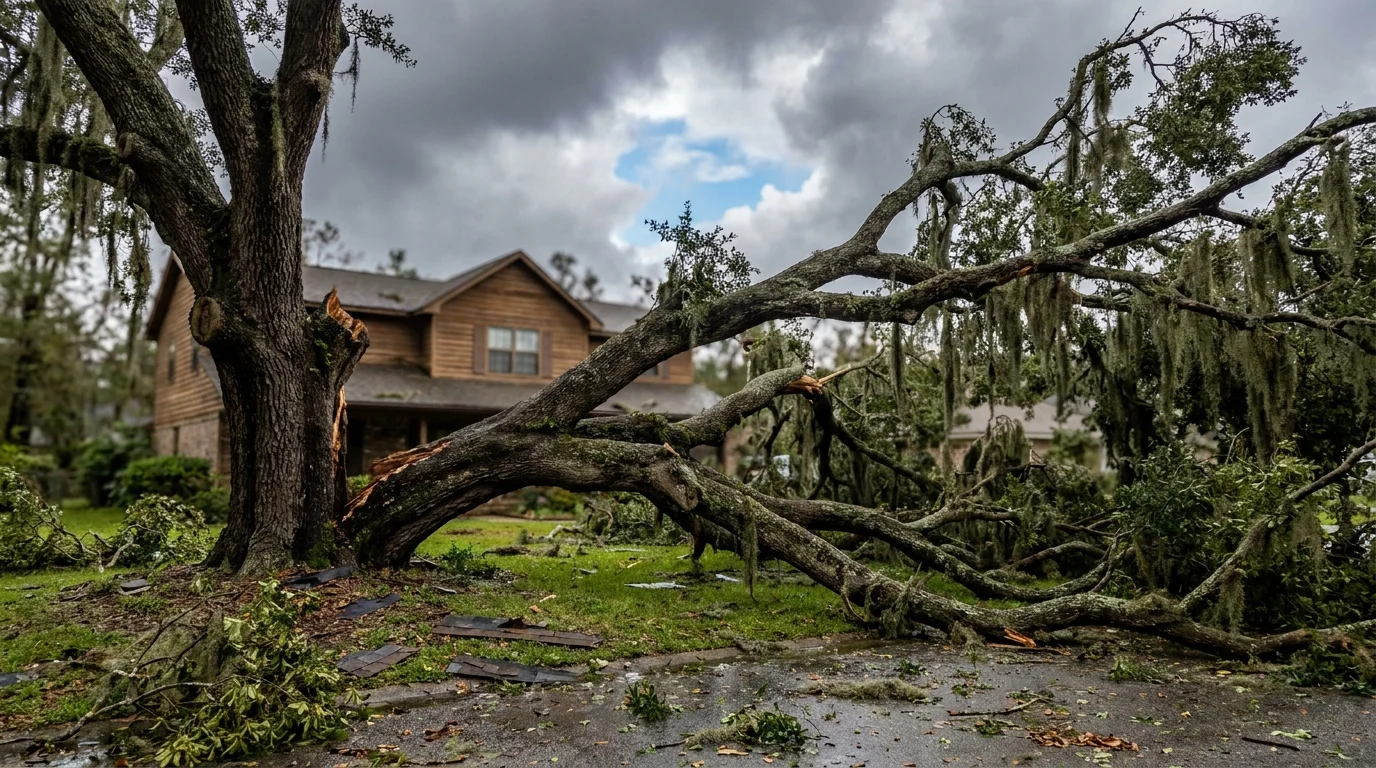
Some years you can barely walk across the driveway without rolling an ankle. Acorns pile up in the gutters, they fill the pool skimmer, they thump on the roof all night, and the squirrels lose their minds. Then the next year, almost nothing.
Every fall we get calls from homeowners in Rincon, Guyton and Pooler asking the same thing: is the tree sick, is it dying, is it trying to reproduce before it goes? Usually the answer is no. What you are looking at has a name, and oaks have been doing it a lot longer than any of us have been here.
We are LoyalTree LLC, a family-owned, licensed and insured tree company out of Guyton. Mike Williams has 20+ years of hands-on tree experience and has seen a lot of acorn years come and go. Here is what a heavy crop actually means, and the one situation where it is worth a closer look.
Key Takeaways
- A huge acorn crop is called a mast year, and it is normal oak behavior, not a sign of a dying tree.
- Oaks across a whole region tend to mast in the same year, which is why the whole neighborhood gets buried at once.
- White oak group acorns take one year to mature. Red oak group acorns, including water oaks and laurel oaks, take two.
- A heavy crop plus thinning canopy, deadwood or early leaf drop is worth having looked at. A heavy crop alone is not.
- Acorns in gutters and on walkways are a real maintenance and slip problem, so clear them before the first hard rain.
What a Mast Year Actually Is
Oaks do not produce the same number of acorns every year. They cycle. Most years they make a modest crop, and then every few years they throw everything they have into one enormous one. Foresters call that a mast year, from an old word for the nuts that fed livestock turned loose in the woods.
The strategy behind it is simple and a little ruthless. In a lean year, deer, squirrels, turkeys and hogs eat nearly every acorn that hits the ground, and almost nothing sprouts. In a mast year, the oaks produce so many acorns at once that the animals physically cannot eat them all, and the leftovers get a chance to become trees. Because the oaks in an area tend to sync up, the whole population does it together.
That is also why it feels like it happened to everybody at once. It did. Your neighbor’s oak and the ones along the county road are running the same playbook.
Why Coastal Georgia Gets It Worse Than Most
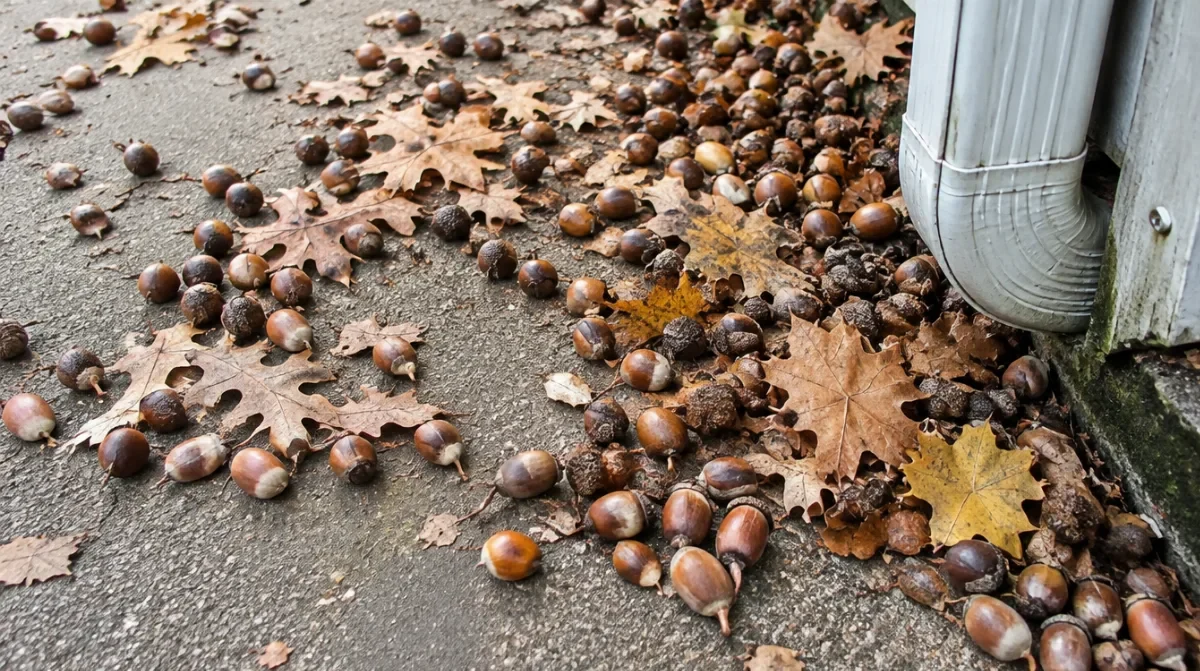
We have a lot of oaks here, and we have a lot of kinds of oaks. Live oaks, water oaks, laurel oaks, willow oaks, southern red oaks and swamp chestnut oaks all show up in Effingham and Chatham County yards, and they do not all mast on the same schedule.
There is a split worth knowing about. Oaks in the white oak group ripen their acorns in a single season, so this spring’s weather has a lot to do with the crop. Oaks in the red oak group, which includes water oaks, laurel oaks and willow oaks, take two full growing seasons to ripen an acorn. That means a heavy water oak crop this fall was set up by conditions eighteen months ago.
A late freeze at the wrong moment in spring can wipe out a crop before it starts. A warm, dry, calm bloom period can set a monster one. Neither one tells you much about the tree’s health today.
Does a Big Acorn Year Mean the Tree Is Stressed?
This is the part people have usually read somewhere online, so let us be straight about it.
Plants under serious stress can put energy into reproduction. That is real, and it happens. But in oaks, the far more common explanation for one huge year is the normal masting cycle, not a death sentence. A healthy oak in a mast year will look healthy in every other respect: full canopy, good leaf color for the season, live twigs out to the tips, no fungus at the base.
What should get your attention is a heavy crop combined with other symptoms. If the tree is loaded with acorns and also has a thin, see-through canopy, grey deadwood through the crown, leaves that went brown and stayed on the tree, bark coming off in sheets, or mushrooms at the root flare, then the acorns are a footnote and the rest is the story. Our guide on how to tell if a tree is dead or just struggling walks through those signs.
Worth noting too: a mast year does take something out of the tree. Oaks often put on less wood growth in a heavy acorn season, and some will produce very little the next year while they recover. That is a cycle, not a decline.
The Practical Problems Acorns Cause
Whatever the tree is thinking, you still have to live with the mess. The ones that actually cause damage around here:
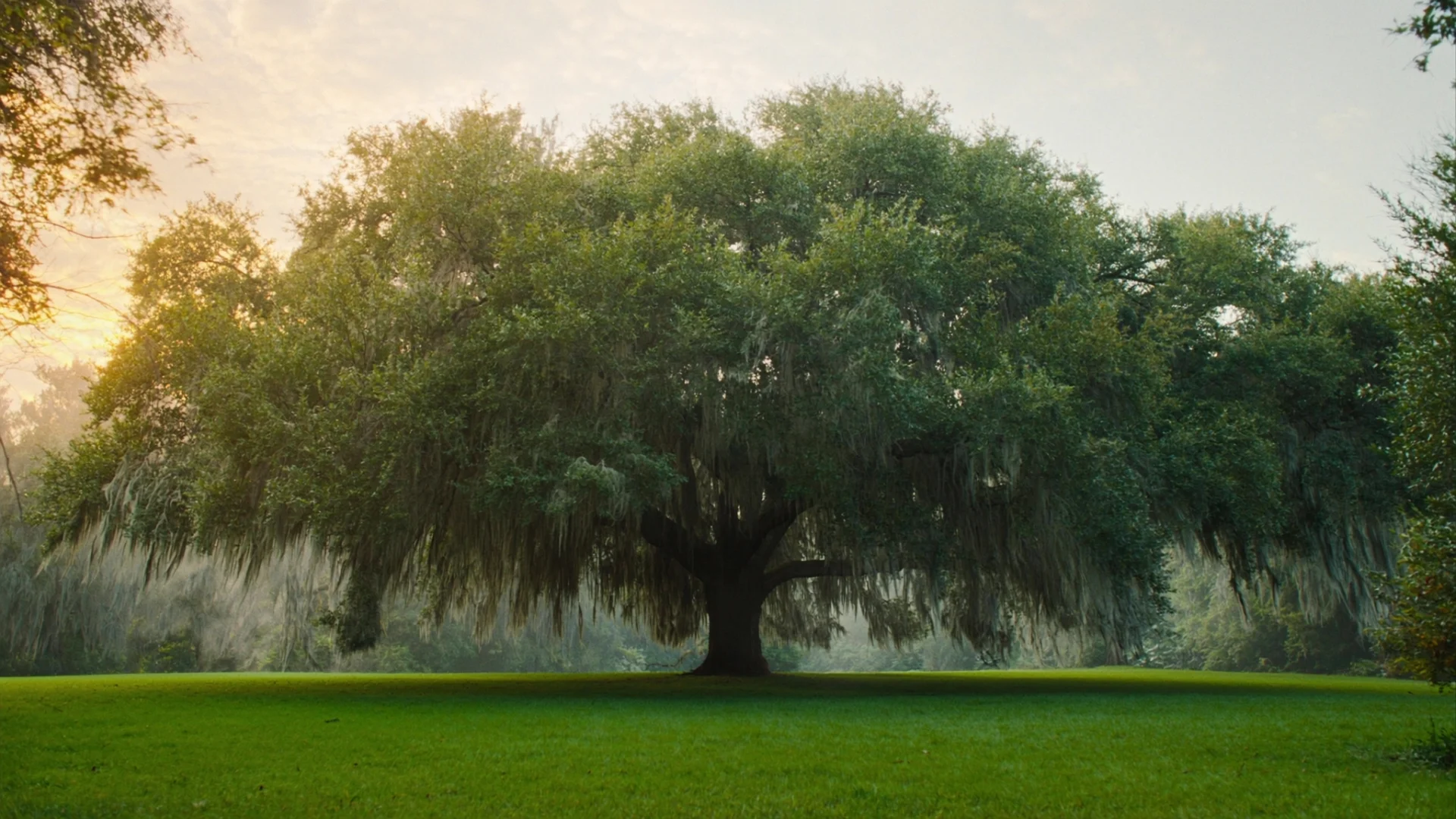
- Gutters and downspouts. Acorns and caps pack into a downspout elbow and stop it cold. Add pine straw on top and the gutter overflows against the fascia all winter.
- Slip hazard. A layer of acorns on a sloped concrete driveway or a brick walk behaves like ball bearings. This is the one that actually hurts people.
- Mowers and blowers. Acorns become projectiles. They also dull blades fast.
- Pools and septic tank lids. Skimmers clog, and acorn tannins stain concrete and pool decks a rusty brown that is hard to get out.
- Seedlings everywhere. Next spring you will be pulling oak sprouts out of every bed and gutter for weeks.
- Rodents. A big food supply next to the house supports more squirrels and rats, and the attic is the next stop.
Clear the gutters and the hard surfaces before the first sustained rain, and keep acorns raked off the walkways. That is most of the battle.
Can You Stop an Oak From Dropping Acorns?
Not really, and we would steer you away from anybody who says otherwise.
There are growth-regulator sprays marketed for reducing fruit and nut set. They have to hit a narrow window at mid to full bloom, results on big mature oaks are inconsistent, and on a sixty-foot live oak it is often not practical to get coverage. For most homeowners it is not a practical route.
Heavy pruning will not fix it either, and cutting a big oak back hard to reduce acorns does far more harm than the acorns ever did. That road leads to tree topping, which we will not do, and which makes a tree more dangerous, not less.
What does help: keeping the tree’s structure clean so debris does not hang up in the canopy, keeping limbs off the roof so acorns are not landing directly in a gutter valley, and accepting that a mature oak in coastal Georgia is going to make acorns. If the tree is genuinely in the wrong place and the acorns are the least of it, that is a different conversation. We wrote about it in how close is too close for a tree near your house.
When to Have Somebody Look at the Tree
Call if the acorn crop came with a canopy that thinned out noticeably this year, if there is deadwood over the house or driveway, if the trunk has a crack or a cavity, or if there is fungus growing at the base. Call if limbs are resting on the roof. And call if the tree is a water oak or laurel oak over about forty years old, because those two species decline earlier than people expect around here.
A tree risk assessment takes the guesswork out of it. We serve Effingham County, Rincon, Springfield, Pooler, Savannah, Richmond Hill and the South Carolina Lowcountry.
Frequently Asked Questions
How often do mast years happen?
It varies by species and region, but oaks commonly run a heavy year every two to five years, with lighter years in between. There is no fixed calendar, and different oak species in the same yard can be on different cycles.
Do live oaks drop acorns in Georgia?
Yes. Live oaks produce small, dark, narrow acorns, usually dropping from around September into November here on the coast. They are in the white oak group, so their acorns ripen in a single season.
Why are my acorns green and small this year?
Green acorns dropping early usually means the tree aborted them, often after drought stress, heat, insect damage or a wind event. A few is normal. If the tree dumps most of a green crop early and the leaves also look off, have it looked at.
Will a heavy acorn year hurt my lawn?
A thick layer left sitting will smother grass and stain hardscape, and it will give you a field of seedlings in spring. Raking or blowing them off the lawn and hard surfaces solves most of it.
Should I remove an oak because of the acorns?
We would not remove a healthy mature oak over acorns alone. A big oak adds shade, storm buffering and real value to a coastal Georgia property. If the tree also has structural problems or sits in a bad spot, that changes the math, and that is worth a proper look.
A Loud Year Is Usually Just a Loud Year
If your oak is pelting the roof this fall, odds are it is doing exactly what oaks have always done, and next year will be quiet. Clear the gutters, keep the walkways swept, and let the squirrels have their season.
What matters is the rest of the tree. Acorns tell you almost nothing. Canopy thinning, deadwood, cracks and fungus tell you plenty.
If something about the tree has you second-guessing it, request a free estimate or call (912) 342-0440 and we will come have a look.