Cutting off a tree’s top to reduce its height is not the same as careful pruning. Homeowners often request it when a tree feels too tall, too close to the house, or difficult to maintain.
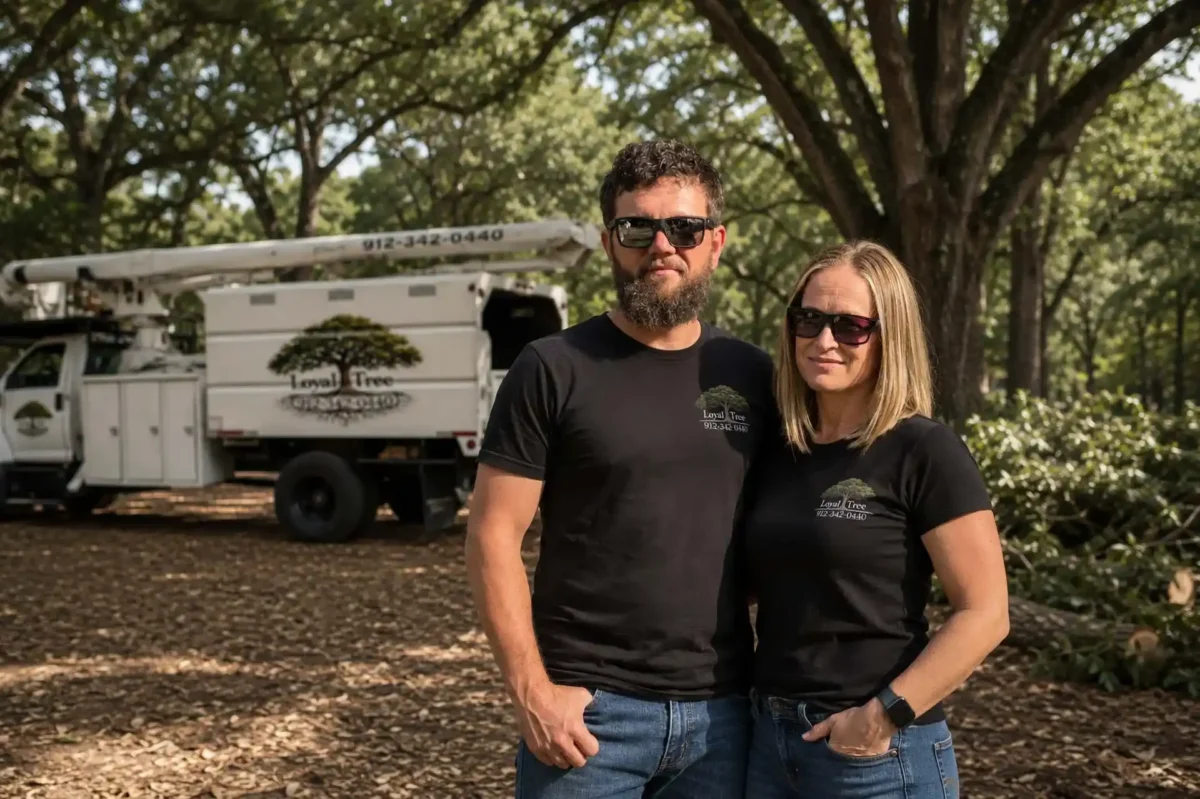
Our plain answer is simple: we don’t top healthy trees. Mike Williams, our lead arborist and operations manager, has 20+ years of hands-on tree experience. Our family-owned company is based in Guyton, and we help homeowners across Effingham County and the Savannah area make safer decisions about trees.
Sometimes a tree can be preserved. Sometimes removal is the honest answer. It depends on the tree, its condition, and what it could hit if it fails.
Key Takeaways
- Removing major upper limbs leaves large cuts and stubs across the tree.
- A tree may grow back quickly, but new limbs can have weak attachments.
- Selective pruning can address clearance and deadwood without damaging the tree’s structure.
- Serious decay, major lean, or storm damage may mean removal is the safest option.
- An on-site assessment provides a better solution than cutting the tree shorter for convenience.
What Is Tree Topping, and Why Responsible Tree Crews Avoid It
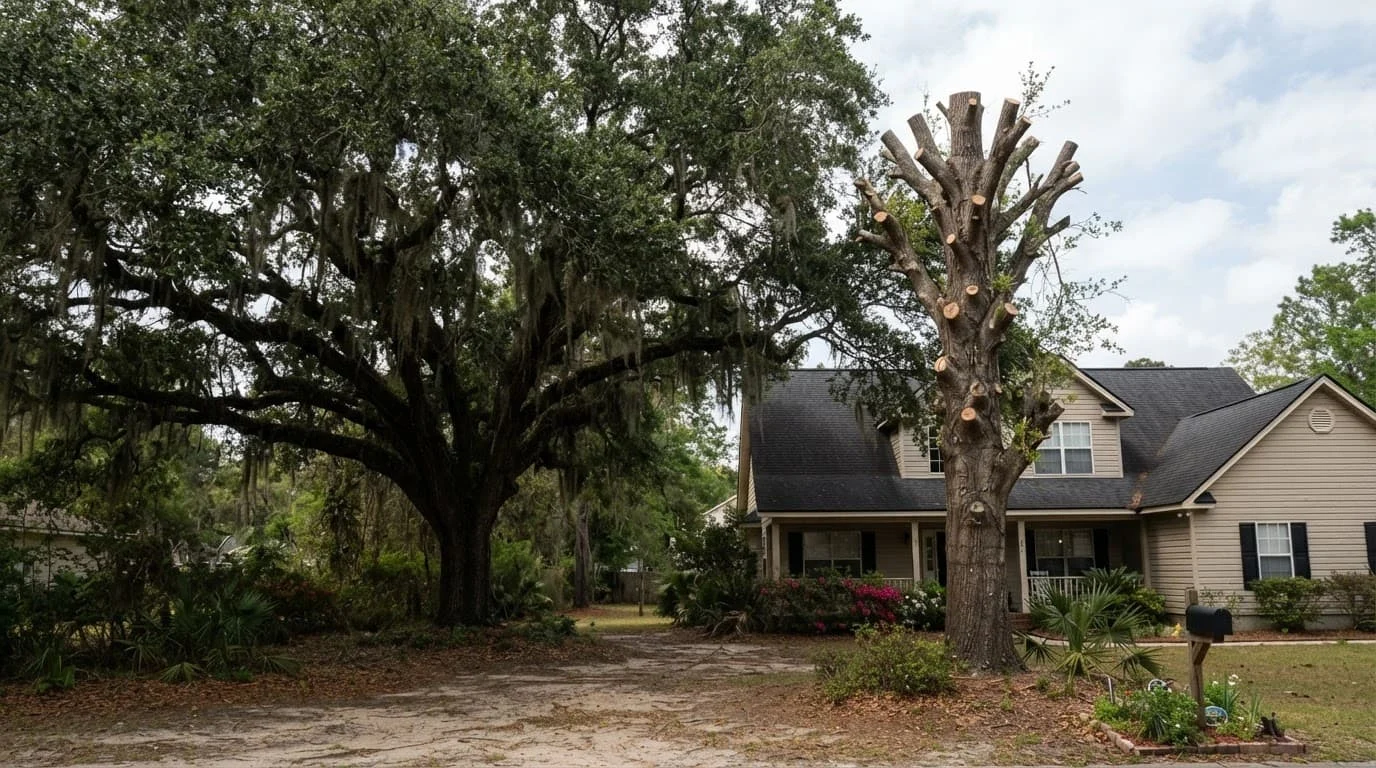
This practice commonly involves heading cuts through major limbs or the upper crown. It leaves large branch stubs and disrupts the tree’s mature height.
Severe topping is sometimes called hat-racking. People ask for it because they want a tree shorter, limbs farther from a roof, or less shade. Those are fair concerns, but topping isn’t a reliable way to manage a tree’s size over time.
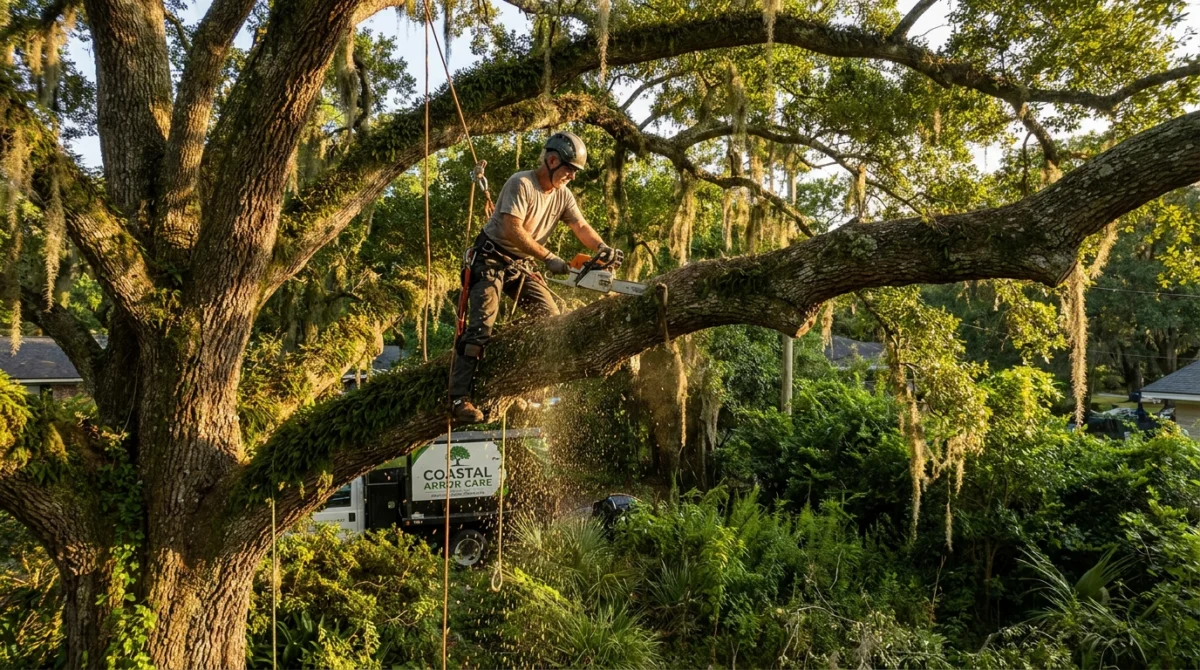
Structural pruning works with the tree’s natural structure. It preserves suitable lateral branches and removes selected limbs based on their condition, attachment, weight, and location. Proper pruning cuts are made near, but not through, branch collars.
The international society of arboriculture supports pruning practices that limit damage and preserve sound branch structure. The University of Georgia’s pruning guidance also stresses cuts that avoid tearing bark and creating unnecessary damage.
Topping Versus Careful Tree Trimming
Careful pruning may remove dead, broken, crossing, or poorly placed limbs while keeping the tree’s natural shape. Before we cut, we look at branch weight, weak unions, decay, nearby structures, and where future growth will go.
For a tree that has a good chance of staying, tree trimming and pruning is the safer route. A few well-chosen cuts can solve a roof-clearance problem without removing the whole top.
Why a Shorter Tree Is Not Always a Safer Tree
Taking the top out changes how weight is spread through the tree. It also leaves large wounds that may take a long time to close over.
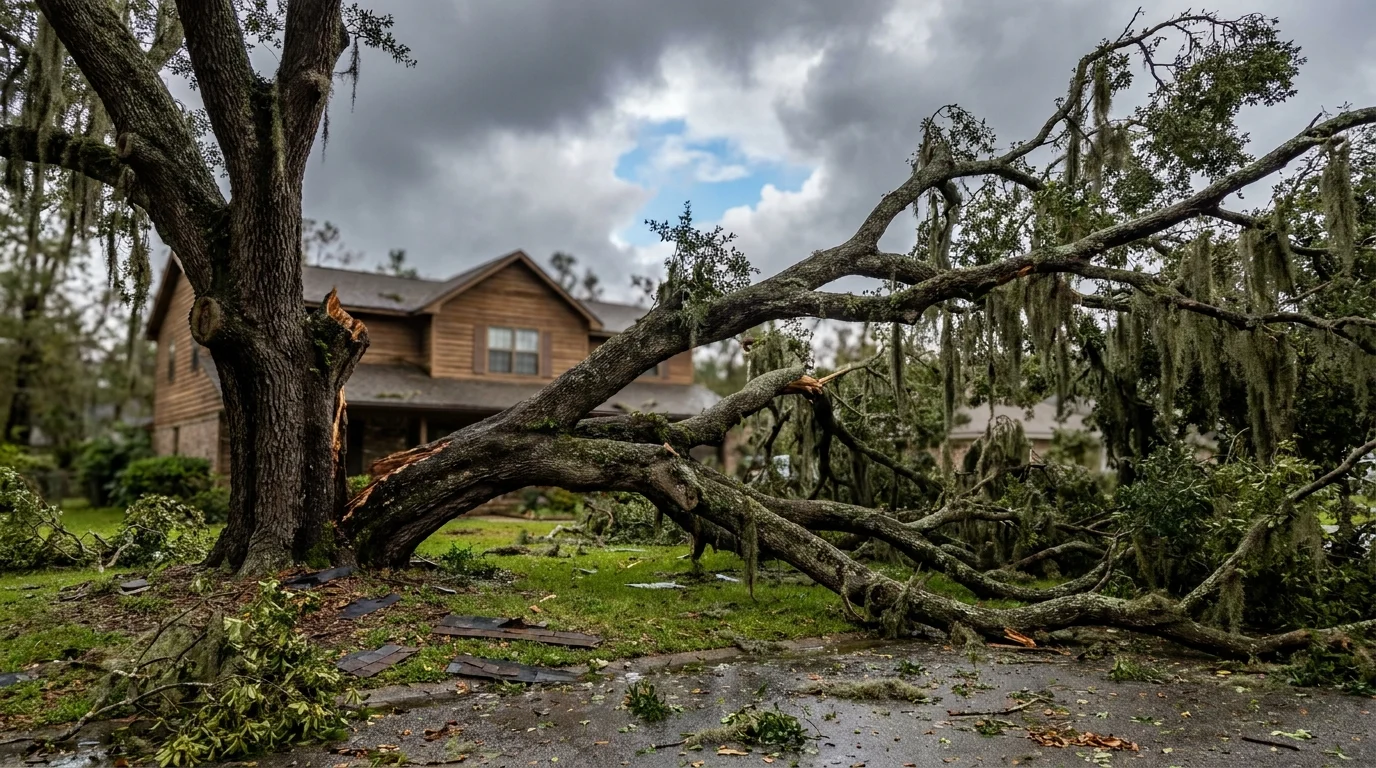
A tree that is already weak, leaning, decayed, or storm-damaged may need a risk assessment or removal instead. Height alone isn’t the whole story. The real question is what condition the tree is in and what sits below it.
The Long-Term Problems Tree Topping Can Create
The trouble with severe cuts usually shows up after the crew has left. A tree may look smaller that day, but the damage can create new safety and maintenance problems.
Fast, Weak Regrowth Can Raise the Risk
A severely cut tree often responds by producing water sprouts, which are fast-growing, often weakly attached shoots near the cuts. They can make the canopy look full again, but they don’t rebuild the original branch structure.
Removing too much live crown also reduces leaf surface area and limits photosynthesis. That can draw down the tree’s energy reserves and disrupt its crown-to-root ratio.
As water sprouts grow heavier, they may break in high winds. This matters when they hang over a roof, driveway, fence, or play area. In our area, summer thunderstorms can test a tree in a hurry.
Large Cuts Invite Decay and Tree Decline
Trees don’t heal cuts like people heal a scrape. They grow new tissue around a wound and try to wall off damaged wood inside.
Large cuts leave open wounds and more exposed wood for the tree to manage. Exposed wood can create opportunities for decay fungi, while suddenly exposed limbs or bark may also suffer sun scald.
Properly placed pruning cuts are different from large topping wounds. The UGA guide to shade and street-tree guidance explains why cut placement matters. Not every severely cut tree dies, but decay and decline become more likely concerns.
A full-looking canopy after severe cuts can still be a weak canopy.
Repeated Topping Can Turn One Job Into a Cycle
New shoots grow, the tree looks tall again, and the same cuts get requested again. Each round leaves branch stubs and more water sprouts, creating a crowded canopy with weak attachment points.
That cycle also takes away useful shade. Our goal is to solve the real problem, not leave you with repeat work and a tree that gets harder to manage every year.
Can the Tree Be Saved? Safer Options for Height and Clearance
Many trees can be preserved, but not every tree should be saved. We consider species, tree health, lean, decay, branch attachments, roots, and nearby targets.
We also assess distance from structures, utility lines, and driveways. A structurally compromised tree becomes a hazard tree when defects and targets create a meaningful failure risk.
A small issue may call for selective pruning. A serious structural defect may call for support hardware or removal. We don’t promise that every tree can be fixed with a few cuts.
When Selective Pruning Can Solve the Real Problem
We may remove deadwood over a roof, reduce a branch rubbing siding, improve driveway clearance, or correct a minor structural defect. These cuts preserve more of the canopy’s natural shape.
Pruning shouldn’t force a mature tree into an unnatural form. It also shouldn’t remove more live growth than the tree can handle.
Proper pruning cuts depend on placement. Cutting just outside the branch collars helps limit unnecessary damage. The UGA rules for sound pruning cuts are a helpful reminder that technique matters as much as the branch being removed.
When Tree Removal Is the More Honest Recommendation
Removal may be safer when a tree is dead, badly decayed, severely split, dangerously leaning, or likely to strike a home, vehicle, road, or power line. In those cases, tree removal can be the better long-term decision.
Afterward, stump grinding is available if you want the area easier to mow, replant, or use again.
Why a Tree Risk Assessment Helps With Uncertain Decisions
A risk assessment is a close inspection for defects, likely failure points, and targets below. It helps separate a tree that needs monitoring or careful pruning from one that needs action soon.
If a previously topped tree is being monitored, watch for weak regrowth and water sprouts. A tree that is actively split, hanging, or touching power lines is different.
Keep people away from those conditions, and treat them as an urgent safety issue.
Why Tree Topping Is Especially Risky Around Coastal Georgia Homes
Guyton, Rincon, Springfield, Bloomingdale, Richmond Hill, Pooler, and Savannah have older lots with mature trees. Sandy soil, clay soil, storm season, and nearby homes all affect how those trees should be managed.
Species, mature size, root conditions, nearby structures, and storm exposure can change the recommendation. Good tree care planning helps protect mature pines and oaks before problems develop.
Hurricane season runs from June through November. Summer thunderstorms can bring hard winds outside that window too. Weak regrowth and poor branch attachments shouldn’t be ignored around a home.
Pines, Live Oaks, and Water Oaks Need Different Decisions
Loblolly and slash pines can snap or uproot during storms. Large live oaks and water oaks can carry heavy limbs over roofs, fences, and driveways.
Each tree needs an individual assessment. One may need a few smart cuts, while another may have defects that make preservation unreasonable.
Storm Timing, HOA Rules, and Local Questions to Check
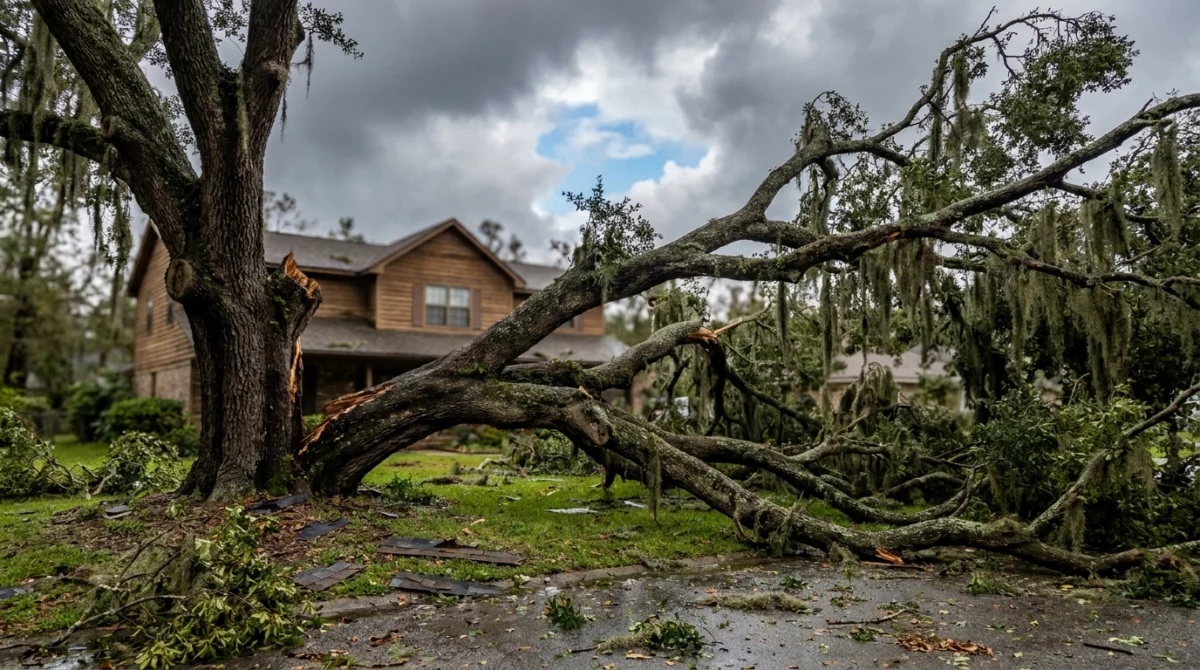
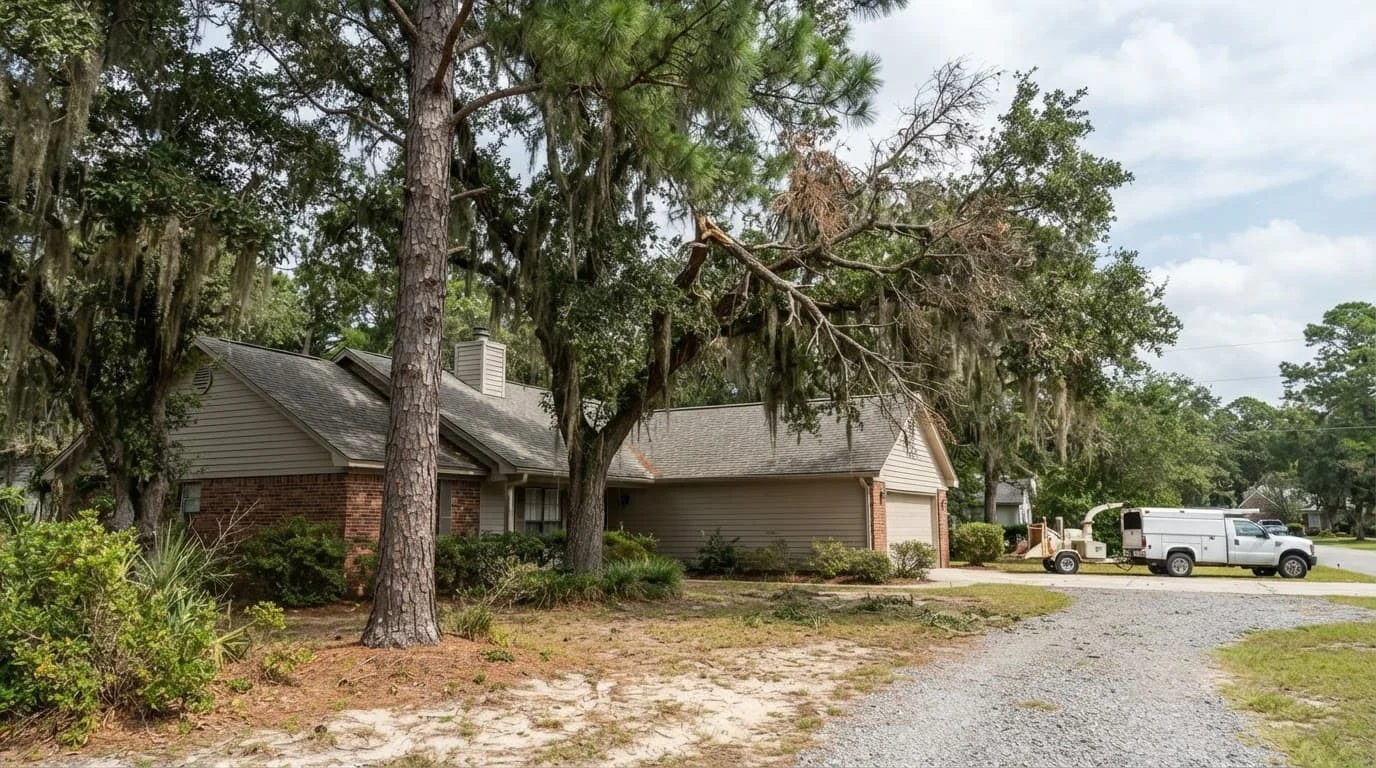
Don’t wait for a named storm if you see cracks, hanging limbs, exposed roots, major deadwood, or a new lean. Trees near energized utility wires require qualified help because those wires may still be live.
Newer subdivisions may have HOA approval rules. County or city requirements can also apply, depending on the property and the work. For trees down or hanging after high winds, see our storm damage and emergency tree service information.
When to Call Us With a Tree-Height or Clearance Question
Call for a free estimate when a tree leans toward a structure, has large dead or hanging limbs, shows cracks or decay, has roots lifting from the soil, touches a line, or has suffered wind-related damage.
During a visit, we listen to your concerns, inspect the tree and nearby targets, and discuss preservation, pruning, or removal. For an uncertain or high-risk tree, we may recommend an inspection by a certified arborist. We also explain how we’ll protect the property and handle cleanup.
DIY work on a hazardous tree isn’t a safe weekend project. Chainsaws, ladders, falling wood, and shifting branches can turn a simple-looking job into a bad situation fast.
Mike provides direct field oversight, and Mary handles scheduling and communication from the office. Before agreeing to a quick fix, ask for an on-site opinion.
Frequently Asked Questions
Is Cutting a Healthy Tree Short Ever a Good Choice?
Severely cutting a healthy tree is rarely appropriate. Emergency or clearance concerns may require careful reduction or removal, but an on-site inspection should guide that decision.
Will Severe Cutting Keep a Tree Short Permanently?
No. Many trees respond to hard cuts with rapid regrowth. This can create a crowded canopy, weak new attachments, and more maintenance later.
Can a Previously Cut Tree Recover?
It depends on the species, cut size and location, existing health, decay, weather, and site conditions. Don’t assume the tree must come down. Don’t assume it will recover without help, either.
Can Homeowners Cut a Tree Short Themselves?
No, especially near roofs, driveways, fences, people, or utility lines. Stay clear of damaged trees, and contact the utility provider if a line may be energized.
What Should Happen After a Tree Is Cut?
Have the tree inspected for weak regrowth, cracks, decay, and targets below. The next step may include monitoring, corrective pruning, support hardware, or removal.
A Better Answer Than Cutting the Top Off
Severe cutting can leave weak regrowth, large wounds, and branch stubs, creating a repeating maintenance problem. Preserving a healthy, structurally sound tree may support your property’s usability, appeal, and property value.
LoyalTree is a family-owned, licensed and insured company serving Guyton, Rincon, Springfield, Bloomingdale, Effingham County, Richmond Hill, Pooler, and Savannah. When you need a straight answer about a tree, request a free estimate for the right care plan.