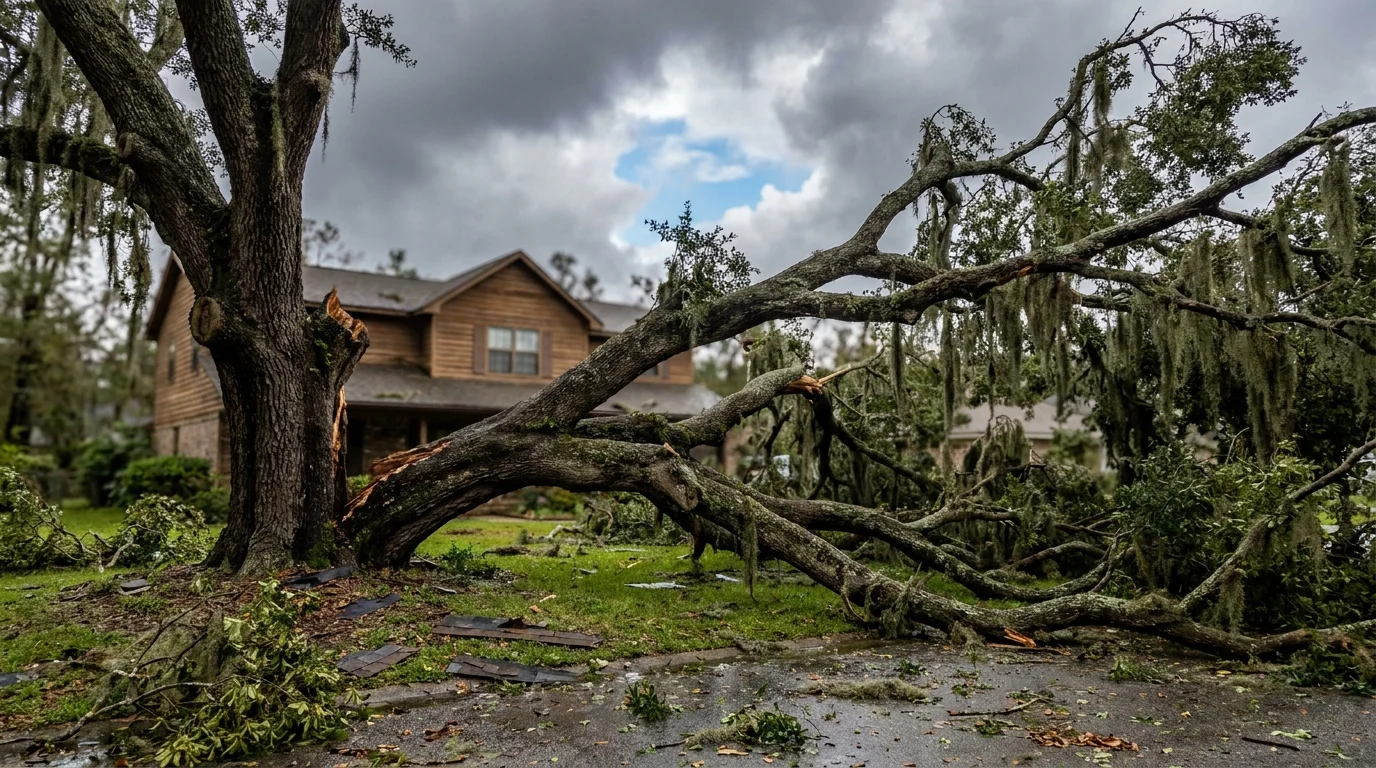
Atlantic hurricane season ends November 30. That date gets treated like a finish line around here, and in a way it is. But the six weeks before it and the six weeks after it are two different jobs, and most people do neither one.
Between now and the end of November, the storm risk is still live and anything you fix is insurance. After November 30, the pressure is off and you get the best window of the whole year to do the tree work you have been putting off, at the time of year when it is easiest on the tree and easiest on the yard.
We are LoyalTree LLC, family-owned and based in Guyton. Mike Williams brings 20+ years of hands-on tree experience. Here is the list, in the order we would work it.
Key Takeaways
- Hurricane season runs June 1 to November 30. Storms have hit this coast as late as October.
- Before November 30, deal with anything that could come down on the house. That is the only priority.
- After November 30, winter is the best window for structural pruning, removals and big equipment work.
- Damage from earlier this season does not heal over the winter. Cracked unions and torn roots stay cracked and torn.
- Document your trees with photos now, before anything happens, not after.
Between Now and November 30
Keep it narrow. In the remaining weeks of the season, there is one question: what could hit the house, the cars, the power drop or a person.
Clear the deadwood over targets
Dead limbs are the first thing out of a canopy in wind, and on the deciduous trees fall is when you can finally see them. Anything grey and bare hanging over the roof, the driveway, the deck or the neighbor’s fence should come out now, not in the spring.
Deal with anything left hanging from earlier storms
Broken limbs that got hung up in the canopy in August are still up there. They are called widowmakers for a reason and they come down on their own schedule. Walk the property and look up specifically for limbs that are detached but caught.
Re-check trees that took damage this season
A tree that lost a big limb, took a hit from a neighbor’s tree, or leaned in a storm does not recover over the winter. The wound stays open, the union stays split, and torn roots stay torn. If anything moved this season, get it looked at before the next one. Our guide on is a leaning tree dangerous covers how to tell a new lean from an old one.
Take the photos
This is five minutes and it matters exactly once, at the worst possible moment. Walk the yard with your phone and photograph every significant tree from a couple of angles, plus the house from each side. Date-stamped photos of healthy trees standing where they should be make an insurance conversation much shorter later. Our article on homeowners insurance and tree removal in Georgia gets into what insurers actually want to see.
What December Through February Is Good For
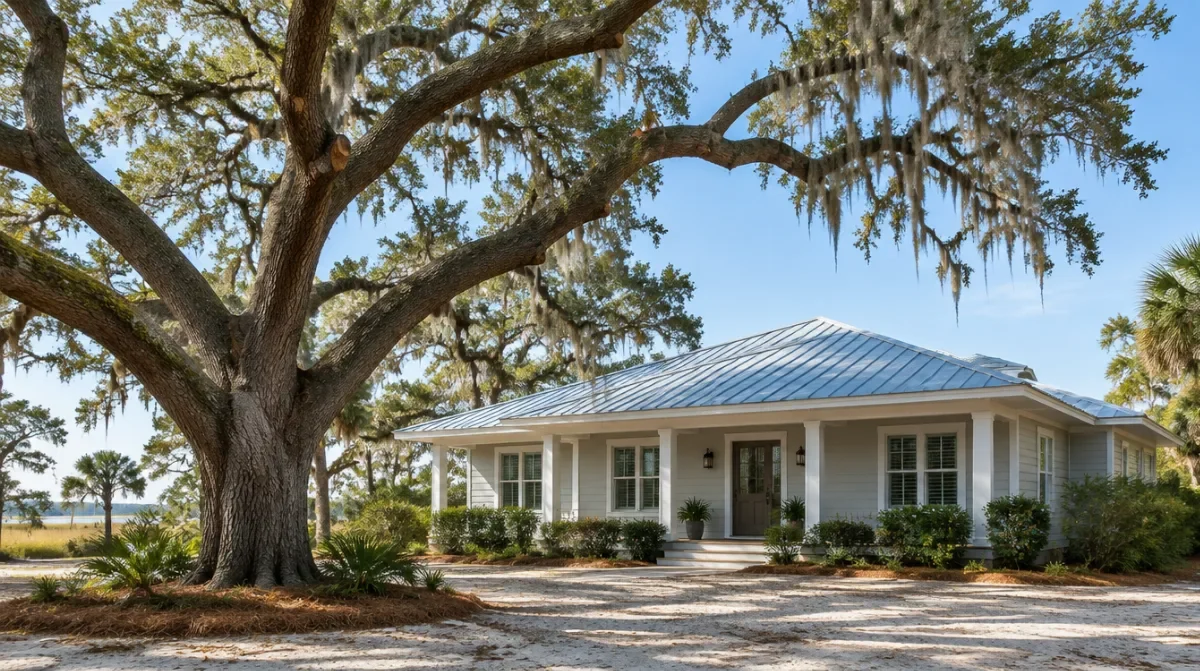
Once the season closes, the calculus changes. This is the best working window of the year on the Georgia coast and almost nobody uses it.
Structural pruning
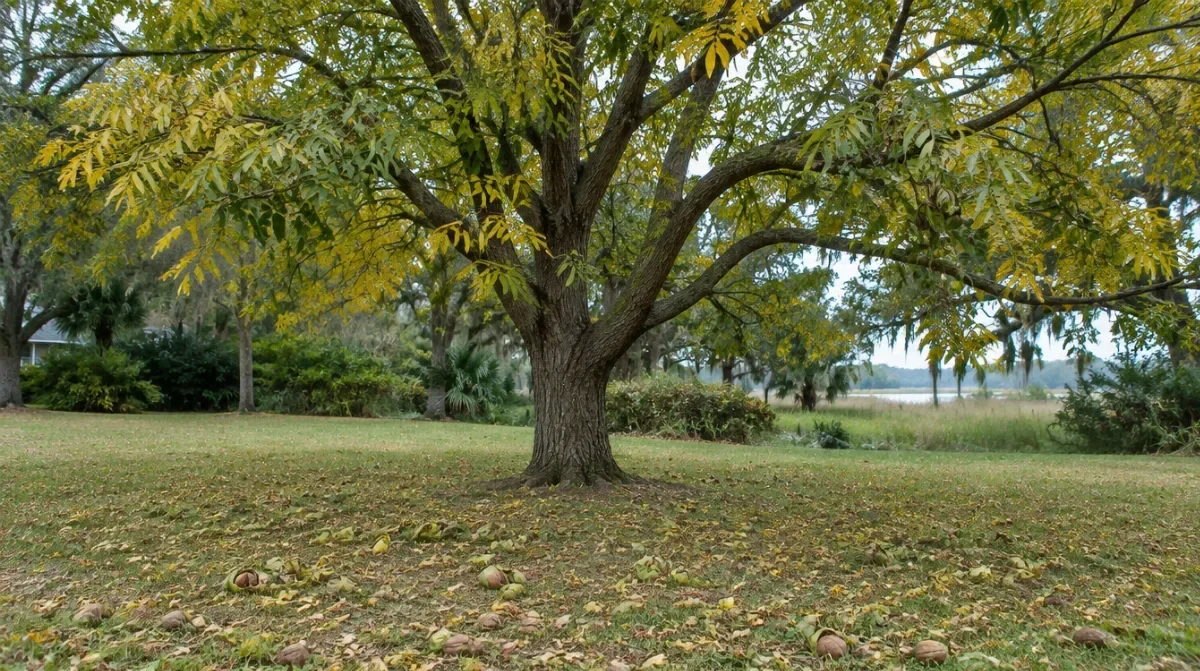
Most hardwoods here are best pruned in late winter while dormant. Cuts close cleanly going into spring growth, the insects that carry some tree diseases into fresh wounds are not flying, and on the deciduous trees a climber can actually see the branch structure and make better decisions. Water oaks, pecans, sweetgums and most deciduous shade trees fall into this. Live oaks hold their leaves through our winter, so the visibility part does not apply to them. Our guide on the best time to trim trees in coastal Georgia breaks it out by species.
Removals and big equipment work
Winter ground is firmer and drier than summer ground here. That matters more than people realize: a bucket truck or crane on a soggy summer lawn leaves ruts you will be repairing for a year. On a deciduous tree there is no leaf mass to handle, so cleanup is faster. If a removal has been on your list, this is when to do it.
Land clearing and brush work
Winter is the right season for clearing a lot or a fence line. Vines and briars are dormant and thin, you can see the ground, snake activity is way down, and the mess is far smaller. Ticks are the exception, they do not take the winter off in Georgia, so keep treating clothing and checking. That is a real seasonal advantage in vegetation management work.
Planting
If a tree came out, our mild winters let roots keep developing while the top is dormant. A tree planted in late fall or winter goes into next summer’s heat already established, which is most of the battle.
What Winter Does Not Fix
Worth being clear about, because people assume a quiet winter means a reset.
A cracked branch union stays cracked. A tree that shifted in saturated soil in September is sitting on a compromised root plate all winter. A trunk with decay in it has slightly more decay in it by March. None of that improves during the off season, and all of it goes into next June carrying more risk than it had this June.
Coastal Georgia also gets weather outside hurricane season. Winter fronts can blow hard for long stretches, and a saturated root plate in a February squall fails the same way it would in a tropical storm. And now and then we get an ice event heavy enough to load limbs, on top of the freezes that take out tender plants most winters.
The Short Version of the List
- Now through Nov 30: deadwood and hanging limbs over anything that matters, out.
- Now: re-inspect any tree that took damage this season.
- Now: photograph the trees and the house for your records.
- Now: gutters and roof valleys cleared after the pine drop.
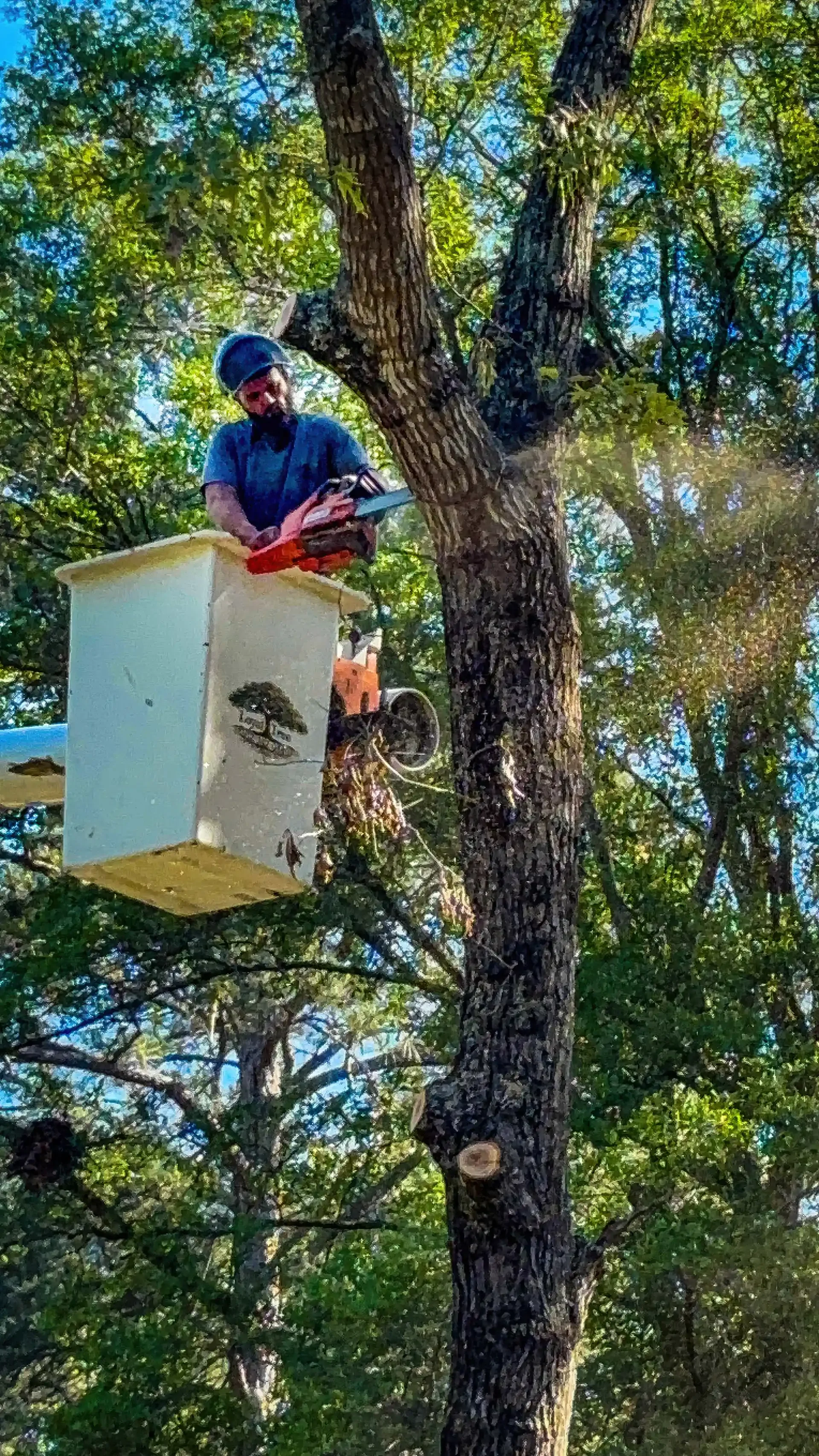
- December to February: structural pruning, crown cleaning, clearance over the roof.
- December to February: removals, stump work, and anything needing heavy equipment on the lawn.
- December to February: lot clearing, fence lines, brush.
- Late winter: plant the replacement.
If a tree comes down on something before you get to any of this, our article on what to do when a tree falls on your house covers the first hour, and what to expect from an emergency tree service covers what happens after you call.
Frequently Asked Questions
When does hurricane season end?
The Atlantic hurricane season officially runs June 1 through November 30. Storms outside those dates are uncommon but not impossible.
Is winter really a better time for tree removal?
For most jobs here, yes. Firmer ground means less lawn damage from equipment, and on a deciduous tree there is no leaf mass to clean up. Emergencies, of course, happen whenever they happen.
Should I wait until spring to prune?
Late winter is generally better than spring for most hardwoods, because cuts close as growth begins rather than sitting through the whole season. Safety work, meaning dead, broken or hanging limbs, should not wait for any season.
My tree survived the season with no visible damage. Do I still need it checked?
If it is large and close to the house, a ground-level look at the trunk and root flare is worth doing regardless. A lot of serious problems do not show in the canopy until late.
Does insurance cover removing a tree that is only leaning?
Policies generally respond to damage, not to risk, so a tree that has not hit anything is usually the homeowner’s responsibility. Read your policy and talk to your agent. We covered the general landscape in does homeowners insurance cover tree removal in Georgia.
Use the Quiet Months
Everybody calls a tree service in September when the wind is blowing, and hardly anybody calls in January when the work is easier, cleaner and better for the tree.
Get the dangerous stuff handled before November 30. Then use December through February for everything else, and go into next June with the list already done.
If you want somebody to walk the property and tell you what is on your list, request a free estimate or call (912) 342-0440.