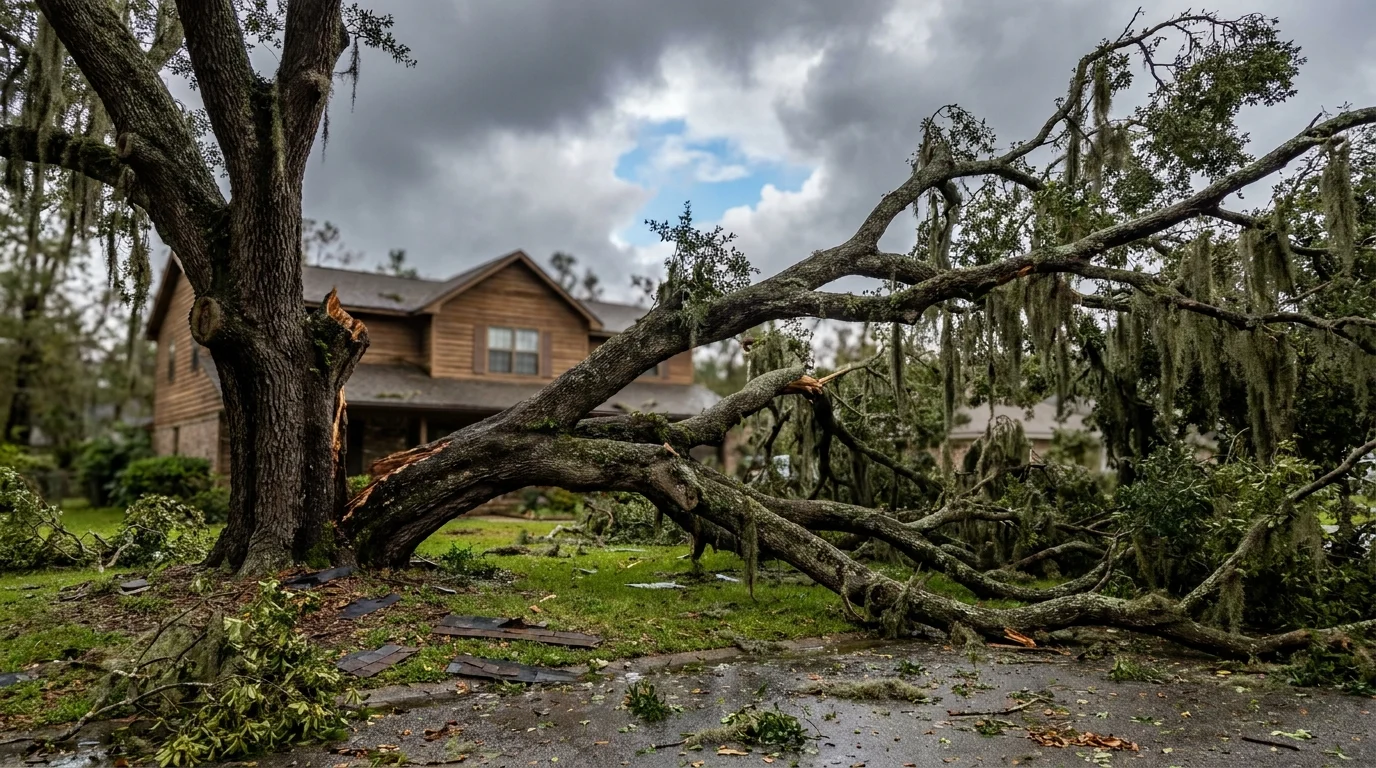
When a tree falls across your driveway or a heavy limb lands on your roof, the first job is keeping people out of harm’s way. An emergency tree service is there to assess the danger, explain the next safe step, and remove only what needs to come out.
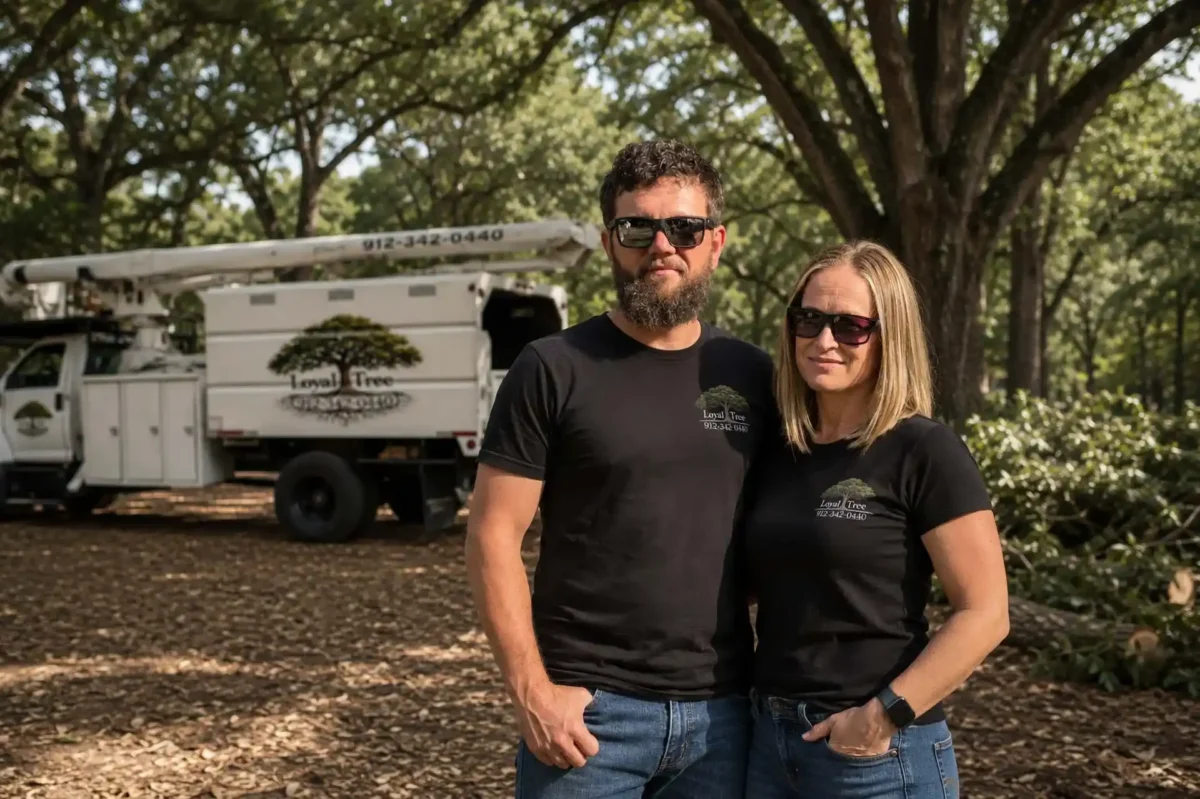
We provide local tree services for homeowners in Guyton, Rincon, Springfield, Bloomingdale, Richmond Hill, Pooler, and Savannah. LoyalTree LLC is family-owned, licensed and insured. Mike Williams brings 20+ years of hands-on tree experience to the field, while Mary Gledhill keeps scheduling and communication clear from the office.
A tree emergency can look manageable from the ground. Hidden weight, wind, and cracks can create additional risks quickly.
Key Takeaways
- Stay clear of fallen, leaning, split, or hanging trees until the area is assessed.
- Never touch a tree or branch near a downed power line.
- Emergency tree work begins with a safety assessment, not a chainsaw.
- Careful pruning or support may save some damaged trees.
- Wet ground, strong winds, limited access, and nearby structures can affect the work plan.
What an Emergency Tree Service Handles First
An urgent tree problem is any situation where a tree could hurt someone, block access, or cause property damage. That includes a fallen tree on a roof, vehicle, fence, or driveway. It also includes broken branches, cracked trunks, lifted roots, or a tree that suddenly leans harder after a storm.
If a tree is near power lines, treat every wire as live. Keep people and pets back. Call the utility company or emergency services when there is an immediate threat. Don’t touch the tree, the wire, a fence, or standing water nearby.
Our storm damage and emergency tree service work begins with a safety assessment. From a safe position, we identify stored weight, possible movement, tension, and nearby targets before work begins. A limb can be held up by another branch, a roof edge, or its own fibers. Cutting the wrong spot can cause secondary damage to a roof, vehicle, or other property.
The National Weather Service classifies thunderstorms with wind gusts of 58 mph or more as severe, according to its severe thunderstorm safety guidance. Those winds can turn a weak limb into a serious problem in a hurry.
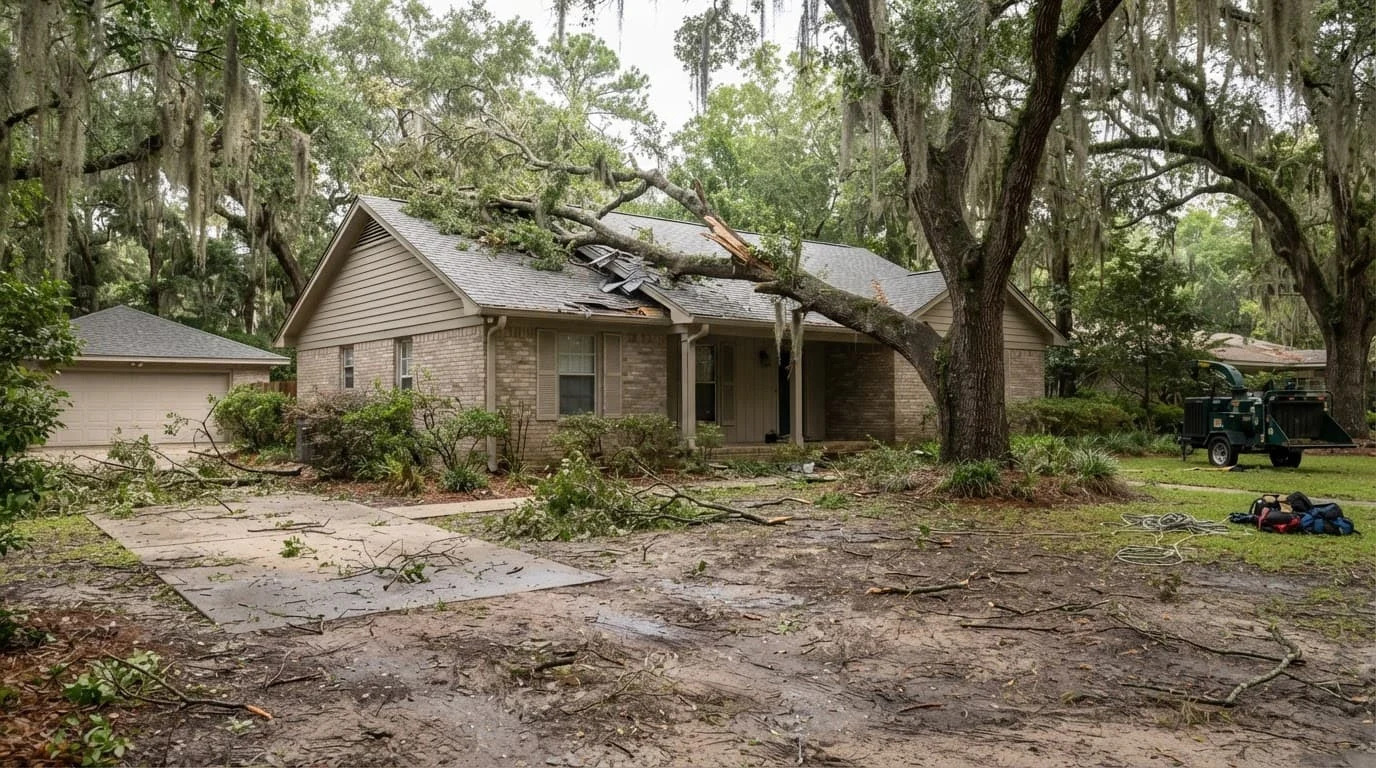
How Crews Decide Whether a Tree Can Be Saved
Emergency work doesn’t always mean taking down the whole tree. Signs of structural failure can change that decision quickly.
We look at the trunk, main limbs, roots, lean, and canopy, along with the tree’s distance from your home or other property.
A stable tree with one broken limb may be a good candidate for careful tree trimming and pruning. In some cases, selective pruning, cabling, or bracing can help keep a valued tree in place.
A badly split trunk, uprooted root system, hollow base, or severe lean tells a different story. If the tree can’t safely support itself, keeping it may put your home, vehicles, and family at risk.
What Happens on the Day of Emergency Tree Removal
The process usually starts with a phone call and a few basic questions. We want to know what happened, where the tree is sitting, whether power lines are involved, if access is blocked, and whether there is property damage. If a structure is threatened or access is blocked, seek immediate assistance. Photos can help, but only take them from a safe distance.
When we arrive, Mike looks at the tree and the property before equipment enters the work area. We explain what we see and recommend the safest path forward. Our tree removal service may remove a limb first, or use controlled cutting to bring down the whole tree in planned sections. We answer the phone 24 hours a day during storm season, and the crew that shows up is the same crew that does our everyday work, led by certified arborists rather than a subcontractor we found that morning. When a big pine or oak has come down across a house and there is no safe way to piece it out from the ground, crane assisted removal is the tool we reach for, and an emergency professional will tell you up front whether the job needs one. Emergency tree removal is about sequence and safety more than speed, so expect us to slow down for a minute and look before anybody starts a saw.
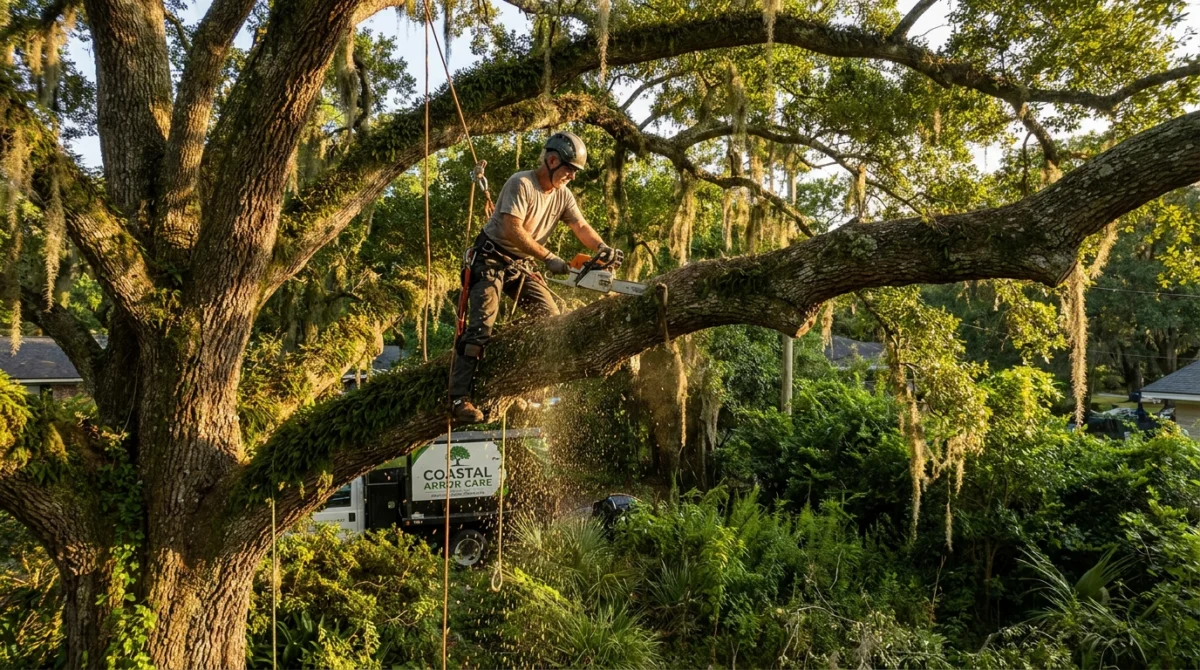
Emergency tree removal isn’t usually a matter of pulling a tree away from the house. A crew may need to remove smaller limbs, reduce weight, set rigging ropes, and lower pieces into a clear area. That helps prevent secondary damage while a damaged tree comes down.
Fences, roofs, septic areas, irrigation heads, parked vehicles, narrow driveways, and tight lots all affect the plan. Wind, wet ground, and other hazardous conditions can affect it too. We protect the work area as much as conditions allow, load the debris, handle debris disposal, and clean up the practical mess left behind.
We keep you informed while the work is underway. You shouldn’t be left guessing what is happening around your own home.
What Homeowners Should Do Before the Crew Arrives
Keep children and pets indoors or well away from the work area. If a vehicle is close to the tree, move it only when you can do so without entering the danger zone.
It also helps to unlock gates and point out the best access route. Let us know about septic tanks, sprinkler lines, buried utilities, landscaping features, and anything else you don’t want equipment near.
Don’t climb, cut, pull, or put a chainsaw on a storm-damaged tree. Wet bark, soft ground, and hidden tension make a tree much more dangerous than it may look from the yard.
A branch that looks caught can still be carrying thousands of pounds of pressure. Give it room until it can be assessed safely.
Emergency Tree Risks Around Effingham County and the Savannah Area
Our part of Georgia has no shortage of trees, and each one fails a little differently. Loblolly and slash pines can snap high up or uproot in high winds. Mature live oaks and water oaks can drop heavy limbs, especially when older roots have weakened or the canopy has old damage. Uprooted trees, weakened roots, snapped trunks, and damaged canopies can all lead to structural failure.
Sandy soil around Guyton, Rincon, Pooler, Richmond Hill, and Savannah can loosen after heavy rain. Clay-heavy spots in Effingham County can hold water longer. Either condition can leave roots with less grip than they had before the storm.
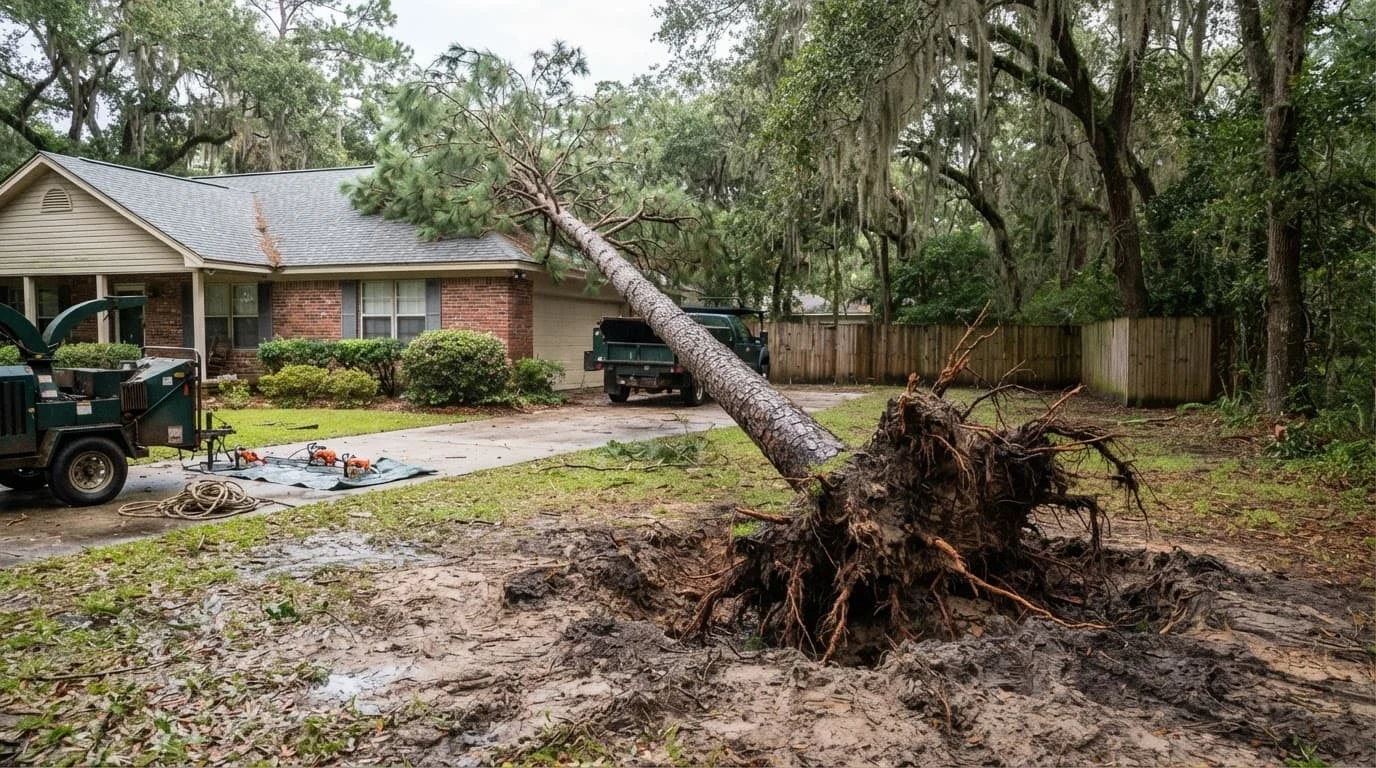
Summer thunderstorms can bring severe weather with little warning. Hurricane season runs from June through November, as covered in the National Weather Service’s hurricane preparedness information. Older wooded lots in Springfield, Bloomingdale, and Savannah often have big trees close to homes, sheds, and fences.
Newer subdivisions may also have HOA rules. County permit questions can come up depending on the property and work involved. Ask before assuming removal can begin right away.
Weather still sets the limits. We won’t put a crew beneath unstable limbs during lightning, strong wind, or dangerous ground conditions.
Why Emergency Tree Work Is Usually Not a DIY Job
There’s a difference between picking up loose twigs after storm damage and cutting a damaged tree. If small broken branches are on open ground and nothing is moving overhead, you may be able to move them by hand. Stop there if the tree has cracked trunks, is leaning, hung up, or near a structure.
A chainsaw doesn’t make a tree damaged by high winds predictable. Severe weather can leave limbs loaded, meaning they’re bent and storing force. A split trunk can barber-chair, which means it tears upward and backward while being cut. Uprooted trees can shift as the root plate settles. Together, these are hazardous conditions.
Blocked escape paths are another problem. So are roofs, fences, vehicles, slopes, and power lines. A mistake near these hazards can cause serious property damage. There is no safe shortcut around those risks.
Take photos of visible damage for your insurance records from a safe place. Then step back and ask your insurance company what evidence it needs for insurance claims. The National Weather Service’s Charleston office safety resources also use the 58 mph severe-wind threshold, which gives some perspective on what a hard thunderstorm can do to an already weak tree.
A licensed and insured local crew can have professional arborists evaluate the damage, and you should verify the credentials of any certified arborists. Tree care professionals can set up rigging, manage falling sections, and decide whether stabilization or removal makes sense. That is work where experience matters.
When to Call Us for Emergency Tree Service or a Free Estimate
Call promptly for emergency tree service when a tree is on a structure, blocking a road or driveway, or leaning farther after a storm. These situations may require emergency tree removal, especially with lifted roots or a worsening lean. A split trunk, a large broken limb over a walkway, or a tree near power lines is a tree emergency that needs immediate assistance.
If a tree looks concerning but isn’t an immediate threat, don’t wait for the next storm to answer the question. A planned safety assessment gives us time to look at the trunk, roots, canopy, and nearby targets without the pressure of bad weather.
We serve Effingham County and nearby Richmond Hill, Pooler, Savannah, and coastal Georgia, providing a local response when tree damage occurs. Mike is directly involved in field work, and Mary handles scheduling, communication, and coordination for each tree removal service. We keep the conversation plain and give free estimates without pressure.
Frequently Asked Questions
Can emergency tree work be done during rain or high winds?
It depends on conditions at the property. Lightning, strong winds, saturated ground, or unsafe equipment access may delay the work.
We can still assess the situation, explain what needs to stay clear, and help plan the next safe step. No tree job is worth putting people near a falling limb or unstable trunk.
What happens if a fallen tree is touching a power line?
Stay away and contact the utility company or emergency services as appropriate. Keep everyone else back, including pets.
Never move the tree, touch a branch, or assume the line is dead because the lights are still on. Electricity can travel through trees, fences, wet ground, and nearby objects.
Will the crew remove every tree damaged by a storm?
No. We assess stability, trunk damage, root condition, location, and the risk to people or property. A tree with a broken limb may still have a sound trunk and root system.
When conditions allow, selective pruning or support may preserve the tree. When it’s too compromised to stand safely, removal is the honest answer.
What happens to the stump after emergency removal?
The immediate service focuses on removing the tree and handling debris disposal. Stump work is usually scheduled separately after the danger is cleared.
Stump grinding can take the stump below grade, making the area easier to mow, replant, or use for a future project.
A Safe Next Step After Tree Damage
Emergency tree trouble can happen in any season, though storms and heavy rain make it more common around coastal Georgia. Stay clear, protect people first, and have tree care professionals assess the damage before anyone starts cutting.
The right plan depends on the tree, the damage, and what sits around it. When you need a straight answer, request a free estimate from LoyalTree LLC. Tree care professionals can recommend the right tree services for your property.