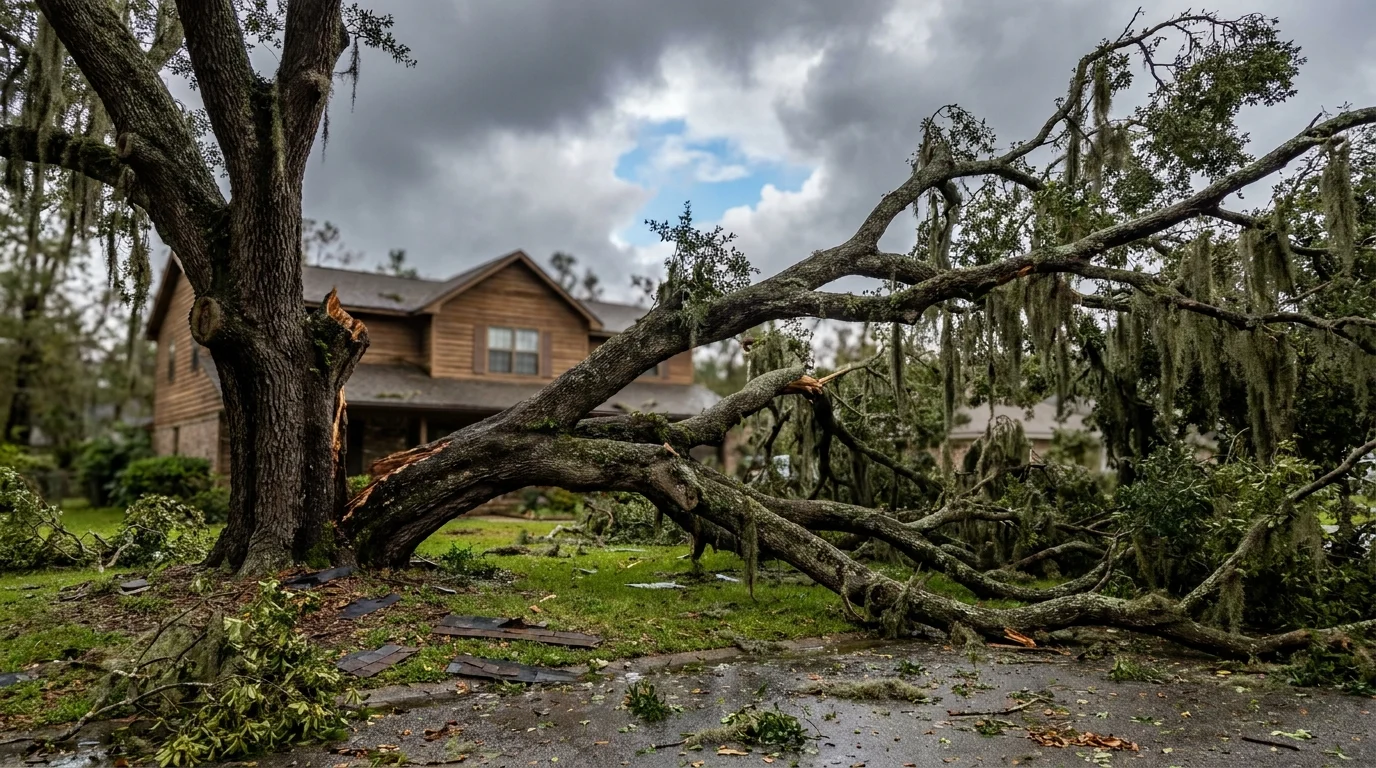
Homeowners insurance in Georgia may help pay for tree removal in certain situations, but coverage depends on the cause, what was damaged, and your policy language. A tree that strikes the house after high winds may be handled differently from one that falls in an open yard.
We’re a family-owned, licensed and insured tree service, not an insurer or a law firm. Check your insurance policy and ask your agent before authorizing work. Home insurance terms can vary after hurricanes, thunderstorms, and high winds in Guyton, Rincon, Springfield, Bloomingdale, Richmond Hill, Pooler, and Savannah.
A fallen pine can turn a calm morning into a mess fast. This guide focuses on coverage questions and practical steps for tree removal after a storm. Knowing what to photograph, who to call, and what not to touch helps you make the next decision safely.
Key Takeaways
- Homeowners insurance in Georgia may cover tree removal when a covered peril, such as wind or lightning, causes damage to a covered structure.
- A tree that falls in an open yard is usually the homeowner’s responsibility, and deductibles or debris removal sublimits may apply to covered claims.
- Photograph the tree and property damage before removal when it is safe, contact your insurance agent promptly, and keep itemized invoices and receipts.
- Stay away from downed power lines and unstable trees, and use a licensed and insured tree service for dangerous or storm-damaged removal work.
- Coverage decisions depend on your policy, the cause of the damage, the tree’s condition, and the adjuster’s findings—not simply where the tree grew.
Does homeowners insurance cover tree removal in Georgia?
In most policies, homeowners insurance may cover tree removal when a covered peril causes damage to a covered structure. A covered structure can include your house, garage, shed, fence, or another listed structure.
Wind, lightning, and other storm events may qualify as a covered peril. If a healthy pine snaps during a thunderstorm and causes roof damage, removal may be part of the claim. Allstate’s overview of fallen tree damage offers similar general guidance, but it doesn’t replace your insurance policy or your agent’s decision.
A fallen tree that lands harmlessly in an open yard is usually the homeowner’s responsibility. The same may apply when a dead tree or long-standing hazard raises concerns about negligence. Your homeowners insurance may still require a review of the cause, the property damage, and the policy terms before approving an insurance claim.
Your insurance policy and the adjuster’s findings control the final decision. A deductible applies to covered losses, and some policies include a sublimit for tree removal. Homeowners insurance may also help with yard cleanup or blocked driveway access, subject to a debris removal limit and the terms of your dwelling coverage. Ask your agent how your home insurance applies instead of relying on a neighbor’s experience.
When a Neighbor’s Tree Falls on Your Property
A tree growing in a neighbor’s yard can still become your claim if it lands on your house or fence. In general, the policy for the property where the tree lands usually responds first, even when the neighbor’s tree caused the damage.
Say a live oak grows near a property line in Rincon. A storm takes down a large limb, and it crushes your fence. If the oak lands on your property, the damaged fence may be a covered structure under your policy.
There can be an exception if the tree owner knew it was dead, dangerous, or clearly failing and ignored the problem. That may lead to a dispute about liability. Take clear photos of the tree, the damage, and any visible defects from before the storm. Avoid blaming anyone before the facts are sorted out, then ask your agent how to proceed.
A tree’s address does not always decide the claim. Where it landed, what it damaged, and its condition before the storm all matter.
What to Do After a Storm Before Tree Removal Begins
Emergency safety comes before tree removal. The first job is making sure nobody gets hurt.
Stay clear of hanging limbs, a leaning trunk, lifted roots, and trees touching a house. Never approach downed power lines or a tree that may be in contact with them. Call the utility company or emergency services when power lines are involved.
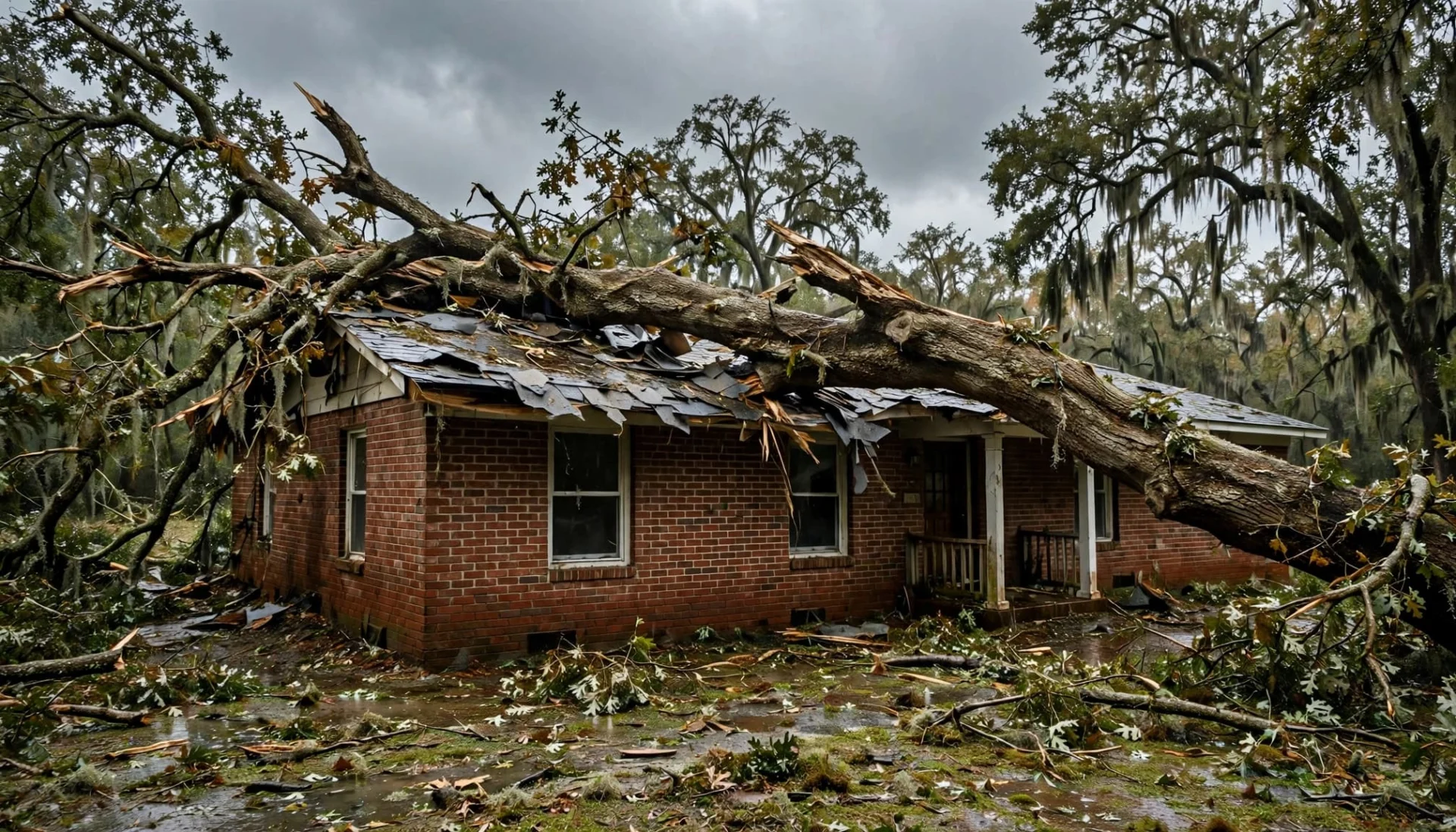
When it is safe, take photos and video before anything gets moved. Capture wide shots of the tree and property, then closer images showing the point of impact and visible property damage. For an insurance claim, contact your homeowners insurance agent early and keep every receipt. Ask for an itemized invoice separating tree removal from debris cleanup.
Be careful with door-to-door storm crews. Don’t sign a contract at the curb before checking that the company is licensed and insured. A roof, driveway, or entrance may need emergency attention first. Full debris cleanup and stump work can wait until the area is stable.
For a fallen tree or hanging limbs after storm damage, our storm damage and emergency tree service page explains the kind of help we provide in Effingham County and the Savannah area.
Is the Tree Actually Dangerous, or Can It Wait?
You don’t need to inspect a damaged tree up close to spot warning signs. A fresh split in the trunk, roots lifting from the soil, a major lean toward the house, or a tree resting on a structure all call for a professional look.
Large dead limbs, cracks where a main limb joins the trunk, and branches hanging overhead can also be serious. Tree damage may be unsafe even when removal isn’t covered.
Don’t climb a storm-damaged tree or start cutting near a roof, fence, or power line. A professional tree risk assessment can determine whether removal is needed. In some cases, tree pruning, cabling, or bracing may help keep a valued tree standing safely.
What Your Insurance Company Will Want From Your Tree Service
Good paperwork won’t decide a claim, but it helps show what happened. Before removal starts, ask for photos of the tree and affected structure when it is safe to take them. Include clear images of the tree damage and surrounding conditions.
Your homeowners insurance adjuster may need an itemized invoice that separates tree removal, protecting the structure, hauling debris, and general yard cleanup. The insurer may also apply a “debris removal limit” to certain cleanup costs. Proof that the company is licensed and insured is useful, along with a short description of the visible damage. Organized photos and invoices can support an insurance claim, but they don’t determine the insurance company’s decision.
At LoyalTree LLC, Mike Williams brings 20+ years of hands-on tree experience to each job, with direct owner oversight. We review the site, protect what is still intact, plan the cuts, lower sections carefully, remove debris, and discuss whether the stump needs attention.
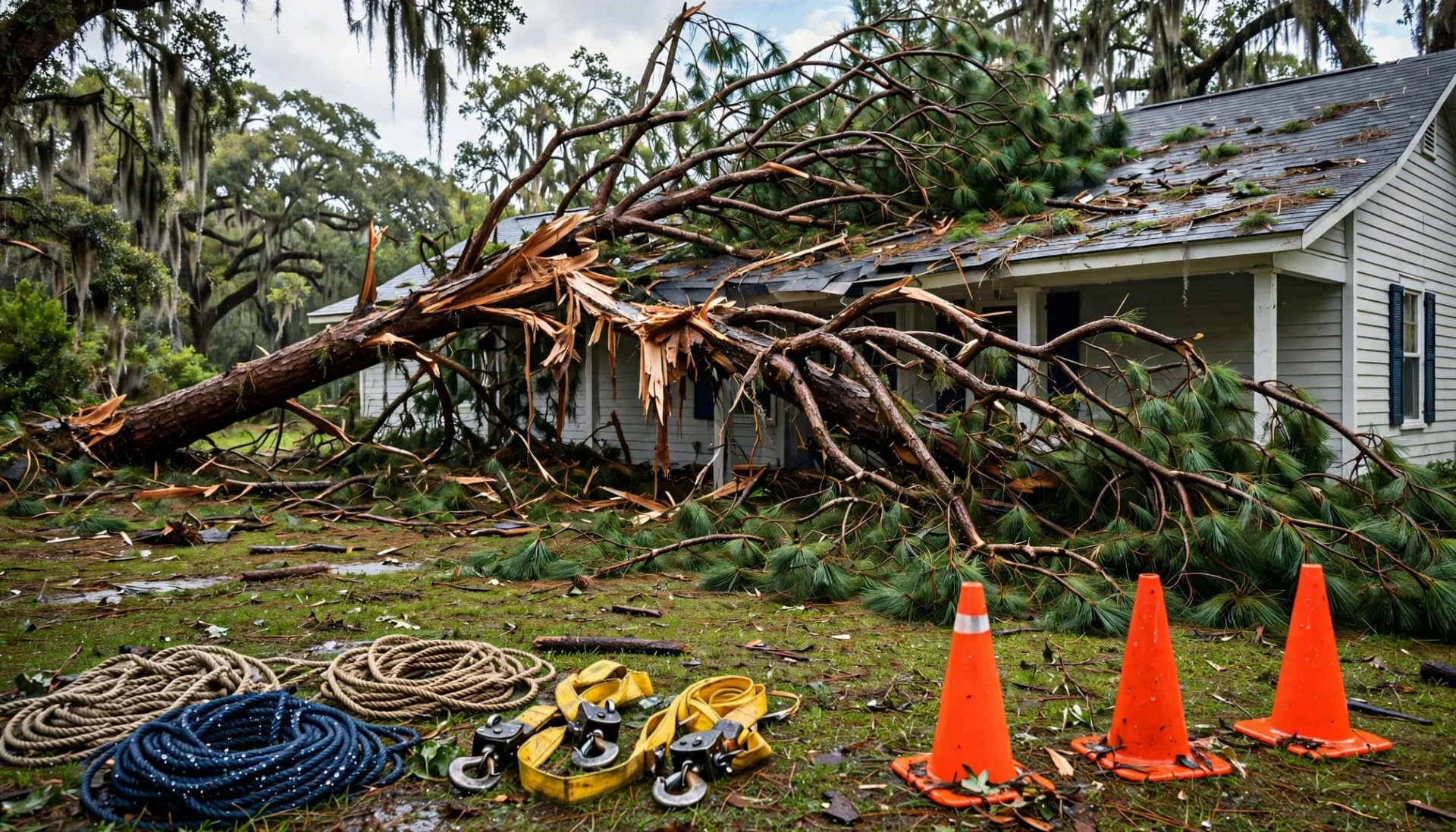
If the stump is in the way after the tree is gone, stump grinding can be planned as a separate next step. We don’t promise what an insurer will pay, but we do provide clear information about the work completed.
Why DIY Tree Removal Can Turn a Covered Loss Into a Bigger Problem
Photos and small, loose yard debris are usually safe for homeowners to handle. Emergency work and preventative tree removal are different situations, though. A licensed and insured company can identify safer alternatives when removal isn’t necessary.
Storm damage changes how a tree carries its weight. A cut in the wrong place can send wood into a roof, vehicle, fence, or person. It can also make the original damage harder to document for your claim.
Call a licensed and insured tree service when a tree is large, leaning, split, near a structure, or tangled with utility lines. If the tree can be saved, tree trimming and pruning may be the safer answer than taking it down.
Local Georgia Conditions That Change Storm Tree Decisions
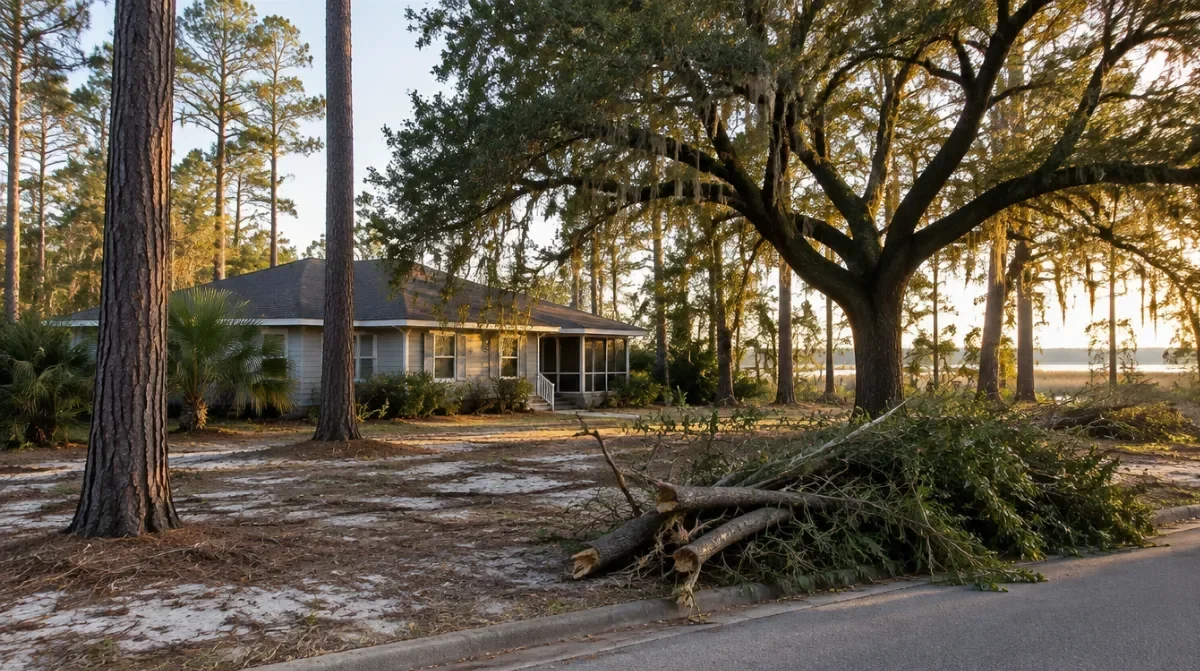
Trees in coastal Georgia don’t all fail the same way. Loblolly and slash pines can snap high in the canopy or uproot when wind and wet ground work together. Mature live oaks and water oaks may hold for years, then drop a heavy limb over a roof or driveway.
Sandy soil can let roots shift after heavy rain. Clay soil can stay saturated and heavy, putting different pressure on root systems. Either condition deserves attention after a long storm.
Hurricane season runs from June through November, and hurricanes are natural disasters that can affect large areas. Summer thunderstorms bring their own sudden severe weather, including strong wind and lightning.
Older lots in Effingham County, Richmond Hill, Pooler, and Savannah often have large trees close to homes, sheds, and fences. Before scheduled work, ask about county permit questions and HOA rules. Even preventative tree removal may be affected by local requirements, especially in newer subdivisions.
When to Call a Tree Service or Request a Free Estimate
Call promptly when a tree is on a roof, blocks a driveway, threatens a structure, touches power lines, hangs after a storm, or shows major cracking and root movement. These situations aren’t good ones to watch for another week.
Less urgent concerns still deserve attention before the next storm season. A declining pine, a dead tree, limbs rubbing against a roof, or a leftover stump can be handled during a planned visit. Preventative tree removal is usually a planning decision, not an automatic benefit.
We serve Guyton, Rincon, Springfield, Bloomingdale, Effingham County, Richmond Hill, Pooler, and Savannah. When you call, have the address, photos, tree location, visible damage, and any claim information your homeowners insurance requires ready.
For preventative tree removal before a dead tree becomes a storm problem, our tree removal team provides a careful site review and cleanup plan.
Frequently Asked Questions
Will insurance pay for tree removal from my backyard?
Usually not if the tree didn’t hit a covered building or block qualifying access. Homeowners insurance may not cover yard clearing for safety, mowing, or future use. Check your policy and ask your agent before making assumptions.
A deductible may apply when coverage is available. Your policy may also set a sublimit for this type of work. Costs can be out of pocket when no covered loss applies.
Should the tree be removed before the insurance adjuster sees it?
If it creates an immediate danger, the unsafe portion may need attention first. Take photos and video before work begins, when safe, then contact your agent promptly. Keep the invoice and all photos from the tree service for your insurance claim.
Will my homeowners insurance pay after a hurricane?
It may, depending on what the fallen tree damaged and what your policy covers. Wind from a hurricane may qualify differently than a tree weakened by decay or long-term neglect. The adjuster and your insurance policy determine the outcome.
Can a tree service talk directly with my insurance company?
We can provide job photos, an itemized invoice, and a clear description of the work. Your insurance company makes the coverage decision. You remain the policyholder responsible for managing the claim.
What if the tree is still standing but leans toward my house?
Don’t wait for it to fall if the lean is new or the roots are lifting. A professional assessment may show whether home insurance concerns warrant removal, pruning, cabling, or bracing before the next hard wind. Safety recommendations don’t guarantee coverage.
A Clear Next Step After Storm Damage
Does homeowners insurance cover tree removal? Usually, coverage depends on whether the tree damaged a covered structure, what caused the storm damage, and what your insurance policy says.
Document the tree damage, contact your insurance agent or insurance company, and use a licensed tree service for dangerous work. Don’t take risks with a chainsaw around a damaged tree.
We’re a family-owned, licensed and insured tree service based in Guyton. With 20+ years of hands-on tree experience, we help homeowners across Effingham County and nearby Savannah-area communities make safe, practical decisions after a storm.
When you’re ready to discuss the work, request a free estimate.