Georgia is usually the country’s top pecan producer, trading the spot with New Mexico most years, and around here plenty of the trees are not in an orchard at all. They are in somebody’s back yard, planted by a grandparent, sixty feet tall, and dropping nuts on the carport every October.
A big yard pecan is a good thing to have. It is also the tree we see shed a limb out of a clear sky more than almost anything except a water oak, and the reason is worth understanding before you park under yours again.
We are LoyalTree LLC, family-owned out of Guyton. Mike Williams has 20+ years of hands-on tree experience. Here is what a pecan needs, when to prune it, and what that limb drop is telling you.
Key Takeaways
- Harvest on the coast generally runs from September or October into December depending on variety.
- Pecans alternate bear: a heavy crop one year, a light one the next. That is normal.
- Late-summer limb drop on a calm day is a real pecan habit and a reason to keep deadwood cleared.
- Prune in late winter while the tree is dormant, not in fall and not in spring when sap is running.
- Scab, aphids and squirrels are the usual crop problems, and none of them mean the tree is dying.
The Harvest Window
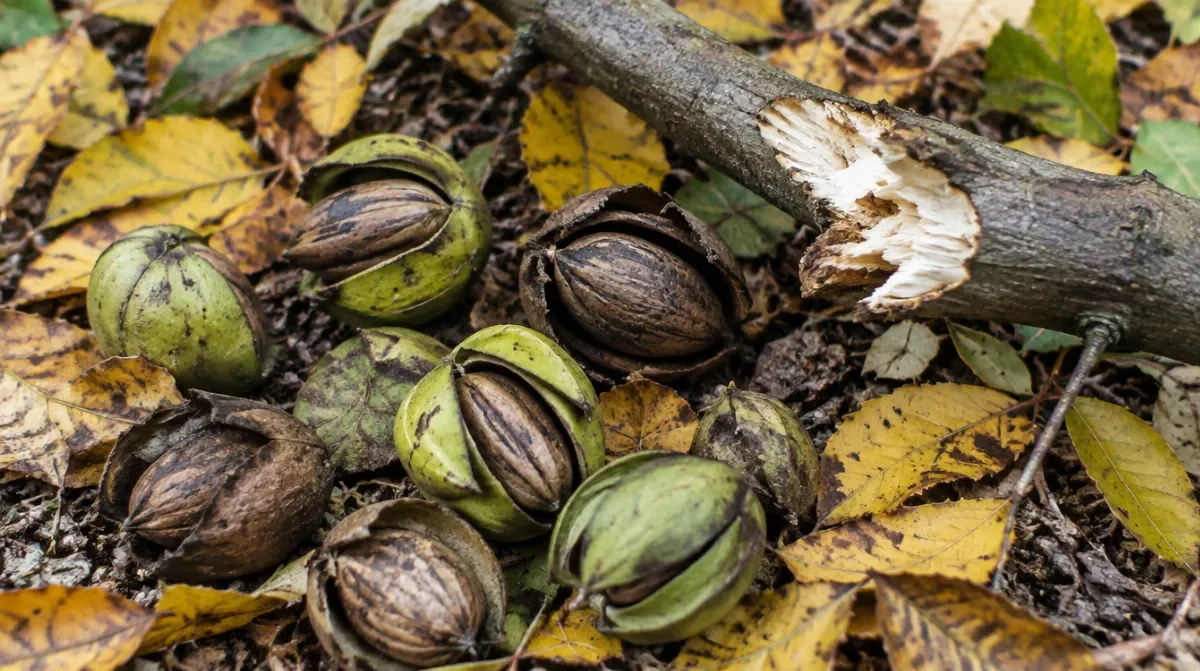
You will know it is starting when the green husks begin to split open and show the shell inside. That is called shuck split, and it means the nut is done filling. From there the husks dry, turn brown, and the nuts start falling on their own.
On the Georgia coast, early varieties can start dropping in September and later ones run into December. A cold snap tends to bring a wave of them down at once.
A few practical notes for a yard tree. Pick up what falls every few days rather than letting it sit, because nuts left on damp ground go moldy fast and moldy pecans are not worth eating. Let what you gather dry for a couple of weeks in a single layer somewhere with air moving before you store them, and then refrigerate or freeze. And accept that the squirrels are getting a cut. On a single yard tree they get a big cut.
Do not knock a tree with a pole from a ladder, and never use anything metal near a service drop. Shaking limbs you can reach from the ground and picking up what falls is how a yard pecan gets harvested.
Why Some Years Are Enormous and Some Are Nothing
Pecans are famous for alternate bearing. A tree loads up with a huge crop one year, spends most of its stored energy doing it, and then produces very little the following year while it recovers. Orchards manage this with fertility programs and by thinning fruit. A yard tree does whatever it wants.
A light year is not a sick tree. Two or three bad years in a row, combined with small nuts, thin foliage and dieback in the top, is a different signal and worth looking into.
Pecans also need a second, compatible variety nearby to pollinate well. In town that usually takes care of itself because there are other pecans around. On an isolated rural lot with a single tree, a light crop may just be pollination.
The Limb Drop Nobody Warns You About
Here is the thing that actually brings us out to pecans.
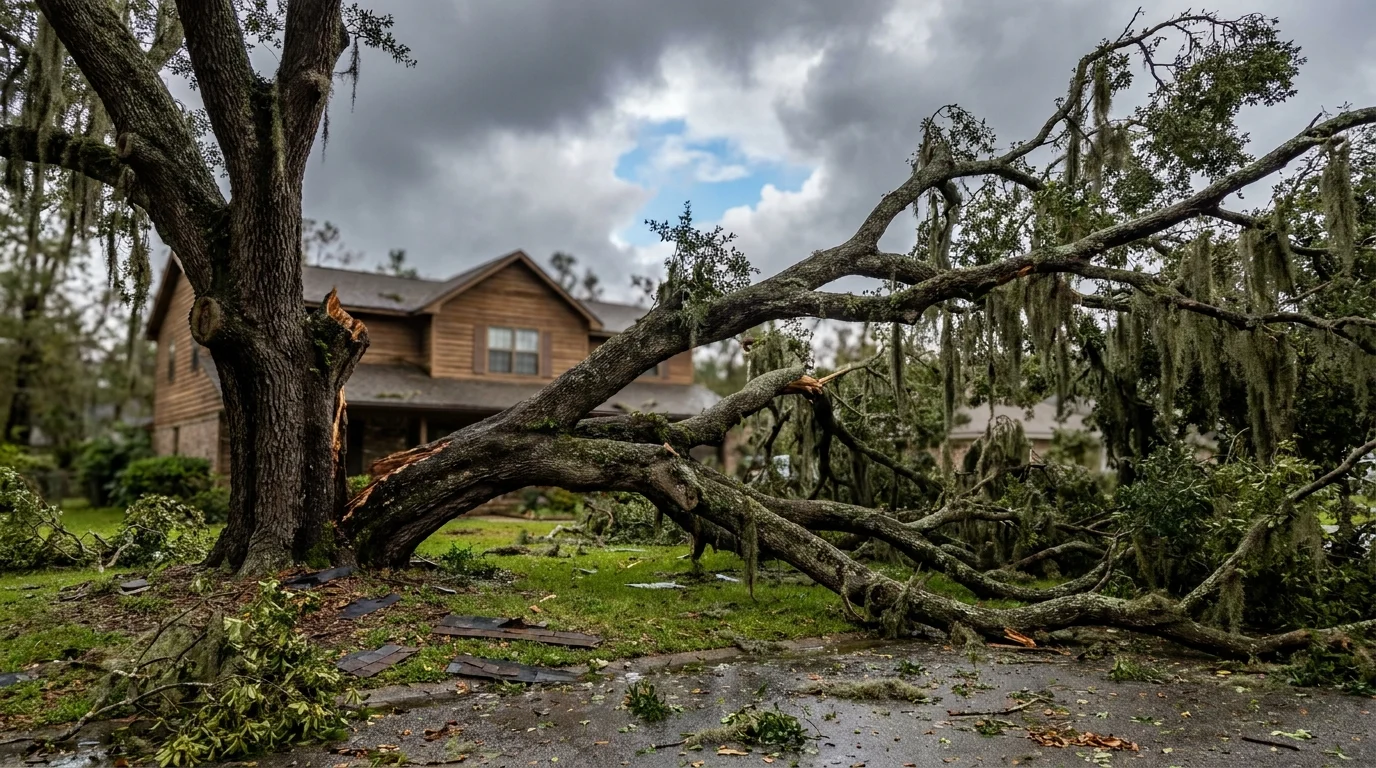
Pecans grow long horizontal limbs that reach a long way out, and a nut crop puts serious load on the ends of them. Add a hot, still afternoon in late summer and a pecan will drop a large limb with no wind at all. It is a known habit of the species and a handful of other big-limbed trees. Nobody has fully pinned down why it happens.
You cannot stop it entirely. You can meaningfully reduce it:
- Keep deadwood out of the canopy. Dead limbs come down first and they are the ones over the driveway.
- Shorten over-extended limbs. Reducing the end weight on a long horizontal limb takes leverage off the union. This is proper reduction pruning back to a lateral, not cutting it off in the middle.
- Do not park under it and do not put the play set under it. Simple, free, effective.
- Look at the unions. Pecans do produce weak codominant forks, and on a big old tree over a house that is worth a real inspection. Cabling and bracing is sometimes the right answer on a heritage tree.
Pecans are also common casualties in our storms because of how far they reach. Our article on getting trees ready for hurricane season applies to them squarely.
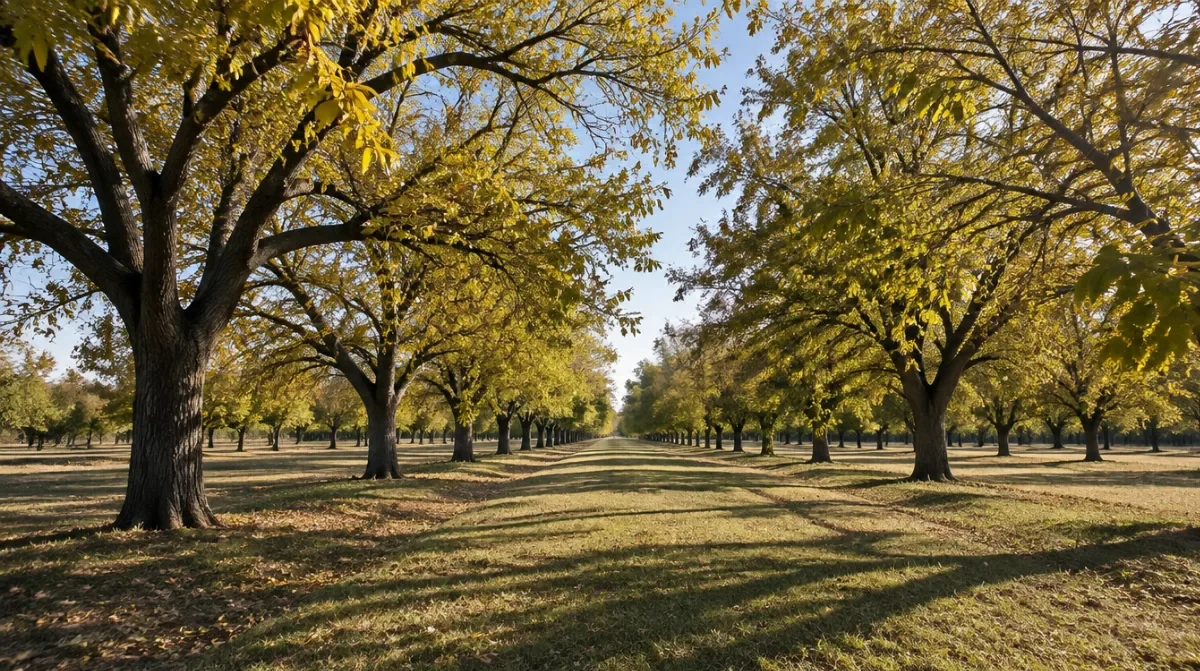
When to Prune a Pecan
Late winter, while the tree is fully dormant and before the buds swell. Around here that is generally somewhere in January or February.
A cut made while the tree is in leaf will weep more, which looks alarming and does no real damage. Why late winter: UGA says pecans can actually be pruned at any time of year without harming the tree, but with the leaves off you can see what needs to come out and get to it, and cuts made then close as growth starts.
The exceptions are broken, hanging and dead limbs, which come out whenever you find them. Safety work is not seasonal. Our guide on the best time to trim trees in coastal Georgia covers the other species.
On a young pecan, the useful work is training: pick a central leader, keep branches spaced out along it, remove narrow forks early. On a mature sixty-footer, the useful work is deadwood, clearance and end-weight reduction. What is never useful is topping it to make it shorter.
Common Pecan Problems in Coastal Georgia
Scab. The big one in our humidity. Black lesions on the husks and leaves, nuts that stay small or drop early. Orchards spray on a schedule; on a sixty-foot yard tree, effective spraying is not realistic. Raking up and disposing of fallen husks and leaves reduces the carryover, and some varieties resist it far better than others.
Aphids and the sticky mess. If everything under the tree is coated in something sticky and then turns black, that is aphid honeydew with sooty mold growing on it. Annoying, rarely fatal to the tree, and it washes off cars and furniture.
Webworms. Those grey bags of webbing on branch ends in late summer look terrible and do very little to a mature tree. Pruning out the reachable ones is fine. Do not set them on fire, which people genuinely try.
Squirrels. No practical fix on a yard tree. In our experience metal baffles only do anything on an isolated trunk with no other route in, which is rarely the case.
For anything beyond this, your UGA county extension office is the right call. They deal with pecans constantly in this state.
Frequently Asked Questions
When are pecans ready to pick in Georgia?
When the green husks split open and the nuts begin falling on their own, generally September or October through December on the coast depending on variety. Nuts that have to be pried out of a green husk are not ready.
Why did my pecan tree drop a big limb with no wind?
Pecans are prone to summer limb drop. Long horizontal limbs, brittle wood and the weight of a nut crop combine, often on hot still afternoons. Clearing deadwood and reducing end weight on over-extended limbs lowers the odds.
When should a pecan tree be pruned?
Late winter while fully dormant. Broken, hanging or dead limbs should be removed whenever you find them regardless of season.
My pecan made no nuts this year. Is it dying?
Probably not. Alternate bearing, a spring freeze at bloom, scab pressure or limited pollination will all produce a light year. Pair a light crop with thinning foliage and dieback in the top before you worry.
How close to the house can a pecan be planted?
Give a pecan real distance. They get large, they reach wide, and they shed limbs and nuts. Well away from the roof, the driveway and the septic field. Our guide on trees too close to the house covers how to think about spacing.
Worth Keeping, Worth Watching
A mature pecan is one of the better trees you can have in a Georgia yard. Shade, character, and pie in November. We are not in the business of talking people out of them.
Just know what it is: a big, wide-reaching tree that occasionally lets go of a limb for no reason you can see. Keep the deadwood out, keep the long limbs from getting too heavy on the ends, and do not park the truck under it.
If yours is hanging over the house and you would like somebody to look at it before winter, request a free estimate or call (912) 342-0440.