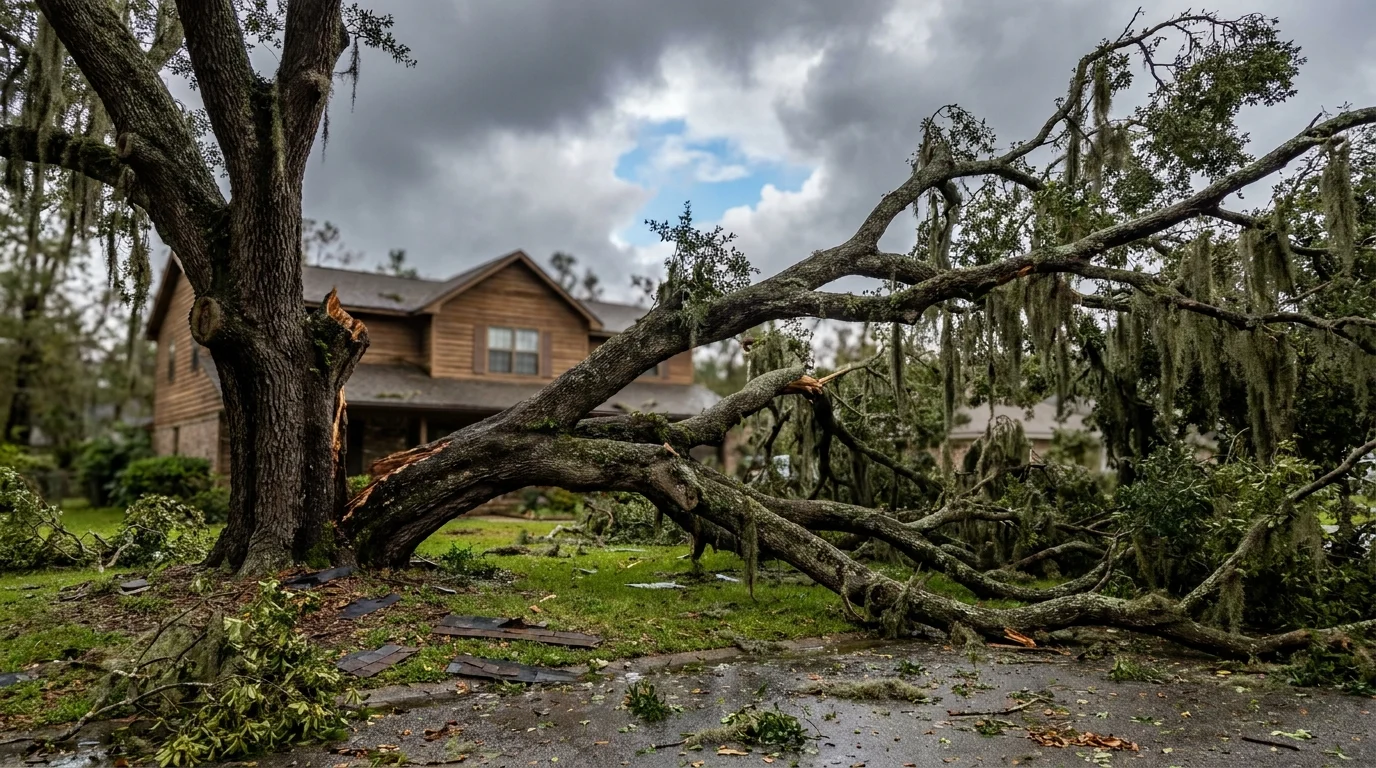
When a pine, live oak, or water oak is growing close to your roof, the first question is usually simple: is it too close? The honest answer is that a tree close to house isn’t automatically dangerous, but distance alone doesn’t tell the whole story.
We look at mature height, tree species, lean, trunk condition, roots, crown weight, soil, and what sits below the tree. In Guyton, Rincon, Springfield, Bloomingdale, Richmond Hill, Pooler, and Savannah, those details can change fast after heavy rain or summer storms, turning a manageable tree into a storm hazard.
Here’s what separates a manageable tree from one that needs prompt attention.
Key Takeaways
- A tree’s height, tree roots, lean, condition, and nearby targets matter more than one fixed distance.
- Dead limbs, fresh cracks, lifting roots, and a changed lean deserve a closer look.
- Georgia storms can turn dead or unstable trees into a source of roof damage or other structural damage.
- Sound trees can often stay with proper tree pruning, but decay or instability may make tree removal the safer choice.
- Large limbs, roof work, climbing, and power lines aren’t safe DIY jobs.
Tree Close to House: How Much Space Is Safe?
There isn’t one distance that works for every yard. A young ornamental tree differs from a 70-foot pine near a bedroom. Compare mature height and mature size, not distance alone. A japanese maple may stay manageable near a home, while a tall pine can reach the roof with one failing limb.
We look at the tree’s mature height, crown spread, trunk strength, root condition, and lean. We also consider the roofline, driveway, septic area, fence, pool, power lines, and the rooms people use most. A tree can stand straight and still have a branch structure that threatens the house.
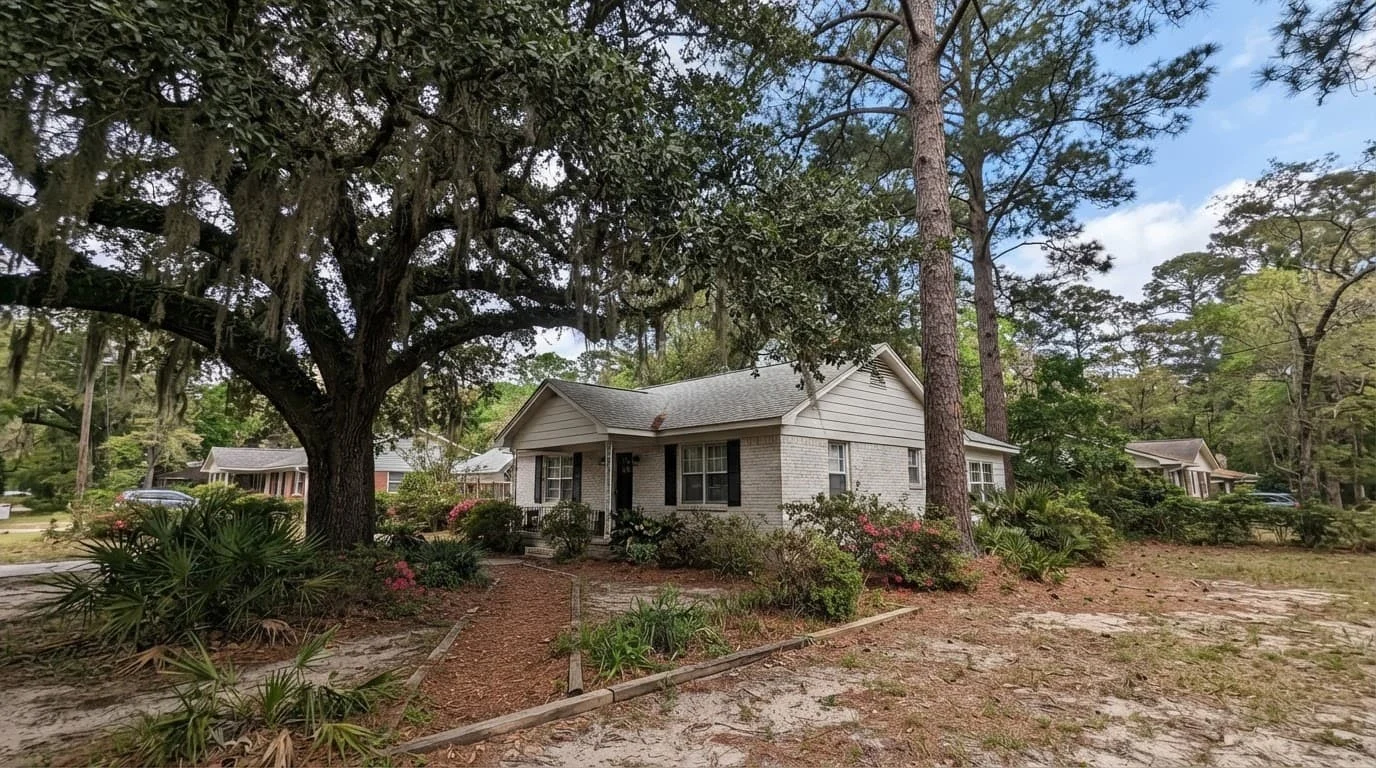
Safe planting distance depends on mature crown spread, underground growth, nearby utilities, and the structure’s location. Check those factors before planting, even with smaller ornamental trees. A root barrier can help guide growth in suitable situations, but it isn’t a guaranteed foundation solution.
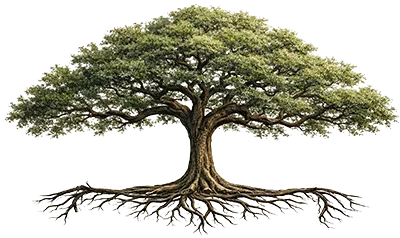
Tree roots deserve a practical look too. They can lift walkways, affect drainage, and create drainage issues around a home. Tree roots don’t automatically cause foundation damage. Concrete foundations are not automatically damaged by nearby roots either. Risk depends on the species, soil, soil moisture, home age, root location, and whether the tree has shallow root systems.
From the ground, you can check for a few things:
- Look for overhanging branches rubbing the roof, gutters, siding, or chimney.
- Check tree roots for exposed sections, raised soil, or fresh cracks in the ground near the trunk.
- Notice whether the trunk has shifted after wind or heavy rain.
- Check for dead wood over the house, driveway, or a door you need to use.
Don’t climb a ladder, pull on a hanging limb, or walk under a tree that looks unstable.
The Warning Signs That Make a Nearby Tree Dangerous
Light branch contact can be a nuisance. It may scrape shingles or keep leaves in the gutter. That differs from a large dead limb over the roof, where failure could cause roof damage or other structural damage.
Pay attention to deep trunk cracks, cavities, loose bark, mushrooms near the base, broken limbs hanging in the canopy, and roots lifting on one side. Fresh soil cracks after rain are another concern. A lean that appeared or worsened after a storm needs a prompt look.
Take pictures from a safe distance if something changes. When the signs aren’t clear, an on-site tree risk assessment can show whether the tree needs pruning, monitoring, support, or removal.
A nearby tree becomes more concerning when the tree is changing, not simply because it has been close to the house for years.
Why Georgia Trees Need a Local Safety Check
Effingham County and the Savannah area have plenty of beautiful old trees. They also have weather and soil conditions that can hide tree problems until a storm comes through.
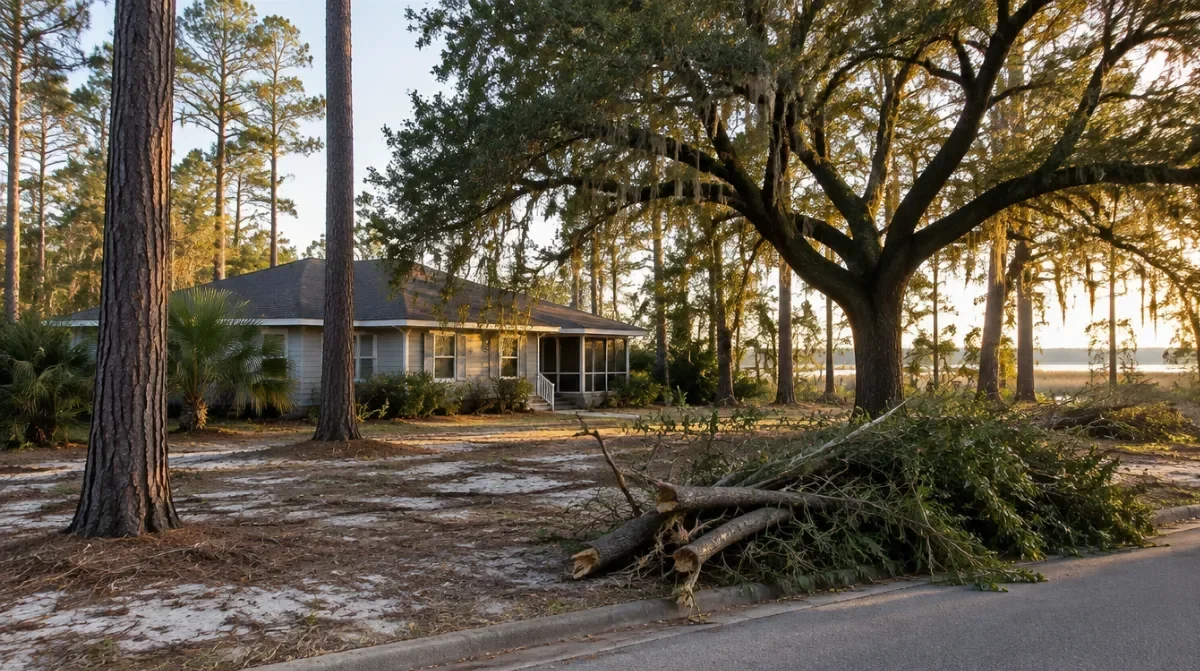
Loblolly and slash pines grow tall and fast. The tree species affects crown weight, rooting behavior, and wind response. In high wind, pines can snap along the trunk or uproot when saturated soil loosens tree roots. Mature live oaks and water oaks often have wide, heavy crowns. Their limbs may stretch over roofs, drives, and older homes on wooded lots.
Sandy soil drains quickly, but drainage issues can still develop after extended rain. Changes in soil moisture may loosen the ground around roots. Clay soil holds water longer and can stay soft around the root plate. Shallow root systems, or roots weakened by past disturbance, can increase movement risk. A tree may look solid on a calm, dry day, then shift when wet ground and wind hit together.
Hurricane season runs from June 1 through November 30. The National Weather Service hurricane safety guidance is a good reminder that preparation shouldn’t wait until a named storm is close. Summer thunderstorms can cause the same immediate trouble, especially with saturated ground and sudden wind.
Newer subdivisions may also have HOA rules about tree work. County permit questions can apply in some situations. Before a healthy tree comes down, check the rules that apply to your property.
How Storms Change the Risk Around a House
Before storm season, look up into the canopy, check for overhanging branches, clear loose yard items, and keep a route open for vehicles and emergency access. Saturated ground, high wind, and unresolved defects can combine into a serious storm hazard. Don’t wait until a cracked limb is hanging over the roof.
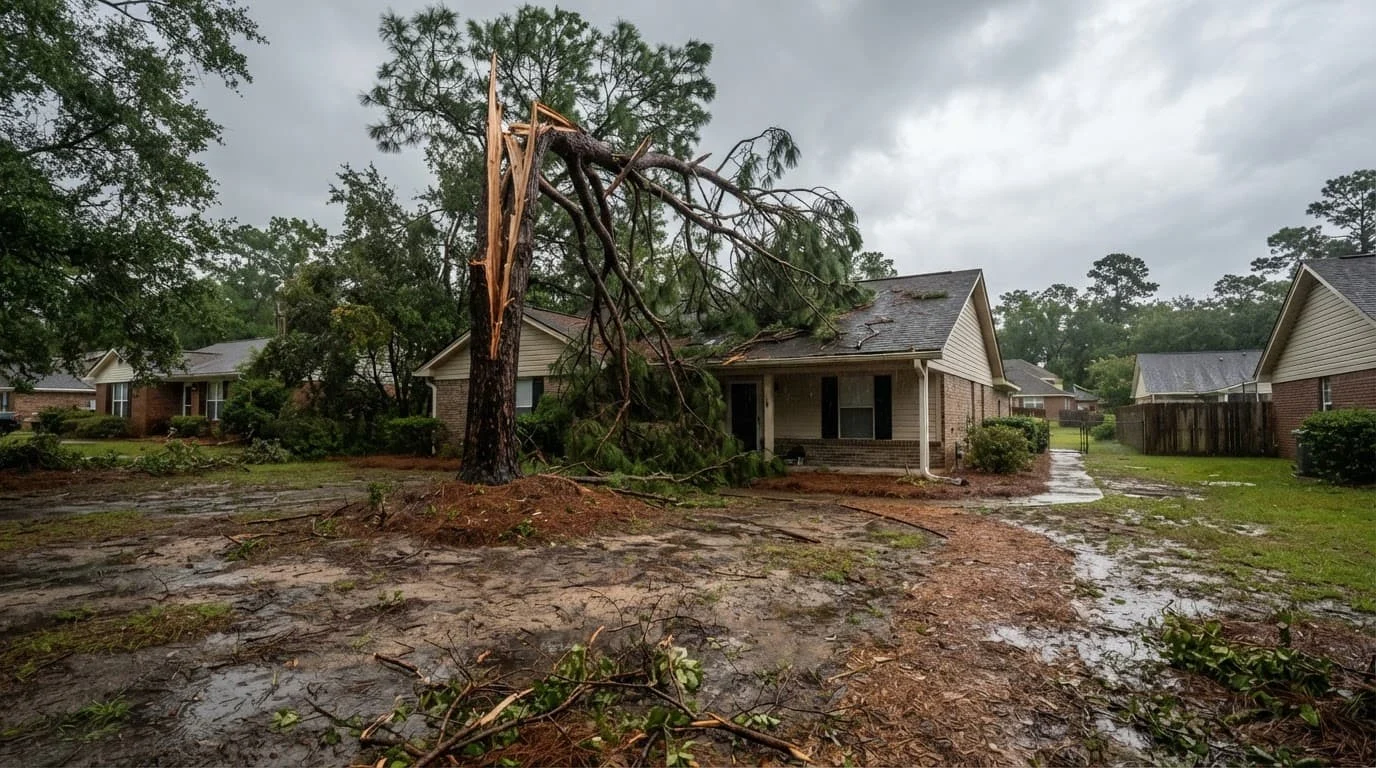
A fallen, split, or hanging tree is different from routine trimming. If a tree is down on a roof, driveway, or structure, or a limb is caught overhead, storm damage and emergency tree service may be needed quickly.
Stay away from any downed tree near electrical lines. The National Weather Service’s storm-prep advice also stresses planning before dangerous weather arrives. Contact the utility company or emergency services when power lines are involved.
Can a Tree Near the House Be Saved, or Should It Come Down?
A healthy tree close to a house can often stay. A certified arborist can use a tree risk assessment to determine whether the tree can be retained safely.
Good tree trimming and pruning starts with a clear goal for tree pruning. It can remove deadwood, lift limbs away from the roof, reduce rubbing, and improve clearance around a chimney or service line. It isn’t about stripping a tree bare or cutting it back until it looks small. Topping, which means cutting off large sections of the crown, often creates weak new shoots and can make future problems worse.
Cabling and bracing may help support a weak branch union or two leaders growing together. That hardware supports part of the tree. It is not a promise that a failing tree is safe.
Removal becomes the better call when there is major decay, severe failure involving the tree roots, a split trunk, extensive storm damage, or a lean that is getting worse. It also makes sense when the tree cannot be managed safely because of its condition and what it could hit. In those cases, planned tree removal is safer than waiting for wind to make the choice.
What Happens to the Stump After Removal?
The stump is usually a separate decision after the tree is down. If it isn’t in the way, some homeowners leave it for a while.
When you want the space back, stump grinding takes the remaining stump below ground level so the area can be mowed, replanted, or used for another project. Roots may remain underground, and the spot may need soil and landscape repair afterward.
DIY or Professional Help: What Happens on the Job?
Light cleanup on the ground is one thing. Cutting large limbs, climbing, using a chainsaw near a house, or working around power lines isn’t a safe DIY job.
A professional visit should start with the whole picture. A certified arborist or qualified tree professional evaluates the tree, the targets below it, access for equipment, slope, soil, underground utilities, and the safest direction for each piece. A tight backyard in Rincon needs a different plan than an open lot in Springfield.
On removal day, the crew reviews the plan before work starts. Structures and nearby landscaping are protected where possible. During tree removal, limbs are cut in controlled sections and lowered when space is tight. Then the crew handles debris cleanup and walks the property with you.
Mike Williams is the lead arborist and the person you will see on site. He brings 20+ years of hands-on tree experience. Mary Gledhill handles scheduling, estimates, and communication, so you aren’t left wondering what happens next.
When Trimming Is Better Than Removing
A sound tree may benefit from tree pruning to remove dead branches, lift low limbs from the roof, or address overhanging branches. Thinning a crowded section of canopy with a clear purpose can reduce branch contact before storm season.
Pruning cannot fix serious decay inside the trunk or roots that are failing. If the tree’s base is unstable, cutting a few limbs may only hide the bigger issue. We would rather give you a straight answer than make a tree look better for a few months.
When to Call Us for a Tree Near Your Home
Call for a closer look when a tree leans toward the house, roots are lifting, soil has cracked, or the trunk has split. Large dead limbs over a roof or a fallen tree can cause roof damage, while fresh storm damage and limbs touching power lines also need attention.
If a tree has fallen or is hanging near electrical lines, don’t go near it. The National Weather Service warns against approaching downed power lines, even when the line looks inactive. Call the utility company or emergency services when needed.
LoyalTree LLC is family-owned, licensed and insured, and based in Guyton. We work across Effingham County, Richmond Hill, Pooler, Savannah, and nearby communities. An on-site review can determine whether the right service is pruning, support, monitoring, or tree removal.
Frequently Asked Questions
Can tree roots damage a house foundation in Georgia?
Nearby roots can contribute to foundation damage in vulnerable conditions, especially where soil shifts or drainage is poor. Risk to concrete foundations depends on the soil, moisture, foundation condition, and root location.
Is a tree touching the roof automatically dangerous?
Not always. Small branches brushing shingles may need pruning before they cause wear or block gutters. Heavy limbs rubbing the roof, dead branches overhead, or branches that could break in a storm deserve faster attention.
Should a leaning pine be removed before hurricane season?
A leaning pine should be checked before storm season, especially if the lean is new or the ground is lifting around the roots. Some pines have shallow root systems and may naturally lean. A recent change in angle or root movement is different.
Can homeowners remove a tree without checking HOA or county rules?
Sometimes, but don’t assume it. Newer neighborhoods may have HOA rules, and local permit requirements can apply depending on the property and tree. Check first, especially before removing a healthy mature tree.
What should happen if a tree falls on a house?
Keep people away from the damaged area and watch for power lines. Call emergency services if there is immediate danger, then contact your insurance carrier and review the relevant insurance policy. Don’t try to cut or move the tree yourself.
A Nearby Tree Needs More Than a Tape Measure
Distance matters, but it doesn’t decide whether a tree is safe. A well-kept live oak near a home may be manageable for years. A pine farther away with lifting roots and a new lean may be the bigger concern.
If you plan to plant a tree, choose a safe planting distance carefully. Consider its mature size, crown spread, roots, and nearby structures. In coastal Georgia, shade trees such as a japanese maple depend on site conditions and available shade.
Watch for changes in the roots, trunk, canopy, and ground after storms. If you are in Guyton, Rincon, Springfield, Bloomingdale, Effingham County, Richmond Hill, Pooler, or Savannah, you can request a free estimate for an on-site review.