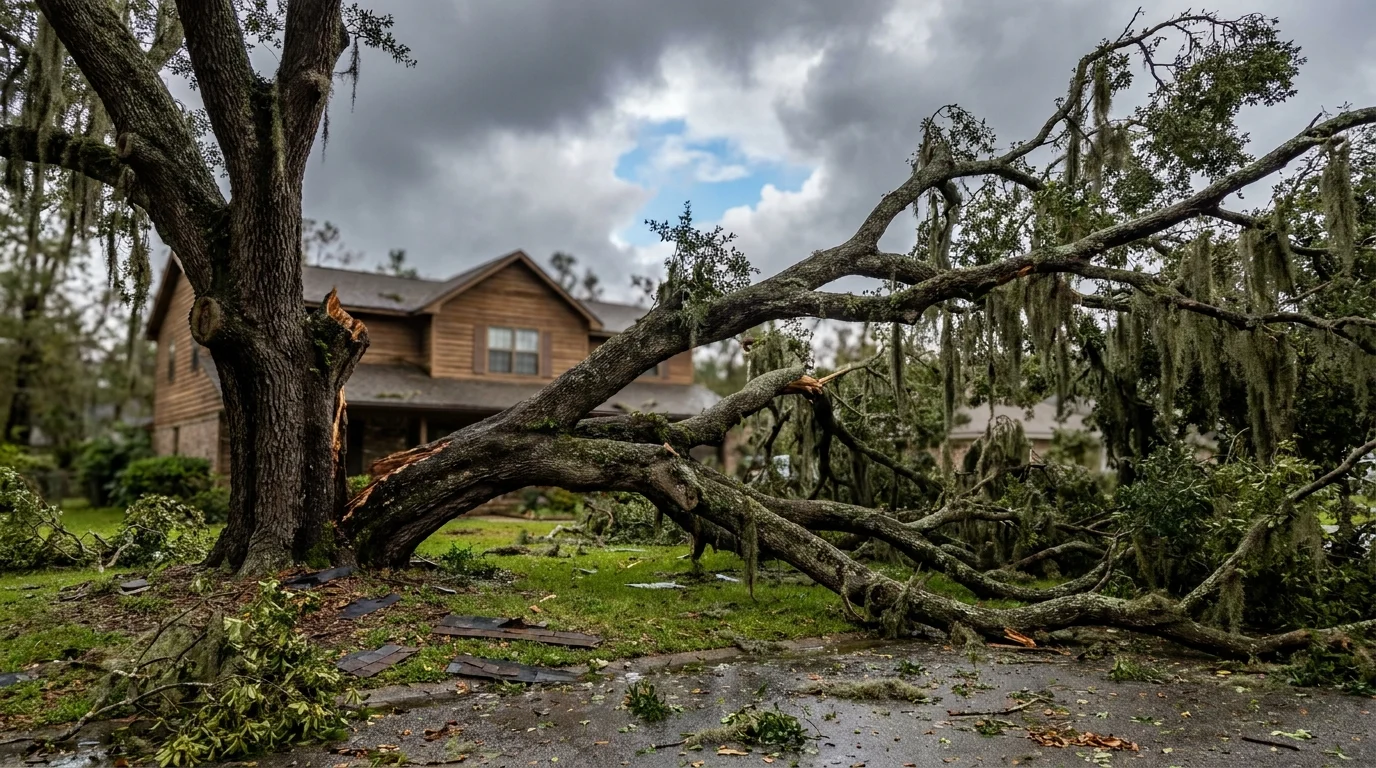
After a wet stretch in the fall, things start showing up on trees that were not there in August. A shelf of tan fungus poking out of the trunk. A ring of little mushrooms in the grass right around the base. A sheet of bark on the ground that used to be on the tree.
Some of that is harmless. Some of it is the most serious warning a tree can give you, and it is the one homeowners most often walk past. The difference is mostly about where it is growing.
We are LoyalTree LLC, a family-owned, licensed and insured crew based in Guyton. Mike Williams has 20+ years of hands-on tree experience. Here is how to read what you are seeing.
Key Takeaways
- Fungus growing out of the trunk or root flare means wood decay is already established inside.
- Mushrooms in the mulch or lawn nearby are usually harmless decomposers, not a tree problem.
- Bark falling off in sheets over living wood is serious. Bark flaking off naturally on certain species is not.
- Root and trunk decay cannot be treated or reversed, so the question becomes how much sound wood is left.
- Any of this on a large tree near the house deserves a proper look before storm weather.
Mushrooms in the Yard vs. Fungus on the Tree
This is the distinction that matters, so start here.
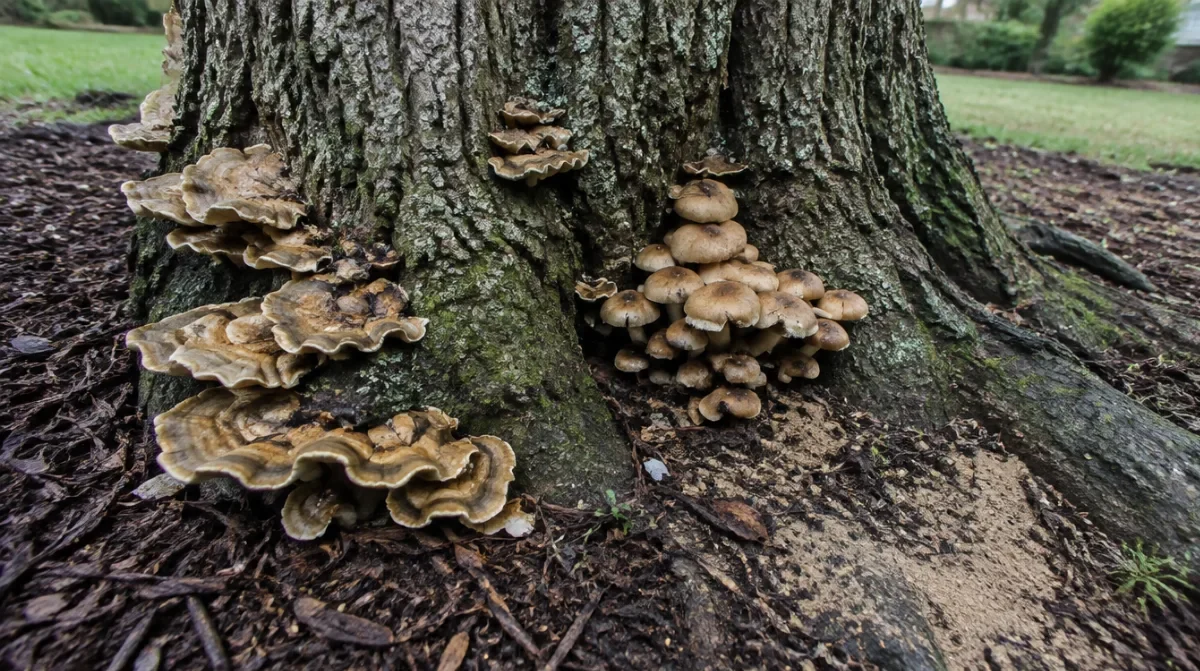
Mushrooms scattered out in the mulch or the lawn are usually decomposers living on dead organic material, or fungi in a healthy partnership with the tree roots. Old mulch, buried construction scrap, a root from a tree that came out years ago. They are doing useful work and they are not attacking your tree. The one to look twice at is a tight cluster right at the base, because some root-rot fungi fruit in a ring around the flare and come up through mulch or grass. You can knock them over if you have pets or small kids, and otherwise ignore them.
Fungus growing directly out of the trunk, out of the root flare, or out of a major surface root is a different thing entirely. That fruiting body is the visible part of a fungus that has already colonized the inside of the tree. The mushroom is the tip; the rot is the iceberg.
A useful way to think about it: mushrooms have to feed on something. If one is growing out of the trunk, it is feeding on wood inside that trunk.
What We Look At
Position on the tree
Low is worse than high. Fungus at the root flare or in the first few feet of trunk means decay where the tree carries the most load and where failure takes the whole tree over. Fungus on a dead limb twenty feet up means that limb needs to come out, which is routine.
Hard shelves versus soft clumps
Hard, woody, layered brackets that persist year after year usually mean a long-established decay column. Soft, fleshy clumps that appear after rain and rot away in a week are often seasonal, but if they are coming out of the trunk they still mean the same thing.
How much of the circumference
One bracket on one side of a big trunk is a concern. Fruiting bodies coming out all the way around the base is a much bigger one, because it suggests the decay is not confined to one sector.
What the rest of the tree is doing
Fungus at the base plus a thinning canopy, plus limbs dropping in calm weather, plus early leaf color is a tree in real trouble. Fungus at the base on an otherwise vigorous tree still matters, but there may be more time. Our guide on how to tell if a tree is dead or just struggling covers the canopy side of it.
Whether the soil has moved
Root decay plus lifted or cracked soil on one side is the combination that precedes a whole-tree failure in wet, windy weather. In our sandy coastal soil that can happen quietly. Our article on what tree roots really do gets into how root systems behave here.
Bark Falling Off: When It Matters
Bark on the ground sends people into a panic, and a lot of the time it should not.
Normal shedding
Several trees we have plenty of here shed bark as a matter of course. Sycamores peel in big plates and look half-dead year round. River birch curls and flakes constantly. Crepe myrtles shed thin strips to reveal smooth cinnamon wood underneath, which is one of the nicest things about them. Young trees also shed the outer bark as the trunk expands. If there is healthy tight bark underneath, it is fine.
The bad kind
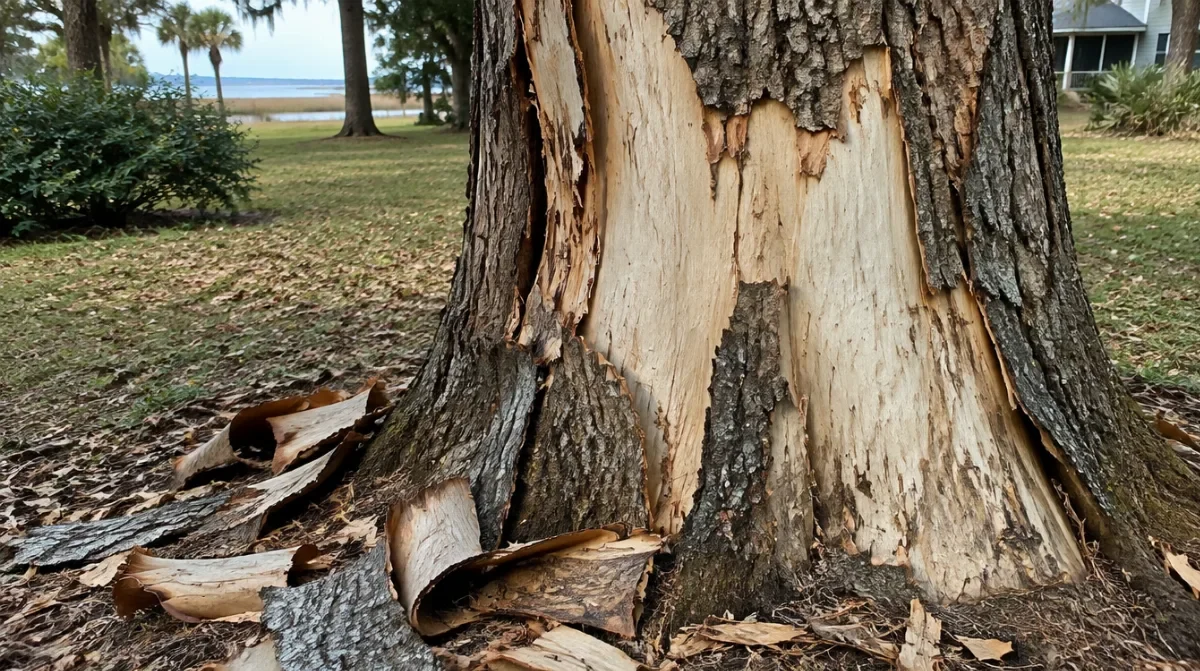
Worry when bark comes off in sheets and what is underneath is bare, dry, discolored wood rather than fresh bark. That means the living layer just under the bark has died in that area. Common causes we see:
- Lightning. Often a narrow strip running top to bottom on one side.
- Sun scald. Winter damage on the southwest side of a young, thin-barked tree, from the swing between a warm afternoon and a freezing night.
- Mower and trimmer damage. A ring of wounds at ankle height. This is entirely preventable and it is one of the most common ways we see young trees lost.
- Borers. Small round or D-shaped exit holes, sometimes with fine sawdust. Usually they move into a tree that is already stressed.
- Underlying decay. Bark lets go because the wood beneath it is no longer alive to hold it.
The measurement that matters is how far around the trunk the dead area goes. A tree moves water and food through that thin living layer. Lose a strip and it can compartmentalize the damage and carry on. Lose a full ring all the way around and the tree is finished, even if it leafs out one more spring.
Can Decay Be Treated?
No, and we would be careful with anybody who says otherwise.
There is no fungicide that clears an established decay column out of a trunk. Trees do not heal wounds the way we do. They wall damage off and grow around it, which is a containment strategy, not a repair. Once wood is decayed it stays decayed.
A few things that used to be common practice and are now considered harmful: do not fill a cavity with concrete or foam, do not carve out the rotten wood to clean it up, and do not paint wound dressing on cuts. All three tend to trap moisture and interfere with the tree’s own defenses.
What can actually help a struggling tree is reducing everything else it is fighting: correct mulching out to the drip line, keeping mulch and soil off the trunk, protecting the root zone from traffic and compaction, watering through drought, and removing deadwood. That is the tree preservation side of the work, and on a tree with a good chunk of sound wood left it can be worth doing.
So Does the Tree Have to Come Down?
Not automatically. Trees carry most of their structural load in the outer wood, which is why a partly hollow tree can still be structurally sound. The real questions are how much sound shell is left, where the decay sits, how exposed the tree is to wind, and what is underneath it.
A decayed tree at the back of a wooded lot can stay and be good for wildlife. The same tree over a bedroom, a driveway or a neighbor’s fence is a different answer. That is what a tree risk assessment is for, and if it does need to go, hazardous tree removal on a decayed trunk takes rigging and planning rather than just a saw.
Frequently Asked Questions
Are mushrooms growing at the base of my tree always bad?
If they are growing directly out of the trunk, the root flare or a major root, they indicate decay inside the tree and should be looked at. If they are in the mulch or lawn a few feet away, they are usually harmless decomposers.
Should I remove the mushrooms?
Knocking them off does nothing to the fungus inside the wood, but there is no harm in it, and it is reasonable if children or pets are around. Just do not treat it as having solved anything.
Why is bark falling off only one side of my tree?
One-sided bark loss usually points to a localized injury: lightning, sun scald on a newly exposed side, equipment damage, or decay under that section. What matters is how much of the circumference is affected.
Can a tree recover from losing bark?
A tree can grow new tissue in from the edges of a wound and close it over time, if the damaged area is limited. A complete ring of dead tissue around the trunk is not survivable.
Is fungus contagious to my other trees?
Wood decay fungi spread by spores, which are in the air everywhere. They generally need a wound or already-weakened tissue to establish. Keeping your other trees free of mower wounds, bad pruning cuts and piled-up mulch matters more than the presence of a fruiting body next door.
Look at the Bottom Three Feet
People do all their looking up at the canopy. The bottom three feet of trunk and the ground right around it tell you more about whether a tree is going to stay standing.
Fall and early winter are the easiest time to see it, before the leaf litter piles up and while the weather is comfortable enough to actually walk out there and look.
If you find something growing out of a trunk you would rather not think about, request a free estimate or call (912) 342-0440 and we will come read it for you.