If you’ve been asking when to trim crepe myrtles, you’re not alone. We hear it every year in Guyton, Rincon, Springfield, Bloomingdale, Richmond Hill, Pooler, and Savannah, usually when a tree is getting tall, shaggy, or too close to the house. A beautiful crape myrtle that is left alone to grow into a beautiful tree will give you the full range of bloom colors, from white and pink to watermelon red and purple, and it looks right whether it anchors a front bed, screens a fence line, or fills the corner of smaller garden spaces. Even the dwarf varieties sold for container gardens hold their shape better with a light touch than a hard cut.
A hard cutback isn’t the answer for most trees. When you prune crepe myrtles, selective cuts can improve shape, clearance, and plant health. Topping is severe pruning, often called “crepe murder,” and it leaves weak new growth that creates more work later. Timing depends on the tree’s condition and what needs fixing.
Key Takeaways
- Late winter is usually the best time for planned pruning in Georgia.
- When you prune crepe myrtles, remove dead, broken, rubbing, and poorly placed branches first.
- Topping, often called “crepe murder,” creates weak shoots and ruins natural branch structure.
- A dwarf crape myrtle may need only selective annual pruning, not a hard cutback.
- Storm damage and immediate hazards shouldn’t wait, while large limbs, decay, power lines, and leaning trees call for licensed, insured help.
When to Trim Crepe Myrtles in Georgia
For most healthy trees, late winter is the best window. The crape myrtle is dormant, its branch structure is easier to see, and spring growth hasn’t started yet. In Georgia, that often means around mid-february, but weather matters more than a rigid calendar date. The University of Georgia’s late-winter pruning guidance lines up with what we see on local properties.
Georgia winters don’t follow a perfect calendar. A warm spell can wake a tree up early, and a late freeze can still roll through. We avoid major cuts during a hard freeze or after tender new growth has already pushed out.
Healthy crepe myrtles usually need less work than people think. Annual pruning should focus on plant health, not reshaping the entire canopy. A good tree trimming and pruning plan helps you prune crepe myrtles selectively, removing dead or damaged limbs, crossing branches, and growth blocking a walkway, roof, driveway, or line of sight. Lower limbs may also need removal when they interfere with clearance.
A young or smaller variety, such as a dwarf crape myrtle, may need a little early guidance, but it doesn’t need severe pruning. If you prefer a tidier look after a heavy bloom, deadheading flower clusters or removing seed heads with hand pruners is optional. This cosmetic cleanup should never become structural pruning.
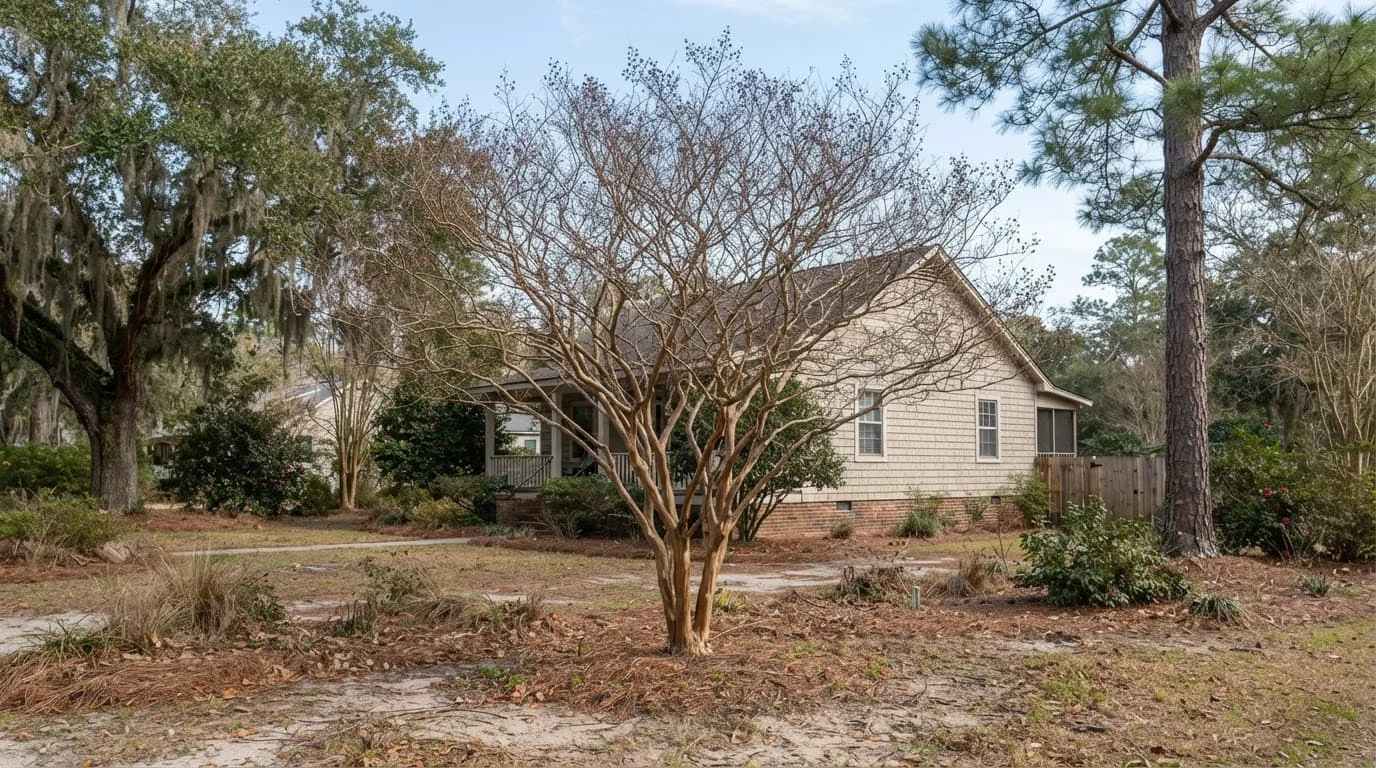
How Georgia Weather Changes the Pruning Window
Late freezes, wet weeks, summer heat, and thunderstorms all matter. If a winter cold snap is coming, wait until it passes before making fresh cuts. Poorly timed cuts can increase winter injury, while summer pruning can add stress during the hottest part of the year.
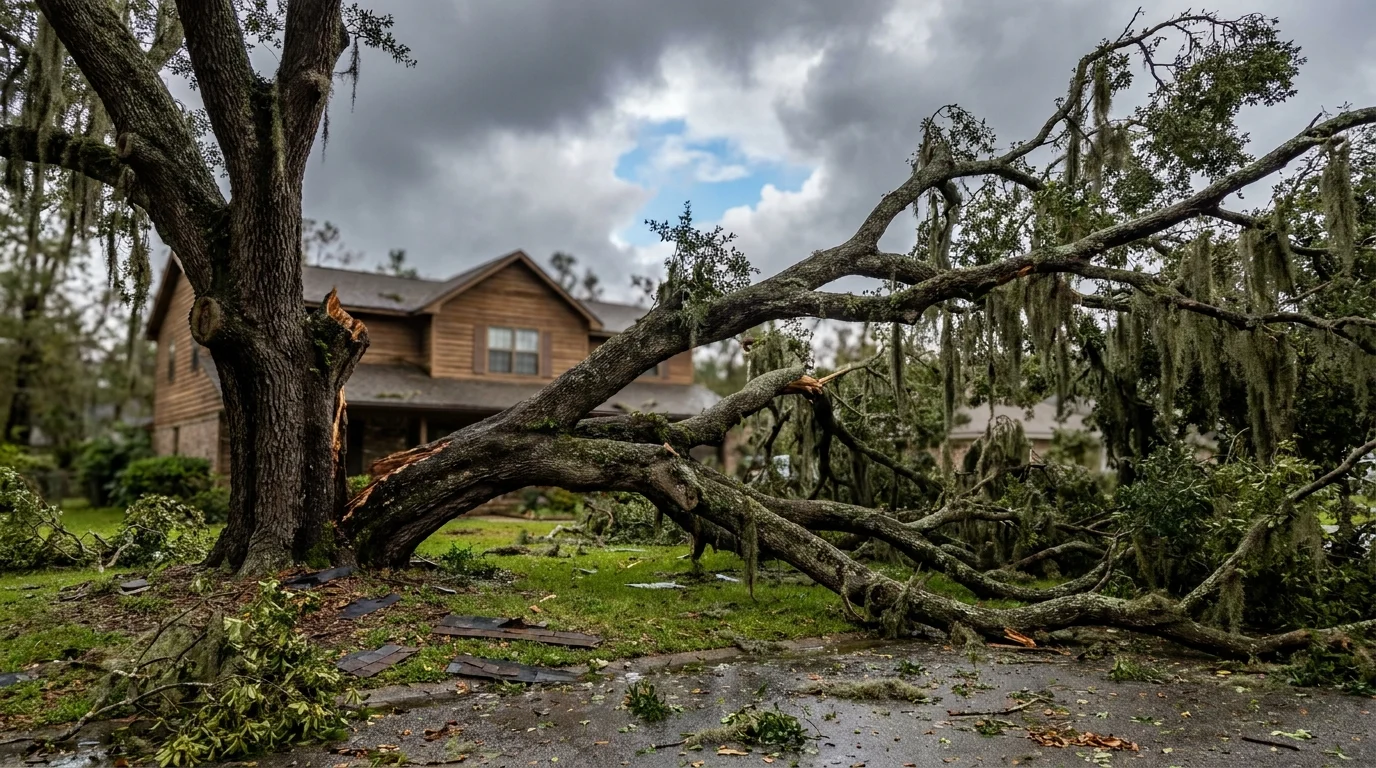
Broken limbs are different. A branch split by a summer thunderstorm, hanging over a driveway, or scraping a roof needs attention when it happens. Safety problems don’t wait for the normal pruning season.
Signs a Crepe Myrtle Needs More Than Light Shaping
Dead limbs, hollow spots, peeling bark around a major crack, and weak branch attachments deserve a closer look. The same goes for a tree with a serious lean, root movement, or limbs growing toward a roof or utility line.
A visible problem near the trunk or a main branch isn’t a casual weekend trim. Don’t climb a ladder with a chainsaw, and never work near electrical lines. Those jobs can turn dangerous in a hurry.
Why Topping Crepe Myrtles Causes More Problems Than It Solves
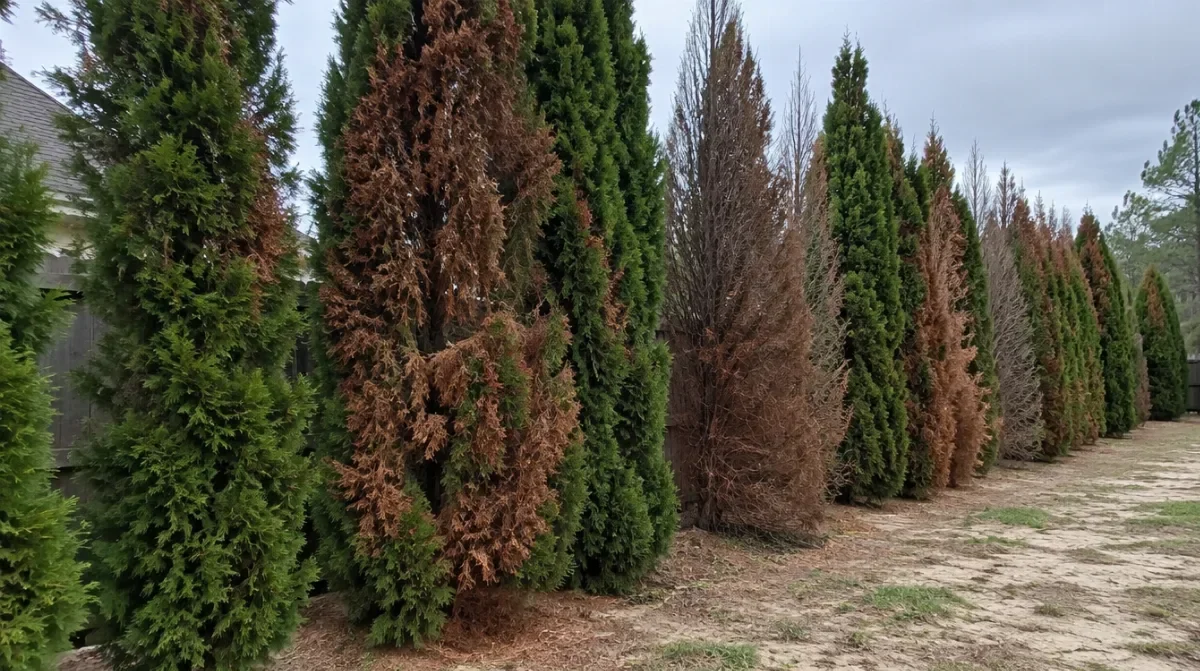
Topping means cutting major branches back to short stubs, often leaving the whole crown at one blunt height. Around here, people sometimes call it “crepe murder.” It may look like an easy way to make a tree smaller, but it is not proper pruning.
Those big cuts remove established branch structure. The tree responds by pushing out fast new growth, including upright sucker growth near each cut. These shoots can grow quickly, but their attachment is often weaker than the original branch.
The result is a tree with an unnatural shape, larger wounds, and more repeated maintenance. Exposed bark can also take a beating from direct sun. The UGA explanation of aggressive crepe myrtle pruning shows why those severe cuts lead to weak replacement growth.
Topping does not reliably keep a tree small. It often brings back tall, weak shoots faster than homeowners expect.
If a tree has outgrown its spot, repeatedly trying to prune crepe myrtles through topping is not a long-term fix. Selective reduction is safer than severe pruning. A better-sized cultivar, such as a dwarf crape myrtle, may also be a better planting choice, though it still needs care. A young tree may be moved. In some cases, the honest answer is that the tree is too close to a structure and shouldn’t stay.
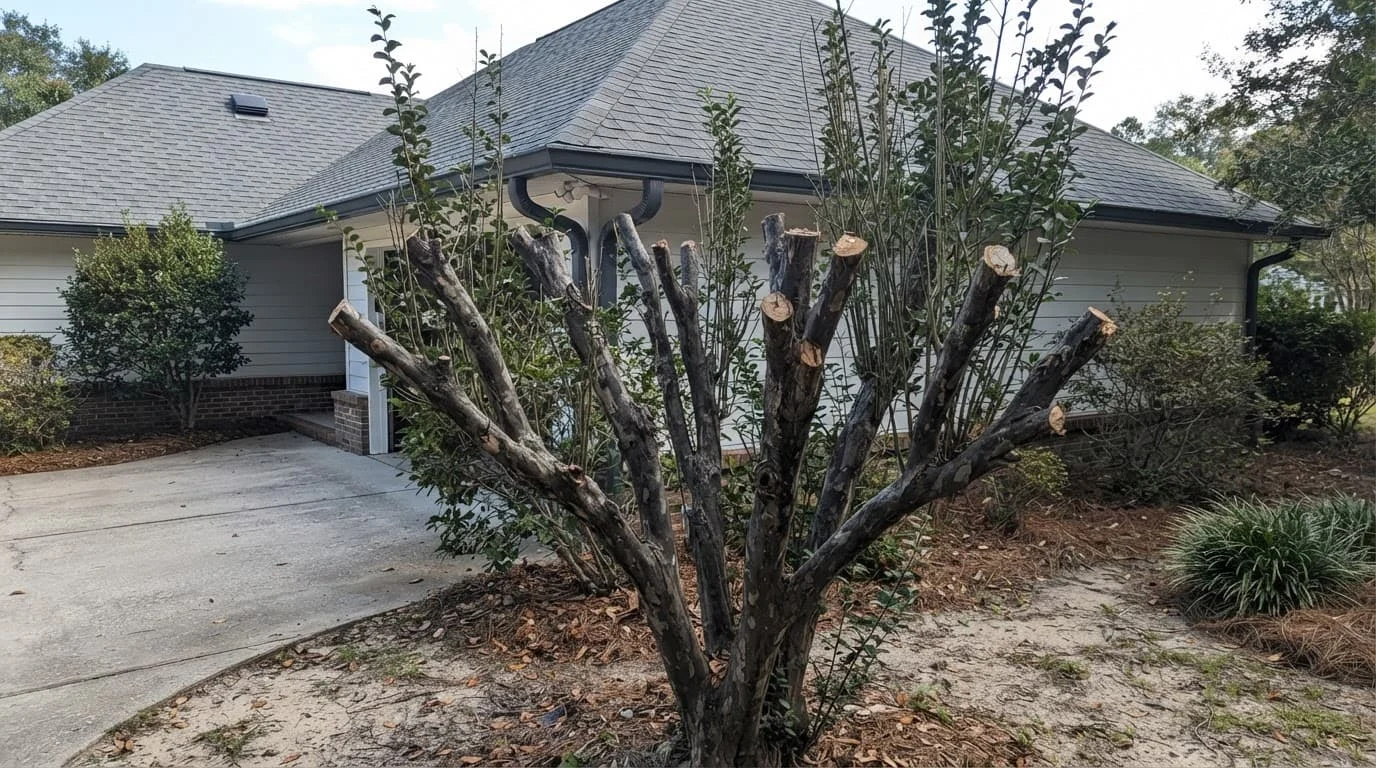
What Proper Reduction Looks Like Instead
Proper reduction means choosing individual branches and cutting them back to a healthy side branch or branch collar. The branch collar is the slightly raised area where a branch joins the trunk or another limb.
Pencil width branches may be handled differently from large limbs. The goal is to preserve the tree form, strong connections, and enough leaf-bearing growth to keep the tree healthy. We plan cuts before tools come out. Large upper limbs over a roof, fence, or driveway are not a DIY project.
When a Tree Can Be Saved and When It May Need Removal
Many overgrown or misshapen trees can be improved with careful cuts. Light storm damage can often be cleaned up without taking down the whole tree.
Severe decay, major trunk damage, unstable roots, or a tree growing into a structure changes the conversation. When saving it isn’t safe or practical, tree removal may be the safer path. We’d rather preserve a healthy tree when we can, but we won’t pretend a dangerous tree is fine.
Crepe Myrtle Pruning in Effingham County and the Savannah Area
Crepe myrtles handle our heat well, but local conditions still matter. In Guyton, Rincon, and Springfield, sandy soil can dry out quickly. Some older lots have heavier clay pockets, mature roots, and trees planted long before the current house or fence line.
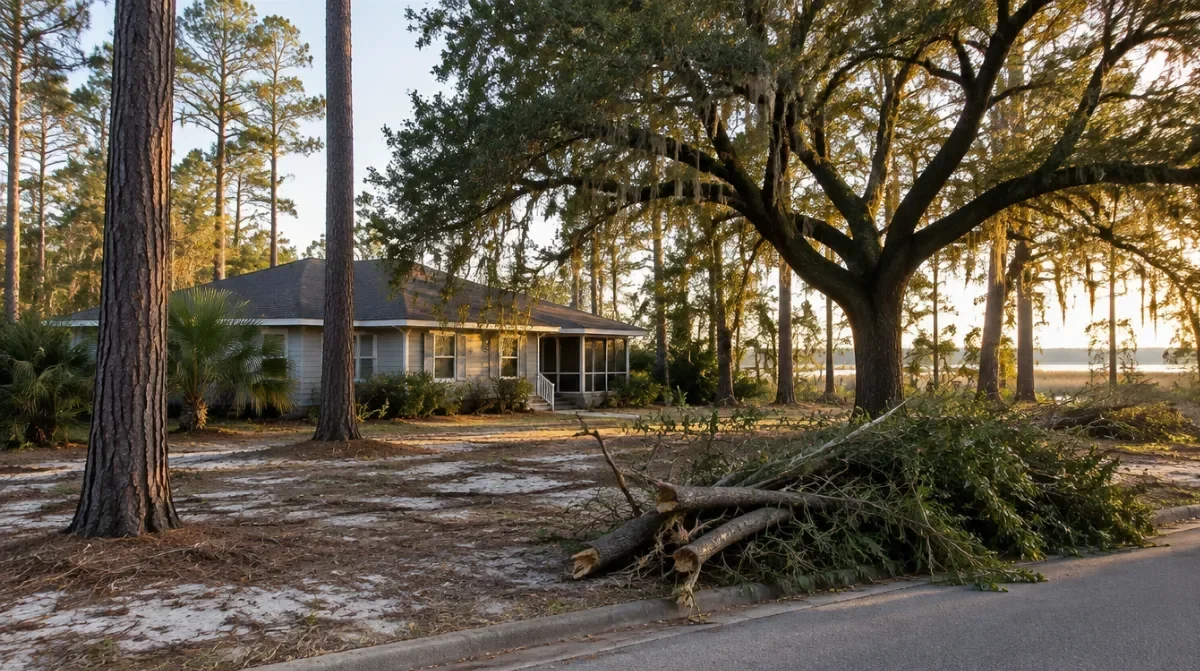
In Bloomingdale, Richmond Hill, Pooler, and Savannah, summer thunderstorms can snap limbs without much warning. Hurricane season runs from June through November, so trees near homes, driveways, fences, and power lines need a look before storm season. Even a dwarf crape myrtle can develop storm-related hazards when planted close to a structure.
These trees are not loblolly pines, live oaks, or water oaks. Still, the same questions matter: Are limbs dead? Are branches close to the roof? Is the tree leaning? Has soil pulled away near the base?
Newer subdivisions may have HOA rules about appearance or tree work. County and utility requirements can also apply, depending on where the tree sits. After a thunderstorm or hurricane, leave hanging limbs and broken tops alone until storm damage and emergency tree service can be arranged.
How to Prepare a Crepe Myrtle Before Storm Season
Before June, take a few minutes to look over the tree from the ground:
- Look for deadwood, broken branch ends, and narrow branch angles.
- Check clearance above the roof, driveway, fence, and outdoor living areas.
- Inspect lower limbs for cracks, decay, or weak attachments.
- Watch for loose soil at the base or a new lean.
- Homeowners may prune crepe myrtles away from structures, but shouldn’t attempt cuts near service lines or unstable limbs.
Pruning lowers some risks, but it can’t guarantee a tree will come through a storm untouched. A tree resting on a structure, a hanging limb, or anything tangled with wires needs professional help.
When to Call a Tree Professional for Crepe Myrtle Trimming
Small twigs you can safely reach from the ground may be fine to trim with hand pruners. Stop there if the work needs a ladder, chainsaw, rope, or a cut near a roof or line. Large limbs can swing, split, or fall in ways that are hard to judge from below.
Decay, a leaning tree, storm damage, and tight clearances call for a licensed and insured tree service. If you plan to prune crepe myrtles in late winter, a professional assessment can help determine the right approach. When we come out, we inspect the tree and the space around it. Then we talk plainly about whether it can be preserved, what work is needed, and how we’ll protect the property and handle cleanup.
LoyalTree is family-owned and based in Guyton. Mike Williams brings 20+ years of hands-on tree experience to the work on site. Mary Gledhill handles scheduling, communication, and coordination, so you know what’s happening before the crew arrives.
Sometimes a few careful cuts are enough. Sometimes the tree needs more attention. Either way, a look from the ground is better than guessing.
Frequently Asked Questions
Can crepe myrtles be trimmed in summer in Georgia?
Small cleanup cuts may be appropriate in summer. Major structural pruning is better planned for late winter, before spring growth begins. Storm damage, broken limbs, and immediate clearance problems are the exceptions.
Should spent crepe myrtle flowers be removed?
Removing old flower clusters is optional. It can make the tree look neater, but it isn’t required for good health. Don’t let bloom cleanup turn into cutting back major branches.
How often does a crepe myrtle need pruning?
It depends on the variety, location, growth rate, and past treatment, including whether it is a dwarf crape myrtle. A healthy tree with good structure may only need periodic inspection and a few selective cuts, not annual pruning or a hard cutback.
What should happen after a crepe myrtle comes down?
The stump can stay if it is out of the way. If you plan to mow over the area, replant, add a fence, or build nearby, stump grinding can be a sensible add-on after removal.
A Better Way to Care for a Crepe Myrtle
Late winter is usually the right time for planned pruning in Georgia. Keep cuts selective, use hand pruners only on small, safely reachable twigs, and don’t top the tree just because it has grown taller than expected.
A healthy tree is worth keeping when its location and condition allow it. When decay, storm damage, or poor placement makes it unsafe, we’ll give you a plain answer.
Homeowners in Effingham County, Richmond Hill, Pooler, Savannah, and nearby communities can request a free estimate from LoyalTree.