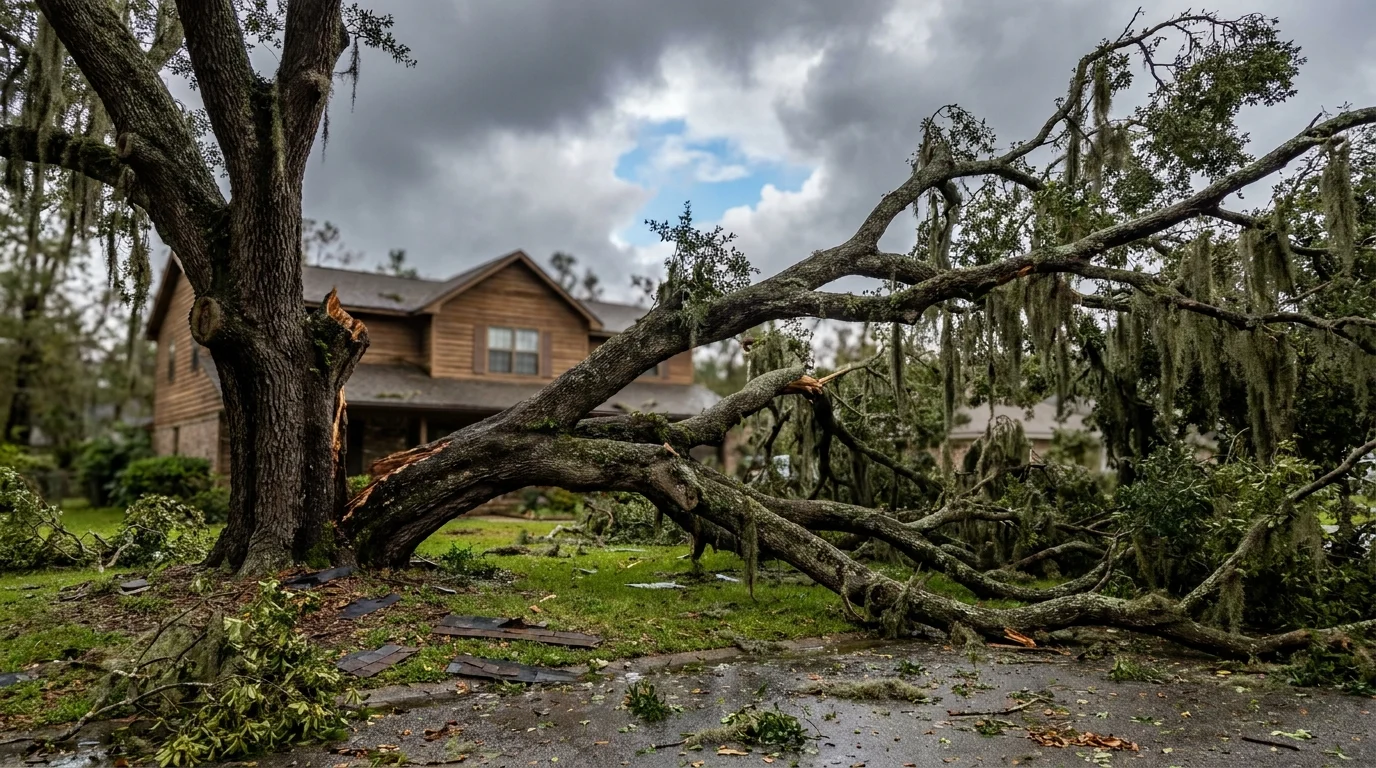
Yes, tree roots can affect a foundation, driveway, or septic system, especially when they find a crack, loose joint, weak spot, or steady source of moisture. A healthy root system usually won’t break through solid concrete or an intact pipe on its own. Ongoing root growth can exploit existing cracks, moisture, or weak soil, while tree health often influences how quickly the problem develops.
Around Guyton, Rincon, Springfield, Bloomingdale, Richmond Hill, Pooler, and Savannah, we see this concern often on older wooded lots with big pines and mature oaks. The hard part is figuring out whether roots caused the trouble, made it worse, or simply found a problem that was already there.
A little checking now can keep you from cutting roots, removing a good tree, or overlooking a plumbing or structural issue.
Key Takeaways
- Roots often take advantage of existing cracks, weak joints, and damp soil.
- Surface roots can lift driveways, sidewalks, and patios as they grow larger.
- Septic pipe blockages from root growth and drain-field failures aren’t the same problem.
- Cutting roots can cause root injury, and a nearby tree doesn’t automatically need removal.
- Sudden leaning, lifted roots, or storm damage near a house needs prompt professional attention.
Can Tree Roots Damage Your Foundation, Driveway or Septic?
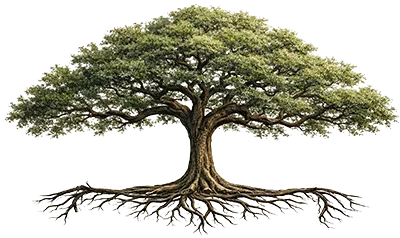
Roots follow the easiest path. They spread through loose soil, move toward water, and grow around obstacles. A broad root system commonly includes shallow lateral roots, feeder roots, and absorbing roots with fine root hairs. Species with a taproot system may still develop substantial lateral spread.
That can put roots close to concrete, pipes, and septic components. It doesn’t always mean the tree is the cause of a problem. Distance alone isn’t a reliable diagnosis because root spread, root depth, and soil depth vary.
A foundation crack may come from settling, drainage, soil movement, or other site issues. Soil compaction can limit soil oxygen, reducing the oxygen supply available to roots. Roots can then work into an opening or hold moisture near it. The same goes for old sewer and septic lines. Fine roots can enter through a separated joint or cracked pipe, then thicken inside the line over time.
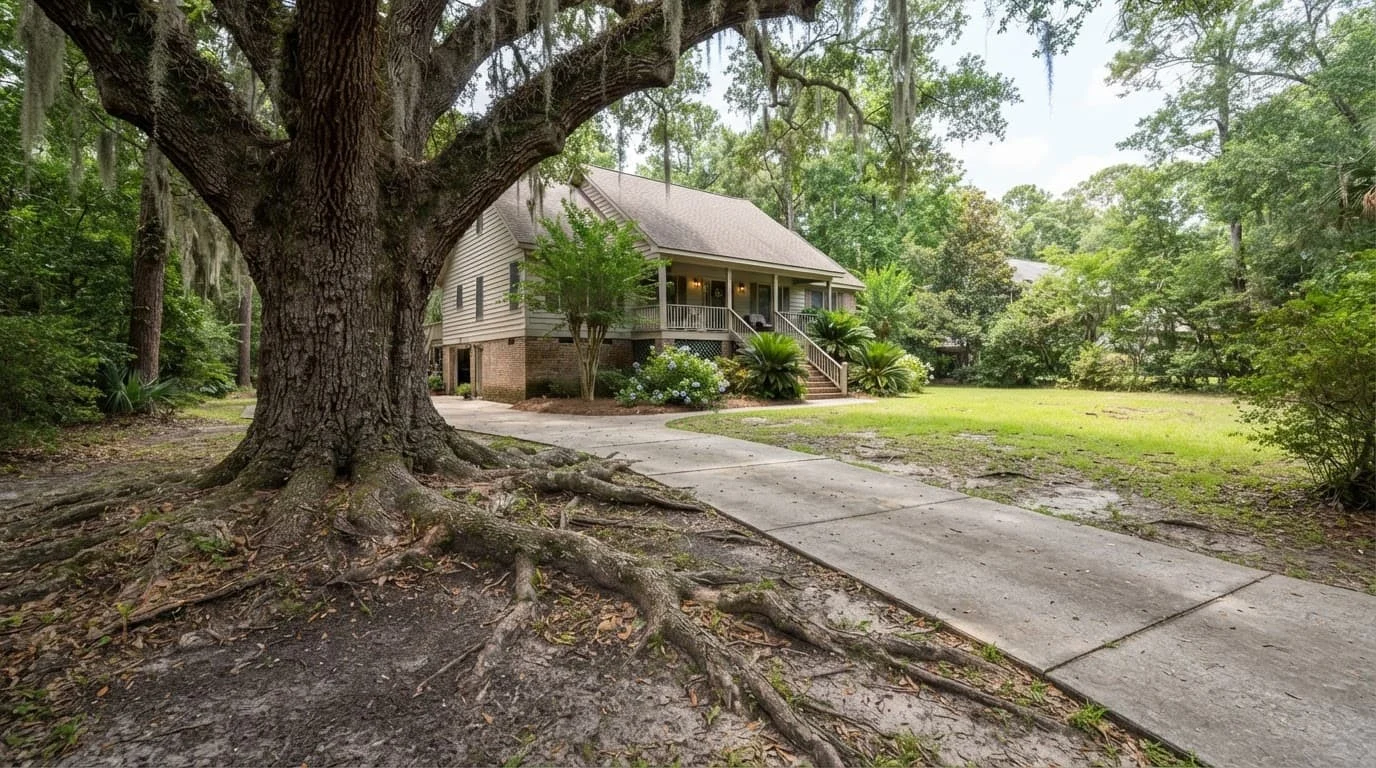
Driveways are different. Large surface roots can slowly push pavement upward. You may see a slab lift at one edge, a low spot become uneven, or a trip hazard form near a mature live oak or water oak.
Taking down the tree may stop future root growth, but it won’t repair cracked concrete, broken pipe, or soil movement already in place. Cutting a major root can cause root injury and destabilize a mature tree. Avoid digging or changing soil in the root zone, and get advice before considering root pruning.
When a problem involves the house, plumbing, or wastewater, bring in the right foundation, plumbing, or septic professional before deciding what to do with the tree.
Warning Signs Around the House and Driveway
You can look for changes without digging around the tree. Watch for new or widening cracks in masonry, doors that suddenly stick, windows that no longer open smoothly, lifted driveway panels, exposed roots, or soil that has mounded near pavement.
Roots showing in a crack don’t prove they made the crack. Still, a change that happens fast deserves attention. Raised concrete can become a fall hazard. A tree that leans after heavy rain, has fresh soil lifting at its base, or shows roots pulling out of the ground needs a closer look right away.
Take clear photos and note where you see the change. A picture from last month can tell a better story than a quick guess in the yard.
How Roots Reach Septic Pipes and Drain Fields
Septic lines and drain fields hold moisture and nutrients, which roots naturally seek out. A root may find its way into a pipe through a broken section, a failed seal, or an open joint. Once inside, it can catch paper and waste, leading to slow drains or backups.
A root blockage in a line isn’t the same as a failing drain field. A drain field can struggle because the soil is saturated, compacted, or no longer treating wastewater properly. Removing a tree won’t fix that kind of failure.
Arrange a septic inspection before removing a tree near the system. The tree may be manageable, while the real problem is a damaged line or wet soil that needs repair.
Roots often show where water is escaping. They don’t always explain why it is escaping.
Local Tree Roots Behave Differently on Coastal Georgia Properties
Soil matters as much as the tree. In parts of Effingham County and the Savannah area, sandy ground can wash, shift, and leave roots more exposed. Heavy equipment, wet ground, and repeated traffic can cause soil compaction, reducing soil oxygen around roots. Other yards have heavier clay that stays wet longer. Those conditions affect root growth and how pavement moves after rain and dry spells.
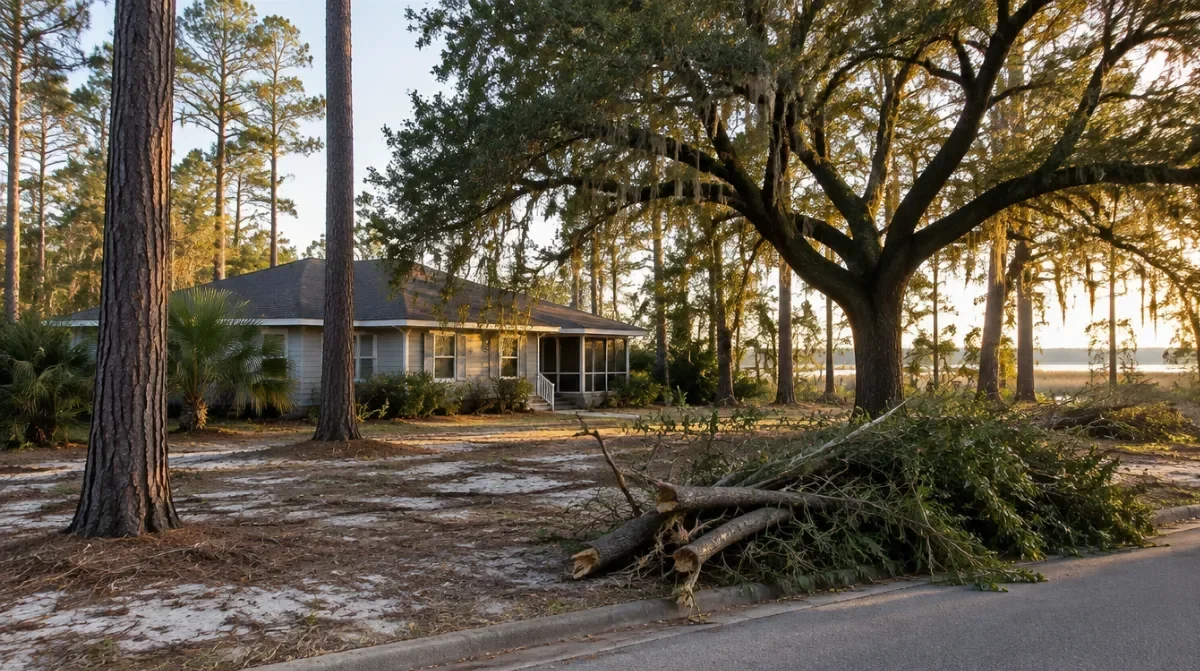
Loblolly and slash pines often have wide root systems near the surface. Their root spread and root depth vary with drainage, species, and site conditions. A healthy pine can stand for years without trouble. But high winds, saturated soil, decay, root disease, or root loss can change tree health fast. Summer thunderstorms are common here, and hurricane season runs from June through November.
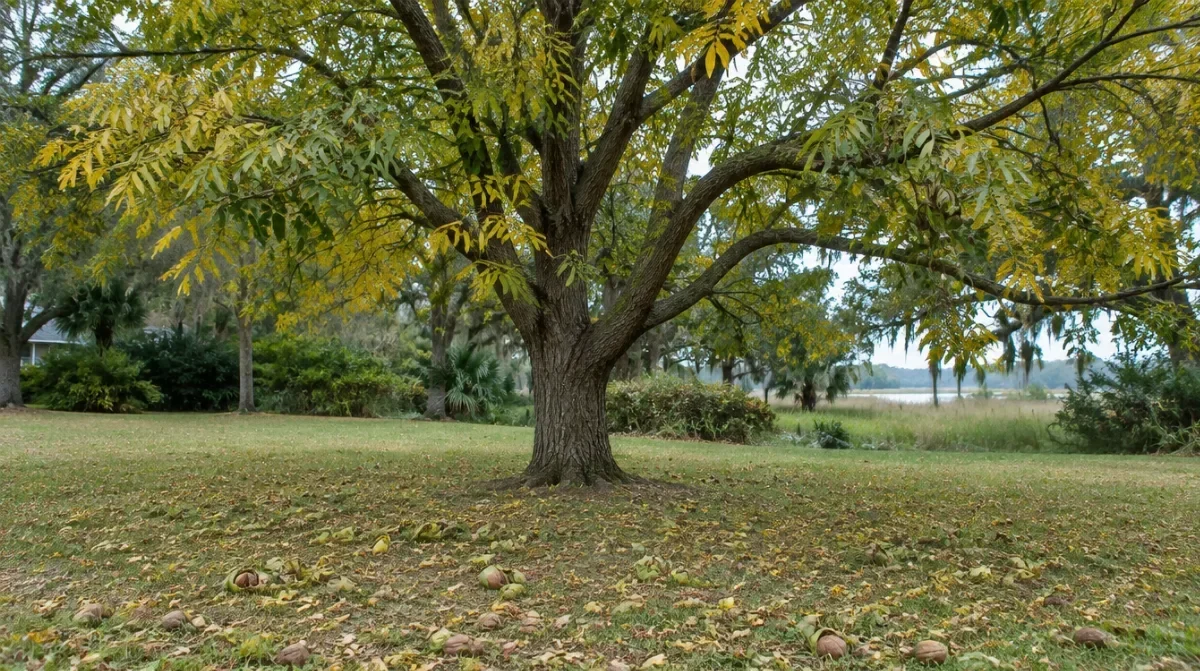
Large live oaks and water oaks deserve a different kind of attention. Their roots can spread beyond the branch dripline, and surface roots may affect old homes, driveways, and septic areas. Distance matters, but it’s not the whole answer.
A tree’s root system includes several kinds of roots with different jobs. Woody roots provide support, while lateral roots help anchor the tree and transport water. Fine absorbing roots and root hairs take in moisture and nutrients. Root hairs depend on a healthy oxygen supply in the root zone, and mycorrhizal fungi can support that soil-root relationship.
On newer subdivisions, urban trees may grow in restricted soil compared with trees on older wooded lots. HOA rules may limit major pruning or removal. County rules may also apply in certain situations. Check those questions before scheduling major work, not after a crew is already on the property.
When a Tree May Be Saved Instead of Removed
Roots near a house don’t automatically mean the tree has to go. Sometimes the better answer is correcting drainage, deep watering, keeping wood mulch off the trunk, or using selective tree trimming and pruning to reduce stress. In some cases, limited root pruning may also help, but it requires a site-specific evaluation. The work area should protect soil and roots beneath the branch dripline.
We don’t recommend trenching through major roots or cutting them because they are inconvenient. That kind of root injury can weaken a mature tree, especially when roots are removed on one side. Soil changes can hurt too. The University of Georgia Extension warns that even a few inches of changed soil grade around roots can cause lasting damage to established trees in its guidance on construction damage to trees.
Cabling or bracing can help some trees with weak branch structure. A declining tree may also have root disease, so it needs a proper diagnosis before preservation or removal is chosen. Cabling won’t fix a failing foundation, a broken septic line, or poor drainage.
What to Do When Roots Are Causing a Real Safety or Property Problem
Start with what you can see. Photograph cracks, standing water, lifted pavement, surface roots, and any lean in the tree. Write down when you first noticed the issue and whether it changed after a storm, plumbing repair, or long wet spell.
Then identify the affected system. A foundation professional can look at structural movement. A plumber can inspect a drain line. A septic company can evaluate the tank, lines, and drain field. That step keeps a tree decision from becoming an expensive guess.
Visible roots may not explain the whole problem. Root disease can cause a tree to decline or fail even when the damage isn’t obvious.
After a tree is removed or badly damaged, old roots can decay while nearby root growth continues to affect pavement or soil. Repairs may still be needed.
Once the condition of the tree is clear, we can talk through the practical options. It may need pruning, monitoring, preservation work, or tree removal if it is dead, unstable, badly placed, or creating a real safety problem.
After a thunderstorm or hurricane, stay away from split, uprooted, leaning, or hanging trees. Don’t stand under broken limbs. Don’t drive beneath a damaged canopy. A tree near a roof, driveway, power line, or septic tank can be risky even when it is still standing.
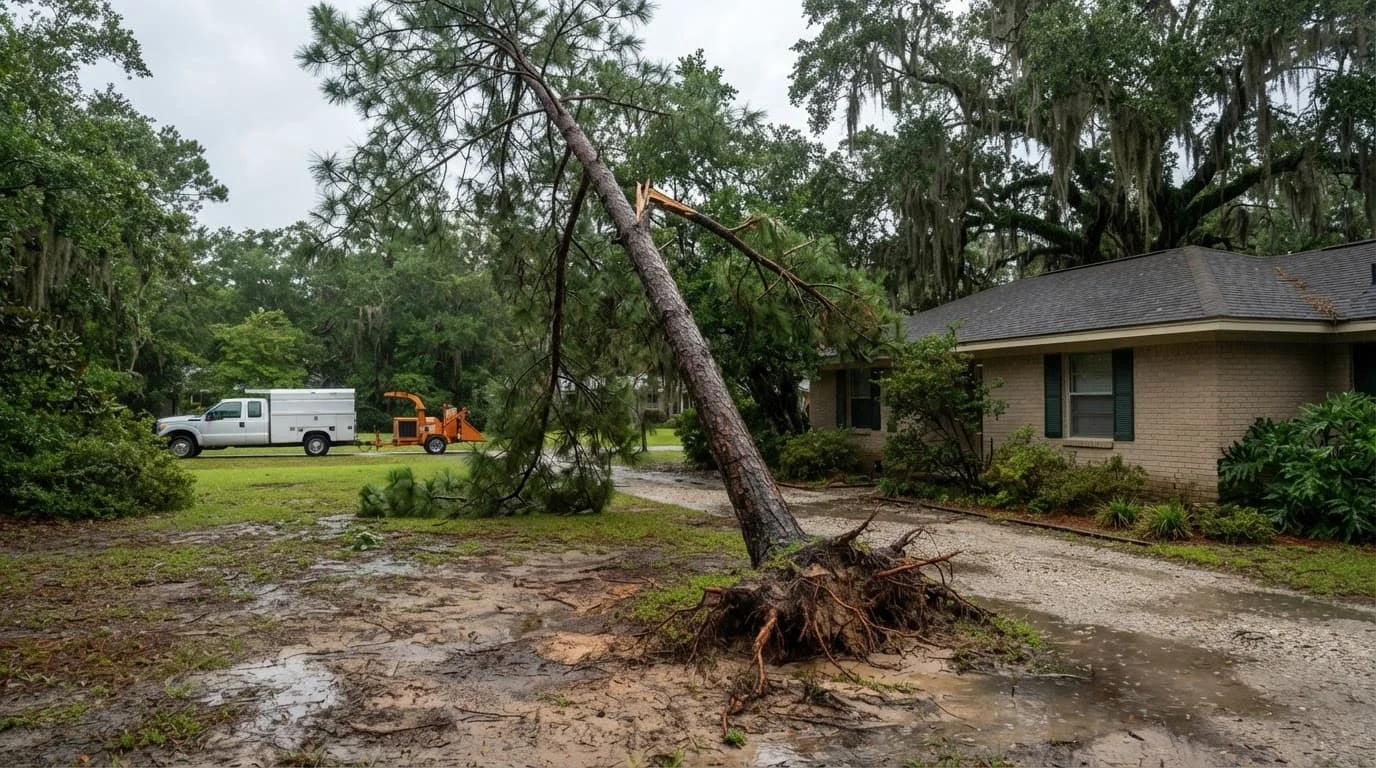
A licensed and insured crew should review access, drop zones, the tree’s condition, and nearby structures before work begins. For storm-related hazards, our storm damage and emergency tree service is built around safe access and controlled cleanup.
On service day, expect a site review and a clear work plan. We protect driveways, structures, and landscape areas where possible. If removal is needed, the tree comes down in controlled sections. Cleanup follows, and stump grinding can be discussed as an add-on if the remaining stump is in the way.
Why DIY Root Cutting and Tree Removal Can Backfire
Digging near a foundation, septic system, or mature tree can cause root injury and construction damage to utilities, pipes, or surrounding soil. Improper root pruning can also cut roots that help hold the tree steady. Avoid digging, parking, or stacking materials within the branch dripline whenever possible.
A tree may look fine after major roots are cut, then fail later in wind or saturated ground. Removing soil around exposed roots can disturb the root zone, reduce soil oxygen, and limit the tree’s oxygen supply.
Small surface roots far from a structure may only need basic yard care. But if roots belong to a mature tree near your home, driveway, or septic area, have them evaluated before you cut them.
When to Call LoyalTree for a Free Estimate
Give us a call if tree roots are lifting your driveway, a mature tree is leaning toward the house, fresh damage appears after a storm, or new cracks develop beside a large tree. It is also worth getting a look when a tree sits near a septic system and you aren’t sure whether preservation or removal is safer.
LoyalTree LLC is a family-owned, licensed and insured tree service based in Guyton. Mike Williams provides on-site oversight and brings 20+ years of hands-on tree experience. Mary Gledhill handles scheduling, communication, and the details that keep the job moving.
We work throughout Effingham County, including Guyton, Rincon, Springfield, and Bloomingdale, along with Richmond Hill, Pooler, and Savannah. Our evaluation considers the tree, root system, root zone, branch dripline, overall tree health, and possible root disease. We explain what we see in plain English and recommend a sensible next step. We don’t replace a foundation contractor, plumber, or septic specialist when their expertise is needed.
Frequently Asked Questions
Can tree roots crack a solid foundation?
Healthy roots usually don’t break through a sound, solid foundation. They’re more likely to enter existing gaps or add pressure where soil, drainage, or concrete already has a weakness. A foundation professional should inspect significant cracks or movement.
Will removing a tree stop septic damage?
Removal can stop new root growth, but it won’t repair a cracked line or failing drain field. Have the septic system inspected first, especially if drains are slow or wastewater is backing up.
Can roots grow back after a tree is removed?
Roots from a removed tree don’t keep growing without the tree. Some species can send up shoots from a stump or remaining roots, but mature roots usually decay over time. Timing depends on the species, soil, moisture, and stump treatment.
How far should a tree be from a driveway or septic system?
There isn’t one safe distance for every tree and property. Surface roots, root spread, and root depth vary by species, mature size, soil, and drainage. Root pruning shouldn’t be based on distance alone. Also consider the condition of the driveway or septic components.
Can root disease weaken a tree near a foundation?
Root disease can weaken a tree, but it doesn’t automatically mean the foundation is cracking. Have a qualified arborist inspect the tree, and ask a foundation professional to evaluate significant cracks or movement.
Is root damage worse during storm season?
Storms don’t make roots grow faster, but heavy rain and high winds can expose a weak root system. Saturated soil can reduce a tree’s hold in the ground. A site-specific tree assessment is safer than guessing based on the season alone.
A Straight Answer Starts With the Whole Property
Tree roots are one possible cause of foundation, driveway, or septic trouble. The right answer depends on the tree, soil, drainage, nearby structures, and any existing damage.
Don’t cut major roots or remove a tree until you understand the problem. A healthy tree may be worth saving, while a damaged or unstable one may require careful removal.
For straightforward guidance in Guyton, Rincon, Springfield, Bloomingdale, Effingham County, Richmond Hill, Pooler, and Savannah, request a free estimate.