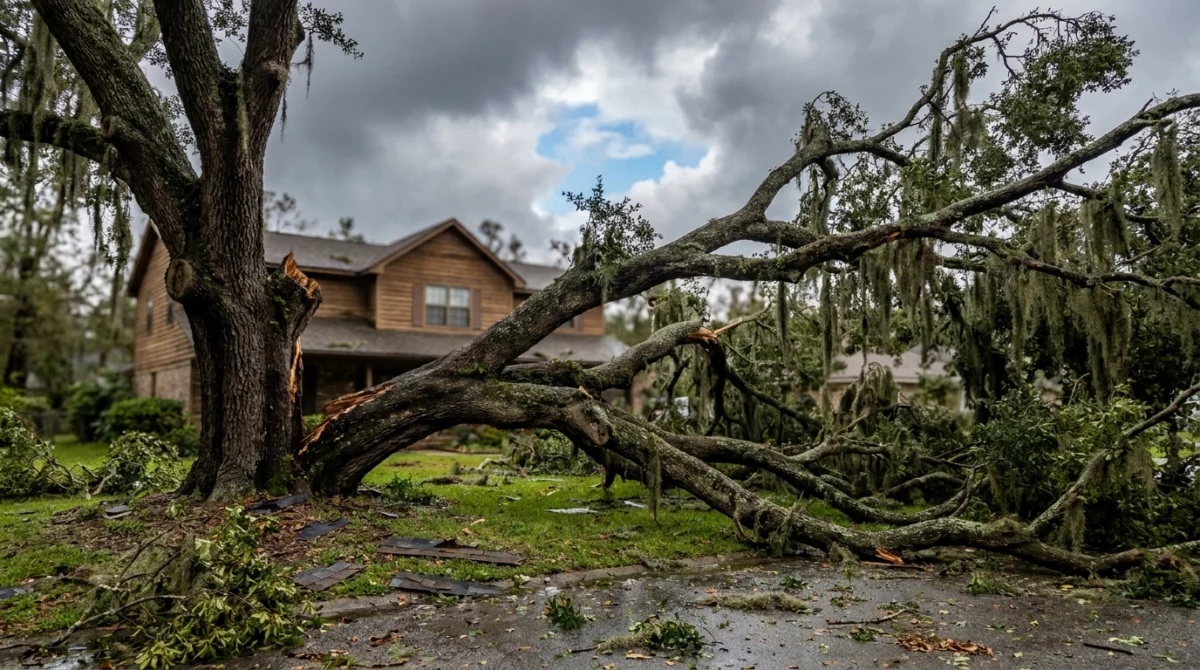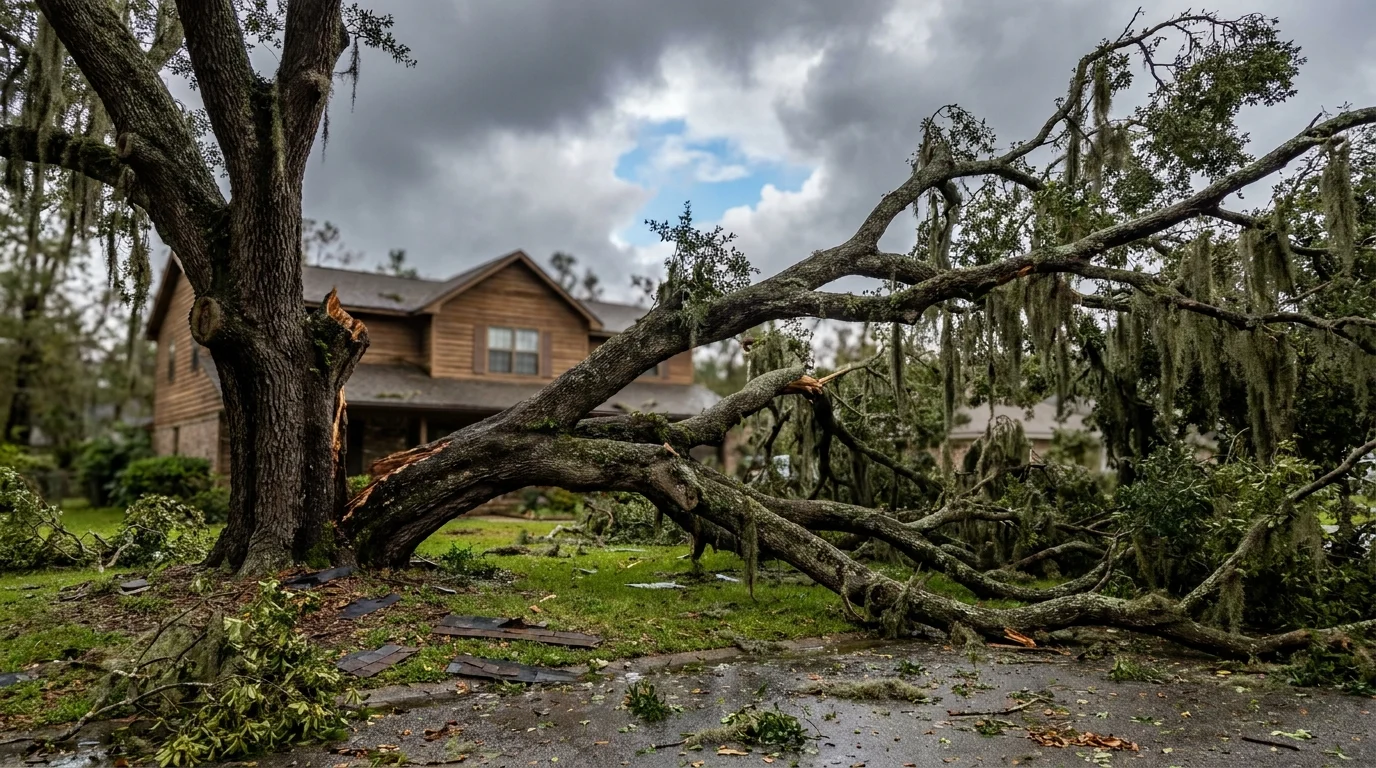
A leaning pine or a dead limb over the roof can turn into a long night when storms roll through. If a tree is too close to the house, blocking a project, or dropping limbs in the driveway, you need a straight answer, not the first name that pops up online.
Choosing the right crew means looking past a quick promise or a low-sounding estimate. Ask who will inspect the tree, how the crew plans the work safely, and what credentials they bring. A clear written scope should cover the work, cleanup, and whether the tree can be preserved.
We’re LoyalTree LLC, a family-owned, licensed and insured company based in Guyton. Mike Williams brings 20+ years of hands-on tree experience to the field, while Mary Gledhill handles scheduling, estimates, and communication. Here are the questions we’d want a neighbor to ask before hiring anybody.
Key Takeaways
- Ask for proof that the company is licensed and insured before work begins.
- Request a written plan covering the tree, property protection, cleanup, and exclusions.
- A leaning or damaged tree isn’t always a removal, so ask whether preservation is realistic.
- Storms, sandy soil, mature oaks, and pine trees create local risks worth discussing.
- Don’t handle large limbs, chainsaws, ladders, or power-line hazards on your own.
How to Choose a Tree Service in Effingham County
The first question to ask is, “Can you explain what you see and what you recommend?” A good crew should answer without trying to scare you into signing on the spot.
A reputable tree service company should explain who will inspect the tree and who will perform the work. Ask whether a certified arborist will assess complex or questionable trees. Also ask whether the company is licensed and insured, and request proof of insurance showing liability insurance and workers compensation coverage. These documents can clarify responsibility if a worker is injured or the job causes damage.
Local experience matters, too. A tree growing in Guyton, Rincon, Springfield, Bloomingdale, Pooler, or Savannah may have sandy soil, tight access, old fences, buried irrigation, or a roof close beneath the canopy.
Ask for a written estimate. Before work begins, request a written contract that identifies the scope, exclusions, crew responsibilities, access conditions, and cleanup. Compare multiple estimates, check online reviews, and review the company’s standing with the better business bureau. You can also ask about membership in a tree care industry association or references to the international society of arboriculture. Association membership alone isn’t proof of competence.
If someone pressures you after a storm, be cautious, especially with door-to-door contractors or unusually low prices. Upfront payment demands and rushed decisions can be warning signs of tree service scams. If the answers are vague or the promises sound unbelievable, slow down.
Ask whether removal is the only answer
Not every rough-looking tree needs to come down. Pruning, cabling, bracing, or tree preservation may make sense when the tree is otherwise sound. Cabling and bracing use installed supports to reduce strain on a weak limb or split area. They aren’t a fix for every problem, but they can help some valued trees.
If removal is the right call, a professional tree removal plan should cover access, nearby structures, rigging, safely lowering wood, and cleanup. Taking down a tree is more than cutting at the trunk and hoping it falls where it should.
Questions That Reveal Whether a Tree Is Dangerous or Can Be Saved
Homeowners often ask us, “Is this tree going to fall?” The honest answer comes after looking at the whole tree, the ground around it, and what sits nearby.
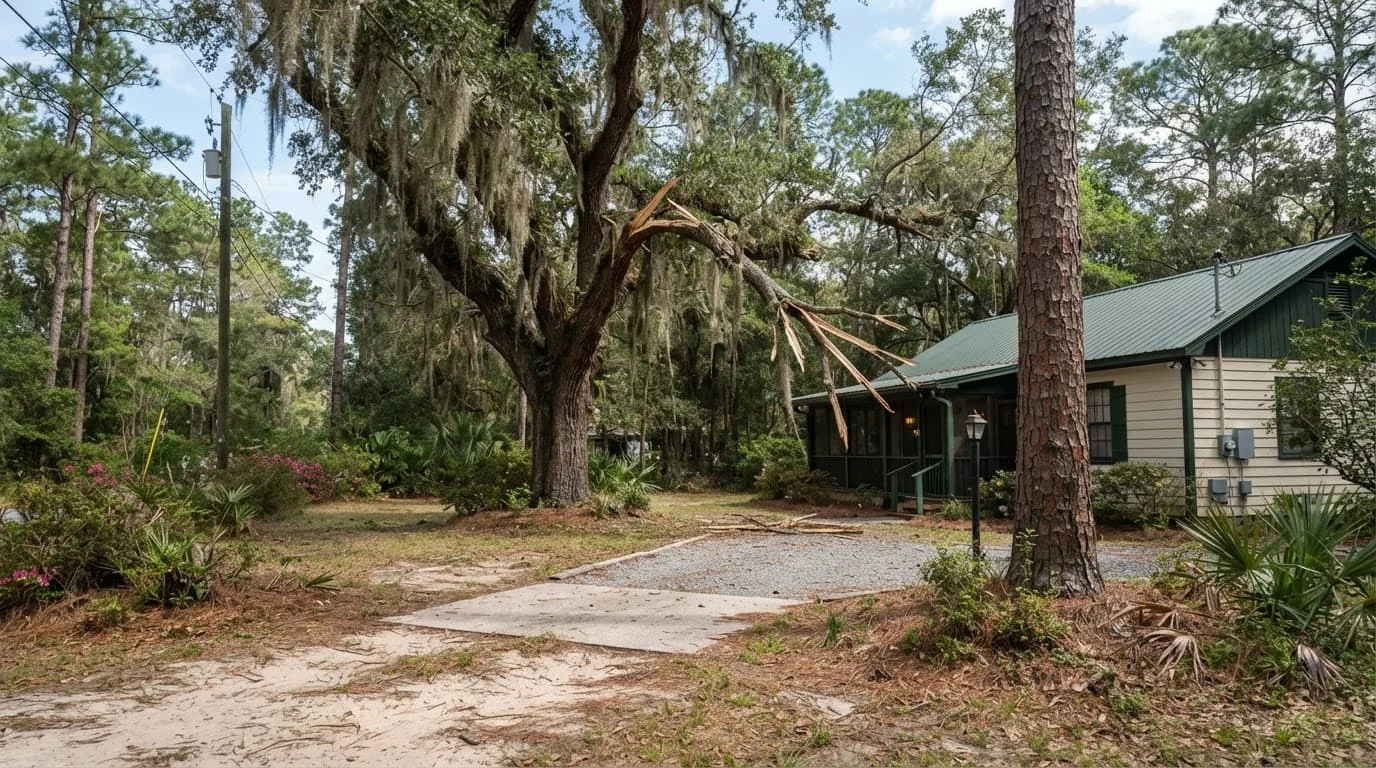
Large dead limbs, deep trunk cracks, decay, hollow spots, mushrooms near the base, exposed roots, and lifted soil are all warning signs. A new lean matters more than a tree that has grown at the same angle for years. Branches rubbing the roof or reaching toward a utility line also deserve attention.
One sign alone doesn’t always mean removal. Trees can have dead wood or a small hollow and still be managed safely. What matters is the tree’s structure, health, target area, and chance of failure.
Get clear answers about storm risk
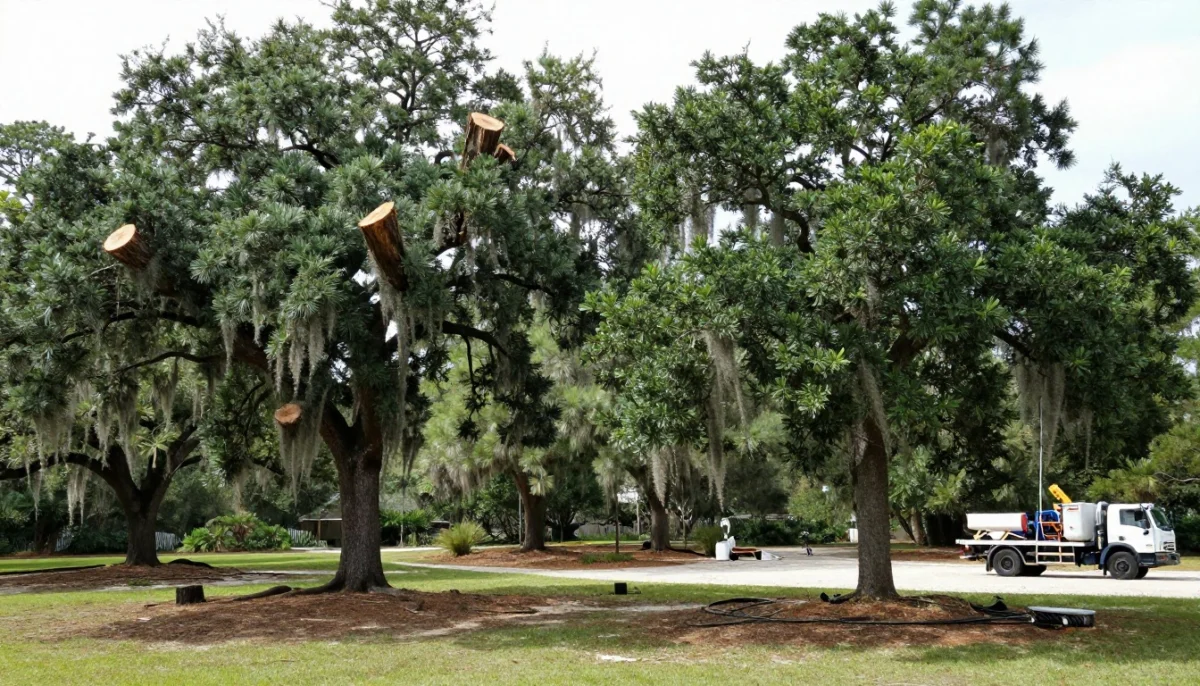
Ask what the crew sees, what part may fail first, and what could happen in the next hard storm. Then ask whether structural pruning, trimming, cabling, or bracing could extend the tree’s useful life. Question tree topping, since indiscriminate topping can create weak regrowth and new structural problems.
Careful tree trimming and tree pruning can remove dead weight, reduce strain on long limbs, and clear branches away from a roof. Targeted pruning should follow the tree’s condition and your goals, rather than leaving healthy growth cut back to bare stubs.
A tree can look green and healthy overhead while decay is weakening the trunk or roots below.
Don’t climb a questionable tree or cut large limbs yourself. Homeowners shouldn’t use climbing spikes, ladders, or chainsaws on structurally compromised trees. A ladder, chainsaw, sloping ground, and a limb over a fence or driveway are a bad mix. The same goes for anything close to power lines.
Local Tree Service Questions for Storms, Soil, Permits, and HOA Rules
Effingham County weather has a way of finding weak spots. Summer thunderstorms can bring sudden wind, and hurricane season runs from June through November. The National Weather Service Georgia Hurricane Guide is a useful reminder to make preparations before a named storm is close.
Loblolly and slash pines can snap high up or uproot when wind catches a heavy crown. Big live oaks and water oaks may carry wide, heavy limbs over roofs and driveways. Sandy soil can shift after heavy rain. Clay pockets can hold water and change how roots grip the ground.
Confirm the rules instead of guessing
Ask how the company handles hanging limbs, fallen trees, blocked driveways, and damaged fences after a storm. Be cautious of door-to-door contractors, and verify the company before authorizing work.
Also ask what protection is planned for your lawn, roof, vehicles, and landscaping. Permit rules can differ by location, so ask about permits and licensing before work begins, especially near roads, drainage areas, utilities, or protected subdivisions. Newer neighborhoods may also require HOA approval before a tree comes down. A reputable company should tell you what needs to be confirmed locally, not guess.
For branches touching or close to electrical lines, Georgia Power’s tree and vegetation management information explains why utility coordination may be needed. Keep clear of the line and ask for the safe next step.
If a tree is on a roof, hanging over an occupied area, or blocking access, emergency tree removal is the right kind of call for an active hazard.
What to Expect on the Workday, From Safety Planning to Cleanup
A good tree job starts before the first limb comes down. The crew should review the tree, access route, drop zone, and written scope with you. They should also discuss vehicles, roofs, gates, irrigation heads, septic features, landscaping, and fragile items to help prevent property damage.
A written contract should identify the agreed scope, access assumptions, protection measures, and what happens if hidden decay or soft ground changes the plan.
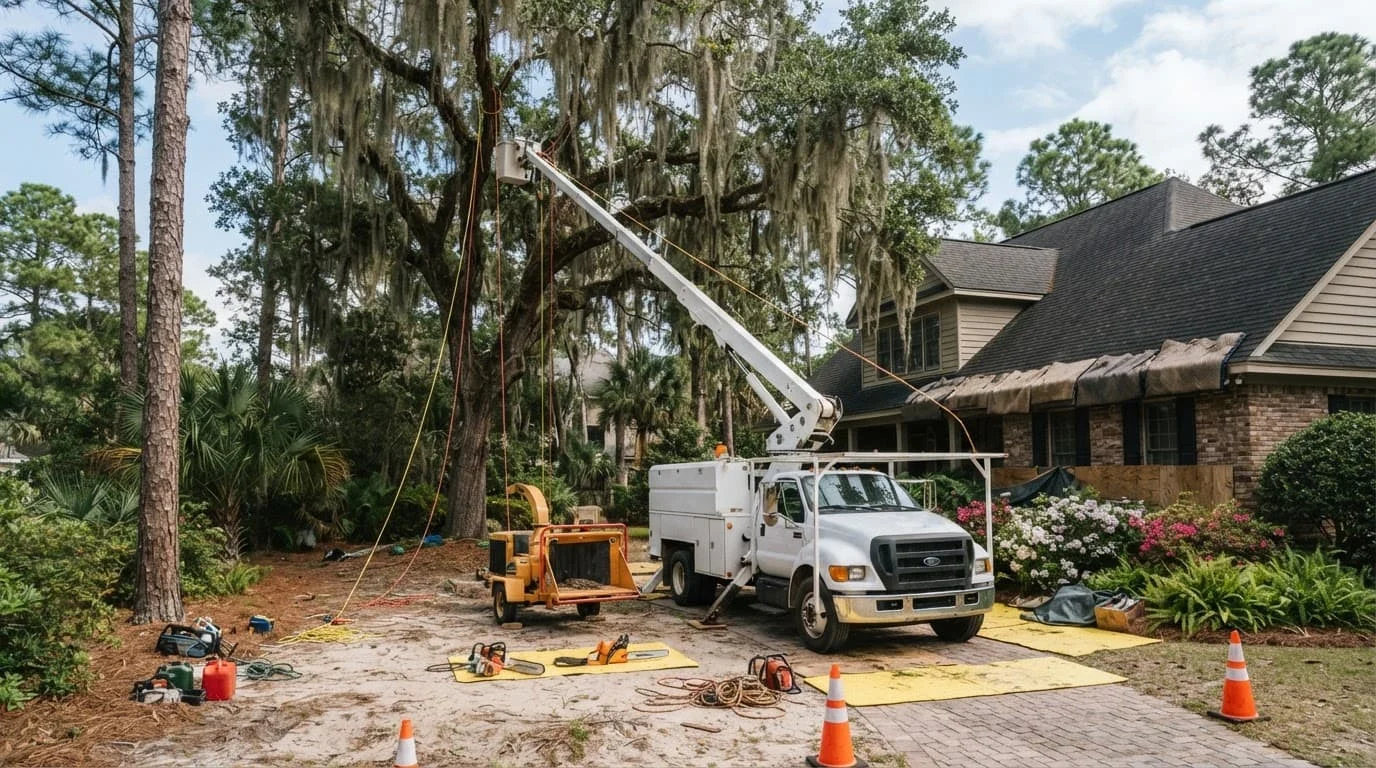
Equipment placement matters. A bucket truck, chipper, ropes, or stump grinder can protect the job when used with a plan, but they can also damage a yard if access isn’t discussed first. Ask who is responsible for moving cars and movable items before the crew arrives. Confirm whether debris cleanup includes branches, logs, chips, and raking, and ask about exclusions.
Watch for a clear plan, not a rushed cut
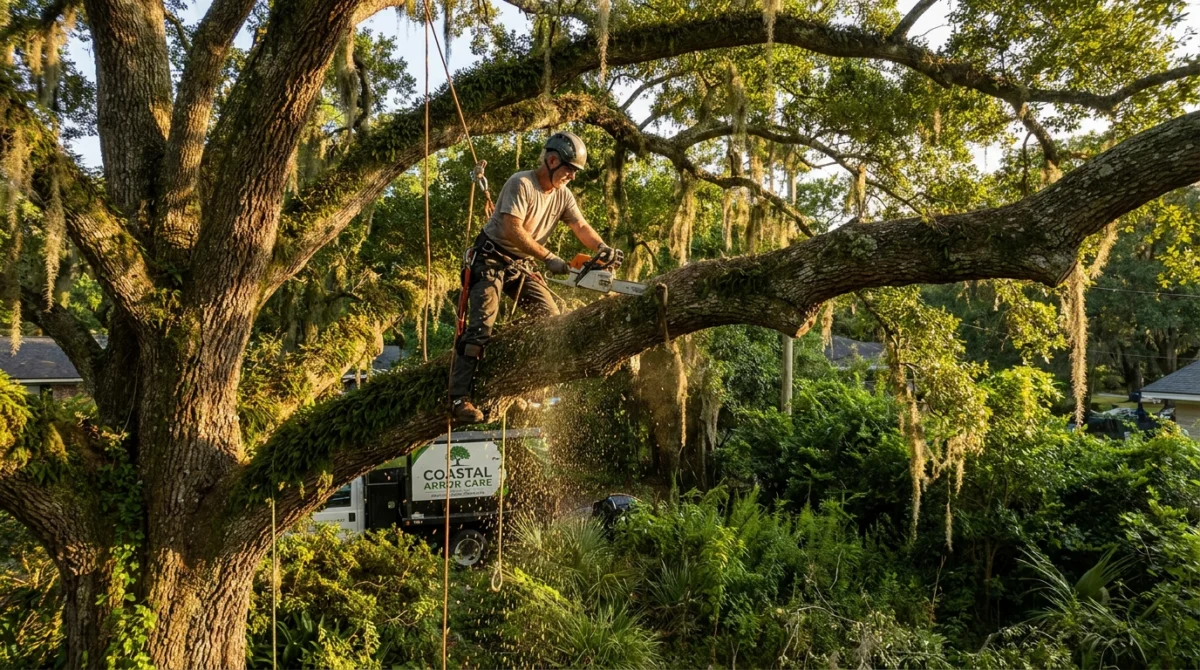
The crew should protect nearby roofs and landscaping where possible, remove limbs in manageable pieces, and explain any change in the plan. Trained crews should follow applicable safety regulations and recognized industry standards while adapting the plan to the site. Hidden decay, a wasp nest, soft ground, or an unseen utility line can change how a tree must be handled.
Small pruning can be manageable if branches are low, clear of structures, and reachable from the ground. Large limbs, removal work, storm damage, chainsaws, ladders, and power-line concerns belong with trained professionals. That is not a place to learn by trial and error.
Decide what happens to the stump
Stump removal options may include grinding or other approaches, depending on the property and its intended future use. If you want to mow over the area, replant, or build where the tree stood, ask about stump grinding. The estimate should say whether that work is included or separate.
The Georgia Forestry Commission also has tree care and reforestation resources that can help when you’re thinking beyond the immediate removal and planning what comes next for the property.
When to Call Us for a Tree Assessment or Free Estimate
Call us when a tree has recently shifted, roots are lifting soil, decay is visible at the trunk, or a large limb is hanging over the home. It also makes sense to have a tree assessed before construction, a new fence, driveway work, or major landscaping.
We work throughout Guyton, Rincon, Springfield, Bloomingdale, Effingham County, Richmond Hill, Pooler, Savannah, Port Wentworth, Brooklet, coastal Georgia, and the South Carolina Lowcountry. Mike provides direct field oversight as co-owner, lead arborist, and operations manager. Mary keeps scheduling, estimates, and communication clear from the office.
Photos can help us understand the concern before we arrive. Still, an on-site visit is best for seeing the tree, soil, access, and nearby risks. For complex structural concerns, ask whether a certified arborist will inspect or review the tree. If you’re unsure what you’re looking at, you can request a free estimate without pressure.
Frequently Asked Questions
Should a tree service inspect the tree before giving an estimate?
Yes. An on-site inspection shows the tree’s condition, nearby structures, access, soil, utility lines, and cleanup needs. Photos help start the conversation, but they may not reveal every hazard.
Can a tree service work near power lines?
Never cut or pull branches touching or close to power lines. The utility company or qualified professionals may need to help. The crew should explain the safe next step before work begins.
What should homeowners do before the crew arrives?
Move vehicles and outdoor items if requested, unlock gates, and identify irrigation, septic components, or buried features. Keep children and pets away from the work area. Review access and property protection with the crew when they arrive.
Is emergency tree service needed after every storm?
No. Call for emergency help when a tree is on a roof, blocks access, hangs over people or structures, or may fall. Debris already on the ground without an active hazard can often wait for regular service.
What happens if a tree cannot be saved?
Removal may be safest when decay, storm damage, structural failure, or unstable roots create serious risk. The crew should explain the recommendation, work plan, cleanup, and whether stump work is optional.
A Safer Choice Starts With Clear Answers
The right crew provides a careful inspection and an honest recommendation. They should show licensing and coverage, protect your property, and explain when a tree can stay.
Mature trees, storm exposure, HOA rules, and county questions deserve more than a guess. LoyalTree LLC is a family-owned Guyton company serving homeowners across Effingham County and the Savannah area.
If a tree has you worried, request a free estimate and we’ll take a look.