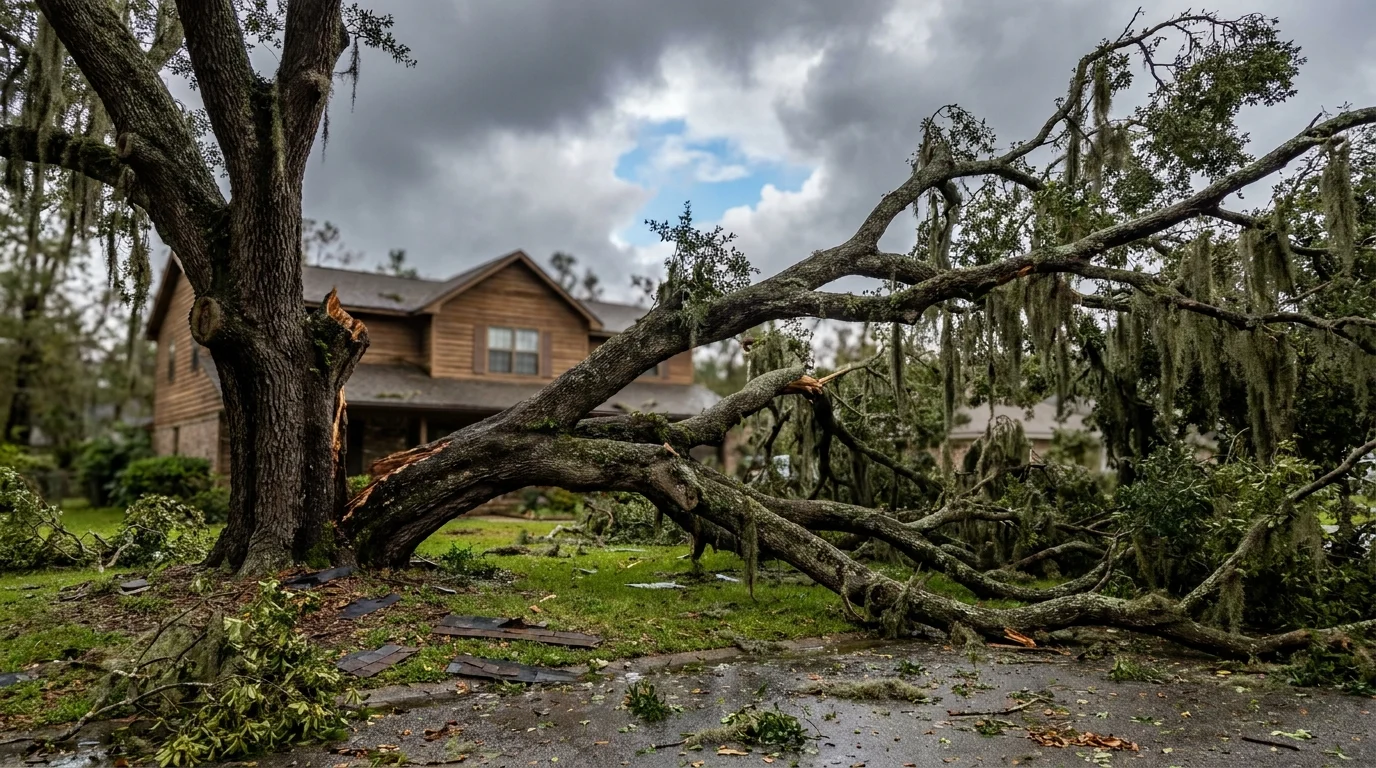
Can you trim a tree yourself without turning a small yard job into a roof, fence, or driveway problem? Sometimes you can. A few small dead twigs or low branches within easy reach may be fine, but a large tree near anything you care about needs more than a saw and a good guess.
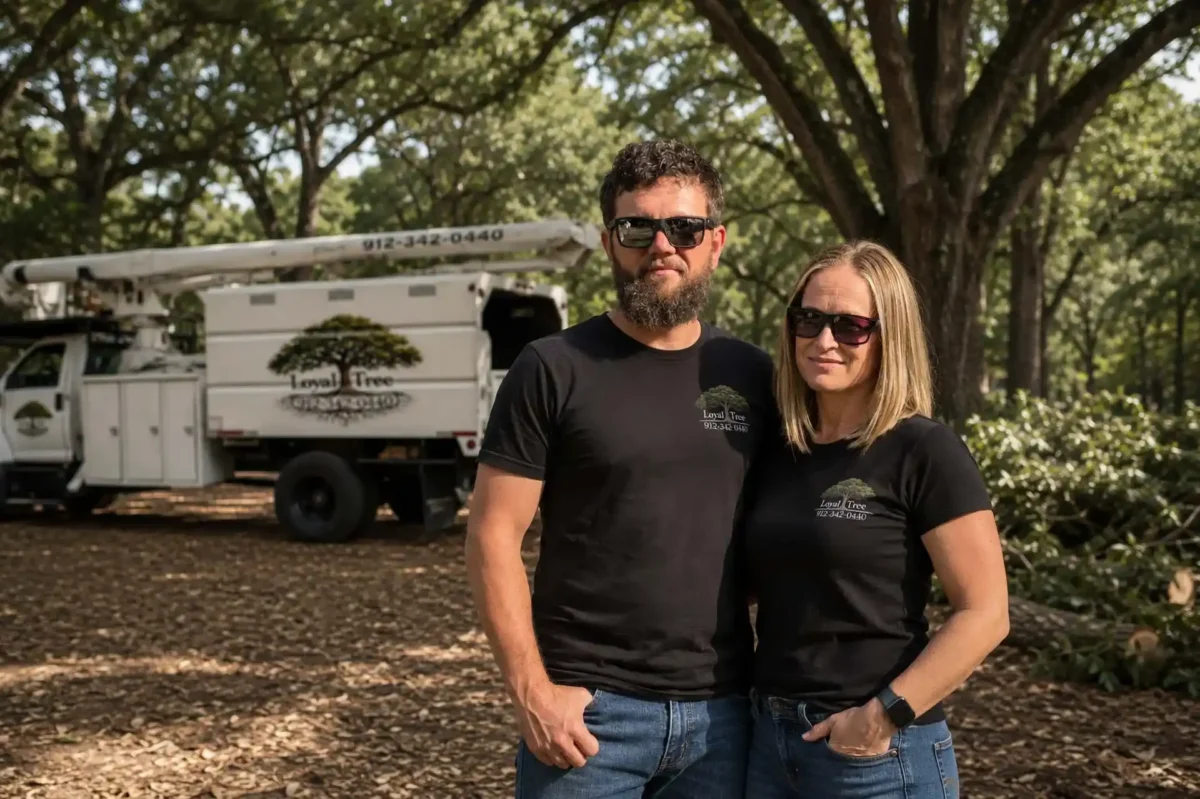
So, what does an arborist do that a routine trimming job doesn’t? At LoyalTree, we evaluate the whole tree, not just the branch you want removed, before recommending the right tree care. Mike Williams works in the field, while Mary Gledhill handles scheduling, estimates, and clear communication from the office.
Here is the plain answer on what can be pruned, what may be saved, and when it’s time to call for help.
Key Takeaways
- An arborist evaluates tree health, structure, roots, lean, and nearby hazards before making a cut.
- Small ground-level pruning can be manageable, but ladders, chainsaws, and large limbs aren’t a DIY mix.
- Proper pruning can preserve a tree. Topping and random cuts can leave it weaker.
- Pines, live oaks, sandy soil, and storm season change the risks around coastal Georgia homes.
- A damaged or hard-to-read tree deserves a calm, on-site assessment before removal is considered.
Do You Need an Arborist to Trim a Tree? What Does an Arborist Do?
The short answer is no, not every branch needs an arborist. But when a tree is tall, damaged, close to a house, or hanging over a driveway, an arborist’s judgment matters.
An arborist is a tree care professional who understands tree health, structure, and safe work practices. Their work draws on arboriculture, the study and practice of managing trees.
Routine tree trimming and pruning can help a tree maintain a stronger shape. Tree pruning should address a specific goal with every cut, such as clearing a roof, removing deadwood, or reducing weight on a weak limb. An evaluation also considers the tree’s structure and the risks around it.
A certified arborist may hold a credential associated with the International Society of Arboriculture. Credentials can show specialized training, but they don’t replace a site-specific assessment.
The right recommendation could be monitoring, preservation work, tree cabling and bracing, or removal. Cabling and bracing only make sense when they address a specific structural concern. We don’t start with the assumption that a tree has to come down.
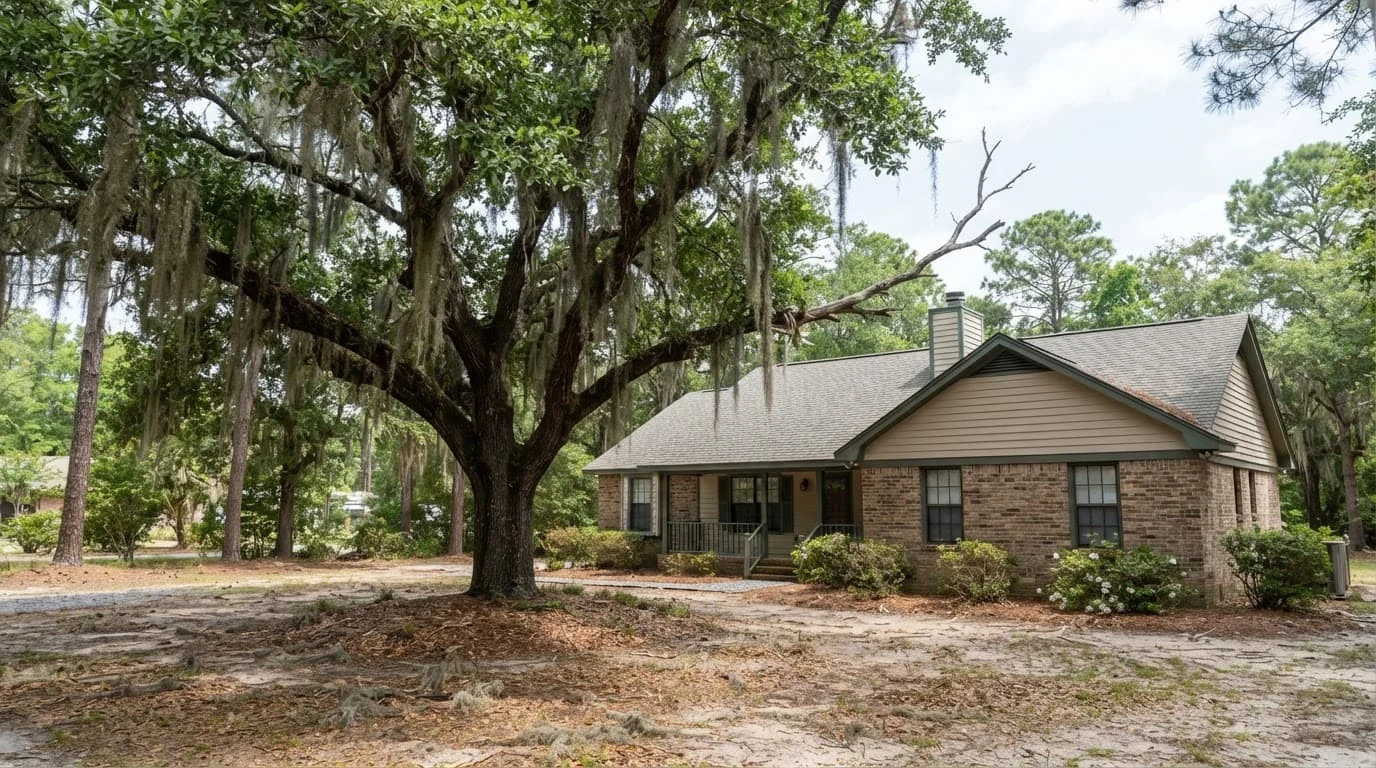
What a Professional Tree Assessment Looks For
We start from the ground and look up, then take a closer look when the site allows it. Cracks, cavities, dead branches, hanging limbs, and limbs rubbing a roof all matter.
We also look for included bark, where two stems are pressed together with bark trapped between them. That connection can be weak. Tree biology helps explain why branch attachments, decay, roots, and a tree’s response to pruning matter.
Mushrooms near the base, exposed roots, trunk decay, soil movement, and a fresh lean can change the recommendation too. Tree diseases can create symptoms that resemble structural defects, so the cause matters.
A tree risk assessment weighs defects, nearby targets, and the likelihood of failure. A complex or disputed evaluation may be documented in an arborist report, though not every estimate includes one.
One warning sign doesn’t always mean removal. Trees can have scars and still be sound. The job is to judge the risk in front of you and preserve the tree when that remains reasonable.
When Trimming Is Safe to Handle Yourself
You may be able to remove small dead twigs or a few low branches from the ground. Keep the job small, and only work when there are no power lines, roads, buildings, people, or signs that the tree is unstable.
Don’t climb a tree. Don’t run a chainsaw from a ladder. Don’t try to catch, hold, or steer a large limb as it falls.
A clean cut doesn’t make a risky job safe. If you can’t clearly predict where the limb will go, it isn’t a one-person yard chore.
Can the Tree Be Saved, or Is Removal the Safer Choice?
A mature live oak can shade a whole backyard. An old pine may have stood beside the house for decades. We understand why homeowners in Guyton, Rincon, and Springfield want a preservation-first answer before anyone talks about taking a tree down.
We weigh the tree’s health, defects, species, root condition, recent storm damage, and what sits beneath it. A limb over open lawn isn’t the same as that limb over a bedroom or a parked car.
Pruning can remove damaged weight and improve structure. Tree biology also limits what pruning can accomplish. It can’t reverse severe internal decay, a badly split trunk, major root failure, or a tree that leans toward the house with too much risk left behind.
Tree cabling and bracing can support some weak unions, but they can’t correct severe decay or failed roots. When a hazard can’t be managed reasonably through preservation, hazard removal may be the safer choice. In those cases, tree removal may be the honest answer. An arborist report can help explain the recommendation when defects are significant or insurance documentation is needed. Cleanup comes with the work, and stump grinding can be arranged afterward if the stump is in the way.
Warning Signs That Need a Closer Look
Call for an assessment if you notice a fresh crack, bark pulling away from the trunk, a new lean, lifted soil around the roots, or a hollow-sounding area.
Large mushrooms at the base, hanging branches, and limbs resting on a roof or driveway also deserve attention. Keep children and pets away from a tree that shifted after a storm. No one sign proves a tree will fail, but these signs shouldn’t be ignored.
Why Tree Topping and Improvised Cuts Cause Problems
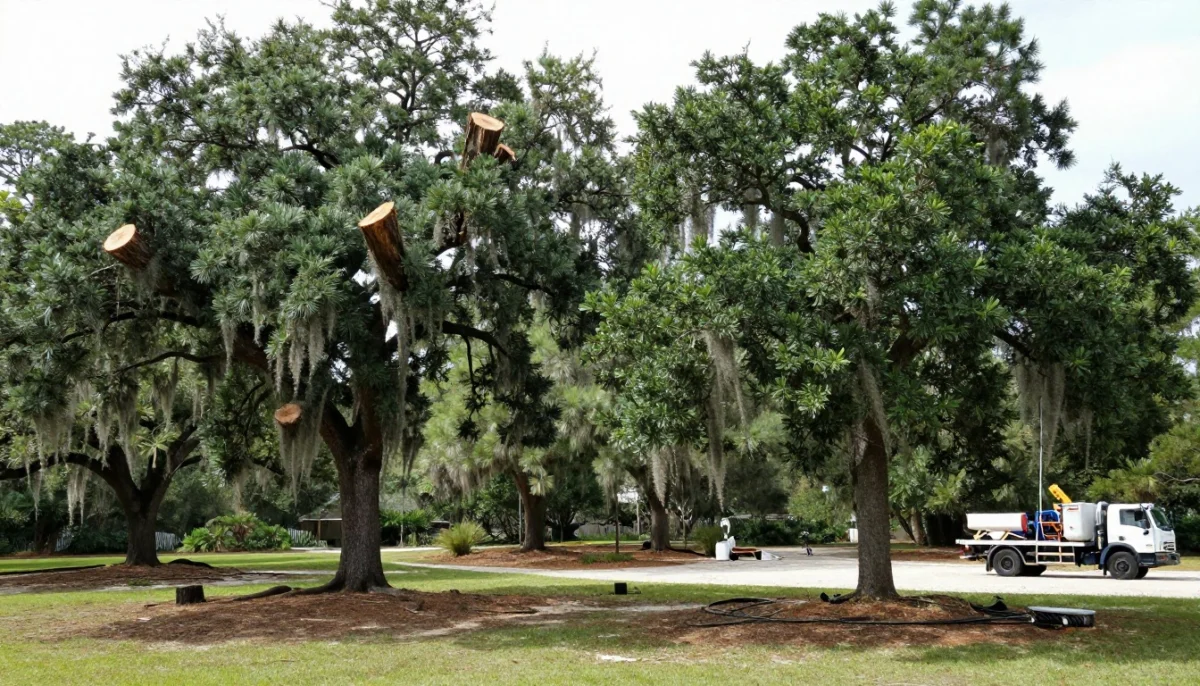
Topping means cutting major branches back to blunt stubs. It may make a tree look smaller for a while, but it often pushes out fast, weak shoots and leaves bigger wounds behind.
Over-pruning can stress a live oak, pine, or shade tree. It can also expose bark to sun and leave a canopy less balanced than before. UGA notes that poor pruning practices, including topping, can contribute to wood rot in landscape trees in its guidance on hazardous trees.
Before a major cut, ask what it is meant to fix. If there’s no clear reason, the cut may not belong there.
Why Local Conditions Matter for Tree Trimming in Coastal Georgia
Tree work around Effingham County isn’t one-size-fits-all. Loblolly and slash pines can lose large limbs, snap, or uproot when the ground is soaked and winds pick up. Big live oaks and water oaks may carry heavy limbs over homes on older lots.
Sandy soil drains quickly, while clay holds water longer. Both can affect root stability. A tree that looks fine in dry weather may tell a different story after days of rain.
Hurricane season runs from June through November, but summer thunderstorms can bring strong winds well before then. In newer subdivisions around Bloomingdale, Pooler, and Richmond Hill, check HOA rules before major work. Public trees, rights-of-way, and local-government questions may involve a municipal arborist rather than a private residential tree service. These concerns also connect to urban forestry and development planning.
Storm Season Is the Wrong Time to Discover Weak Limbs
Preventive inspection before storm season can reveal deadwood, weak branch attachments, and limbs over a roof or driveway. Pruning reduces some hazards, but no pruning plan can promise a tree won’t be damaged in a hurricane or thunderstorm.
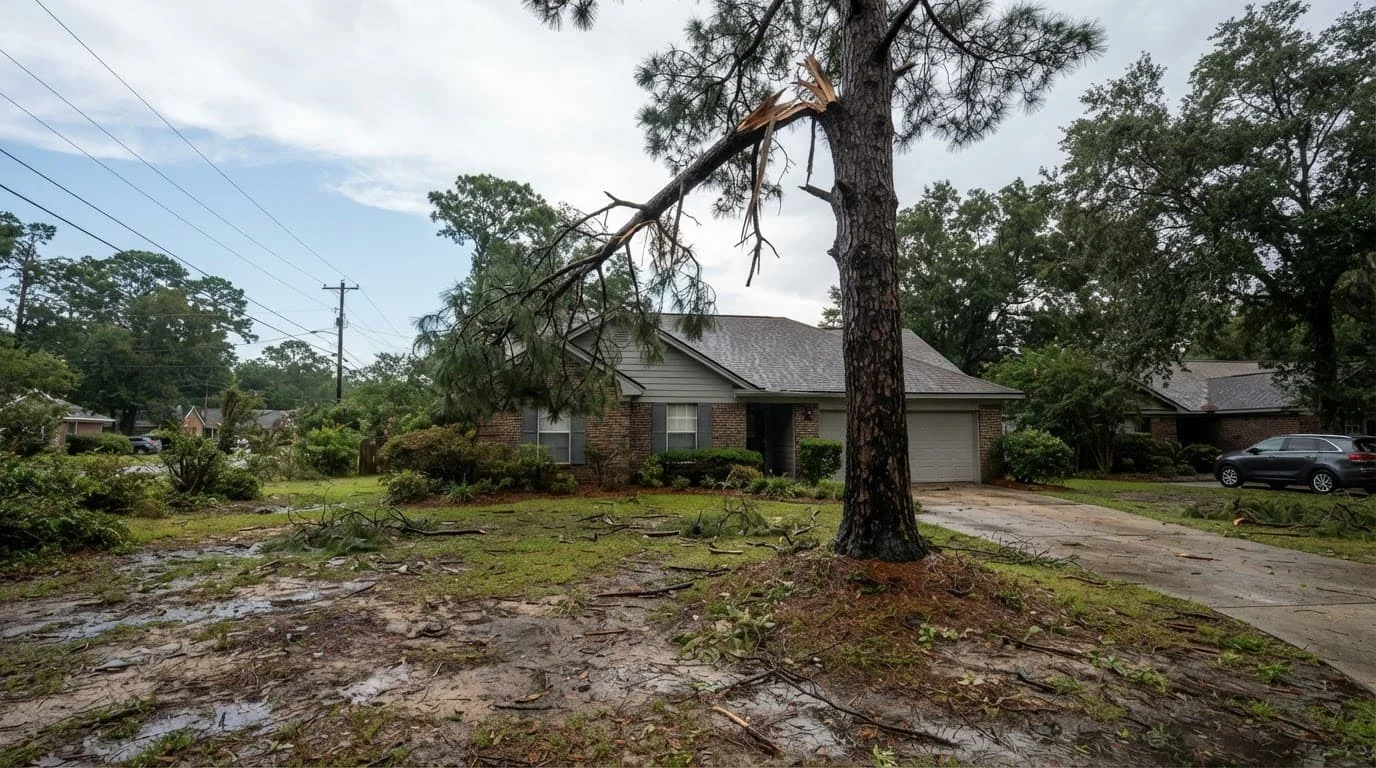
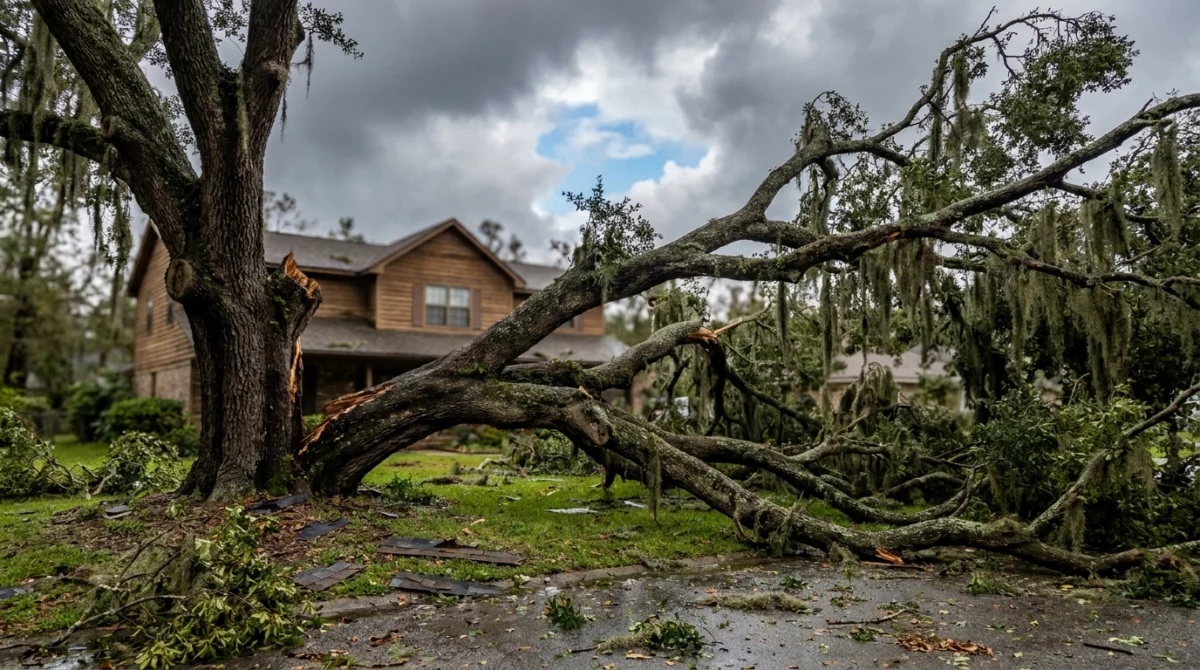
After a storm, stay clear of tangled or energized lines. A utility arborist or the electric utility should handle vegetation near energized lines. For fallen trees, hanging limbs, blocked driveways, or trees on structures, use our emergency tree services. UGA Extension also advises care with storm-damaged trees, especially when removing broken limbs and deciding what can remain safely.
A branch can look solid from the yard and still be cracked where it joins the trunk. Storm damage often hides above eye level.
What Happens When an Arborist Trims a Tree?
A good service day starts with a conversation at the property. We confirm your concerns, review the tree and nearby targets, then explain the work plan in plain English.
Our crew sets up with the house, fence, lawn, driveway, and landscaping in mind. Major limbs are managed in sections when needed. Each cut should have a purpose, not be made because a branch happens to be there.
Licensed and insured professionals bring the right equipment, including climbing ropes when needed. When climbing is required, a climbing arborist coordinates with a ground arborist to keep the work controlled. No outdoor job is risk-free, but planning makes a real difference. When we’re done, we clean up and walk the site with you.
The final recommendation may be future maintenance, monitoring, tree cabling and bracing, preservation, pruning, or removal. The choice depends on the tree’s structure and risk, not an automatic add-on. A good answer isn’t always the biggest job.
Questions to Ask Before Hiring a Tree Service
Ask direct questions before work begins:
- Is the company licensed and insured, and who will be on site?
- What cuts are recommended, and what problem does each one solve?
- How will the crew protect the house, fence, lawn, and driveway?
- Is cleanup included, and what happens if hidden decay is found?
- Are there HOA rules or county requirements you need to check first?
Choose clear communication and a written plan over the lowest promise or a rushed opinion.
When to Call Us for a Tree Trimming Assessment
Call LoyalTree when a tree is too tall to reach safely, close to a roof or utility line, damaged by weather, or showing signs you can’t interpret from the ground.
We can help determine whether it needs pruning, monitoring, support, or tree removal.
Mike is our lead arborist and operations manager, and he oversees the field work. Mary coordinates scheduling, estimates, and communication, so you know where things stand before the crew arrives.
We work across Guyton, Rincon, Springfield, Bloomingdale, Effingham County, Richmond Hill, Pooler, and Savannah. If you’re unsure what a tree needs, you can request a free estimate and we’ll take a look. If documentation is needed, we can discuss whether an arborist report is appropriate.
Frequently Asked Questions
Is an arborist needed for every tree trimming job?
No. Small, reachable pruning from the ground may not need professional help. Height, condition, location, nearby structures, power lines, and unstable limbs matter more than the number of branches you want removed.
Can an arborist tell whether a tree is dangerous?
An arborist can inspect visible defects, tree structure, roots, lean, health, and what could be hit if the tree fails. No visual inspection can predict every failure, especially after changing weather. It can still provide a practical recommendation based on the tree and its location.
Do arborist credentials matter when evaluating tree risk?
Credentials and risk-assessment qualifications vary, so homeowners should verify what a person actually holds. A certified arborist may have general tree-care credentials, while a TRAQ qualification reflects specific risk-assessment training. A board certified master arborist may have advanced professional experience, and a consulting arborist can provide an independent opinion or documentation when needed.
Does the term tree surgeon mean someone is certified?
Not necessarily. Tree surgeon is a general industry term, not proof of a specific certification. Ask about training, insurance, experience, and verifiable qualifications before hiring a company.
Is it better to trim trees before or after storm season?
Routine inspection and needed pruning are better handled before severe weather when possible. Waiting until a limb breaks leaves fewer safe options. UGA’s guidance on care for storm-damaged trees also stresses careful pruning of broken branches once the tree and area are safe.
What should happen to the stump after removal?
A stump can stay in place, be cut low, or be ground below grade. Grinding is often helpful when you want to mow, replant, or use that part of the yard for tree planting. Before planting, confirm the stump is removed, utilities are located, and the space suits the replacement tree.
A Safer Answer Starts With Looking at the Whole Tree
An arborist is most useful when a tree is large, damaged, near a target, or difficult to assess. Safe trimming starts with a careful evaluation. Sometimes the best choice is preserving the tree instead of removing it.
Around Guyton, Rincon, Effingham County, Richmond Hill, Pooler, and Savannah, trees deserve a close look before a saw goes up. If you want a clear answer about the tree in your yard, request a free estimate from LoyalTree.