After a tree comes down, the stump can feel like the last piece of a job that should already be over. An unused stump can become an eyesore, interfere with mowing, sit beside the driveway, or take up space where you planned to plant grass.
The plain answer on stump grinding vs stump removal is that both deal with the stump, but they leave your yard in different shape. Around Guyton, Rincon, Springfield, Bloomingdale, Richmond Hill, Pooler, and Savannah, the most cost-effective choice depends on your future plans for that spot, the roots below it, equipment access, and nearby structures.
Key Takeaways
- Stump grinding cuts the visible stump below ground level and leaves most of the root system in place.
- Stump removal pulls out more root mass but requires wider digging and soil repair.
- Grinding can be a cost-effective choice for lawn areas, easier mowing, and reducing a safety hazard.
- Building, hardscape work, and deep replanting may call for removal instead.
- Soil, utilities, mature trees, storm damage, and access all affect the right choice.
Stump Grinding vs Stump Removal: How Each Method Works
A stump grinder uses a cutting wheel to chew the stump into small wood chips. Stump grinding reduces the visible stump while much of the root system and some tree roots remain underground. For many yards, stump grinding is a practical, cost-effective way to reclaim the space.
Stump removal is more involved. It means digging around the stump, cutting larger roots, and lifting out more of the stump and root ball. That leaves a larger excavation, more loose soil, and more yard repair afterward.
The visible stump doesn’t tell the whole story. Buried utility lines, tight gates, soil conditions, stump size, fences, and nearby concrete all affect how the work needs to be done.
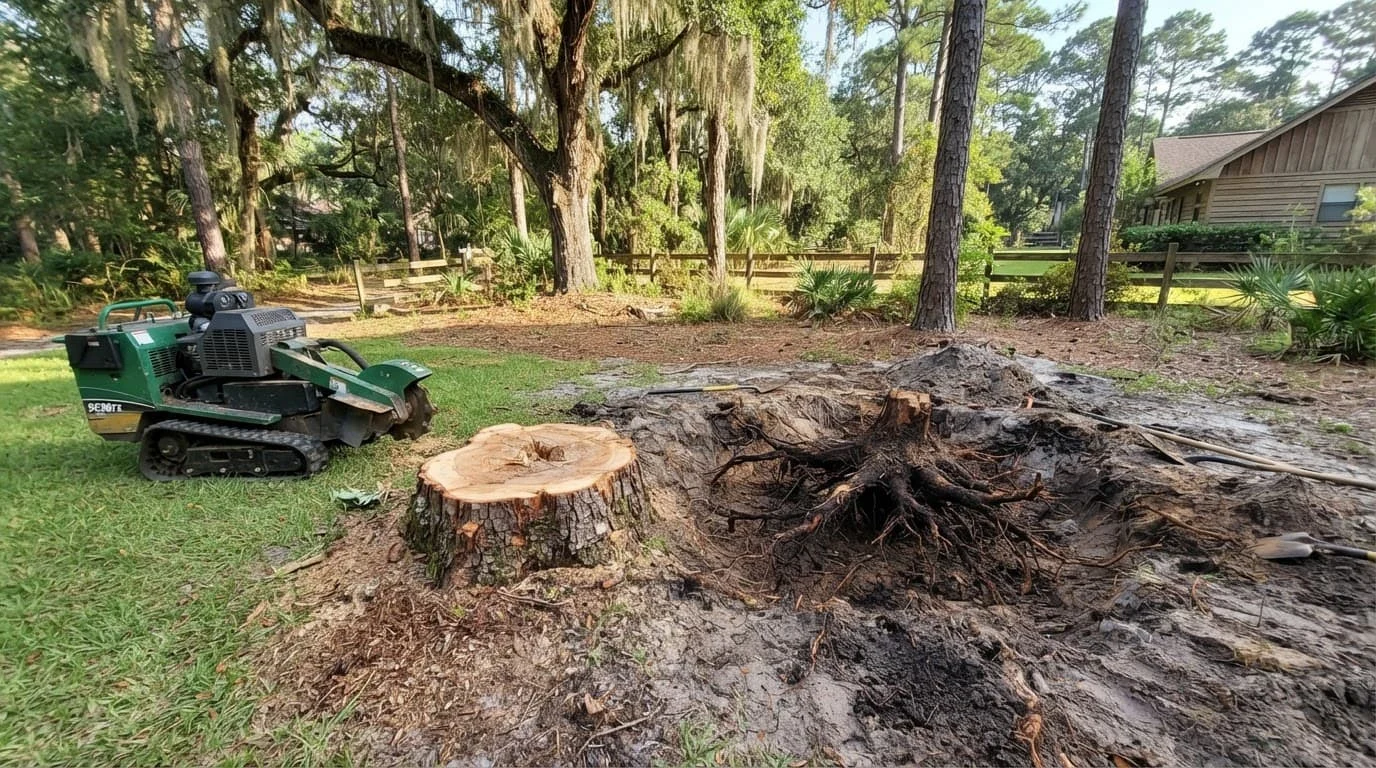
What Happens to the Roots and Wood Chips
Grinding doesn’t remove every root. It takes care of the stump and the upper root flare, which is the wide base where roots spread out from the trunk. The roots left below ground usually break down over time.
The wood chips stay in the ground unless they are removed or moved elsewhere. This organic material can settle as it begins to decay. Depending on the soil conditions, the area may sink a little, which can affect soil stability. Limited excavation and clean soil may be needed before seeding grass, laying sod, replanting, or installing mulch.
Removal takes out more wood and roots, but it also leaves a larger excavation that needs backfill. If you plan a walkway, patio, building, or other construction projects, that extra digging may be worth the added labor and restoration.
Why Stump Removal Is Not Always the Better Choice
More digging isn’t always better digging. Pulling a stump can disturb a lawn, irrigation line, fence post, patio edge, driveway, or roots from trees you want to keep.
A stump near a home, septic system, utility route, or large live oak needs a careful look first. We don’t assume removal is the answer because it sounds more complete. We look at what the ground can handle and what you plan to do there next.
A stump can be gone while the surrounding yard is worse off. The goal is a usable space, not the biggest hole possible.
Which Stump Solution Fits Your Yard and Future Plans?
Start with one question: what do you want this spot to become?
Grinding is often a good fit when you want smoother mowing, a cleaner-looking yard, fewer trip hazards, or space for grass and shallow planting. It can also limit lawn disruption where a large excavation would cause more damage than the stump itself.
A full extraction may make more sense when you’re building, installing hardscape, digging for a footing, or planting something that needs deeper soil. A stump beside a future shed pad is a different job than one at the back edge of a wooded lot.
Some tree species can send up new regrowth after incomplete treatment. Your plans for the area can help determine the right approach.
When the Stump Is a Safety or Pest Concern
A stump beside a walkway, driveway, play area, or gate can become a safety hazard. The same goes for sharp broken wood, blocked access, or a stump that has become soft and hollow.
Normal decay doesn’t automatically mean there’s a pest problem. Carpenter ants and termites are examples of activity that should be evaluated, not assumed. Location and condition still matter, especially when rot has made the wood soft or hollow.
If the original tree was dead, leaning, or damaged in a storm, the stump may be only part of the concern. A certified arborist can assess nearby trees before another limb or trunk becomes the next problem. That may include a broader tree removal evaluation.
Why DIY Stump Work Can Go Wrong
DIY stump grinding and DIY stump removal can go wrong when hidden lines, buried roots, or uneven ground are present. The work also becomes riskier near lawns, irrigation, fences, concrete, and structures.
A stump grinder is heavy equipment. Debris can fly, and digging or excavation near utilities can cause serious damage in a hurry.
Before anyone puts a shovel in the ground, contact Georgia 811 to have member utility lines marked. Markings don’t replace a site assessment, but they are an important first step.
We wouldn’t advise burning a stump, cutting deep into it with a saw, or trying to pull it with a truck near a house or utility path. Those shortcuts can leave you with more damage than stump.
How Coastal Georgia Conditions Affect Stump Work
Coastal Georgia soil conditions vary from yard to yard. Sandy soil around parts of Effingham County, Pooler, and Savannah can shift and expose roots more easily. Clay-heavy ground can hold moisture and affect soil stability during digging or equipment access.
These differences can change the scope and cleanup needs of excavation. Wet clay may slow the work, while loose sand can require extra care around nearby surfaces.
Loblolly and slash pines can have spreading roots, especially after they snap or uproot in high winds. Big live oaks and water oaks often leave a substantial root system near homes, driveways, fences, and older utility runs.
Hurricane season runs from June through November, and summer thunderstorms can bring down limbs and trees with little warning. Uprooted trees may leave a large root ball, while a fallen trunk can block a driveway or damage a nearby structure. In that situation, storm damage and emergency tree service comes first.
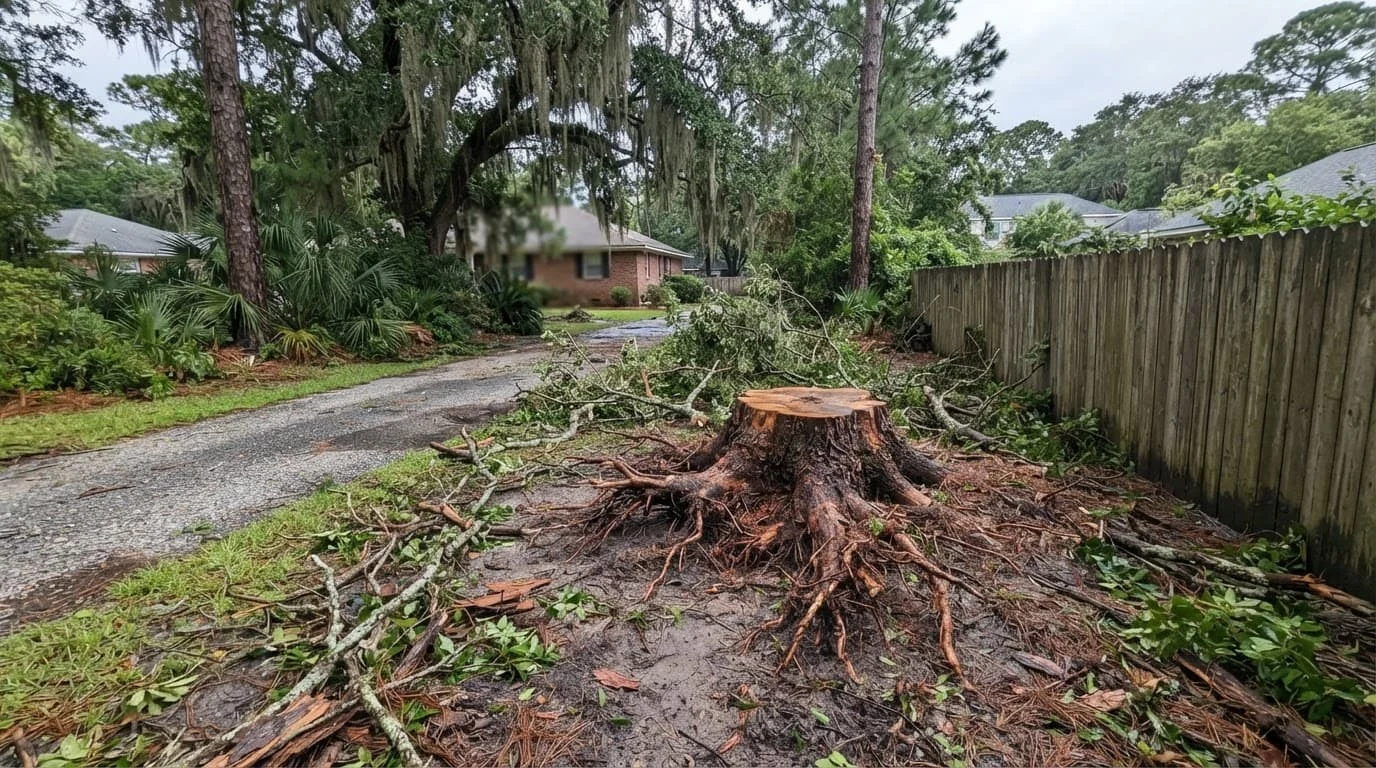
Old Lots, Mature Trees, and Nearby Property Features
Older lots in Guyton, Rincon, Richmond Hill, and Savannah often have mature trees and surprises below ground. Tree roots may be close to foundations, septic systems, irrigation, sheds, fences, and old utility lines.
Newer subdivisions have their own concerns. HOA rules may affect landscaping, tree work, equipment access, or where material can be placed. Property owners may also have county questions when a project changes the property or involves protected trees.
We plan access before equipment enters the yard. The shortest route isn’t always the safest one for your lawn, fence, or nearby trees.
When to Call Us for a Stump Assessment and Free Estimate
For property owners, it helps to share where the stump sits, its rough size, and whether equipment can reach it through a gate or around a house. Tell us if the tree recently fell, if storm damage is involved, and what you hope to do with the area afterward, including future landscaping plans.
We’re a family-owned, licensed and insured tree service based in Guyton. Mike Williams oversees field work with 20+ years of hands-on tree experience. Mary Gledhill handles scheduling, communication, and coordination, so you aren’t left guessing about the next step.
We offer stump grinding as an add-on after tree removal, while stump removal may involve excavation and backfill. A site visit is the most cost-effective way to choose the right scope, since it reveals access, slope, roots, nearby structures, and soil conditions before work starts. We can recommend an approach after reviewing the site, though restoration needs vary.
Don’t dig, burn, or cut into a stump near utilities, a foundation, a septic area, or a fence line. You can request a free estimate when you’re ready for a straight answer.
Frequently Asked Questions
Can stump grinding lower a stump below the yard surface?
Yes. Stump grinding usually lowers the stump below grade, beneath the surrounding ground level. The depth depends on the site and your plans for the area.
The remaining chips and low spot may need soil, mulch, or other finishing work before you seed grass or install another surface.
Will stump removal get rid of all the roots?
No. The process focuses on the visible stump and the upper part of its root flare. Most roots remain underground and break down over time.
That is often fine for lawn use. If you need deeper excavation for a project, let us know before work begins.
Is replanting a new tree where a stump was removed safe?
It depends on how much old wood and root mass remain, the soil condition, the old tree species, and the new tree’s location. An old stump hole isn’t always ready for a new tree.
Talk with a professional about soil replacement and planting distance. A new tree may do better a little away from the old root zone.
Should a storm-damaged stump be handled right away?
It depends on the hazard. A stump that blocks a driveway, has exposed roots, or sits by damaged structures may need attention sooner.
The bigger concern may be an unstable remaining tree, hanging limb, or uprooted root plate nearby. Keep people away from the area after hurricanes and high-wind thunderstorms until it can be assessed.
The Right Stump Choice Starts With the Ground Around It
Stump grinding is less disruptive and usually leaves the root system in place. Stump removal takes out more of the stump and roots, but it also brings more digging, soil movement, and restoration work.
The choice can affect soil stability, especially when removal requires digging and backfill to restore the area. The selected method can reduce a safety hazard when a stump sits near a walkway, driveway, or other traffic area.
Pines, live oaks, sandy soil, utility lines, access, and your plans for the yard all matter. For an on-site recommendation in Guyton, Rincon, Springfield, Bloomingdale, Effingham County, Richmond Hill, Pooler, Savannah, or nearby areas, request a free estimate from LoyalTree LLC.