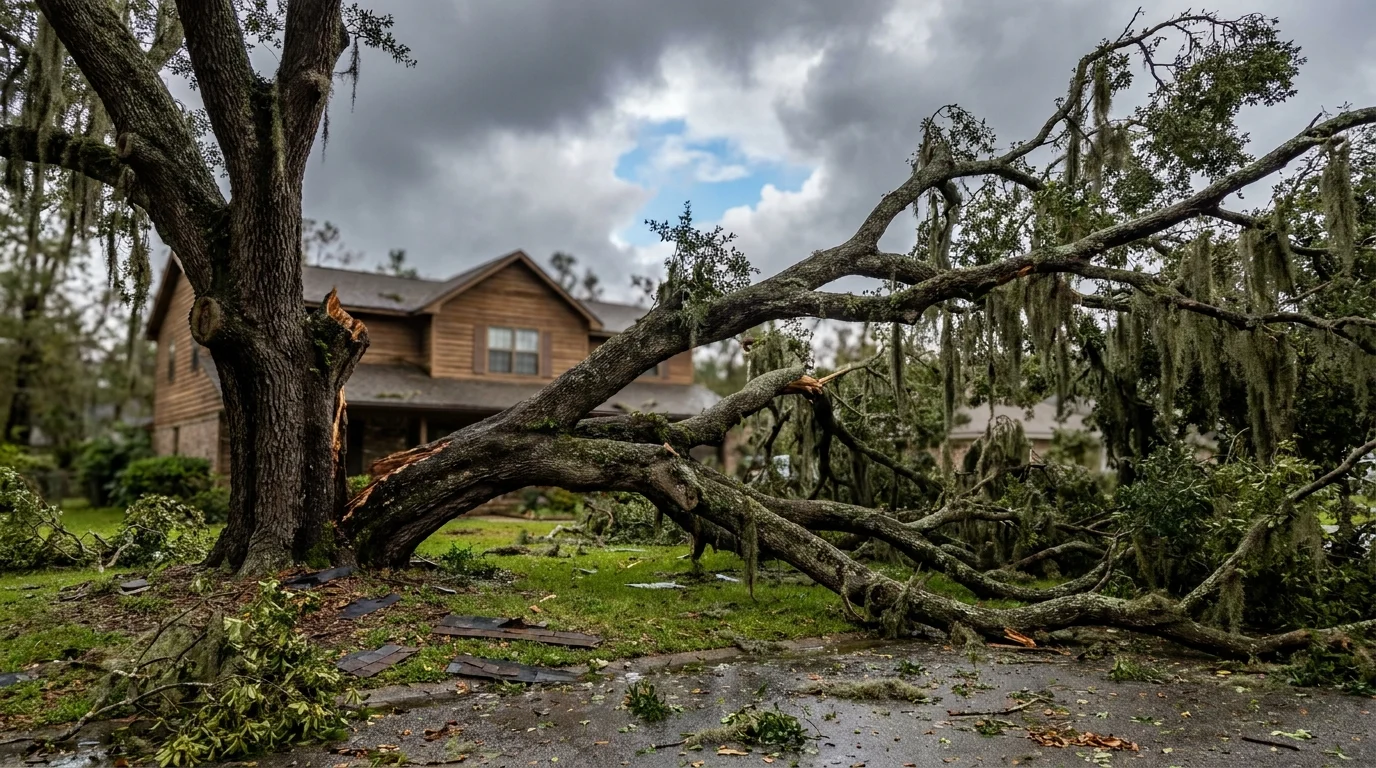
Do tree stumps grow back? Usually, no. A dead tree stump won’t rebuild itself into the tree you had before.
But fresh shoots around a cut stump can make it look like it is coming back. Can a tree regrow from an old stump, or do those shoots only create that appearance? Those shoots, along with roots, decay, insects, and an awkward location, can leave you with a problem long after the tree is gone. We see it across Guyton, Rincon, Springfield, Bloomingdale, Richmond Hill, Pooler, and Savannah.
Here’s how to tell what is happening, when a stump can stay, and when it is time to deal with it.
Key Takeaways
- A stump won’t become a healthy replacement tree, though some species can produce shoots from living roots.
- Fresh sprouts, green tissue, and repeated growth may mean part of the root system is still alive.
- Stumps near walkways, driveways, play areas, or future projects deserve extra attention.
- Stump grinding usually clears usable yard space with less disturbance than pulling out large roots.
- Don’t burn, pull, or treat a large stump with harsh chemicals before checking the risks.
Do tree stumps grow back? Learn what the new shoots really mean
A cut tree trunk does not heal, add height, or become a normal tree again. Can a tree regrow from this stump? No, the original trunk can’t become a full-sized tree.
A tree stump may retain living tissue even though the trunk is gone. Some deciduous trees can produce sucker shoots from a living root system. This response is sometimes called stump regeneration, but it doesn’t mean the original tree returns.
These shoots are a survival mechanism powered by stored energy. Cutting them off may improve the yard temporarily, but it doesn’t always stop the roots from trying again. Water oaks and other hardwoods can be persistent, depending on the tree species.
Signs the stump may still be alive
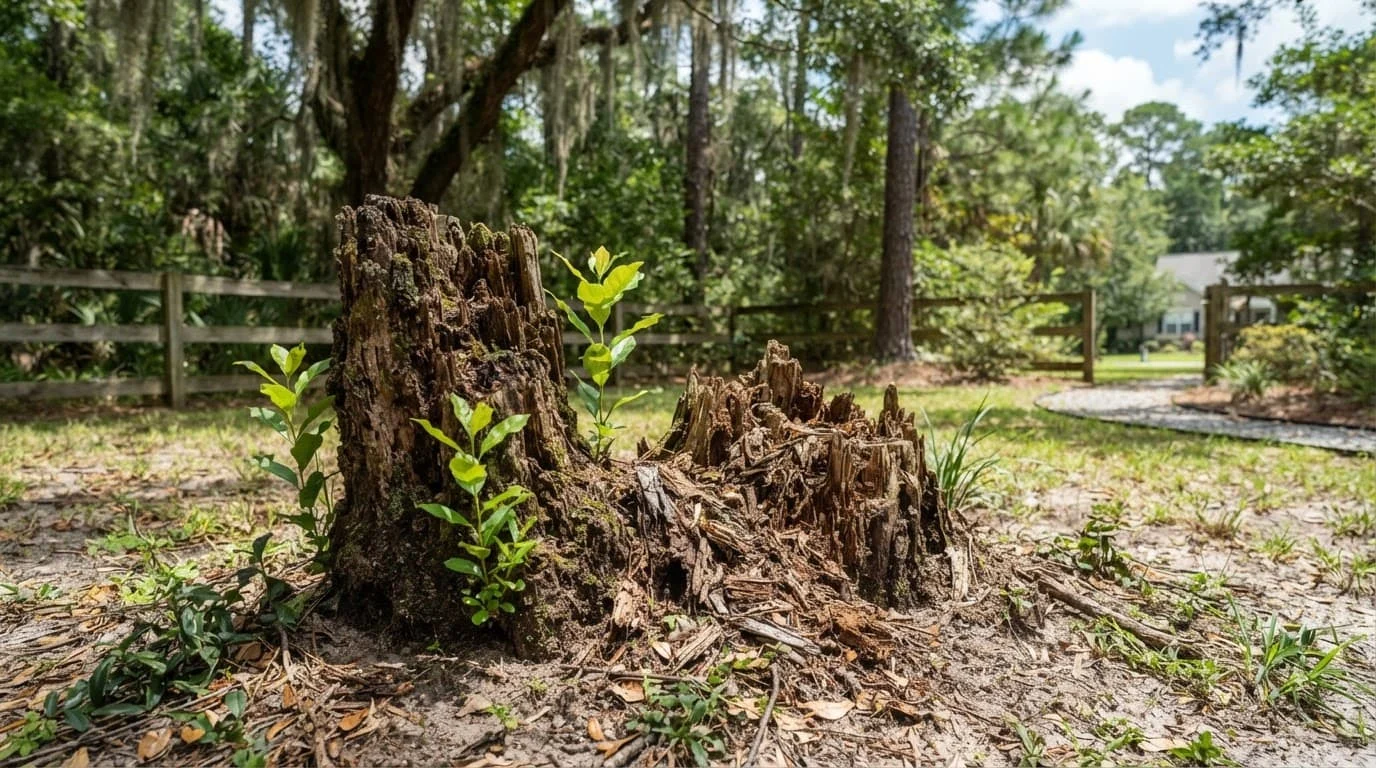
Fresh green shoots are the clearest sign. A thin layer of green, moist tissue under a small spot of bark can also point to living tissue. That layer is called the cambium layer, which moves water and nutrients through a tree.
Not every green plant near a stump comes from the old tree. Vines, weeds, and volunteer seedlings often appear in the same spot. Pine stumps, including many loblolly and slash pines around Effingham County, generally don’t send up new growth the way some hardwoods do. These sprouts aren’t normal replacement tree growth.
If you aren’t sure what you’re seeing, don’t assume the stump is harmless or alive based on one little sprout. Its location and condition matter more than guessing the species from across the yard.
What to do with an old stump in your yard
Leaving a tree stump alone can be reasonable. If it sits well away from the house, fence, garden, driveway, lawn mower path, and children’s play space, you may let it decay naturally. Keep an eye on it, though. Decay changes a stump over time, and its root system can still affect the surrounding ground.
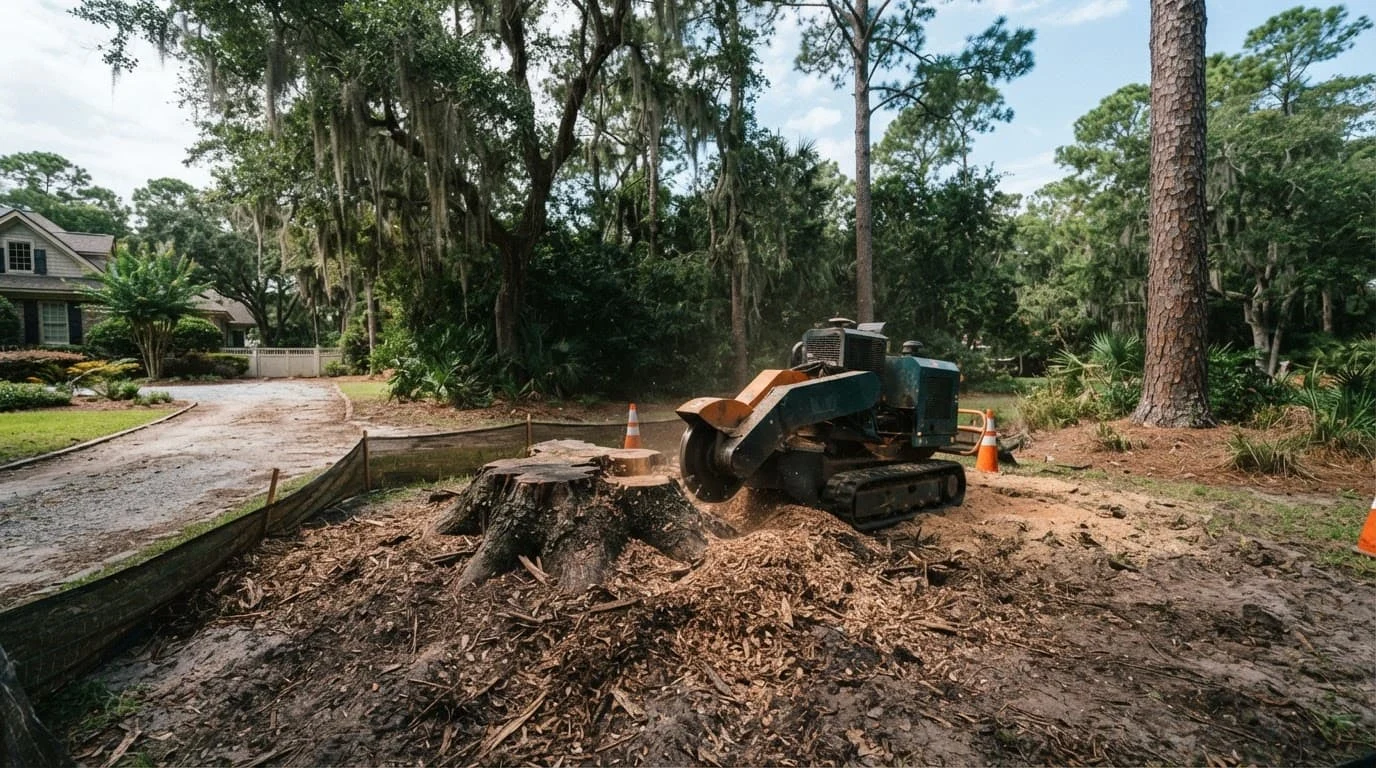
Some homeowners landscape around a low stump. Others cut back sprouts while deciding what to do. If the stump is in the way, stump grinding can bring it below the surrounding grade and open the area for mowing, planting, or future yard work.
Grinding is usually less disruptive than digging out a large root ball. There will still be wood chips and disturbed soil. The area may need settling, cleanup, and fresh soil before you plant grass or create a new shrub bed.
How to tell when a stump has become a hazard
A stump can be a trip hazard even when it is short. Hidden roots can catch a mower tire, a child’s foot, or a visitor walking across the lawn after dark.
Look for soft wood, hollow spots, mushrooms, carpenter ants, and insect activity. Decay alone isn’t a reason to panic. A decaying stump can become a pest magnet beside a driveway, home, play area, utility line, or walkway.
Sprouts can also block sightlines near a fence or driveway. Roots may lift soil, crowd a flower bed, or get in the way of a repair project.
Don’t burn a stump or use chemical stump killers as a shortcut. Fire can travel through roots, and chemicals can damage soil, pets, nearby plants, and groundwater.
Why stump removal is often not a simple DIY job
We understand why homeowners consider digging or pulling a stump. It looks like a straightforward weekend job until root systems run under irrigation lines, fence posts, septic areas, or a driveway.
A truck and chain can damage property fast. A rented grinder can be dangerous without the right access, ground conditions, and safety planning. Before any digging, follow the utility-location guidance in tree care information and call 811.
You can pick up loose debris and inspect the area from a safe distance. Large stumps, buried roots, and anything near utilities should be assessed by a licensed and insured tree professional.
Local stump problems around Effingham County and Savannah
Our yards aren’t all the same. Sandy soil around Pooler, Bloomingdale, and Savannah can shift and wash around exposed roots. Heavier clay pockets in Effingham County may hold water longer. Both conditions affect how a stump settles, decays, and creates landscape problems.
Large live oak and water oak root systems can spread well beyond the visible stump. On older wooded lots in Guyton, Rincon, and Springfield, roots may sit near buried lines, old drainage routes, or a new addition planned years after the tree came down.
Storm timing matters, too. Hurricane season runs from June through November, and summer thunderstorms bring their own hard winds. If a tree is leaning, cracked, or partly uprooted, deal with the larger danger first. UGA Extension’s hazardous tree guidance is a good reminder that storm-damaged trees need careful decisions, not rushed cutting.
Newer subdivisions can add HOA rules. County questions can come up when a stump is tied to grading, land clearing, construction, or a larger tree project.
What happens when a professional handles the stump
We start by looking at the tree stump, access route, nearby structures, visible utilities, and the ground itself. Then we confirm the work area and talk through what you want to do with that spot afterward.
When professional stump grinding is the right fit, we work below the surrounding soil line as conditions allow. The final depth depends on the roots, soil, stump size, access, and whether you plan to plant, mow, or build nearby. We manage the chips and leave the space ready for its next use.
If the stump belongs to a dangerous or storm-damaged tree that is still standing, the tree comes first. Our tree removal work addresses the remaining hazard before stump work begins. After a storm, a fallen or hanging tree may need storm damage and emergency tree service instead of a wait-and-see approach.
When to call us about an old stump or request a free estimate
Give us a call when a tree stump keeps producing new growth or creates a safety, access, or property concern. It is also worth asking when roots appear to affect a foundation, fence, or paved surface. We can help determine whether tree removal, stump removal, or a smaller repair is appropriate.
We are LoyalTree LLC, a family-owned, licensed, and insured company based in Guyton. Mike Williams brings 20+ years of tree care experience to every job site. Mary Gledhill handles estimates, scheduling, and the details that keep communication simple.
We serve Effingham County, Richmond Hill, Pooler, Savannah, and nearby communities. Property owners who are unsure whether the stump, roots, or remaining tree are safe can request an assessment. We’ll provide a straightforward answer and a clear path forward.
Frequently Asked Questions
Can a stump grow new branches after the tree is cut down?
Some trees can send up shoots from living roots or tissue left in the stump. That doesn’t mean the old trunk has become healthy again. If shoots keep returning after mowing or trimming, assess the stump instead of treating each sprout as a separate problem.
Can a tree regrow from an old stump?
It can, depending on the species and the living tissue left behind. New shoots may appear, but they rarely become a stable replacement for the original tree. Repeated shoots may require a longer-term solution.
How long can an old tree stump stay in the ground?
There is no set timeline. Tree species, stump size, moisture, soil, sunlight, and insect activity all affect how quickly wood breaks down. A stump can look decayed on top while solid wood and roots remain below ground.
Can a new tree be planted where an old tree stump was?
Planting in the exact location is often difficult. Remaining wood, roots, settling soil, and limited space can make it hard for a full-sized tree to become established. For a future live oak or another large shade tree, plan the location and soil preparation first.
Should an old stump be removed before selling a home?
Removal isn’t always required before a sale. Still, a visible trip hazard or a stump that blocks mowing can raise questions for buyers. We’d address stumps that create safety issues or interfere with planned landscaping, rather than removing one only for appearances.
Is it safe to grind a stump near underground utilities?
It can be safe when the site is checked and the work is planned around known lines and obstacles. Don’t assume visible utility boxes show where every line runs. Irrigation, septic components, and shallow roots also need consideration before work begins.
For storm cleanup, UGA Extension advises care with saw work because damaged trees can shift and bind unexpectedly. Their storm debris cleanup guidance is worth reading before tackling any larger job yourself.
A stump is not always finished business
A stump cannot help a tree regrow into a full-sized tree. Stump regeneration means limited sprouting from living tissue, not the return of the original tree. Decay and location can also make it more than a simple leftover. Don’t pull, burn, or chemically treat a large stump without knowing what’s under and around it.
We take a plain-spoken approach. We look at the stump, the yard, and what you need that space to do next. When you are ready, request a free estimate.