Every fall we get the same call two or three weeks after the first real rain: water is running down the side of the house, there is a stain on the ceiling, or the flower bed under the eave has washed out. Nine times out of ten the cause is sitting in the gutter, and it came off a pine.
Coastal Georgia has a particular fall cleanup problem. It is not the tidy October leaf pile you see in a magazine. It is pine straw, which drops in huge volume, packs down like felt, and does not wash through a downspout. Then the oaks and sweetgums layer on top of it.
We are LoyalTree LLC, family-owned and working out of Guyton. Mike Williams brings 20+ years of hands-on tree experience. Here is the fall cleanup that actually protects the house, and the part of it that is genuinely a tree job rather than a Saturday job.
Key Takeaways
- Pine straw is the real gutter problem here, not leaves, because it mats and holds water.
- Pines shed their old interior needles every fall. That is normal and not a sign of a dying tree.
- Overhanging limbs are what load the roof, so trimming them back cuts the cleanup permanently.
- Do the gutters twice: once after the pine drop and once after the hardwoods finish in winter.
- Getting on a wet roof or up a ladder against a tree is where people get hurt. Hire that part out.
Why Pine Straw Is Worse Than Leaves
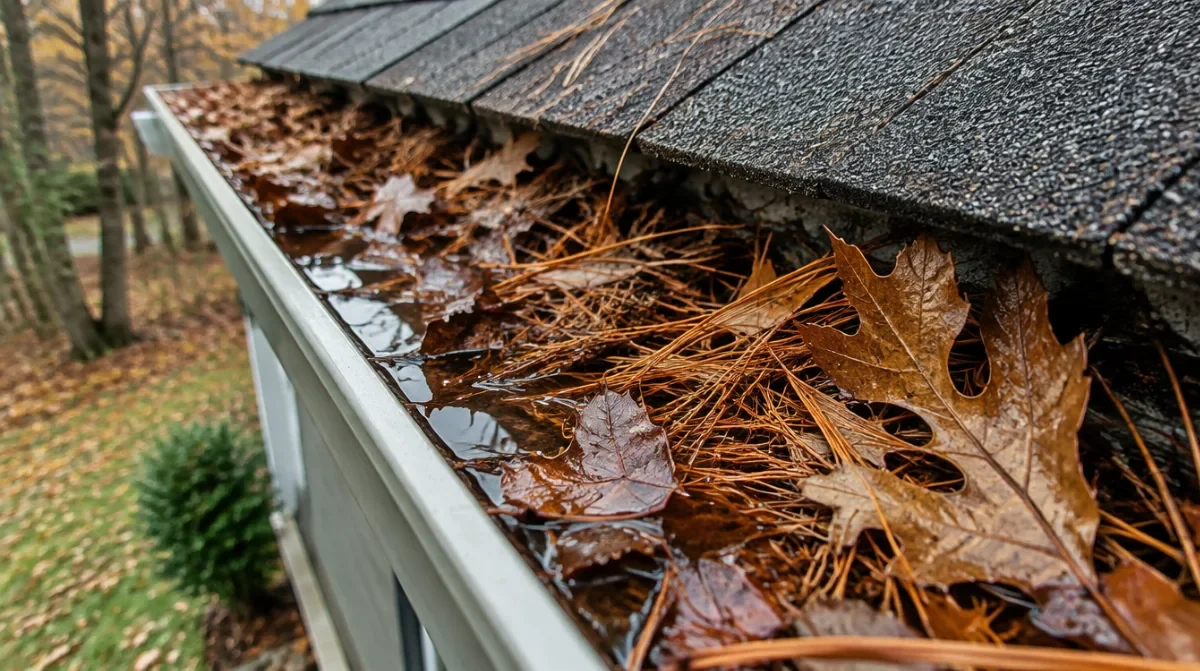
An oak leaf is broad and flat. When it lands in a gutter it usually slides, and when enough water hits it, a good bit of it moves toward the downspout. Pine needles are the opposite. They come down in bundles, they interlock, and once they get wet they compress into a dense mat that water cannot get through.
That mat does several unhelpful things at once. It holds standing water against the gutter seams and the fascia board. It traps grit that turns into soil, and then things start growing in your gutter. It plugs the downspout elbow with a wad you basically have to pull out by hand. And it adds real weight, which is how gutters pull loose from the fascia.
On top of that, pine straw in a roof valley acts like a sponge sitting directly on shingles. Kept wet all winter, we have seen that shorten a roof and let water work in under the shingle edge.
Yes, Your Pines Are Supposed to Do This
Worth saying plainly, because people panic about it every October.
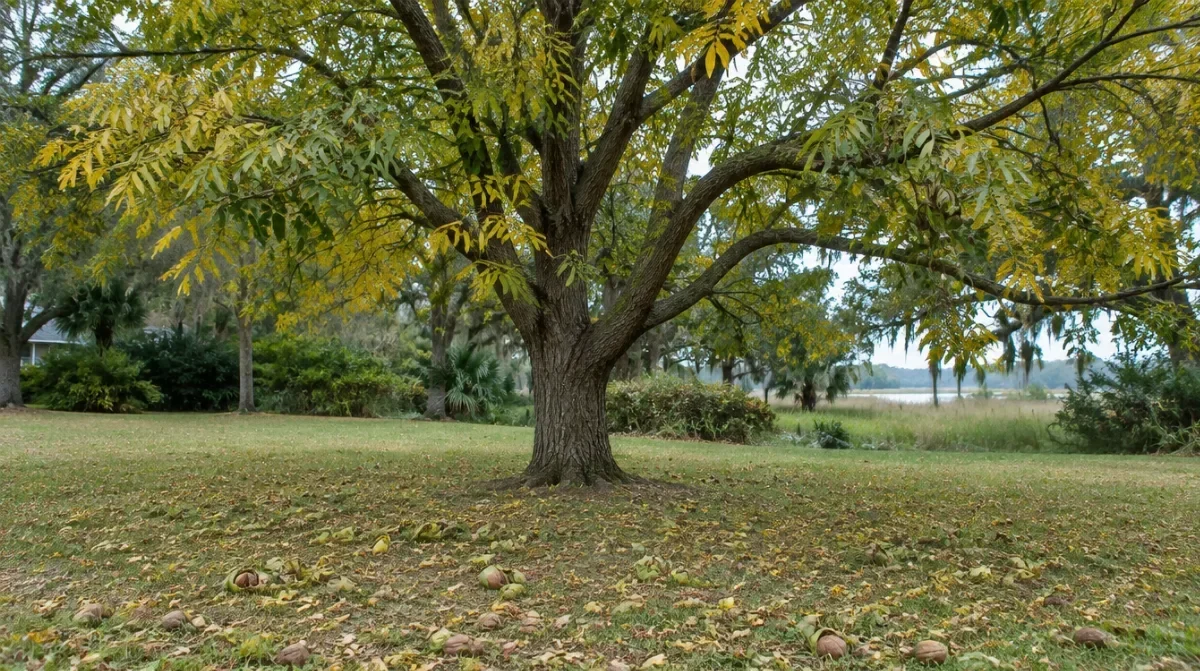
Loblolly and slash pines, the two you see most around Effingham and Chatham County, are evergreen but they do not keep a needle forever. Needles live roughly two to three years, and the tree sheds the oldest ones in the fall. Those old needles are on the inside of the branches, close to the trunk, so the tree turns brown from the inside out while the branch tips stay green.
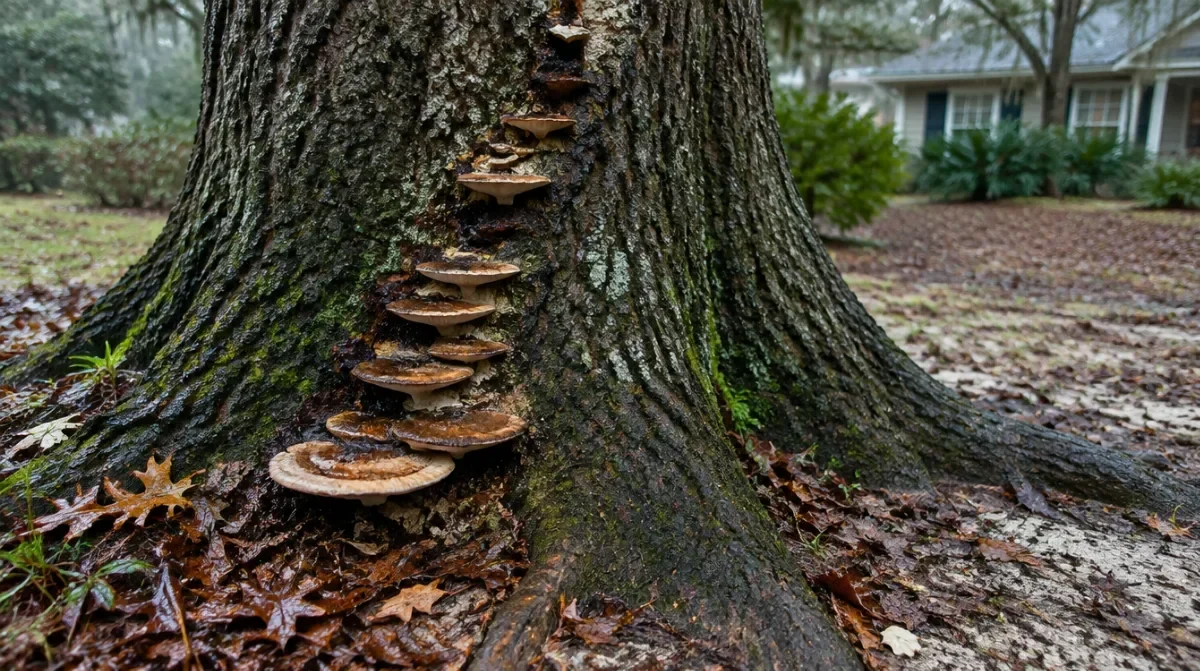
That is normal. What is not normal is browning at the ends of the branches, an entire tree going brown at once, heavy needle drop well outside the normal fall pattern, or pitch and sawdust running down the trunk. Those point to a real problem, and our article on pine trees in storms covers what pine failure looks like around here.
The Fall Cleanup, In the Order That Matters
1. Clear the roof before the gutters
Pull the straw out of the valleys and off the low-slope sections first. If you clean the gutters and leave a foot of straw sitting in the valley, the next rain washes it right back in. Use a blower or a soft roof rake from the ground or from a stable position, not a stiff rake dragged across shingles.
2. Do the gutters twice
Once when the pine drop slows, usually November around here, and again once the water oaks and sweetgums finish, which runs into February or March. One cleaning in October is not enough in coastal Georgia, and that is the mistake most people make.
Check the downspouts separately. A clear gutter with a plugged elbow still overflows.
3. Deal with what is overhanging
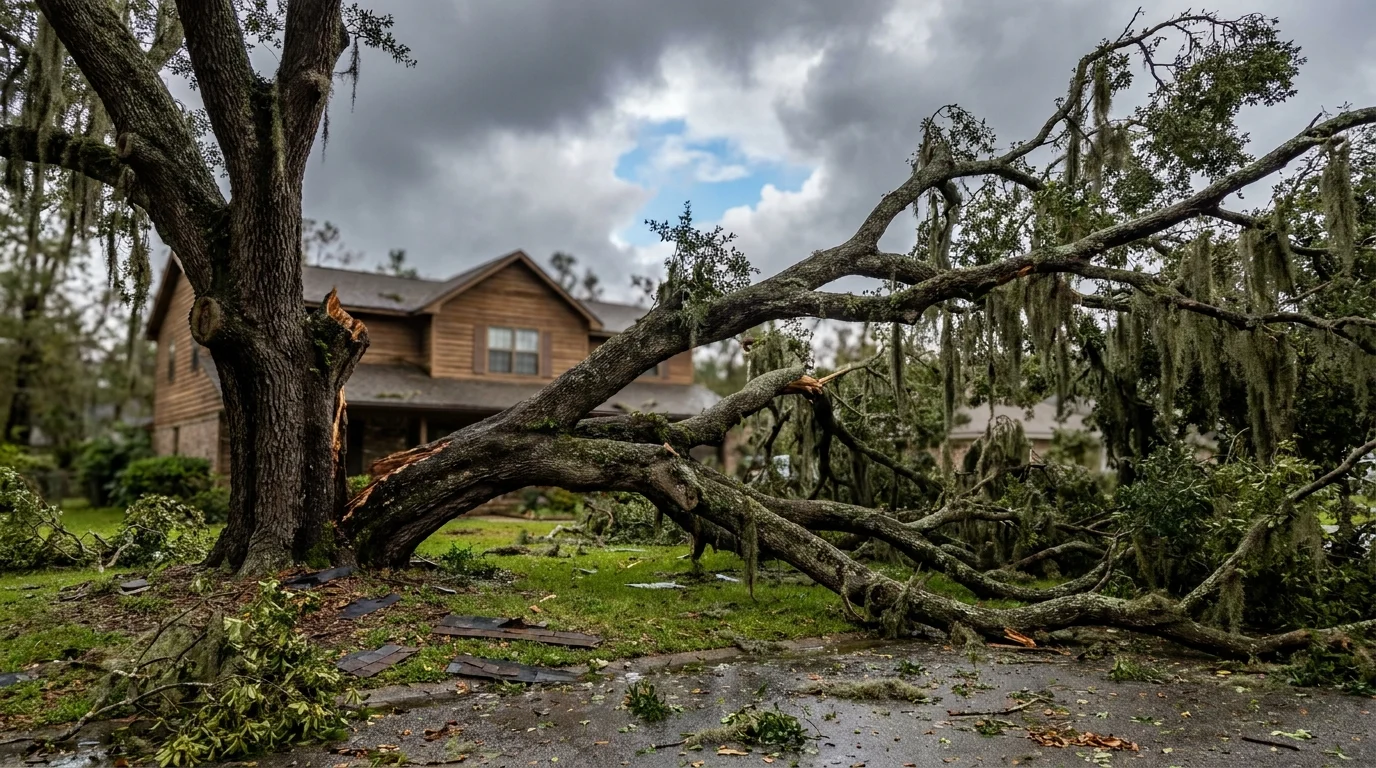
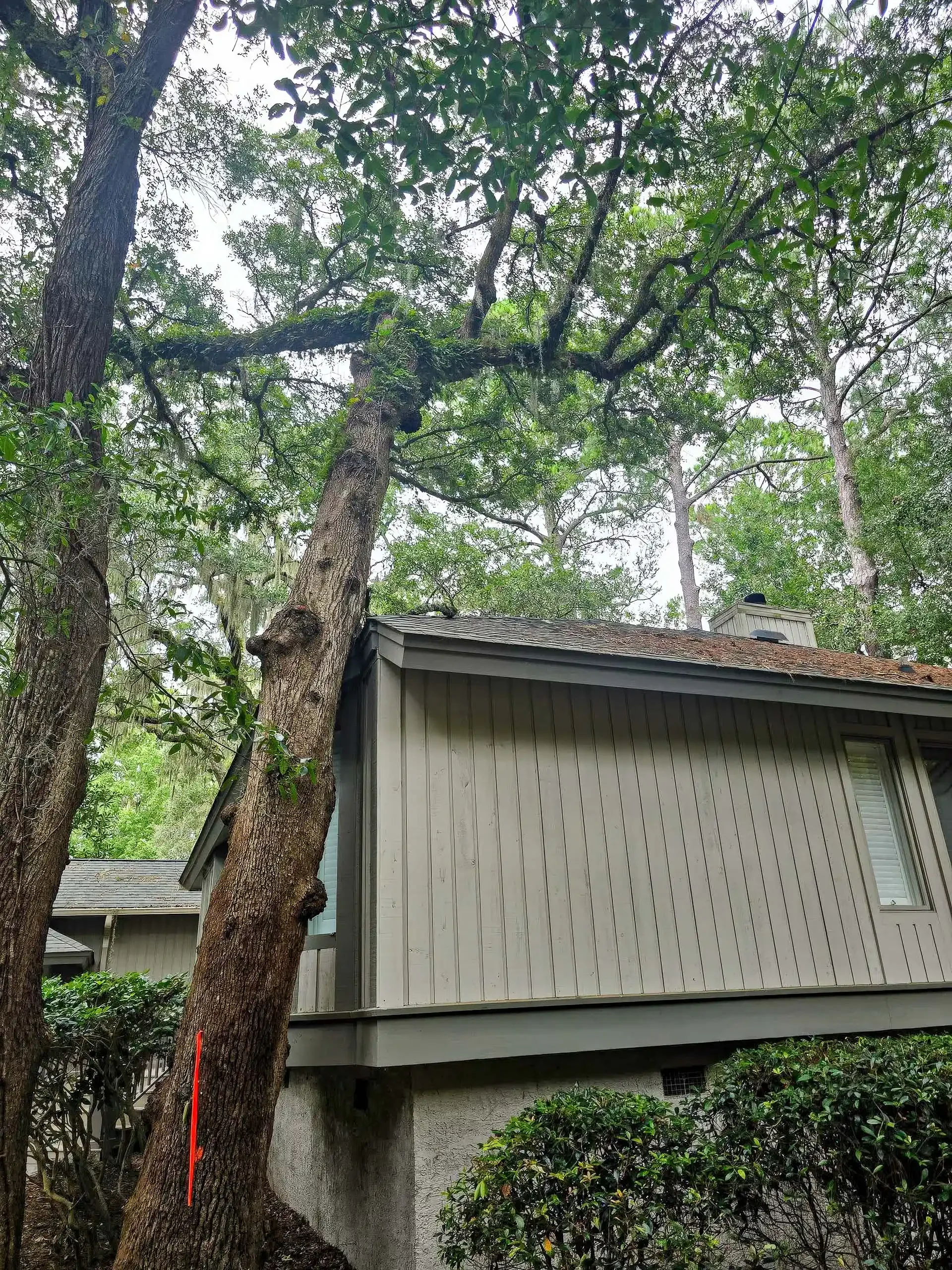
This is the permanent fix and it is the part people skip. If a pine limb hangs directly over a roof valley, that valley will fill every year forever. Pulling those limbs back so the canopy is not directly above the roof plane cuts the debris load substantially, and it also takes away the limb that would come through the roof in a storm.
That is standard tree trimming and pruning work. On a pine it has to be done right, because pines do not respond well to heavy cutting and a bad cut invites decay. Our guide on the best time to trim trees in coastal Georgia covers species timing.
4. Clear deadwood while you are at it
Fall is when you can see the dead limbs. If a crew is already set up on the property to pull limbs off the roof, having them clean the deadwood out of the canopy at the same time is efficient. It is also the highest-value storm prep there is, and hurricane season runs through November 30.
5. Keep the straw, but keep it away from the house
Pine straw is a good free mulch and there is no reason to bag it and haul it off. Rake it into beds, around shrubs, under trees. Just do not bank it up against the siding or the foundation, and keep it off the crawl space vents. A deep bed of straw right against the house is a moisture and pest invitation.
About Gutter Guards
Honest answer: under pines, most of them help some and none of them end the job.
Pine needles are the hardest debris there is for a guard, because they are thin enough to slip through mesh and stiff enough to stand up in slots. In our experience fine micro-mesh does best against needles, but it still needs the top surface brushed off, because a mat of straw sitting on top of the mesh sheds rainwater right over the edge. Screens with larger openings tend to let needles straight through, which is worse than nothing because now the debris is in the gutter and you cannot reach it.
We do not sell gutter guards and have no stake in it. Just go in knowing you are reducing maintenance, not eliminating it.
The Part You Should Not Do Yourself
Ladder falls are one of the most common serious injuries around a house. Add wet shingles, pine straw underfoot and a two-story eave and the odds get bad fast.
Never lean a ladder against a tree limb, and never take a chainsaw or a pole saw up a ladder. That is the single most common way homeowners get badly hurt doing tree work. If a limb is over the roof and you cannot reach it standing on the ground, it is a crew job with proper rigging. Our article on what an arborist actually does covers where the line is.
Frequently Asked Questions
When do pine trees drop needles in Georgia?
The main shed for loblolly and slash pines runs through the fall, usually heaviest from October into November on the coast. Some needle drop happens year round, but the big one is autumn.
How often should I clean gutters under pine trees?
Twice a year at minimum in coastal Georgia: once after the pine drop and once after the hardwoods finish. Under heavy canopy, three times is not unreasonable.
Is pine straw bad for my roof?
Sitting straw holds moisture against shingles and in valleys, which accelerates wear and can let water work under the shingle edge. Clearing it off each fall is simple protection.
Should I have the pines removed to stop the mess?
Not over needles alone. Healthy pines are worth keeping. If a pine is also leaning, showing decay, or standing within falling distance of the house with a bad root plate, that is a different conversation and worth a look.
Can I burn my pine straw and leaves?
Since July 2021 Georgia no longer requires a burn permit for hand-piled natural yard debris, meaning leaves and limbs. Land-clearing and machine-piled burns still need one from the Georgia Forestry Commission. The state summer burn ban covers 54 counties in north Georgia and does not include Effingham or Chatham. What does apply here is your local city or county ordinance, and the rule that you never burn man-made material. Check with your fire department before you light anything.
Fix the Overhang and the Cleanup Gets Smaller
You can clean gutters forever, or you can take one afternoon to get the limbs off the roof and then clean smaller gutters forever. Most people find the second one makes more sense.
And while a crew is up there, the deadwood comes out too, which is the thing that actually matters when the wind blows.
If you have limbs over the roof you would like gone before winter, request a free estimate or call (912) 342-0440.