Some split trees can be supported with tree cabling and bracing, but others are too damaged and should be removed. The decision depends on the split, the tree’s health, and what could be hit if it fails.
We understand wanting to keep a mature tree that shades your house or backyard, but sound remaining wood matters more than how green the leaves look. For homeowners in Effingham County, the useful starting point is knowing which signs call for attention and what support can reasonably accomplish.
Key Takeaways
- Cabling and bracing can support some weak branches and limited splits when enough healthy wood remains.
- Severe decay, failed roots, or major trunk damage may make removal the safer choice.
- A widening crack, hanging limb, or sudden lean needs professional attention, even when the leaves look healthy.
- Support systems reduce risk but need follow-up attention as the tree grows and its condition changes.
- Keep people away from damaged trees, and leave installation to qualified tree-care professionals.
Can a Split Tree Be Saved?
A split doesn’t automatically mean a tree must come down. We need to know where the wood has separated, how far the damage extends, and whether the remaining structure can carry the load.
What cables and braces do
Cables connect selected branches or stems to limit movement and reduce stress on a weak connection. That connection is called a union, the place where two branches or trunks meet.
Brace rods are steel rods installed through a weak connection when an assessment supports that method. They help hold the sections in position. The International Society of Arboriculture’s explanation of cabling and bracing describes this distinction between cable support and rods supporting split connections.
Depending on the defect, we may recommend cables, braces, or both. They have different jobs, so one isn’t automatically a substitute for the other. Dynamic cable systems allow controlled movement and may suit some defects. Some non-invasive systems avoid drilling into stems, but these approaches aren’t interchangeable, and neither suits every tree or split.
Which trees may be worth supporting
Good candidates have a limited defect, sound trunk and roots, and enough healthy structure to support the hardware. Overall tree health helps determine whether support is appropriate. Our tree cabling and bracing service assesses these manageable weaknesses and which tree support systems may fit.
Neither method repairs dead wood, reverses serious decay, or restores a severely split trunk. A full canopy alone doesn’t tell us whether the wood underneath is strong.
A support system depends on sound attachment points. Hardware can’t make badly decayed wood strong again.
How We Tell a Manageable Split from a Dangerous Tree
We look beyond the most obvious crack. A split near a branch connection means something different when there’s also trunk decay, a changing lean, or movement around the roots.
You can notice warning signs without approaching the tree. Observe these details from a safe distance:
- Look for a crack that appears wider or longer than before.
- Notice fresh, pale wood exposed along a split.
- Watch for dead branches, broken limbs caught overhead, or branches hanging lower than usual.
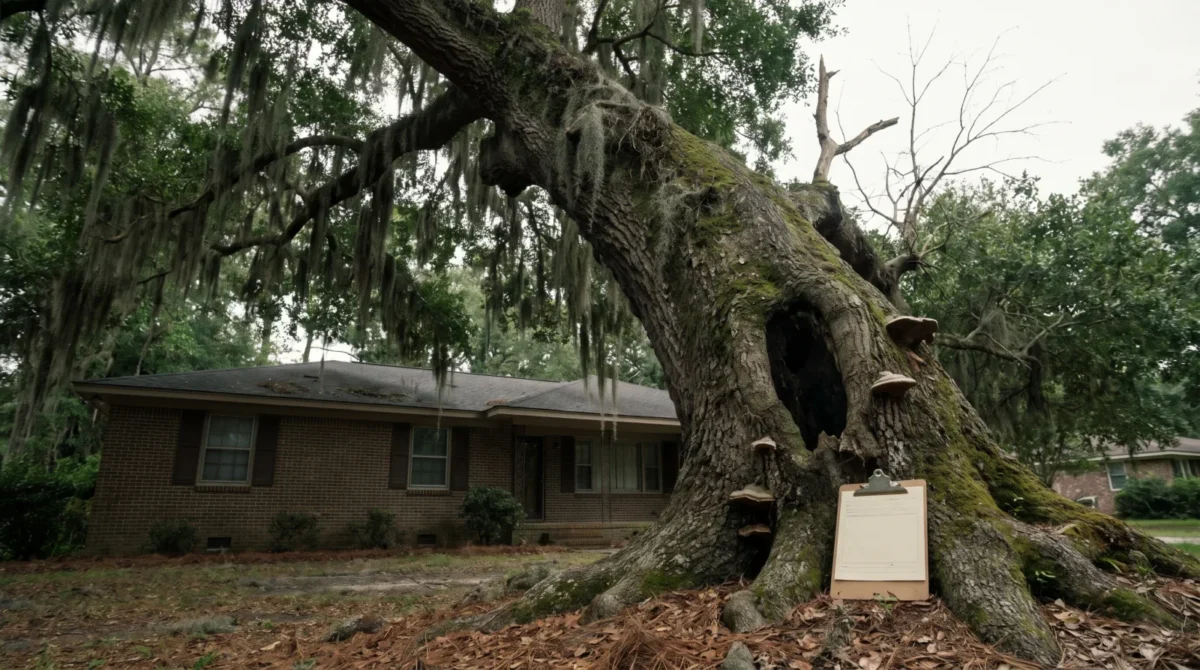
- Look for a new lean, trunk cavities, or visible decay.
- Notice soil lifting or cracking around the base, without walking closer to inspect it.
These observations help describe the problem. They don’t confirm that a tree is safe or tell you how much sound wood remains inside.
Wind can open an existing split further. Don’t stand beneath it to take a better picture, climb into it, or try pulling the sections together with rope, straps, or a vehicle.
Keep children, visitors, and pets away when there’s a hanging limb, an opening crack, or signs of root movement. If a vehicle is beneath the damaged section, don’t enter the danger area to move it.
Our professional tree risk assessment considers the whole tree, including the tree trunk, its surroundings, and nearby targets. That helps us assess tree failure risk and identify what could be struck if the tree or a major part fails.
That matters more than judging a crack by its appearance alone.
What Happens During a Cabling or Bracing Visit
We start by deciding whether the tree can reasonably stay. Choosing hardware comes after that decision, not before it.
Assessment comes before installation
First, we assess the split, trunk, main branches, roots, and surrounding ground. We also consider the house, driveway, walkways, and other places where people spend time.
Next, we decide whether support is suitable and explain the recommendation. That might mean cabling, bracing, tree pruning, a combination of treatments, or removal when the damage is too extensive.
You’ll hear what the proposed work can accomplish and what concerns would remain afterward. A tree worth preserving still needs a practical plan for managing its weak points.
If support won’t adequately address the problem, we say so. Adding hardware simply because a homeowner wants to keep the tree wouldn’t be an honest recommendation.
Installation includes a plan for follow-up
If support is appropriate, the exact method and placement depend on the tree and its defect. Hardware size also depends on these factors. Eyebolts or lag eyes may be used when appropriate, but they’re not required in every system.
We consider applicable ANSI A300 guidance, a relevant tree-care standard, when planning support. After installation, we check the system and explain what changes should prompt another look.
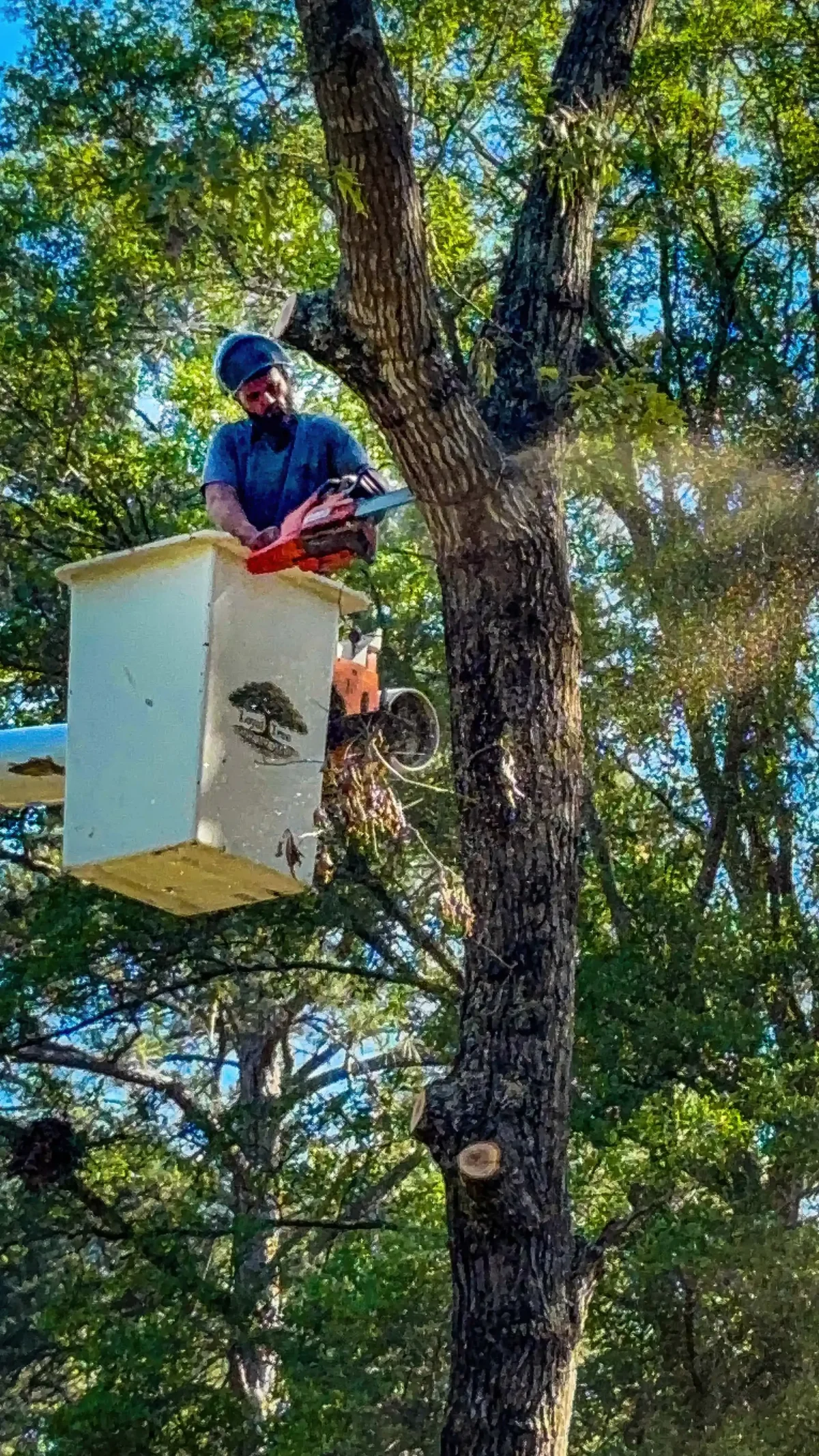
This isn’t a DIY job. It often involves climbing, specialized equipment, and working around unstable limbs. An ISA-published paper on improper installation describes how poorly installed cabling and bracing can spread decay and weaken a tree.
Tree support reduces the chance of failure; it doesn’t make a tree risk-free. Follow-up checks matter because growth, movement, and changes in condition can affect the system.
Local Trees and Storm Conditions That Affect the Decision
Here in Effingham County, a mature tree may stand close to a house, a driveway, or a property line. For our neighbors in Guyton, Rincon, and Springfield, those surroundings are part of the decision.
Live oaks and old pines need individual attention
A live oak’s large spreading limbs need a different assessment than an old pine’s trunk and upper branches. We consider the tree’s structure rather than treating every crack as the same problem.
Large hardwoods can develop competing main stems, sometimes called co-dominant stems. Those are two substantial stems growing beside each other, often at a shared connection.
A narrow V-crotch is a tight stem connection that may need attention if it’s weak or damaged. Its shape alone doesn’t prove the tree is unsafe. A tree with two main stems doesn’t always need cables, and the shape doesn’t tell us whether an existing split is manageable.
The setting can change the recommendation
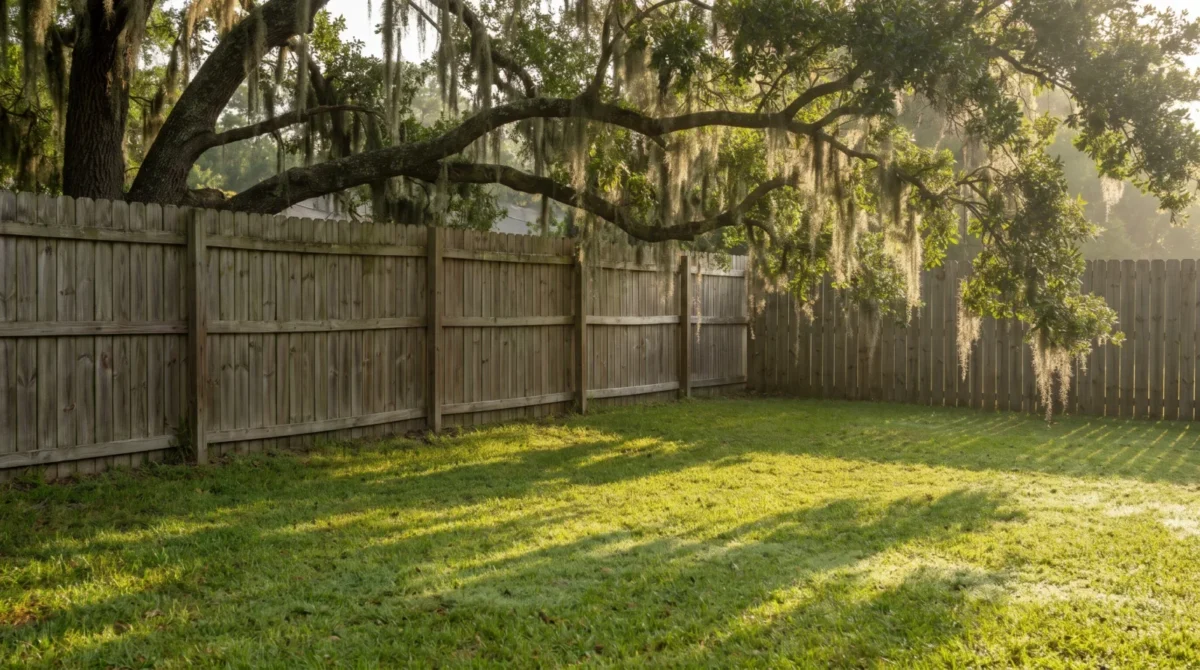
A damaged limb above an unused patch of ground presents a different concern than one above a bedroom or regularly used driveway.
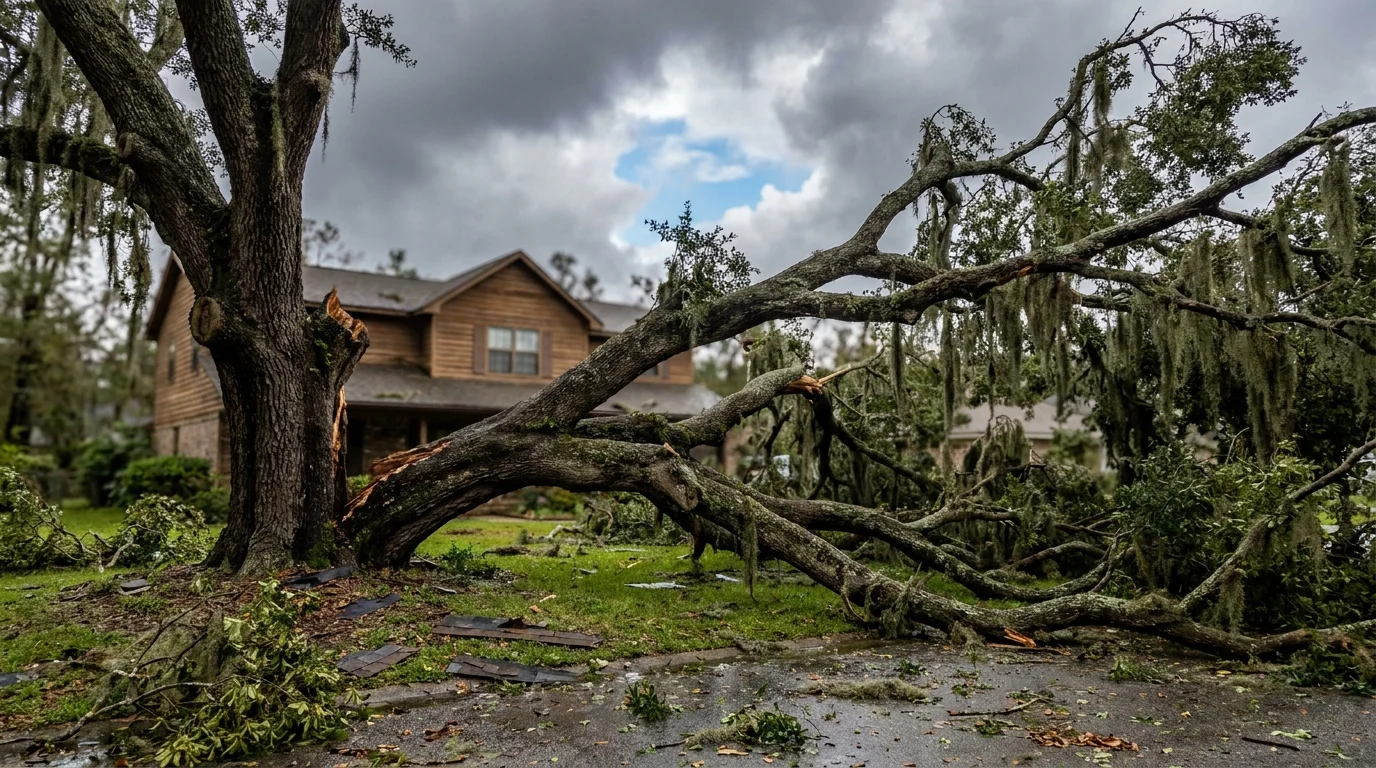
We also consider root condition, soil conditions, weather exposure, and storm damage. Storms can worsen an existing defect, and support can’t guarantee protection. Supporting a branch won’t correct a separate problem at the base of the tree.
Tell us about recent changes, too. New construction, digging near roots, or a noticeable change in the tree’s position can help explain what needs closer assessment.
When to Call Us for a Free Estimate
Call when a split appears to be growing, a large limb could strike your home, or a damaged trunk stands beside a driveway. Don’t wait for leaves to turn brown before taking structural damage seriously.
A tree near people, neighboring property, or power lines deserves particular care. Keep clear of damaged limbs around electrical lines, and don’t touch a branch or anything else in contact with them.
We can discuss preservation when the remaining structure supports it. When the trunk, roots, or major union are badly compromised, tree removal may be the safer option after assessment.
You don’t need to decide on the solution before contacting us. Tell us what changed, where the tree stands, and what sits nearby. We’ll explain whether support is a reasonable option or whether the damage leaves too much risk.
A straight answer helps you make a decision without guessing from the ground.
Want the details on how we do it? See our cabling and bracing service and our tree preservation work for big oaks around Savannah and Effingham County.
Frequently Asked Questions
Can a tree heal after it has split?
Wood doesn’t fuse back together like skin. A healthy tree may grow new wood around a wound, but that growth doesn’t restore the original connection. We don’t treat new growth alone as proof that a split tree is safe.
How long can cables or braces stay in a tree?
There’s no single service life that fits every system. Tree growth, hardware condition, and changes in the supported branches all matter. An annual inspection may be appropriate, but timing depends on the tree, hardware, and supported branches. Inspections help us spot wear, movement, or other changes that may need attention.
Should a split tree be supported before hurricane season?
An assessment beforehand gives you time to understand the problem and consider suitable work. Our guidance on tree assessment before hurricane season starts with the tree’s condition, rather than a promise of storm protection. Support can’t guarantee survival in severe weather, and urgent defects shouldn’t wait for a particular season.
Can any arborist install tree cabling and bracing?
Choose a qualified tree-care professional with experience assessing structural defects and installing support systems. Ask how long they have worked on trees like yours, how they’ll evaluate the whole tree, why support is appropriate, and what risks will remain. The explanation should cover alternatives and follow-up care, not simply where a cable will go.
A Split Tree Needs an Honest Answer
Some split trees have enough healthy structure for cabling or bracing to help them stay. Severe trunk damage, failed roots, or a badly compromised union may leave removal as the safer choice.
We want you to understand that difference before committing to work. Keeping the tree only makes sense when its remaining condition supports a reasonable plan.
If you have a question about a tree on your property, request a free estimate or call (912) 342-0440.
Written by LoyalTreeFamily-owned, licensed and insured tree service based in Guyton, working Effingham County and coastal Georgia. 20 years of experience, 24/7 storm response.