A tree risk assessment is a careful inspection for signs a tree could fail, what it could hit, and steps that may reduce danger. It doesn’t automatically mean your tree needs to come down.
If you’re worried about a leaning trunk or a limb over the house, you deserve a straight answer. At LoyalTree, we look at the whole situation before recommending work, including whether keeping the tree is a reasonable option.
The visit starts with your concerns, then moves to the tree and the ground around it. Here’s what you can expect when we take a closer look.
Key Takeaways
- Tree risk assessments consider the tree’s condition, the chance of failure, and what could be hit.
- Most inspections begin from the ground, with closer checks recommended when a concern needs more attention.
- A warning sign calls for evaluation, but doesn’t automatically mean the whole tree needs removal.
- Pruning, support, preservation, or monitoring may be reasonable options, depending on the findings.
- Hanging limbs, fresh damage, and unstable trees deserve prompt professional attention. Keep people away while arranging help.
What Happens During a Tree Risk Assessment?
Our professional tree risk assessment usually starts with a ground-level tree inspection. We look at the tree’s structure, visible health, roots, and surroundings before discussing what needs attention.
The visit generally follows this order:
- We discuss what you’ve noticed and what worries you.
- We inspect the tree and surrounding ground.
- We consider nearby people, buildings, and other property.
- We explain the findings, any risk rating, and inspection limits.
- We discuss further checks, care, or removal where appropriate.
Starting with the tree and its surroundings
Tell us whether the lean is new, when a branch broke, or whether digging happened near the roots. That history helps us understand changes we can’t see during one visit. You don’t need to know tree terminology to explain what you’ve noticed.
We examine the tree’s size, shape, trunk, branches, and visible root area. Then we look beyond the trunk. A roof, driveway, walkway, fence, or regularly used yard changes what a failing limb could affect. How people use that space matters, too. The person or property that could be struck is called the target.
Explaining findings before recommending action
We explain what we can see in plain language. If there’s a crack or weak branch connection, we’ll explain why it matters and what options fit the situation. If we provide a risk rating, we’ll explain what it says about the likelihood of failure and the possible consequences.
The scope of tree risk assessments can vary. A level one assessment is a limited visual check, while a level two assessment is a more detailed visual review of the tree and site. Neither description means specialized testing is included.
A ground-level visual inspection has limits. We can’t see every buried root or every part of the wood inside a trunk. The International Society of Arboriculture’s guidance on managing tree risk describes visual inspections and the possible use of instruments to check for decay.
When something needs a better look, we’ll say so. Written reports may use terms such as “tree condition survey” or “tree risk survey,” so check what each report covers rather than assuming the label guarantees a particular scope. You’ll receive clear written findings and recommendations rather than an unexplained instruction to cut.
How to Tell Whether a Tree Is Dangerous or Can Be Saved
A warning sign is a reason to investigate, not proof of tree failure. We weigh tree defects, the likelihood of failure, and the consequences of failure based on what could be struck.
What visible warning signs can and cannot tell you
A tree that has recently started leaning deserves attention, especially when the soil has lifted around its base. That’s different from a longstanding lean with no visible recent change. The history of the lean matters alongside what we see.
Large dead limbs, trunk cracks, weak branch connections, decay, root damage, and storm injuries also matter. A dead limb over a roof creates a different concern than deadwood away from buildings and regularly used spaces.
One symptom alone doesn’t settle the question. A cavity needs context, including its location and the surrounding wood. Green leaves don’t tell us whether a branch connection or root system is sound.
A level three assessment is a more advanced, targeted investigation. A specialist may use sonic tomography or a resistograph to investigate internal decay. Static load testing can evaluate how a tree responds to force. These are specialist options, not routine checks or guarantees that a tree will or won’t fail.
When care may help, and when removal may be safer
If the tree can reasonably stay, we discuss care that addresses the concern. That might include tree trimming and pruning to remove dead or damaged branches, root protection, or watching for further changes.
For some structural weaknesses, tree cabling and bracing services may provide support. These systems aren’t a repair for severe decay or failing roots, and they need follow-up attention.
When a serious defect threatens people or property and care won’t sufficiently reduce the danger, tree removal may be the safer choice. We tie that recommendation to the observed condition and the site. The explanation should make sense to you before work begins.
How Local Trees, Soil, and Storms Affect the Assessment
In Effingham County and the Savannah area, the setting matters as much as the tree. An older wooded lot in Guyton may have different concerns than a tight yard in Rincon or Springfield.
Why tree type and ground conditions matter
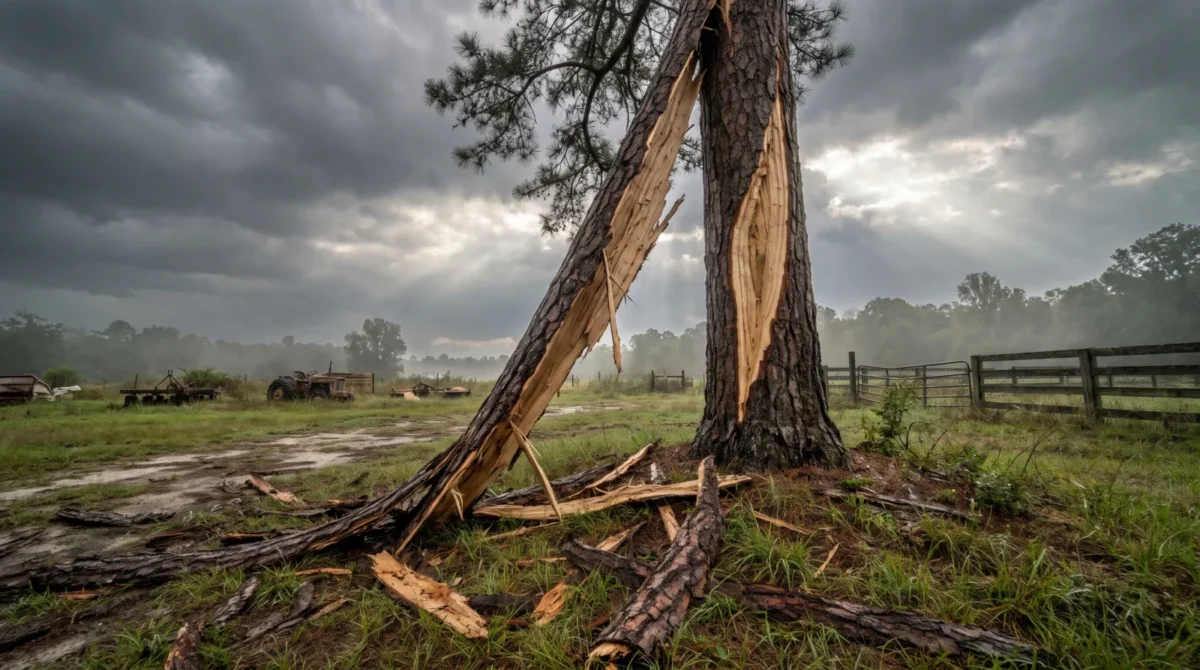
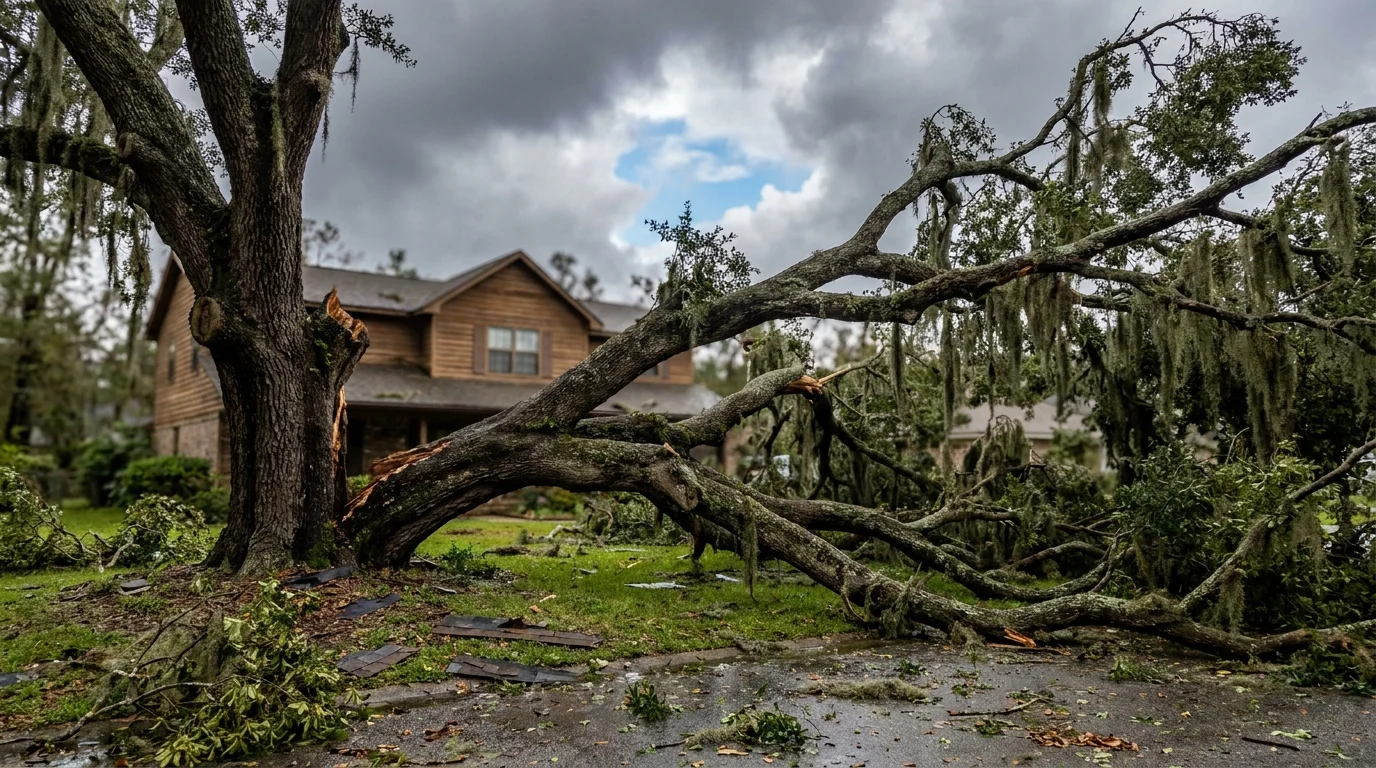
A mature live oak near a house deserves a close look at its large limbs, branch connections, and root area. With a storm-damaged pine, broken wood and any change at the base need attention. Other hardwoods need their own assessment, too.
Species alone can’t establish tree health or tree safety. Tree condition and site history carry more weight than a name.
Ground changes matter. Cut roots, compacted soil, and changes in ground level can affect a tree. Tell us about recent trenching, construction, or changes in drainage, even when the tree still looks green.
What storm damage changes about timing
If you already have concerns, arranging an assessment before another storm gives you time to consider the options. There’s no reason to wait for a broken limb to get an existing concern looked at.
After a storm, a fallen tree or hanging limb changes the immediate priority. Keep people and pets away, and don’t stand underneath damaged branches to inspect them.
Our storm damage and emergency tree service handles situations where damaged trees need prompt attention. Across Bloomingdale, Savannah, and nearby communities, trees close to homes require careful planning because nearby buildings leave less room for falling wood.
When to Call About a Tree Risk Assessment
Call when you notice a new lean, visible trunk or root damage, large dead limbs over a home or driveway, or recent storm damage. These signs may point to a hazardous tree. You can also call when you’re unsure whether a tree can stay. You don’t need to diagnose the problem first.
Changes are useful information. Let us know whether a crack appeared recently, branches started dying, or the ground moved around the trunk. Describe what you can see from a safe place. Don’t walk closer to a damaged tree to gather details for the call.
Climbing, cutting large limbs, and working near power lines aren’t DIY jobs. A branch under tension can move suddenly when cut. A hanging limb can fall while someone is trying to reach it. Keep away from trees touching lines and contact the utility about the electrical hazard.
We can look at the tree, explain the visible concerns, and discuss care or removal where appropriate. Our role is to help you understand the choices without pushing work the tree doesn’t need. Ask us what our assessment covers and what it can’t tell you. If you need a formal written report for an insurance claim, an HOA or a legal matter, we’ll tell you plainly whether that calls for a consulting arborist or an ISA certified arborist’s formal report.
Tree owners can keep assessment findings with maintenance notes as part of their duty of care. An assessment alone doesn’t determine liability.
If a tree threatens people, a building, or access to your property, tell us that when you call. We offer 24/7 emergency storm response.
For a closer look at a tree that’s worrying you, request a free estimate or call (912) 342-0440.
See how our tree risk assessment works, why water oaks top our list of trees to check, and the neighborhoods we cover around Savannah and Effingham County.
An assessment often ends with one of two answers: cabling and bracing to keep the tree, or hazardous tree removal when it has to go.
Frequently Asked Questions
Does a tree risk assessment mean the tree has to come down?
No. We base recommendations on the tree’s condition, location, and the risk it presents, so monitoring or care may be enough. If removal is recommended, ask which observed defect drives that recommendation and why keeping the tree would leave too much risk. You should understand the reason, especially when you’re deciding what to do with a valued shade tree.
Can a tree be assessed after storm damage?
Yes, an assessment can help clarify visible damage and practical next steps, including damage that isn’t limited to the broken branch. A tree left standing may still have hanging wood or damage at its base. Stay clear of unstable trees, and seek urgent help when a tree or limb threatens people, a building, or access.
Can homeowners check a tree before calling?
You can observe it from a safe distance and note changes, such as a fresh lean, broken limbs, or newly exposed roots. Photos taken without approaching the hazard can help you describe the concern when you call. Those observations aren’t a substitute for professional evaluation, and you shouldn’t climb, dig around unstable roots, or cut branches to investigate.
How often should a tree be checked?
We base follow-up advice on the tree’s condition and the findings, rather than giving every property the same timetable. Major storm damage, a visible change, or a new concern is a reason for another look. Mature trees near places people regularly use deserve attention when conditions change, and installed support systems also need follow-up guidance.
Clear Options for the Tree and Your Property
A tree risk assessment helps turn an uneasy feeling into clear options. The tree may be able to stay with care or observation, or the findings may point to further inspection or removal.
We explain what we see, what remains uncertain, and why a recommendation fits your property. You shouldn’t have to sort through technical language or feel pushed into a decision.
If you’re concerned about a tree in Effingham County or a nearby community, we’re glad to take a look. To get started, request a free estimate or call (912) 342-0440
Written by LoyalTreeFamily-owned, licensed and insured tree service based in Guyton, working Effingham County and coastal Georgia. 20 years of experience, 24/7 storm response.