Hazardous tree removal is the careful removal of a tree that poses a real risk to people, buildings, or other property. That risk may come from a split trunk, damaged roots, storm damage, or another weakness that could cause failure.
If you’re worried about a tree near your home, we start by looking at its condition and what it could hit. At LoyalTree, we want to preserve a sound tree when care can reasonably reduce the risk. The first step is understanding the warning signs, whether the tree may be saved, and how its surroundings affect the removal plan.
Key Takeaways
- A tree’s condition matters, but so do its location and what could be struck if it fails.
- Fresh leaning, lifting soil, major cracks, and hanging limbs deserve prompt professional attention.
- Pruning, cabling, or bracing may help preserve a tree when its remaining structure is sound.
- Hazardous removal requires a plan for nearby buildings, access, overhead hazards, and cleanup.
- Coastal storms and saturated ground can make an existing weakness more concerning.
What Hazardous Tree Removal Means, and How to Spot the Risk
A large tree doesn’t need to come down simply because it stands near your house. We consider how likely the tree or a major limb is to fail, along with what lies underneath.
A damaged tree over a driveway presents a different concern than one well away from people and buildings. Location matters alongside condition.
Warning signs that deserve a closer look
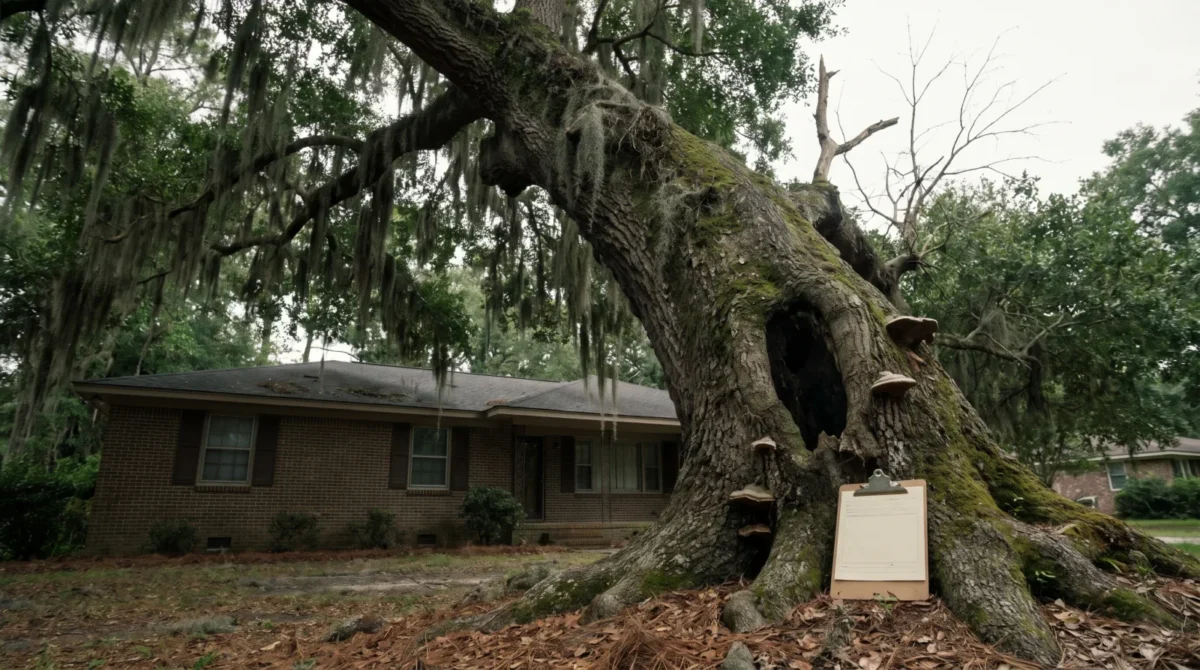
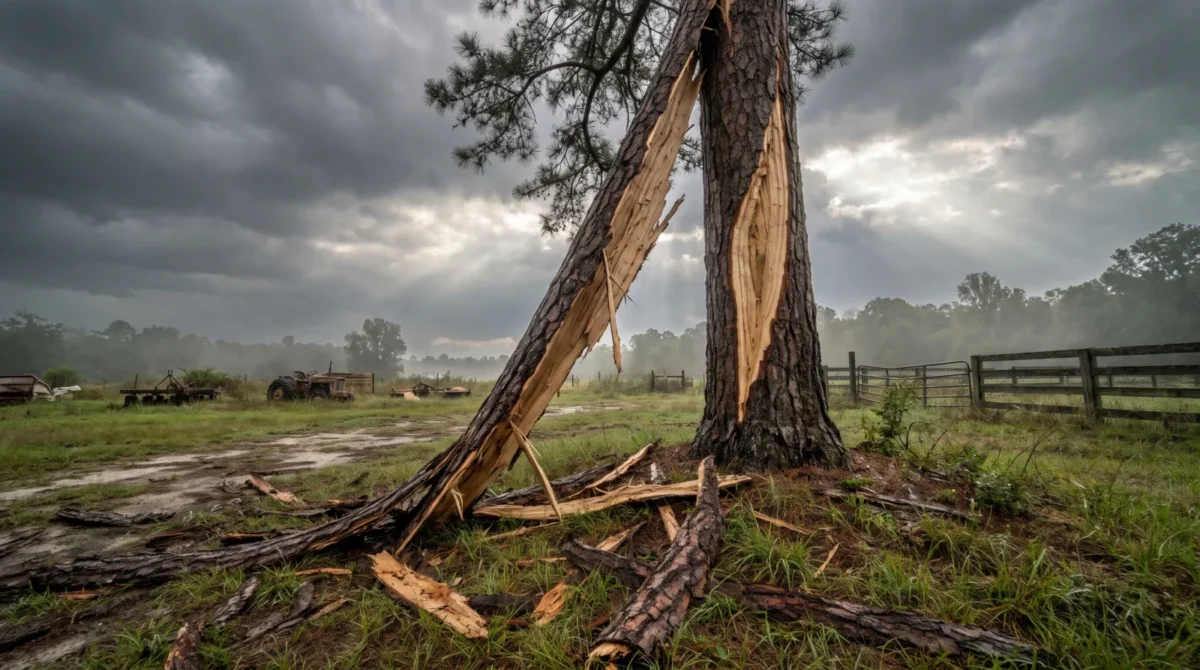
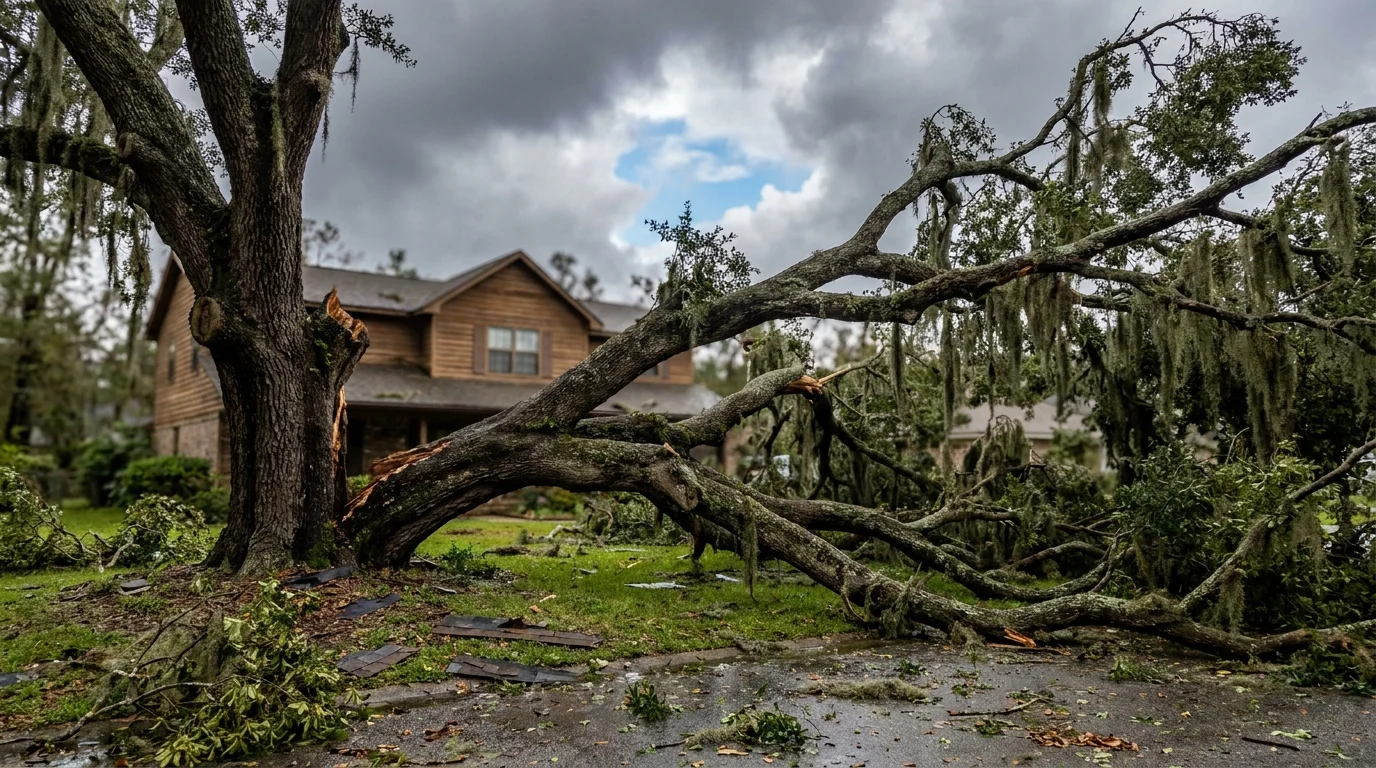
Deep cracks, a splitting trunk, and a fresh lean deserve prompt attention. Soil lifting around the base can mean the roots are moving. Large dead branches, hanging limbs, and broken sections after a storm also call for a closer look.
Decay, a cavity, fungus at the base, root damage, or other structural defects warrant an assessment, but none alone proves a tree must be removed. An old scar doesn’t automatically mean removal. Seasonal leaf loss doesn’t, either.
Keep clear if the tree appears unstable. Don’t walk underneath a hanging limb or approach the trunk to inspect a new split.
When a tree may be saved instead
Our tree risk assessment looks at the roots, trunk, branches, lean, and surroundings before we recommend work. We explain what concerns us and whether care can reasonably address it.
Some homeowners ask whether they need an ISA certified arborist before a big removal. If you want a second opinion, that is fine with us.
Tree pruning or tree trimming can address damaged branches, but neither can repair failed roots or a badly decayed trunk. Cabling and bracing, support systems used for certain weak connections, may help in suitable cases.
Those options depend on sound wood and a tree worth preserving. They can’t restore a badly decayed trunk or failed roots. When the remaining structure can’t support the tree reliably, removal may be the better choice.
What Happens During Hazardous Tree Removal
Hazardous tree removal starts with a site review, before any cutting begins. We look at the tree’s condition, the space around it, and how the crew can work without putting people in the path of falling wood.
A work plan built around the property
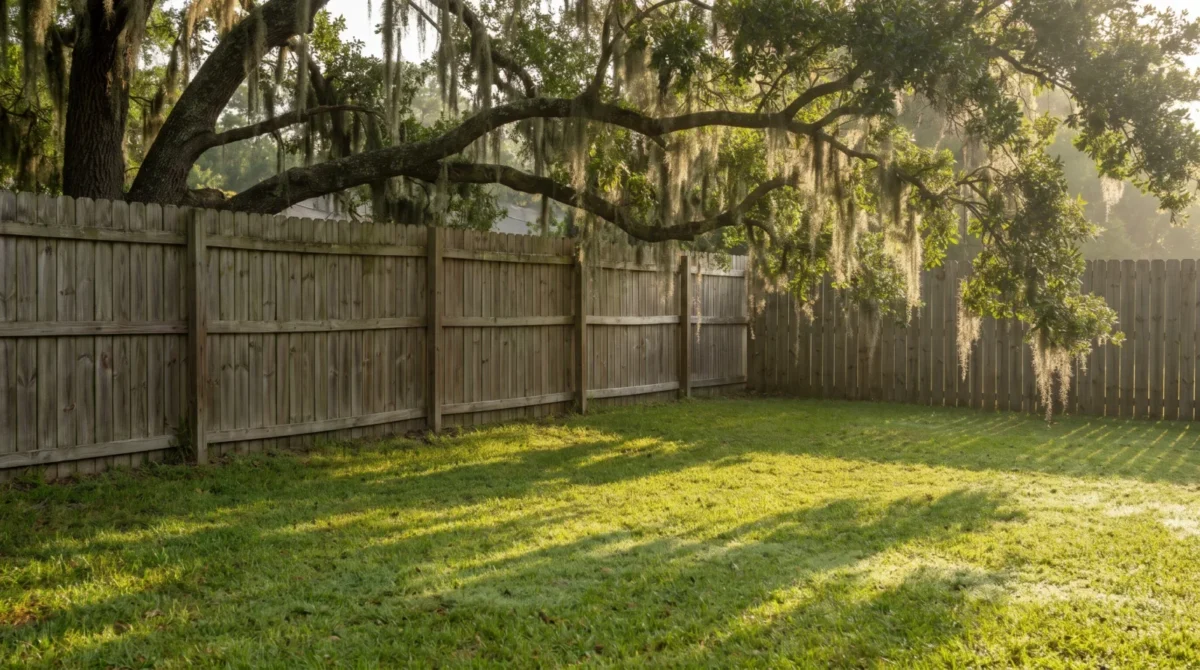
Nearby homes, sheds, fences, driveways, and overhead hazards all affect the plan. We also consider equipment access and where branches and trunk sections can be lowered.
A complicated or unstable tree may need sectional dismantling or crane-assisted removal. These methods depend on the tree, access, and site conditions, so they aren’t right for every job. Ropes and rigging help control and lower sections of wood.
Our tree removal work includes cleanup and debris removal. Removed branches and wood are handled as part of the agreed scope. Before work begins, we talk through the planned scope so you understand what is included and what remains afterward.
A simple safety checklist for the workday
A little coordination helps keep the work area clear:
- Keep people and pets away from the work zone, including gates or paths that lead into it.
- Follow the crew’s directions and wait for permission before approaching.
- Move vehicles if asked so access and landing areas stay open.
- Discuss fences, septic areas, driveway concerns, and other property details before work starts.
You don’t need to help pull ropes or handle branches during removal. Let the crew manage the work area. Every tree is different, so we don’t promise the same method or timeline for every job.
Why DIY Removal Can Turn Dangerous
A leaning or broken tree can move in ways that aren’t obvious from the ground. A damaged section may still be held by surrounding branches. Another part may be carrying weight that shifts as soon as something is cut.
That uncertainty is what makes a hazardous tree a poor DIY job. Pulling on it with a vehicle or cutting away what looks like a small obstruction can change how the whole tree is supported.
Near a house or fence, there may be little room for a mistake. Falling wood can strike property, hit someone nearby, or bring down branches that appeared secure.
We recommend keeping clear and calling a qualified, licensed and insured tree service. If a tree is touching power lines or other utility lines, stay away and contact the utility. Don’t approach or move the tree yourself.
Even a partly fallen tree can remain dangerous. The fact that part of it has reached the ground doesn’t mean the remaining trunk and limbs have settled into a safe position.
How Local Trees, Soil, and Storm Season Affect the Risk
Across Effingham County and the Savannah area, mature trees often share limited space with houses, driveways, and fences. Large live oaks, pines, and other hardwoods need individual assessment, since species alone doesn’t show whether a particular tree should stay or go.
A broad live oak can have heavy limbs over a roof. A pine may have storm damage high in its crown, the upper branches and foliage. We assess the tree’s structure and damage rather than judging by size alone.
Ground conditions matter, too. Depending on the property, sandy soil may drain quickly, while saturated soil and coastal storms can make existing root or structural problems more concerning. A fresh lean with lifted soil calls for a different response than an unchanged lean with no recent ground movement.
Wind exposure also belongs in the assessment. A tree’s surroundings help us understand what could happen if a weakened branch or trunk fails.
In Savannah’s Historic District and other established neighborhoods, mature trees are part of what people value about their properties. We understand why homeowners want a clear explanation before removing one.
Storm preparation starts with that explanation. We identify damaged limbs, weak connections, and root concerns so you can address an existing problem rather than guess at its seriousness. Before work begins, check county or local requirements, HOA rules, and whether a permit is needed.
When to Call Us for an Assessment or Free Estimate
Call promptly when you notice a fresh lean, moving roots, a split trunk, or a damaged tree over your home or access route. These signs need an assessment, even if the tree still has green leaves. If a failed tree threatens a structure or blocks access, ask whether emergency tree removal is appropriate.
If people are in immediate danger, keep away and contact emergency services. Don’t stand beneath the tree while making calls or try to clear an unsafe route yourself.
We’re a family-owned tree service serving Effingham County, Guyton, Rincon, Springfield, Bloomingdale, Pooler, Richmond Hill, and Savannah. We can assess the tree, explain the concern in plain English, and discuss whether removal or another option makes sense.
Our hazardous tree removal service starts with understanding the risk and planning the work around your property. You don’t need to know the diagnosis before calling.
If you noticed a change after a storm or have an older concern you’ve been watching, tell us what changed and when. That history helps us assess the tree.
You can read more about our hazardous tree removal service, how we handle a leaning tree, and the jobs we take on around Pooler and Effingham County.
If the trouble started with a storm, see what lightning does to a tree, and read what happens at a free tree removal estimate before we come out.
Frequently Asked Questions
Does a dead tree always need to come down?
Location matters. A dead tree that could strike a home, walkway, or regularly used area presents a different concern than one isolated from people and property. We assess what it could hit and its condition before recommending the next step.
Can a leaning tree be made safe?
Some trees have grown at an angle for years. A new or worsening lean can indicate a problem, especially with root or soil movement. We can’t judge stability by the angle alone, and support systems aren’t a suitable answer for every leaning tree.
Should removal wait until after storm season?
Waiting isn’t a good plan when a tree already shows signs of instability. We recommend assessment before severe weather when a tree raises a safety concern. The assessment helps determine whether work is needed promptly or whether the tree can be monitored.
What happens to the stump after removal?
The stump generally remains unless separate stump work is included in the agreed scope. Ask about the stump up front, whether stump grinding is part of the job or not, so you know exactly what will be left when the crew pulls out. Removing the hazardous tree and stump grinding are separate decisions, so we make that distinction clear beforehand.
A Clear Answer Before a Tree Comes Down
A hazard assessment helps separate a tree that needs removal from one that can reasonably stay with the right care. We look at the weakness, the surroundings, and the options before recommending a next step.
You deserve a straight answer about a tree you’re worried about, without pressure to remove one that can be preserved.
If you’d like us to take a look, request a free estimate or call (912) 342-0440
Written by LoyalTreeFamily-owned, licensed and insured tree service based in Guyton, working Effingham County and coastal Georgia. 20 years of experience, 24/7 storm response.