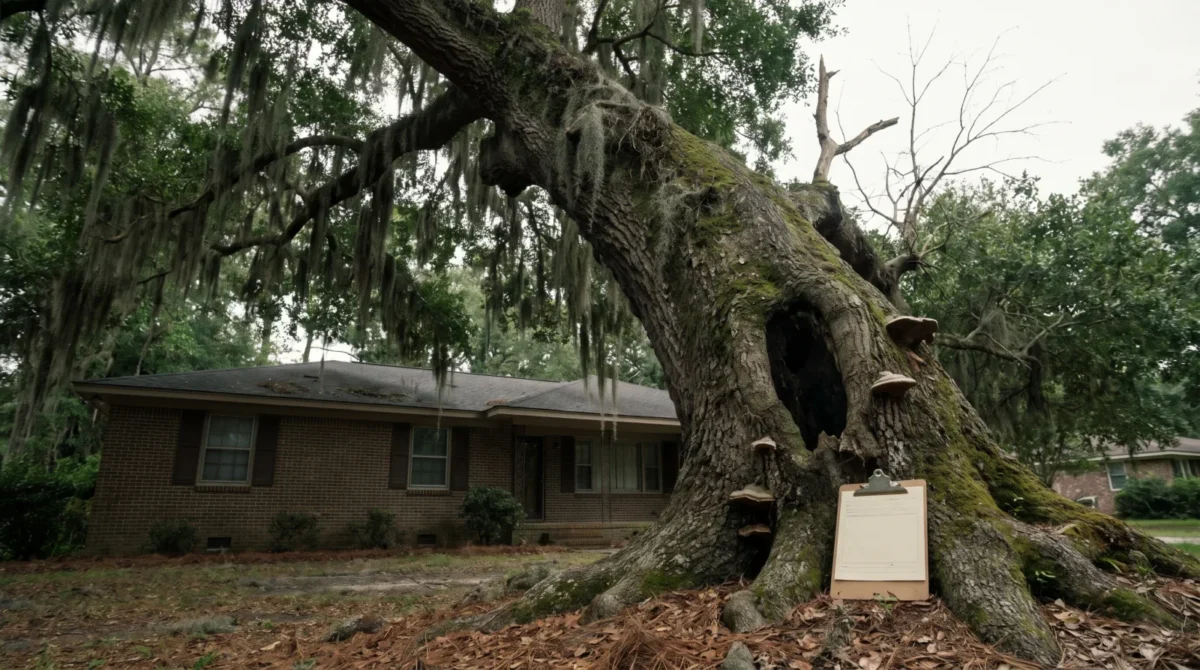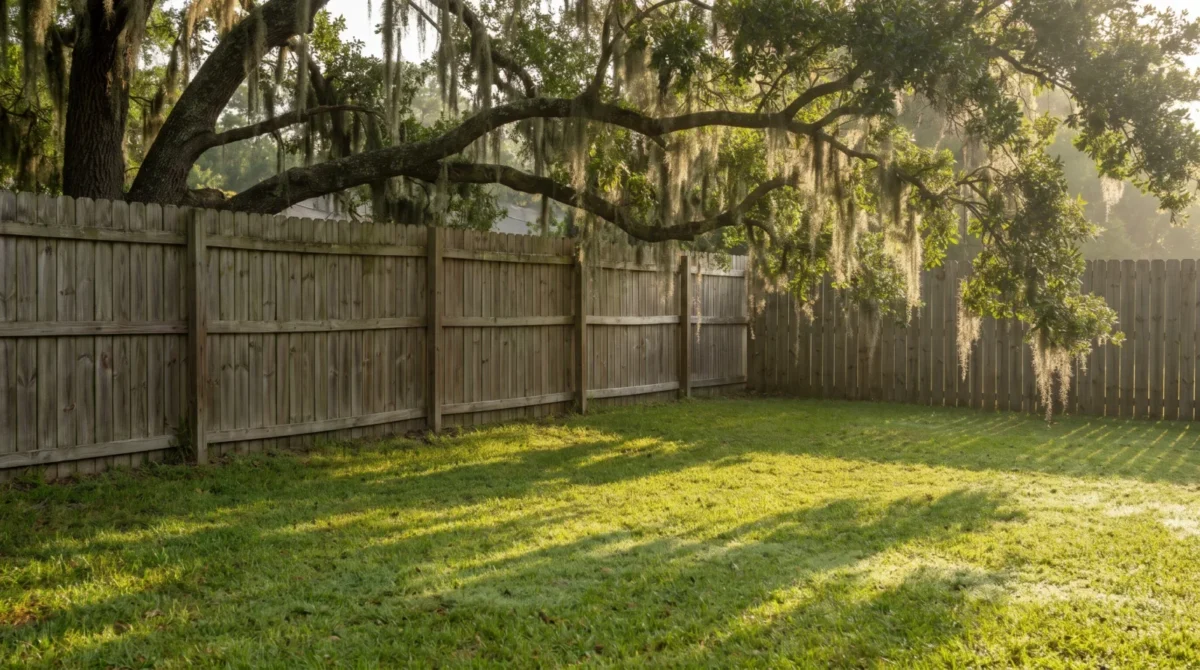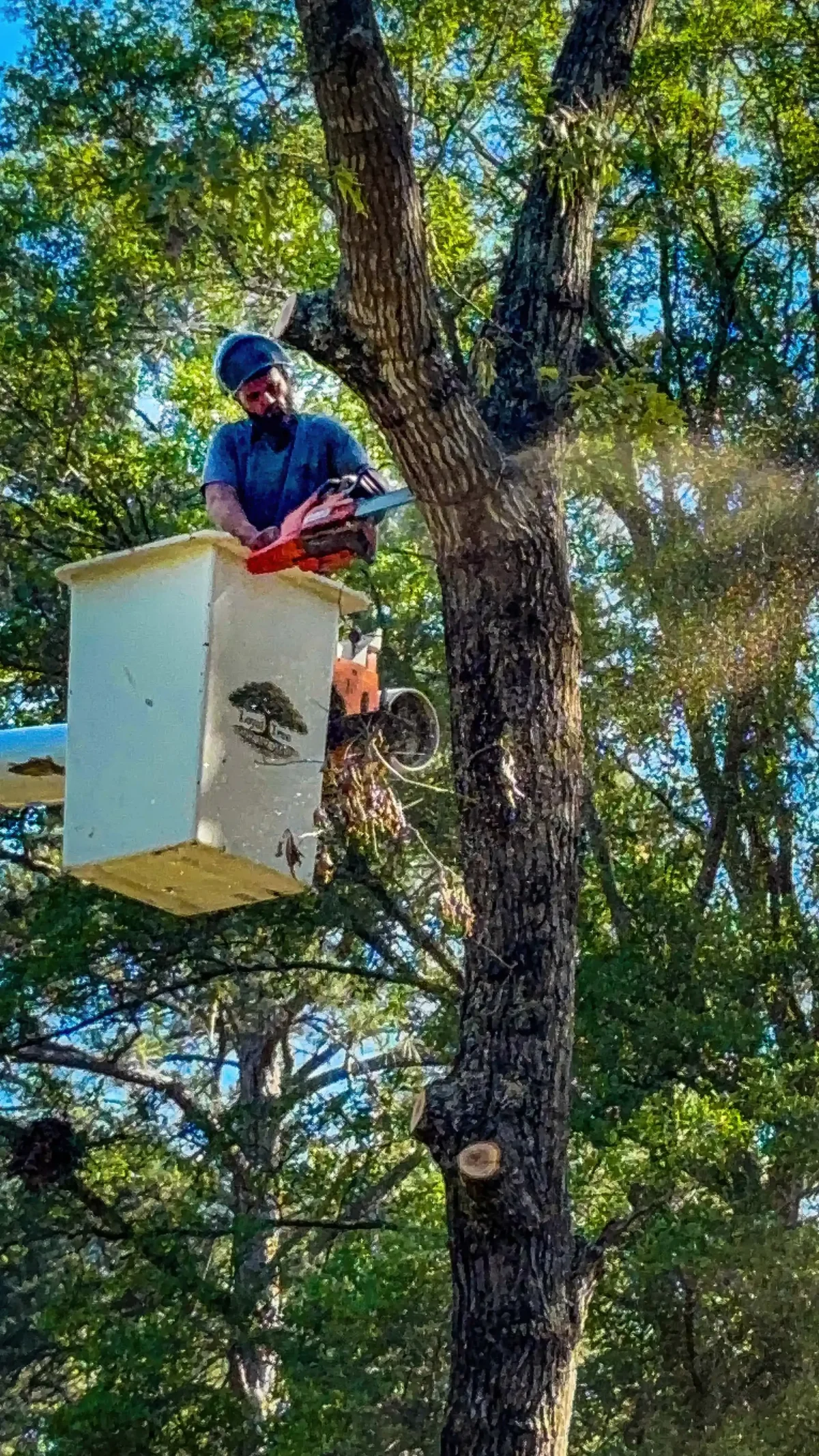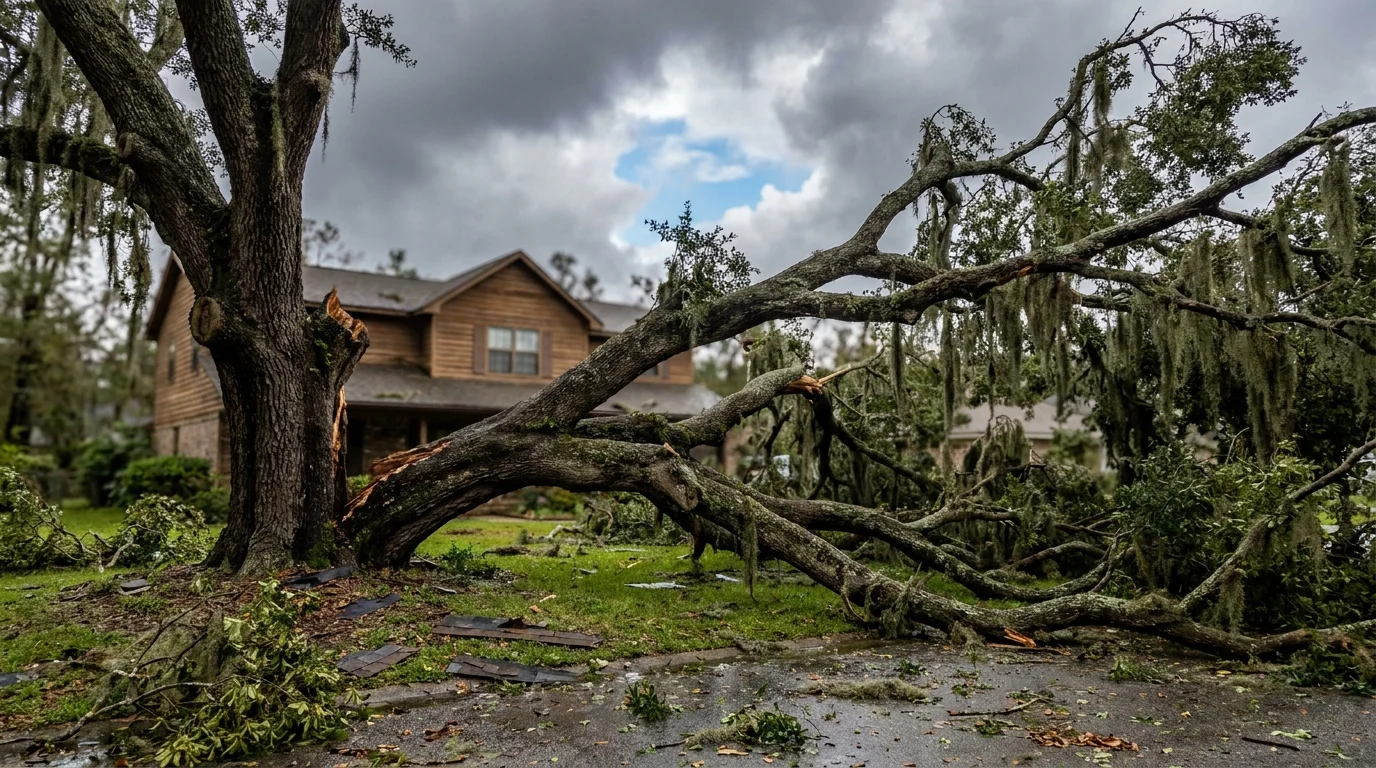
A tree struck by lightning may survive, but visible lightning damage alone can’t confirm its condition or safety. A scarred tree may recover, while one that still looks green may have serious damage.
For homeowners around Guyton, Rincon, and Springfield, the hardest part is knowing whether to wait or call for help. We separate recovery from immediate safety, because a living tree can still have a dangerous trunk or limb.
Start with what you can see from a safe place, then leave close inspection and damaged-tree work to a professional.
Key Takeaways
- Some lightning-damaged trees can be kept, but visible tree damage alone doesn’t establish whether the tree is safe.
- Keep people, pets, and vehicles away from split trunks, hanging limbs, lifted roots, or a new lean.
- A professional assessment considers the trunk, canopy, roots, stability, and anything the tree could hit.
- Careful pruning may help a sound tree; severe structural damage may call for removal.
- Never climb, cut, or pull on damaged limbs, especially near electrical lines.
Tree Struck by Lightning? Signs It May Recover
From a safe location, look for bark loss, split bark, scorched foliage, or broken branches on lightning-struck trees. Electrical current rapidly heats moisture inside the tree trunk. Steam expansion can cause these signs and harm the cambium layer, the living tissue just under the bark. Visible damage may not reveal the full extent of internal damage.
Don’t walk underneath the canopy to get a better look. Loose bark can hide damage, and a broken limb may remain caught overhead.
Photos taken safely can help us understand what happened before we arrive. They don’t replace an on-site inspection, especially when the tree stands near your house.
Living tissue and structural strength both matter
Several factors affect whether a tree can survive a lightning strike. Living tissue matters, but so does the strength of the trunk and branches. Those factors affect tree survival, and healthy-looking branches don’t cancel out a badly weakened trunk.
We consider how much sound trunk and branch structure remains, along with visible root problems and existing decay. We also watch for delayed decline, when reduced health appears later. Limited damage gives us different options than a major split through the tree’s supporting structure.
Green leaves don’t tell you whether a cracked trunk can still hold the tree up.
Keeping a tree is worth considering when its condition supports that choice. Keeping it simply because it’s still alive can leave a serious hazard.
Is the Damaged Tree Dangerous or Can It Be Saved?
You don’t need to diagnose a damaged tree yourself. Your job is to recognize warning signs and stay clear. Our job is to assess the tree and explain whether care or removal is the safer choice.
Treat a split trunk, hanging limbs, or a new lean as warning signs
Keep people, pets, and vehicles away if the trunk is split, large branches are hanging, or the tree has developed a new lean. Lifted roots, falling limbs, or a tree resting against a structure also need prompt attention.
Don’t move closer to see how deep a crack goes. A safe-looking approach can put you beneath damaged wood.
If the tree touches a power line, stay well back and contact the utility. Call emergency services when there’s immediate danger. As Purdue’s storm-damage guidance explains, trees can become electrically charged through contact with live wires.
What a professional checks before recommending care or removal
Our professional tree risk assessment considers visible trunk damage, major branch attachments, canopy condition, root problems, and lean. A ground-based tree inspection also checks what could be struck, including a home, driveway, parked vehicle, or play area.
People ask whether a lightning-struck tree needs an ISA certified arborist. Whoever you have look at it, ask how long they have worked on storm-damaged trees around here.
The inspection starts from the ground. If the tree remains sound, selective pruning may remove damaged branches while preserving healthy growth.
A badly split trunk, uprooted root system, or severe instability can make tree removal the safer choice. We’ll explain which findings drive that recommendation.
What to Do After a Lightning Strike, and What Not to DIY
The first hours after a strike aren’t the time to test a lightning strike tree with a saw. Give it room, keep others away, and arrange help when you see warning signs.
A simple safety checklist for the first day
Wait until the storm has passed before looking outside. Then follow these steps without entering the area where the tree or its limbs could fall:
- Keep people and pets out of the drop zone, and leave vehicles alone if reaching them would put you underneath damage.
- Avoid touching the trunk, loose bark, broken branches, or anything tangled in the tree.
- Stay off ladders and don’t climb the tree to inspect or reach a limb.
- Keep clear of electrical lines and anything touching them.
- Take photos and note visible changes only from a safe location.
Don’t cut or pull down hanging branches. Leave fallen wood alone when it’s connected to the tree or tangled with other limbs.
Why cutting a damaged tree yourself can make things worse
A cracked trunk can shift when weight changes. Bent or trapped branches can spring back when cut. A limb caught overhead may release as another piece moves.
Adding a chainsaw or ladder gives you less room to react. Large trees, unstable trunks, overhead damage, and work near structures aren’t DIY jobs.
Our storm damage and emergency tree service addresses hazards such as hanging limbs, trees on buildings, and blocked access. Tell us about power lines before any work is planned.
How Local Trees and Storm Conditions Affect Recovery
Around Effingham County and the Savannah area, the tree’s setting matters alongside its condition. Local pines and live oaks, sandy soil, and nearby structures can all affect an assessment.
Mature trees on older lots need a closer look
Older properties in Bloomingdale, Richmond Hill, Pooler, and Savannah often have mature pines or live oaks close to houses and outbuildings. Their size and reach make the location of damage important.
We consider the tree’s existing condition, visible decay, branch attachments, and space around it. A sound tree with one damaged branch presents different choices than a tree with several major weaknesses.
Your home and daily routines matter, too. A limb over the front door or the only driveway affects how urgently the area needs attention.
Storm conditions can change the work plan
During storm season, strong winds, active lightning, and saturated ground can affect equipment access and crew safety. Sandy soil and wet ground also matter when we assess visible root movement and stability.
Tall trees can be more exposed to lightning. A lightning protection system can help route current safely toward the ground, but tree lightning protection can’t guarantee a tree will avoid damage.
Emergency response doesn’t mean every tree can be cut immediately. Sometimes the safest first step is keeping an area closed while conditions improve.
After a strike, tree care depends on the tree’s condition. Check soil moisture before considering deep irrigation, and don’t apply slow-release fertilizer automatically.
Stressed trees may be more vulnerable to pest and disease problems, including fungal pathogens or ambrosia beetles. Monitor for changes, but don’t assume these problems will occur.
Our explanation of what to expect from emergency tree work covers how we weigh site conditions and hazards. We’ll explain what needs to stay clear and how the work can proceed safely.
When to Call Us for a Lightning-Damaged Tree
Call when you see a split trunk, a new lean, hanging large limbs, lifted roots, or branches falling. Damage near a home, driveway, or power line deserves prompt attention, even when much of the canopy looks green.
You don’t need to decide whether the whole tree should come down before contacting us. That’s part of the assessment.
When we arrive, we look at visible hazards and the tree’s surroundings. We’ll discuss whether appropriate care can keep it in place or whether removal is the safer option. You can expect a plain explanation of the damage and the next steps.
If removal is recommended, we’ll discuss access, nearby structures, and how the crew would handle the work. If the tree can be kept, we’ll explain what care makes sense. We won’t recommend cutting it down simply because it was struck.
From our base in Guyton, we help neighbors across Effingham County and nearby communities make that decision without guessing.
For help planning the next step, request a free estimate or call (912) 342-0440.
If a strike left a tree hanging over the house or driveway, our storm and emergency tree service covers Rincon, Guyton, Springfield and the rest of Effingham County, and you can read what to expect from an emergency tree service.
Lightning damage often shows up as pine needles turning brown weeks later, and a split trunk may be a candidate for cabling and bracing.
Frequently Asked Questions
Should damaged bark be painted or sealed?
We don’t recommend painting a lightning wound as a general repair. Wound coatings don’t restore the tree’s strength or replace lost tissue. Leave loose or damaged areas alone until they can be assessed rather than trimming bark yourself.
Would topping the tree make it safer?
Topping removes large portions of the canopy and can create weak regrowth. It doesn’t repair a split trunk or damaged roots. When a tree can be retained, we recommend pruning based on its actual condition rather than cutting every branch back.
Will homeowners insurance pay for the work?
Coverage depends on your policy and the circumstances of the damage. We can explain the tree work and provide an estimate, but we can’t promise what an insurer will cover. Keep photos taken safely and retain invoices for any work performed.
What information helps when calling about the tree?
Tell us where the tree is, what damage you can see safely, and whether it affects a house, driveway, or electrical line. Mention blocked access or a tree resting on a structure. Don’t approach the tree to gather extra details for the call.
Give the Tree a Chance Without Taking a Risk
A tree struck by lightning may be worth saving, but serious trunk, limb, or root damage needs a careful safety check. We look at both the tree’s condition and what could happen if part of it fails.
You don’t have to make that call alone. Keep clear of damaged areas, and let us help you sort out the safest next step.
When you’re ready, request a free estimate or call (912) 342-0440.
Written by LoyalTreeFamily-owned, licensed and insured tree service based in Guyton, working Effingham County and coastal Georgia. 20 years of experience, 24/7 storm response.