A pine tree may shed older needles in fall, which is normal. Browning across the crown, the leafy top of the tree, or on newer growth can point to a problem.
The pattern matters more than the color alone, especially when you look at the whole tree instead of one brown branch. A heavy fall shed can make brown needles look alarming without meaning the pine is dying.
We start by looking at where the brown needles are, when the change started, and whether the rest of the tree looks sound.
Key Takeaways
- Older needles turning brown inside the branches can be normal fall shedding, especially when the outer growth stays green.
- A shift to brown at branch ends or across much of the crown deserves closer attention.
- A pine’s roots, overall condition, size, and location matter when judging safety around your home.
- Keep observations at ground level. Widespread decline, hanging limbs, or a changing lean are reasons to ask for a professional assessment.
Normal Fall Needle Drop vs. a Pine in Trouble
What normal seasonal shedding looks like
Evergreen doesn’t mean every needle stays green forever. Loblolly and slash pines keep new needles while shedding older ones.
Those older needles sit farther inside the branches, closer to the trunk. As they age, they can turn yellow, then brown, before falling. Less sunlight reaches this interior growth, so brown needles may appear inside the crown while the outer growth stays green.
That pattern is the important part. Shedding needles under the tree don’t automatically mean it’s failing. Our guide to normal fall needle shedding covers the seasonal changes that often worry homeowners.
When the pattern deserves attention
We take a closer look when browning reaches the newer needles at branch ends or spreads across much of the crown. A whole pine fading at once is different from older interior needles dropping.
Timing matters, too. Heavy needle loss well outside the usual fall pattern deserves attention, especially alongside thinning or bare growth.
Needle blight, a possible fungal disease, and insect infestation can also cause symptoms, but appearance alone can’t confirm either diagnosis.
Still, needle color alone doesn’t identify the cause. Before recommending care or removal, we need to consider the living growth, trunk, roots, and surroundings.
Two pines can have brown needles for different reasons. One may be shedding normally while the other has a problem that needs attention. Treating both the same way can lead to unnecessary work or missed trouble.
How to Spot Signs of a Sick or Dangerous Pine
Look at the whole crown
Stand well back where you can see the top and both sides. Look for widespread color change, large bare areas, or growth that looks much thinner than the rest.
A small patch of older inner needles tells us less than green growth turning brown across the crown. Widespread bare or brittle growth can suggest decline beyond normal shedding.
Note whether the change appears to start top down or bottom up. These patterns are useful to report, but they don’t diagnose the cause.
We also consider the tree’s position. A pine beside a house, driveway, or frequently used yard needs a different safety discussion than one with open space around it.
Use a simple ground-level check
You don’t need to climb, pull on branches, or walk beneath damaged limbs to gather useful information.
- Look for green outer growth and note whether the color change stays inside the branches or reaches across the crown.
- Observe the trunk from a safe distance and note any lean that appears new or has changed.
- Look around the tree for recent digging, construction, or heavy equipment traffic near its roots.
These observations help us understand what needs closer attention. They don’t prove that a tree is safe.
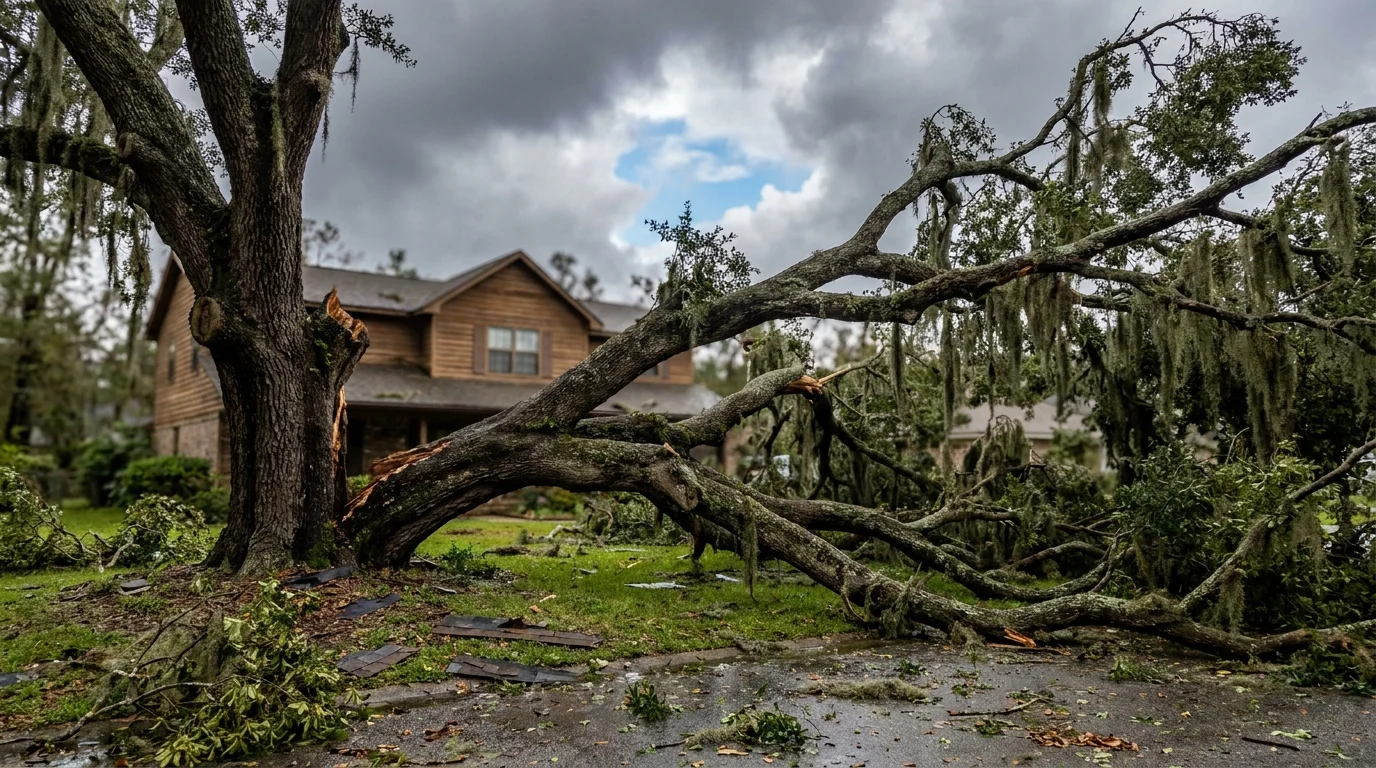
A dead or declining pine may be less able to withstand a storm, but needle color alone doesn’t predict failure. Our explanation of pine tree storm hazards covers why roots, tree size, health, and distance from your home belong in the same conversation.
If a limb is hanging overhead, keep people and pets away rather than inspecting underneath it.
Why Pines in the Savannah Area May Brown Differently
Loblolly and slash pines are familiar trees around Guyton, Rincon, and Springfield. Both shed older interior growth, but they don’t all change on the same day.
Along coastal Georgia, the heaviest seasonal shedding commonly occurs in October and November. Some shedding happens throughout the year, and the amount can vary between trees and seasons.
Across Effingham County and nearby Bloomingdale, older wooded properties often contain several kinds of trees. Live oaks, water oaks, laurel oaks, sweetgums, and pecans follow their own seasonal patterns. Palms need a different kind of assessment altogether.
We don’t judge a pine by what the oak beside it is doing. Live oaks, for example, commonly shed older leaves in late winter and early spring rather than following a typical fall leaf drop.
The same species-by-species approach applies in Pooler, Richmond Hill, and Savannah. Comparing nearby pines of the same kind is more useful than comparing every tree along the street.
The property’s history matters as well. Construction, compacted ground, and heavy equipment around a tree can affect its roots. When the color change appears, we want to know what changed around the pine, not simply what month is on the calendar.
Can a Browning Pine Be Saved, and Is It Safe to Handle Yourself?
Start with observation, not treatment
A pine with brown needles may be worth keeping when enough healthy growth remains and its structure is sound. The cause and extent of the problem guide that decision.
Take dated photos from the same safe location. Record when you first noticed the change and whether it has spread. Mention recent work around the tree when you ask a certified arborist or our crew for an assessment.
Don’t spray for an unknown pest or assume fertilizer will solve the problem. Needle blight, insect infestation, and pine wilt are possible diagnoses, but needle color alone can’t confirm them.
For a small ornamental pine in a pot, check that the container drains well. Waterlogged soil can stress roots, so more watering isn’t always the answer.
A sudden increase in sunlight after nearby cover is removed can cause sunscald, or bark injury from sun exposure.
UGA Extension’s guidance on southern pine beetle signs notes that drought-stressed pines may lack pitch tubes, small resin deposits associated with bark beetle activity. The absence of an obvious sign doesn’t settle the diagnosis.
Leave tree work to the right crew
Ground-level observation is reasonable homeowner work. Climbing a large pine, cutting overhead limbs, or handling storm damage is a different matter.
Hanging limbs and trees near power lines aren’t DIY jobs. Don’t try to pull a suspended branch loose or use a ladder against a questionable tree.
For a pine that can stay, we can discuss whether pruning or other care has a useful purpose. Pruning can’t bring dead needles back to life, and unnecessary cutting won’t correct an unknown cause.
A dead or badly damaged pine may not be a good candidate for preservation. We would rather give you a straight answer than recommend work that won’t help.
When to Call Us for a Pine Assessment or Free Estimate
Ask for an assessment when needle discoloration covers much of the crown, the top is becoming bare, or the tree’s lean has changed. Location matters even when symptoms seem modest. For concerning symptoms, ask a certified arborist or an experienced local crew like ours to look at the pine.
A pine beside your roof, driveway, or power line deserves careful attention because people and property are nearby. You don’t have to wait for the entire tree to turn brown before asking about it.
At LoyalTree, we look at the tree’s condition, where it stands, and what could be affected if it fails. Then we discuss whether monitoring, care, or removal makes sense.
Our guide to warning signs of a dying pine explains why the whole tree matters more than one seasonal change.
If storm damage has left a tree or limb hanging, keep the area clear and call for help. Don’t move closer to get a better photograph.
An assessment doesn’t automatically lead to removal. If the pine is shedding normally, that’s useful to know. If it has a serious problem, we can explain what we’re seeing and talk through the next step without pressure.
Not sure what you are looking at? Our tree risk assessment covers pines near homes all over Effingham County, from Guyton to Rincon and Springfield.
Frequently Asked Questions
Do pine trees lose needles every fall?
Many pines shed older needles seasonally, though the amount and timing vary. Loblolly and slash pines commonly have a noticeable fall shed. They stay evergreen because they retain newer needles while the older ones fall.
Should brown pine needles be removed from the ground?
Fallen needles can usually remain as natural mulch where they aren’t causing a problem. Clear them from walkways, drains, or other places where they collect and create a concern. Our guide to pine straw and roof buildup covers cleanup around the house, but raking won’t fix a tree health problem.
Can drought make pine needles turn brown?
Dry conditions can stress a pine and contribute to a color change. Other problems can look similar, so we consider the full tree and recent conditions rather than assuming drought explains everything. A color change that keeps spreading deserves attention even after the weather changes.
Should a pine be removed if it has brown needles?
That discoloration alone isn’t enough reason to remove a pine. We consider the remaining live crown, trunk, roots, visible defects, and position near people or property. A tree shedding older needles may need no work, while a declining pine close to a home needs a closer assessment.
A Closer Look Before Making a Decision
Fall shedding can look dramatic, especially when fresh pine straw covers the yard. Green outer growth with older needles inside that have turned brown often fits that normal pattern.
Widespread decline or a change in the tree’s structure deserves more attention. We can help you sort out whether your pine needs monitoring, care, or removal, without treating every brown needle as bad news.
If you’re unsure what you’re seeing, request a free estimate or call (912) 342-0440.
Written by LoyalTreeFamily-owned, licensed and insured tree service based in Guyton, working Effingham County and coastal Georgia. 20 years of experience, 24/7 storm response.