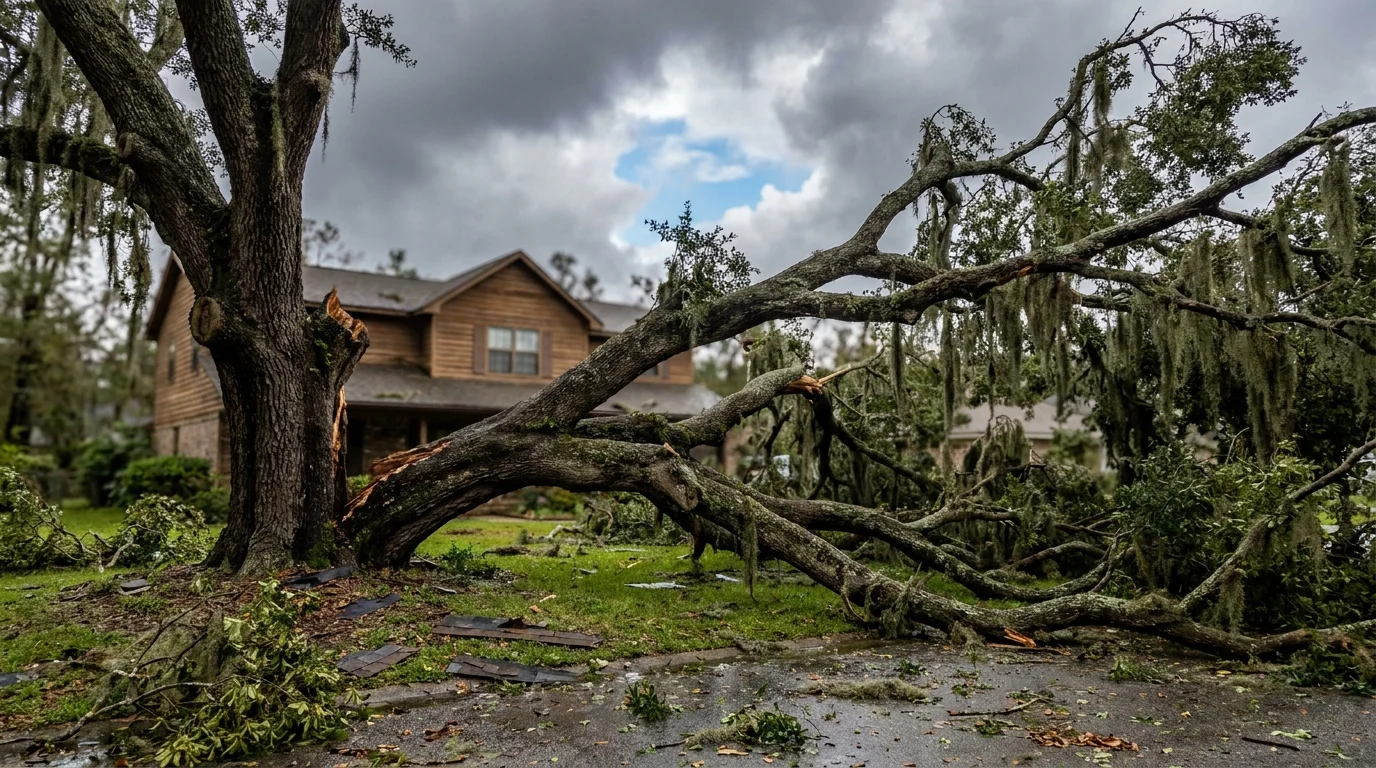
Fall officially starts today, and in coastal Georgia that does not mean much to the weather. It will still be warm this week. But it means a lot to your trees, and it means a lot to the next four months around your house.
Our trees have just come through a long hot summer and the busiest stretch of hurricane season. Whatever damage they took is still up there. The difference now is that the leaves are thinning, the light is changing, and for the first time since spring you can actually see what is going on in a canopy from your own driveway.
We are LoyalTree LLC, a family-owned, licensed and insured tree company based in Guyton. Mike Williams brings 20+ years of hands-on tree experience to every job, and Mary Gledhill handles the scheduling and the estimates. Here is the walk we would want a neighbor to take this week, and what to look for while you are out there.
Key Takeaways
- Fall opens the canopy up, so cracks and structure you could not see in July start to show.
- Walk the whole property, not just the front yard, and look up, down and around the trunk.
- Hurricane season runs through November 30, so a damaged tree is still a live risk.
- Deadwood over a roof, driveway or play area is the first thing to deal with.
- If something looks wrong and you are not sure, have somebody who knows trees take a look.
Why Fall Makes Tree Problems Easier to Spot
All summer, a full canopy hides a lot. Leaves fill in the gaps, cover the deadwood, and make a struggling tree look about the same as a thriving one from the ground. By late September the water oaks, sweetgums, pecans and maples around here start thinning out, and the structure of the tree shows through.
That matters because most of the trees we have cut off houses around here had been showing warning signs for a year or more. Nobody could see them. A grey dead limb forty feet up reads as “part of the tree” in July and reads as “that should not be there” in October.
The other reason to look now is timing. We are still inside hurricane season, which does not end until November 30, and October still puts storms on this coast, Matthew came through on October 8. Anything you fix in the next few weeks is a problem you do not have during the next named storm.
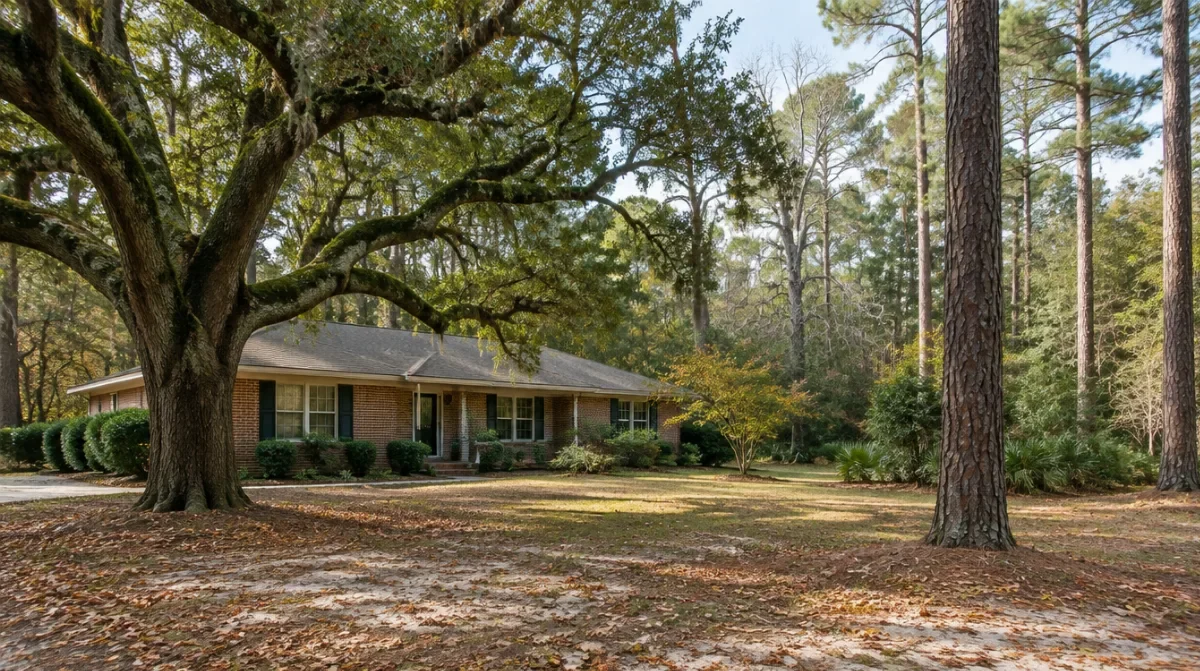
The 20-Minute Walk: What to Look For
You do not need equipment for this and you should not climb anything. Put on shoes you do not mind getting dirty, start at one corner of the property, and work your way around. Give yourself twenty minutes and actually look up.
Start at the ground and the root flare
Walk to the base of each big tree. The trunk should widen out where it meets the soil, like a foot in a boot. If it goes into the ground straight like a telephone pole, soil or mulch has been piled against it, and that hides rot.
Look for mushrooms or shelf fungus growing out of the base or the surface roots. Look for soil that has heaved or cracked on one side, which can mean the root plate has started to move. Look for a gap where the trunk enters the ground. On a lot of our sandy Effingham County soil, the visible clue is subtle, so take your time.
Work your way up the trunk
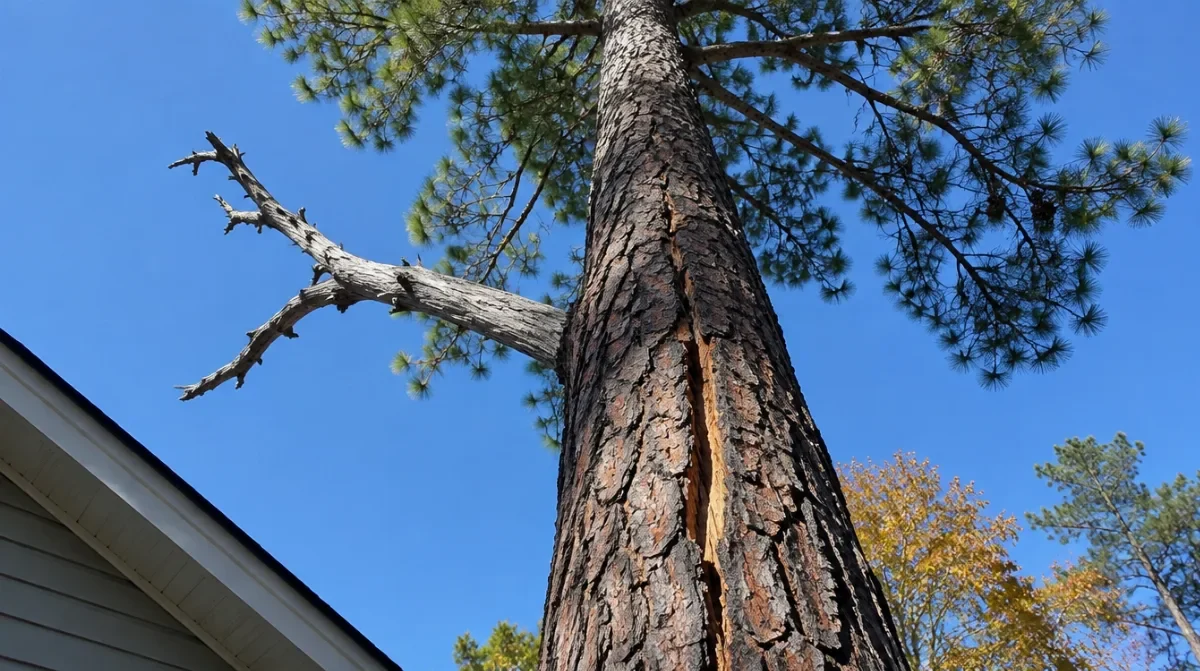
Run your eyes up the main stem. You are looking for vertical cracks, cavities, holes, sap or dark staining running down the bark, and any place where bark is missing or falling off in sheets. Old lightning scars show up as a narrow strip of damaged bark running top to bottom.
Pay special attention to the point where the trunk splits into two or more main leaders. A tight V-shaped union with bark pinched down inside it is one of the most common failure points we see, especially on water oaks and Bradford pears.
Then look at the canopy
Now the part fall makes easy. Scan the whole crown for grey, bare limbs with no small twigs on them. Those are dead, and dead limbs come down on their own schedule, usually in wind or rain. Look for limbs that are hung up in other branches after a summer storm and never made it to the ground.
Compare one side of the tree to the other. A canopy that is thick on one side and thin on the other often means something is wrong on the thin side, either in the roots or in a major limb. Also compare the tree to its neighbors of the same species. If your oak dropped its leaves three weeks before every other oak on the street, that is worth asking about. Our guide on how to tell if a tree is dead or just struggling goes deeper on that.
Finish with the targets
A dead limb over the back corner of the woods is a different problem than the same limb over a bedroom. Stand where the tree would land and ask what is underneath it: the roof, the driveway, the power drop, the septic field, the propane tank, the trampoline, the neighbor’s fence. That is what turns a tree issue into a priority.
What Coastal Georgia Trees Do in the Fall
A few local things confuse people every year, so it is worth knowing what is normal before you worry.
Live oaks do not drop their leaves in the fall. They hold them through winter and shed in late winter and early spring as the new growth pushes. A live oak dropping heavily in October is doing something unusual.
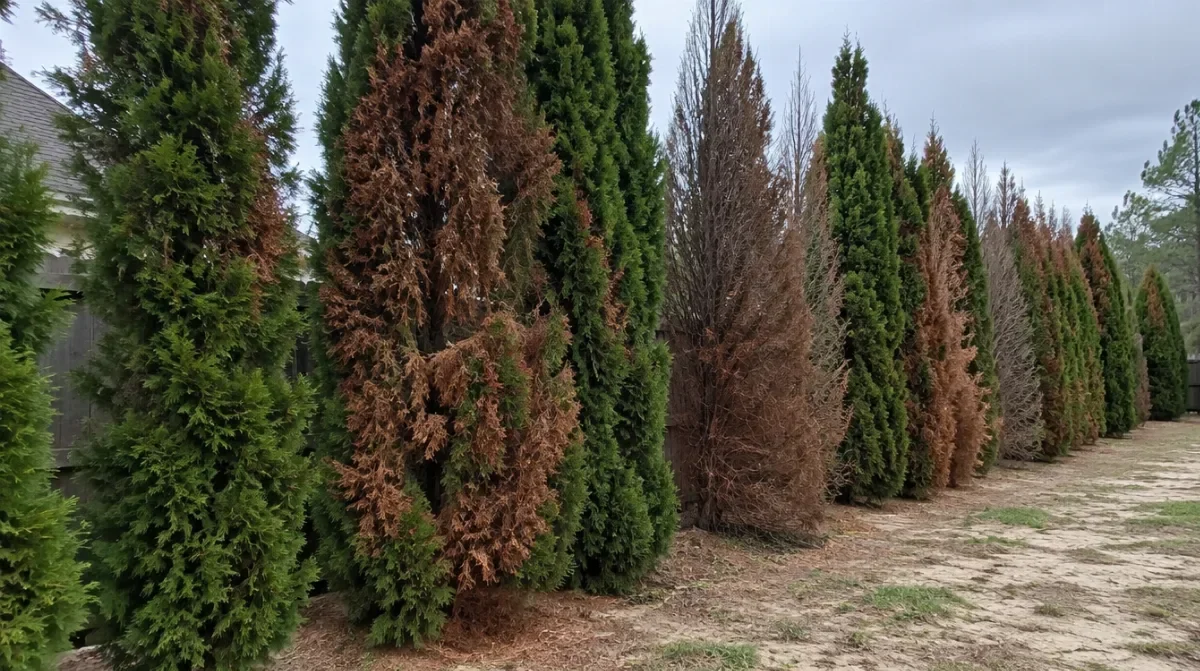
Pines shed needles in the fall, and it looks alarming. Loblolly and slash pines drop their older interior needles every autumn, which turns the inside of the tree brown while the tips stay green. That is normal. Brown needles at the ends of the branches, or a whole tree going brown at once, is not. Our article on pine trees in storms covers what pine failure actually looks like.
Acorns come in waves. Some years the oaks produce a huge crop and some years almost none. A heavy acorn year is not a sign of a sick tree by itself.
Spanish moss gets more obvious as leaves fall. It looks like it is taking over in November. It is not a parasite and it does not feed on the tree, though a tree that is already thin will show a lot more of it.
What to Do Before Winter
If the walk turned up something, here is the order we would put it in.
- Anything over the house, driveway or power drop. Deadwood and hanging limbs above where people and cars go come first, every time.
- Anything leaning that was not leaning before. A tree that has moved is a different situation than a tree that grew crooked. We wrote about the difference in is a leaning tree dangerous.
- Trees showing fungus at the base or a cavity in the trunk. These need a real look, not a guess from the ground.
- Clearance and structure work. Raising limbs off the roof, thinning a crowded crown, cleaning deadwood out. This is the work that protects you through the next several storm seasons, and cooler weather is a good window for it.
- Gutters and roof. Not our department, but pine straw packed in a valley causes more homeowner grief in coastal Georgia than most people expect.
One thing we would push back on: fall is not the season to do heavy pruning on everything just because the weather turned nice. Different species have different windows, and cutting hard at the wrong time sets a tree back. Our guide on the best time to trim trees in coastal Georgia breaks it down by tree. Deadwood removal and safety clearance, though, can happen any time of year.
When to Call Instead of Guessing
Call somebody if a limb is hanging and you cannot reach it safely from the ground, which is most of the time. Call if a tree is leaning toward the house, if the soil has lifted on one side, if there is a crack you can fit a finger into, or if anything is touching or near a power line. Never put a ladder against a tree with a chainsaw in your hand.
If you would rather have somebody else do the looking, that is what we are for. A tree risk assessment is a proper walk of the property with somebody with 20+ years of hands-on tree experience, and a free estimate does not obligate you to anything. We cover Effingham County, Richmond Hill, Pooler, Savannah, Rincon, Springfield and the South Carolina Lowcountry.
Frequently Asked Questions
Is fall a good time to trim trees in Georgia?
For removing deadwood and getting limbs off a roof, yes, any time of year works. For heavy structural pruning, most Georgia hardwoods do better in late winter while they are dormant. Cutting hard in early fall can push tender new growth right before the first freeze.
My pine tree is turning brown on the inside. Is it dying?
Probably not. Pines shed their oldest interior needles every fall, and it can look dramatic. The concern is brown needles at the branch tips, a whole tree fading at once, or needles dropping out of season.
Is hurricane season really still going in late September?
Yes. The Atlantic season runs June 1 through November 30, and the statistical peak falls right around September 10. A tree that took damage in August is still carrying that damage into the back half of the season.
How can I tell a dead limb from a bare one?
A dead limb is grey or silver, has no small twigs at the ends, and often has bark peeling off it. A living limb that has simply dropped its leaves still has fine twigs and buds, and the bark is tight. On the ground, a fresh twig snaps green inside. A dead one snaps dry and brown.
Do I have to remove a tree just because it has deadwood in it?
No. Most large trees carry some deadwood, and cleaning it out is routine pruning, not removal. Removal comes into it when the trunk or root system is compromised, not when a few limbs have died back.
Twenty Minutes Now Beats a Bad Night Later
Nothing about this walk is complicated. You are looking at the ground, the trunk, the canopy and what is underneath, and you are doing it in the one season when the tree will actually show you what is going on.
Most of the time you will find nothing and go back inside. Sometimes you will find a grey limb hanging over the kids’ room, and that twenty minutes will have been the most useful twenty minutes of the fall.
If you spot something you do not like the look of, request a free estimate or call us at (912) 342-0440 and we will come take a look.