If your neighbor’s tree branches hang over your property, Georgia generally allows limited trimming of growth that crosses onto your yard, up to the boundary. You must stay on your side and avoid cuts that seriously harm the tree.
That gives you room to address an overhang, but the boundary isn’t a pruning plan. An overhang can look like a simple yard problem, but you still need to assess safety and tree health before cutting. Power lines and local rules can also affect what makes sense to trim.
We recommend starting with a calm conversation, then checking the boundary and the tree before picking up a saw.
Key Takeaways
- You can generally trim overhanging growth up to your property line, without crossing onto your neighbor’s land.
- Cutting too much can damage the tree or leave a dangerous, unbalanced canopy.
- Large limbs, hanging wood, and overhead cutting belong with a qualified tree crew.
- Keep away from limbs near power lines and report them to the utility.
- Agree on the work with your neighbor when possible, and account for local tree protections before substantial pruning.
What You Can Trim When a Neighbor’s Tree Hangs Over Your Yard in Georgia
A branch crossing your fence doesn’t give you control over the whole tree. Georgia’s general property-line principle allows limited pruning of branches that extend over your property.
Georgia Tree Law’s guidance on overhanging branches describes cutting branches back to the boundary. That doesn’t give you permission to enter the neighboring property or cut down the tree.
Georgia’s limited self-help principle allows you to cut overhanging branches from your side, but it doesn’t permit trespass, entry onto the neighbor’s property without permission, or cuts that harm the tree.
Stay on your side of the property line
Know where the legal boundary is before work begins. A fence, mowing edge, or row of shrubs may not mark it accurately.
Keep yourself, your tools, and any hired crew on your property unless the neighbor gives consent for access. If the boundary is disputed, resolve that before scheduling work. A tree crew can assess branches, but we can’t settle ownership disputes.
We recommend discussing the proposed cuts with your neighbor, especially when large limbs are involved. Written agreement about access and the work can prevent misunderstandings.
Do not make cuts that could damage the whole tree
A right to trim doesn’t make every cut reasonable. Removing a major limb or stripping one side of the canopy can cause lasting harm.
The safe pruning point may also be somewhere other than the property line. If reaching it requires crossing the boundary, get permission first.
The Massachusetts Rule, Hawaii Rule, and Virginia Rule, along with approaches used in Pennsylvania, are state-specific and don’t establish the rule for a Georgia property dispute.
An overhanging limb may raise a nuisance concern, but that alone doesn’t settle responsibility. The tree owner isn’t automatically responsible in every situation. A Georgia attorney can advise on legal questions.
Use This Safety Checklist Before Cutting Overhanging Branches
Before cutting, take a slow look at the whole work area.
- Establish the property boundary and whether the work needs your neighbor’s permission.
- Look for wires, roofs, fences, vehicles, and anything a falling branch could strike.
- Examine the limb for cracks, dead sections, and places where it’s caught or supported.
- Consider how removing it would affect the rest of the tree.
- Stop if the job requires climbing, a ladder, or cutting overhead.
Branches near electrical lines aren’t a homeowner pruning job. Utility-line safety guidance calls for trained line-clearance specialists around overhead utilities. Report the problem to the utility rather than reaching toward it.
Know when pruning is not a DIY job
A cracked limb can move before the saw reaches it. A hanging branch may be resting on another limb, with its weight held in a way you can’t see.
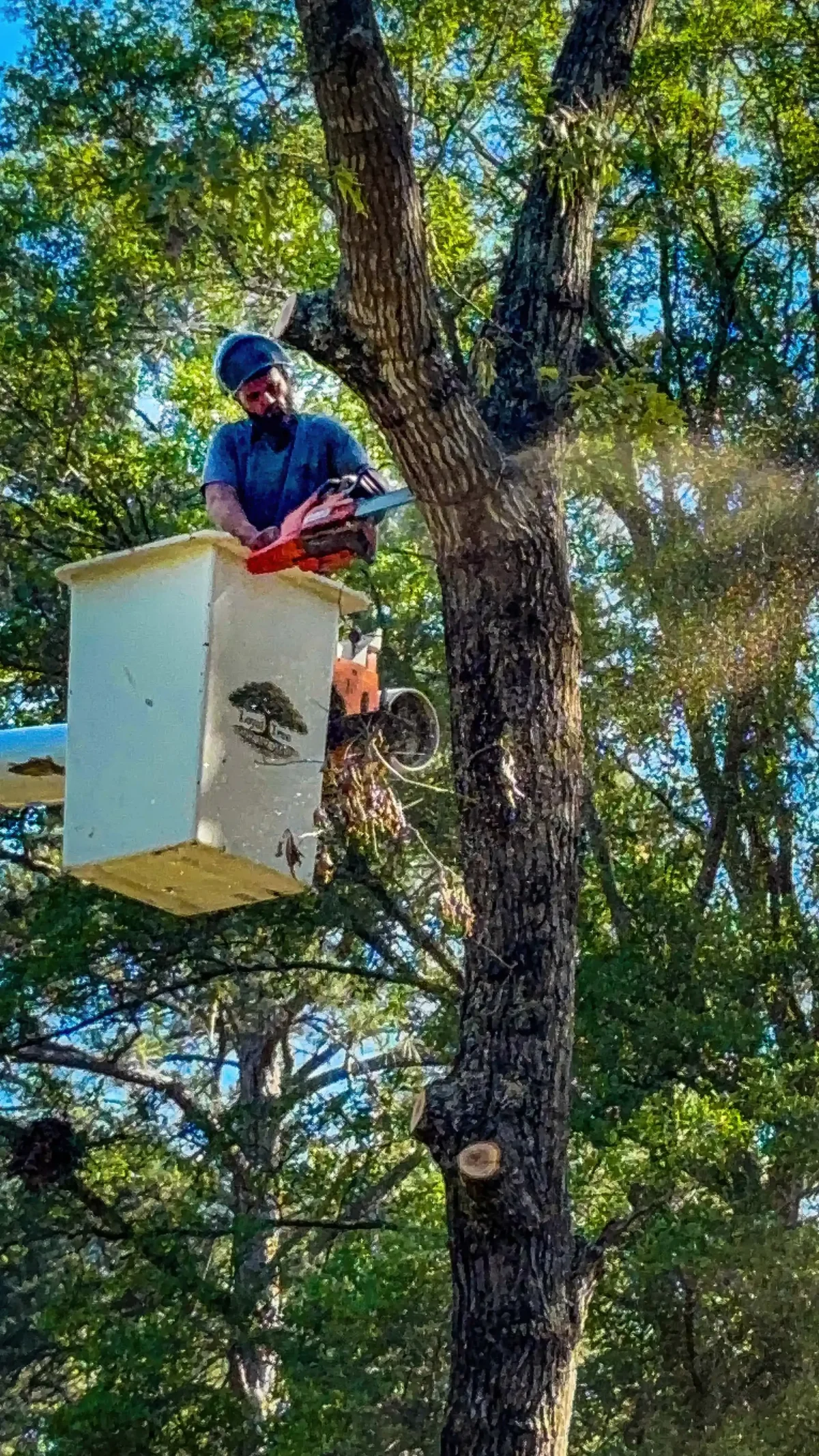
Heavy branches above roofs, leaning trees, and work requiring an overhead chainsaw need a qualified crew. Keep people and pets clear. Don’t try to control a falling limb with a rope tied to a vehicle.
Choose a clean cut that protects the tree
Poor cuts can tear bark, leave damaged wood, or remove too much living growth. Cutting flush against the trunk can damage the tissue around the branch attachment.
We assess large limbs and mature trees before deciding where to cut. The goal is useful clearance without creating a bigger tree problem.
Decide Whether the Tree Can Be Saved or Is a Hazard
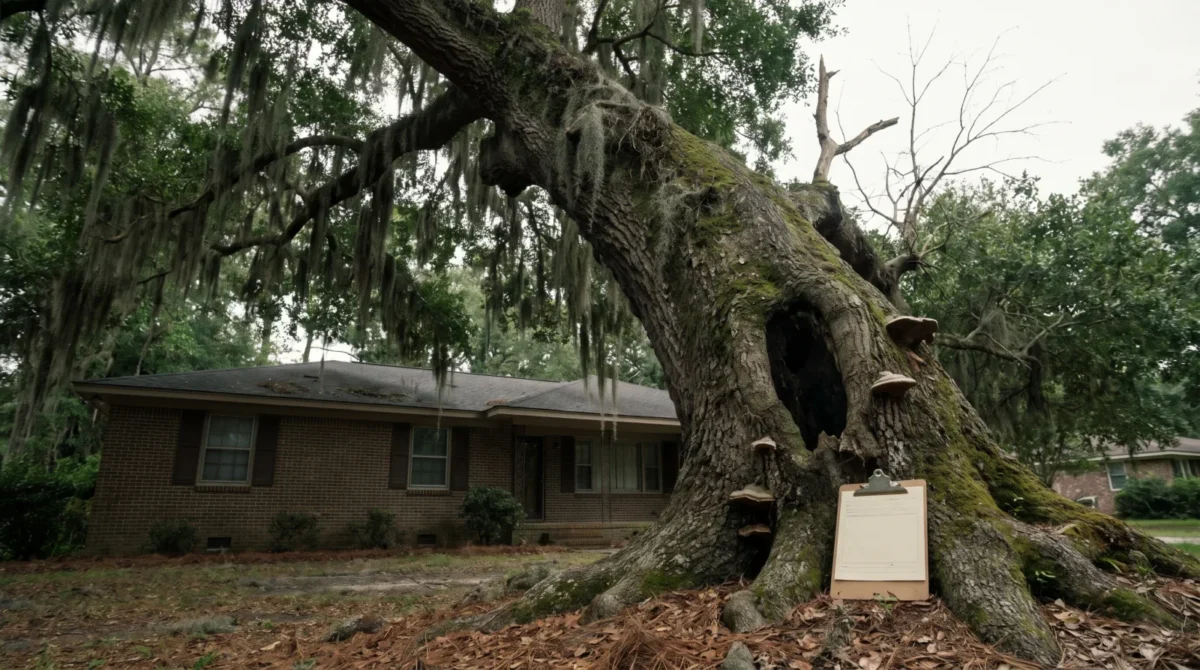
An overhanging branch and a failing tree are different problems. Healthy growth over a fence may need careful clearance. A split limb over the same fence calls for a closer look.
We don’t diagnose a tree from one photograph. Photos can help explain the concern, but they don’t show every crack, attachment, or root problem.
Signs that call for a closer look
Dead branches, fresh splits, broken wood, visible decay, lifted roots, fresh soil gaps around roots, and a tree that has started leaning farther all deserve attention.
A hanging limb or fresh trunk split above an occupied area needs more urgency than routine branch clearance. Keep clear rather than standing underneath for a better picture.
Branches touching or threatening power lines belong with the utility or qualified responders. Don’t assume a wire is safe because it isn’t sparking.
A hazard tree has a defect that could fail and injure someone or strike property. Have a qualified arborist assess it.
Pruning may solve the problem without removing the tree
A sound tree can often stay. Our tree trimming and pruning work starts with its structure, health, and the clearance you need.
Removing deadwood or selected branches may address the concern without taking away useful shade. We won’t promise that result before seeing the tree.
Major decay, severe structural failure, or damage that can’t be managed safely may call for hazardous tree removal. Removing a neighbor’s tree requires their involvement and authorization.
How Local Trees, Storms, and Rules Affect the Right Choice
Around Effingham County and Savannah, including Guyton, Rincon, Springfield, Bloomingdale, Pooler, and Richmond Hill, large shade trees can stretch across several yards. Live oaks, water oaks, laurel oaks, slash pines, and sweetgums each need an individual assessment.
A broad oak limb over a roof presents different access and weight concerns than a broken pine branch caught overhead. Size, condition, attachment, and what sits underneath matter more than the species name alone. Local sandy or clay-heavy soil can also affect what an inspection needs to consider.
Storm season can turn a routine branch into a hazard
The National Hurricane Center’s season information places Atlantic hurricane season between June 1 and November 30. A concerning limb deserves attention before dangerous weather arrives.
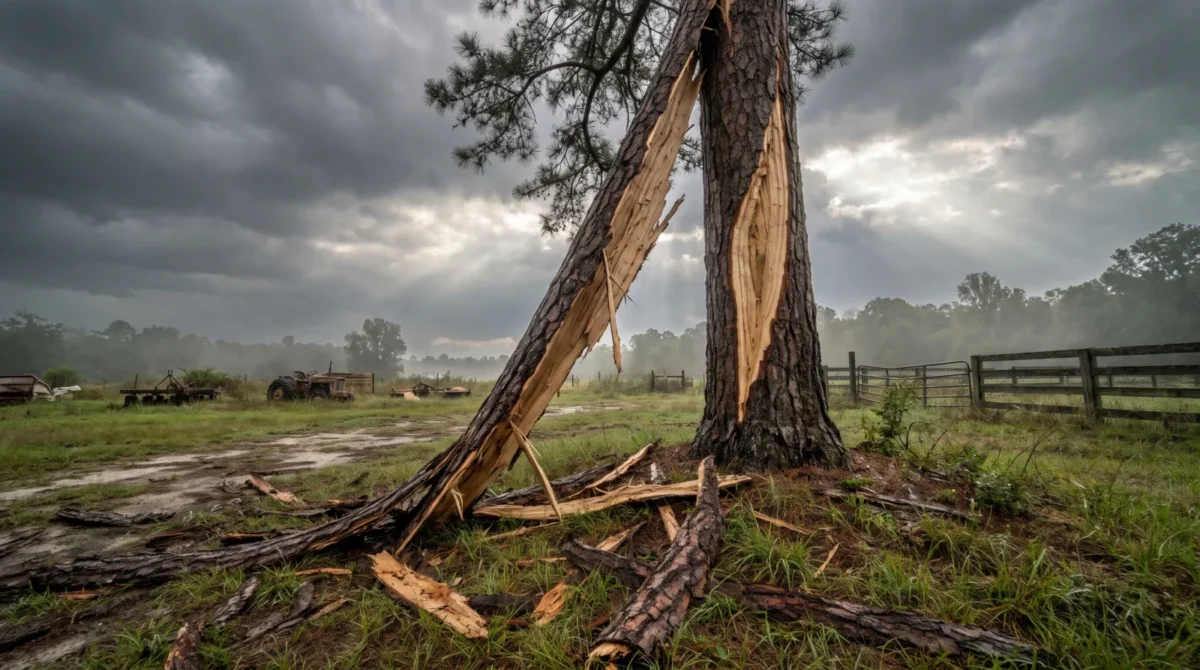
After a storm, look for changes from a safe distance. A new lean, fresh split, hanging limb, lifted roots, or fresh soil cracks near the roots can mean the tree’s condition has changed.
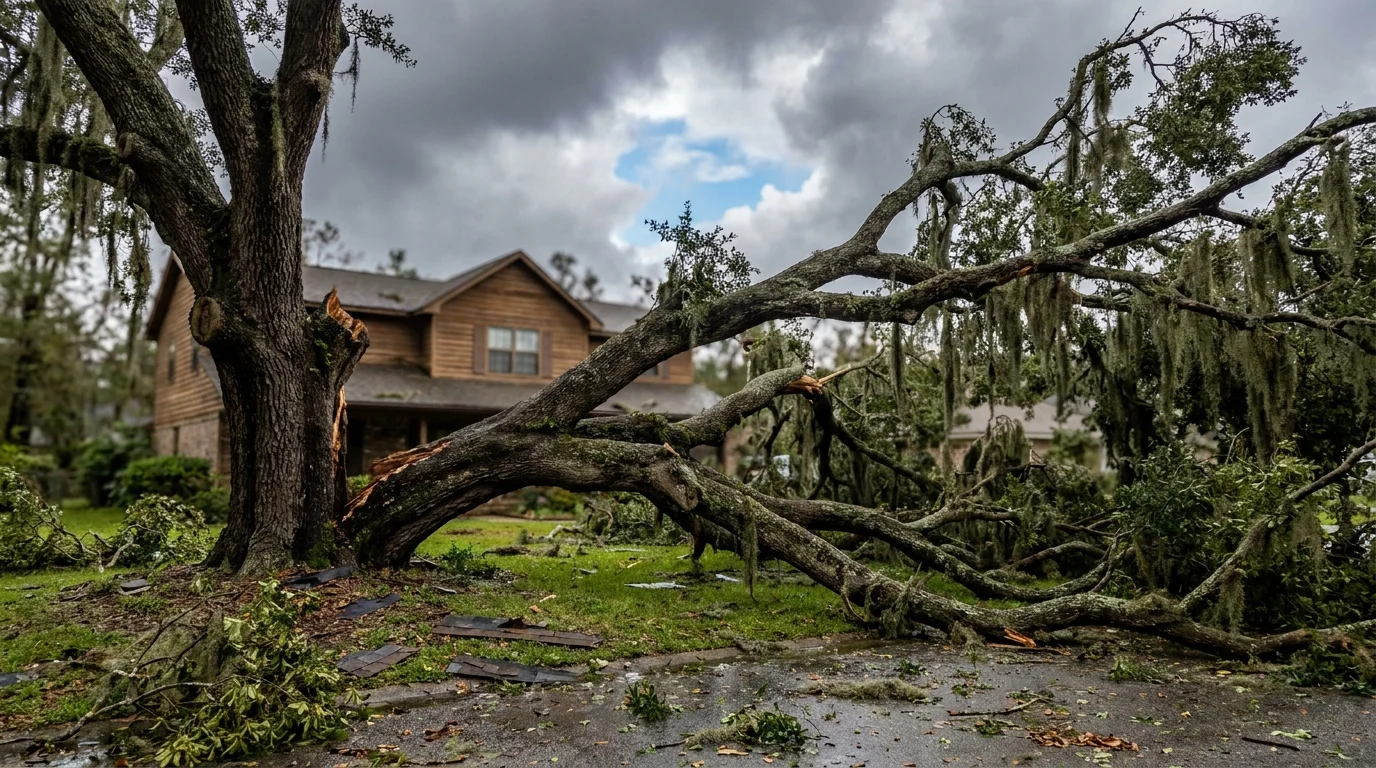
Our storm damage and emergency tree service handles urgent situations involving fallen trees and dangerous limbs. Keep clear of damaged trees while help is being arranged.
Check neighborhood and county rules before major work
Property-line trimming rights don’t erase HOA requirements or local tree protections. Substantial pruning and removal can involve more than an agreement between neighbors.
Savannah’s tree ordinance administration is one example of local oversight that can affect tree work. Growth in a public right of way may follow separate rules, so check with the city or county before cutting.
We don’t treat every property as having the same rules, or assume every overhanging branch requires a permit.
When to Call About a Neighbor’s Overhanging Tree
Call when the branch is too large to handle safely from the ground, hangs above your home, or shows splitting or decay. Storm damage and changes in a tree’s lean also deserve a professional assessment.
An uncertain boundary needs to be settled before cutting. We can discuss access and the proposed work, but a tree assessment doesn’t establish a property line.
On site, we look at the tree, nearby structures, access, and where branches could move during cutting. We explain whether pruning is suitable or whether the tree’s condition calls for a different plan.
We also discuss how to protect nearby property and coordinate access with the people involved. If work needs to happen from your neighbor’s side, that permission belongs in the plan before equipment arrives.
You don’t need to decide between pruning and removal before calling. Start with the concern you can see. We’ll explain what the tree needs and what the work would involve, without pushing removal when careful pruning can do the job.
For limbs too big or too high to handle from your side, our tree trimming and pruning crew works all over Richmond Hill, Effingham County and Savannah. If the tree has already come down, see who pays when a neighbor’s tree falls.
If it turns into a bigger job, here is what happens at a free estimate.
Frequently Asked Questions
Can you trim branches if the neighbor says no?
A neighbor’s objection doesn’t automatically settle your rights to limited property-line trimming. You still can’t trespass or damage the tree. We recommend describing the exact cuts you want, then seeking Georgia legal guidance if the disagreement continues rather than cutting during an argument.
Can you cut branches back to the trunk?
Only when you have the necessary permission and the cut is suitable for the tree. The trunk may be beyond your boundary, and removing an entire large limb may cause more damage than limited pruning. For mature trees, have the attachment and remaining canopy assessed before agreeing on the cut.
What should you do if a branch is touching a power line?
Don’t touch the branch, climb the tree, or try to cut it free. Keep people away and contact the utility; call emergency services if there’s immediate danger. Georgia Power’s tree-management information explains its work clearing vegetation around power lines.
Who handles a branch that falls into your yard?
Responsibility depends on the circumstances and applicable law, and the tree owner isn’t automatically responsible because a limb landed in someone else’s yard. Photograph damage from a safe place and speak calmly with your neighbor. If a home is involved, our guidance on a tree falling on your house covers immediate safety steps. Questions about liability or negligence may need separate legal advice.
Keep the Boundary Clear and the Tree Safe
You can generally address branches over your property, but the boundary is only part of the decision. Safe, limited pruning matters just as much as staying on your side.
Avoid cuts that could damage the whole tree, and leave high limbs, heavy wood, and electrical hazards to qualified professionals. A conversation with your neighbor and a sound pruning plan can prevent a bigger problem.
If you have a question about a tree on your property, request a free estimate or call (912) 342-0440.
Written by LoyalTreeFamily-owned, licensed and insured tree service based in Guyton, working Effingham County and coastal Georgia. 20 years of experience, 24/7 storm response.