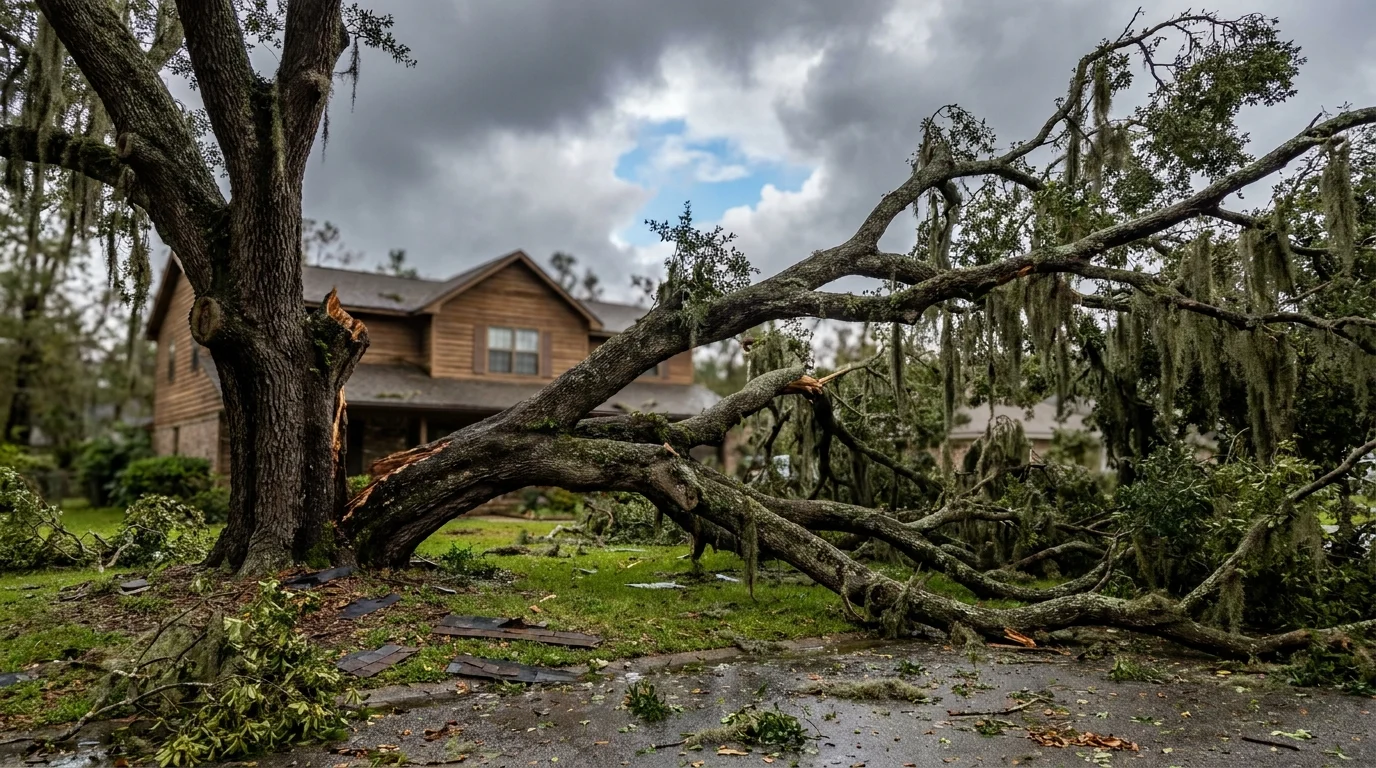
A tree leaning toward your house, driveway, fence, or utility line can make your stomach drop. A leaning tree isn’t always about to fall, but a new or worsening lean can signal root trouble, trunk damage, shifting ground, or storm stress.
Some trees have grown at an angle for years and remain stable. Others begin leaning after one hard rain or thunderstorm. We help homeowners in Guyton, Rincon, Springfield, Bloomingdale, Effingham County, Richmond Hill, Pooler, and Savannah assess the difference without guesswork, especially when a tree could cause property damage.
The safe move is to watch for warning signs, stay clear of the area, and call us when something doesn’t look right.
Key Takeaways
- A long-standing leaning tree may be stable, but its angle and nearby hazards still matter.
- A new or worsening lean, especially with visible damage, needs prompt attention.
- Keep people, pets, vehicles, and lawn equipment outside the fall zone.
- Don’t straighten, cut, or brace the tree with homemade fixes.
- Soil heaving, exposed roots, trunk damage, and hanging limbs can signal failure.
- Storms, wet ground, and heavy limbs make local pines and oaks more likely to fail.
Is a Leaning Tree Dangerous? Start With These Warning Signs
A stable leaning tree isn’t always dangerous. Concern rises when the angle is new or worsening, since it may indicate root failure.
You can inspect it from the ground without touching the tree. Don’t climb it, dig around the roots, cut limbs, or use a ladder for a closer look.
Watch for these signs:
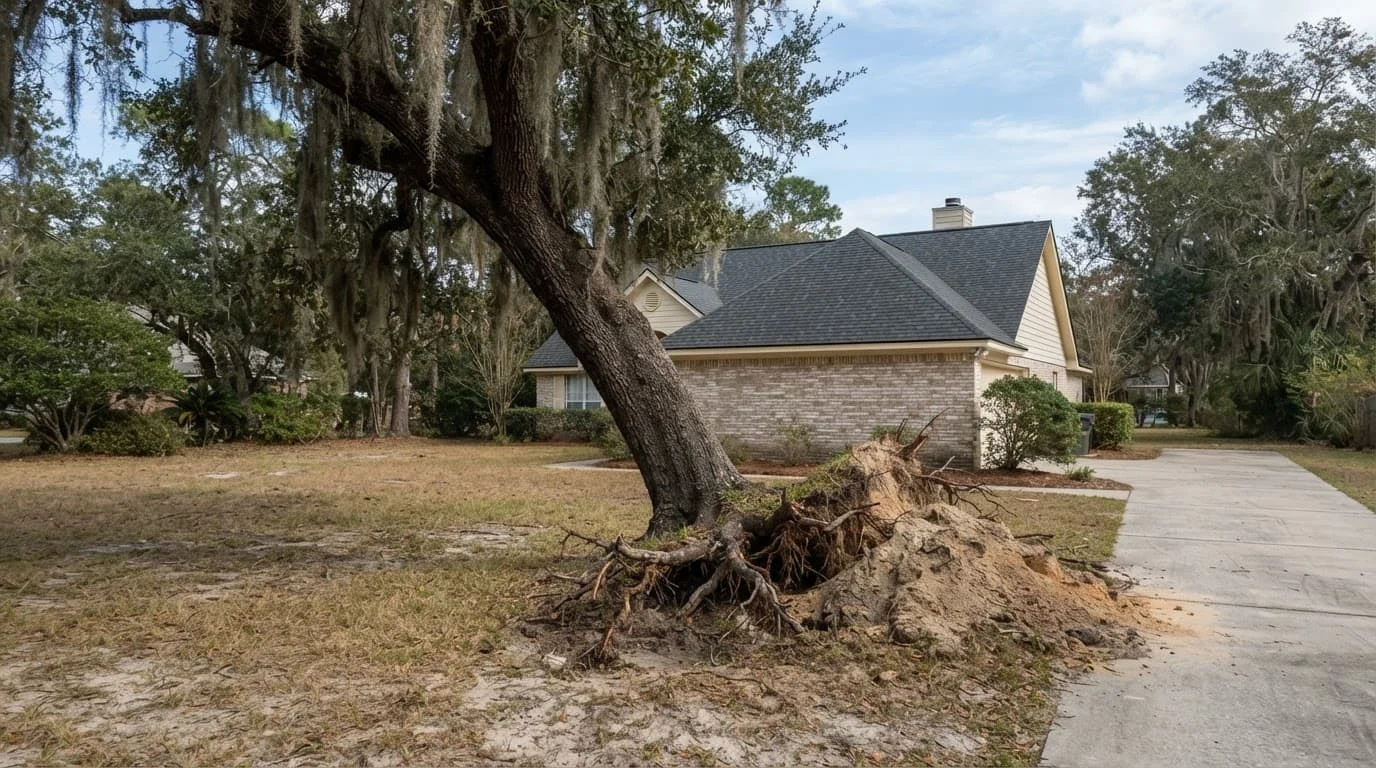
- Fresh cracks in the soil, lifted soil around the root ball, or tree roots pulling up on one side of the trunk.
- A raised mound of dirt, or root plate, on the opposite side of the lean.
- Roots exposed after rain, erosion, or construction, including possible girdling roots that limit support.
- Trunk cracks, hollow spots, or peeling bark around an old wound.
- Dead branches, hanging limbs, or a split where major limbs meet.
- Mushroom growth near the base. Mushrooms alone don’t prove root rot, but they deserve attention with other damage.
- New problems after high winds, lightning, or heavy rain.
A leaning tree over a home, road, or utility corridor can become a falling hazard. Don’t park under it. Keep children and pets away until a certified arborist can assess the risk.
A dead, badly damaged, or unstable tree may need tree removal rather than a repair attempt. An inspection can determine whether the tree has enough structural support or needs removal. Every situation is different, but waiting for a leaning tree to make the decision for you is never the plan.
A Natural Lean Is Different From a New Lean
Trees don’t always grow straight up. A leaning tree may angle toward open sunlight or away from nearby trees. If that leaning angle has stayed the same for years, the trunk and roots may have adapted.
That adaptation can include reaction wood, which helps strengthen the tree as it grows. Leaning hardwoods may develop tension wood, while leaning conifers often form compression wood. Young trees can change as they develop, unlike an established tree with a long-standing lean.
A new lean tells a different story. So does a lean that increased after a storm, came with broken roots, or shows fresh soil movement. Even straight leans or orderly growth don’t guarantee safety. If a leaning tree seems to have shifted, don’t assume it will settle back.
Only an on-site inspection can show whether the tree is stable or headed for failure.
What to Do When the Tree Could Fall Soon
If a leaning tree could fall soon, move everyone away and stay outside the likely fall path. Don’t pull on limbs, tie a support rope to the trunk, or improvise by staking trees. Those actions can bring an unstable tree down.
A leaning tree with branches touching power lines requires plenty of distance. Stay back and call the utility company. Call emergency services if a tree threatens life or blocks a public roadway.
For a storm-damaged tree, hanging limb, or tree resting on a structure, our storm damage and emergency tree service is built for jobs that can’t wait. If you have never scheduled urgent tree work, our guide explains what to expect from an emergency tree service visit.
A leaning tree can look calm after a storm while roots pull loose below ground. The warning sign may be in the soil, not the canopy.
Can a Leaning Tree Be Saved, or Does It Need to Come Down?
We don’t walk onto a property assuming every leaning tree needs removal. A healthy tree with a long-term, stable lean may be worth keeping. Phototropism, a tree’s tendency to grow toward available sunlight, can explain some longstanding leans. Reaction wood may show how the tree has adapted. Neither condition proves the tree is safe. A tree with a failed root system, deep trunk splits, root rot, or severe storm damage may not be safe to leave standing.
When Mike looks at a leaning tree, he considers the species, overall health, age, root condition, trunk strength, canopy weight, soil movement, and structural support. He also checks for hidden concerns, such as girdling roots, and considers what sits in the fall zone. A big tree over an open field is different from the same tree over a roof or driveway.
In some cases, tree trimming and pruning with correct pruning can reduce excess weight and take stress off a weak section. Cabling and bracing can sometimes provide limited support to selected limbs or weak branch unions. However, they can’t repair damaged roots or restore support after root failure.
Why a Quick Fix Can Make the Problem Worse
Trying to straighten mature trees can tear more roots loose. Cutting large limbs on one side can throw off the tree’s balance. Staking and guying may help certain newly planted specimens and young trees, but they aren’t a universal fix for an established tree. Even a well-meant rope, chain, or homemade brace can create a new pressure point on the trunk.
Tree work near a house, driveway, fence, or utility line creates a serious safety risk and isn’t a safe DIY project. If the leaning tree might be worth preserving but its stability is uncertain, get a professional tree risk assessment. It can clarify structural stability before anyone starts cutting.
Why a Leaning Tree Needs Extra Attention in Effingham County and the Savannah Area
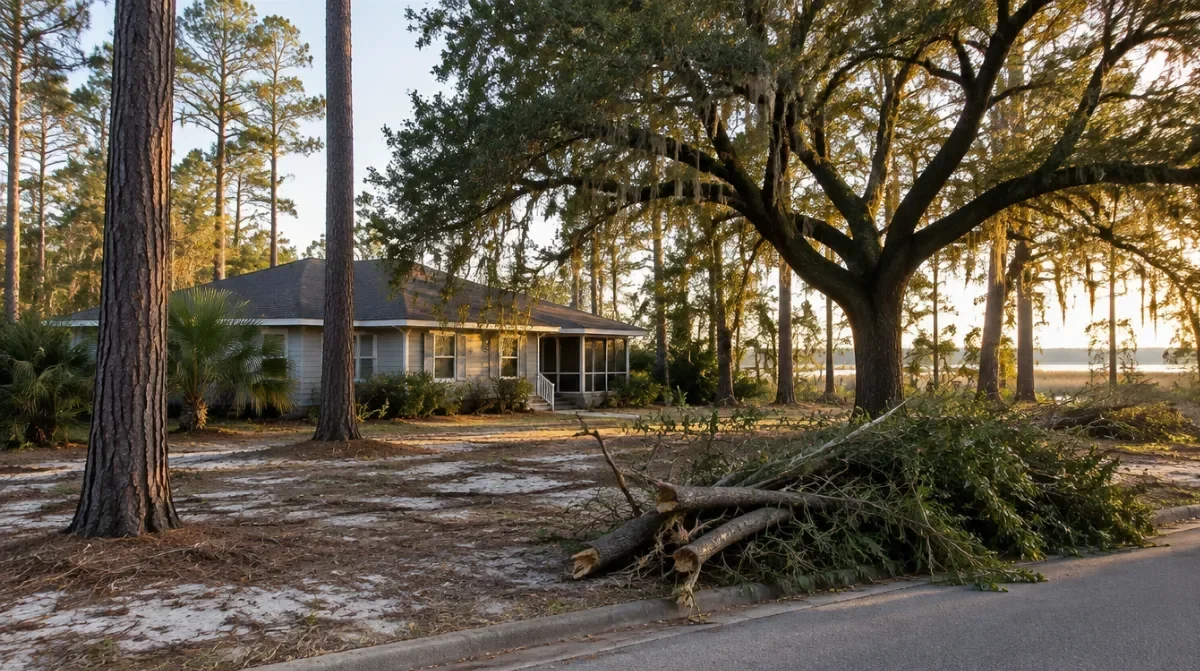
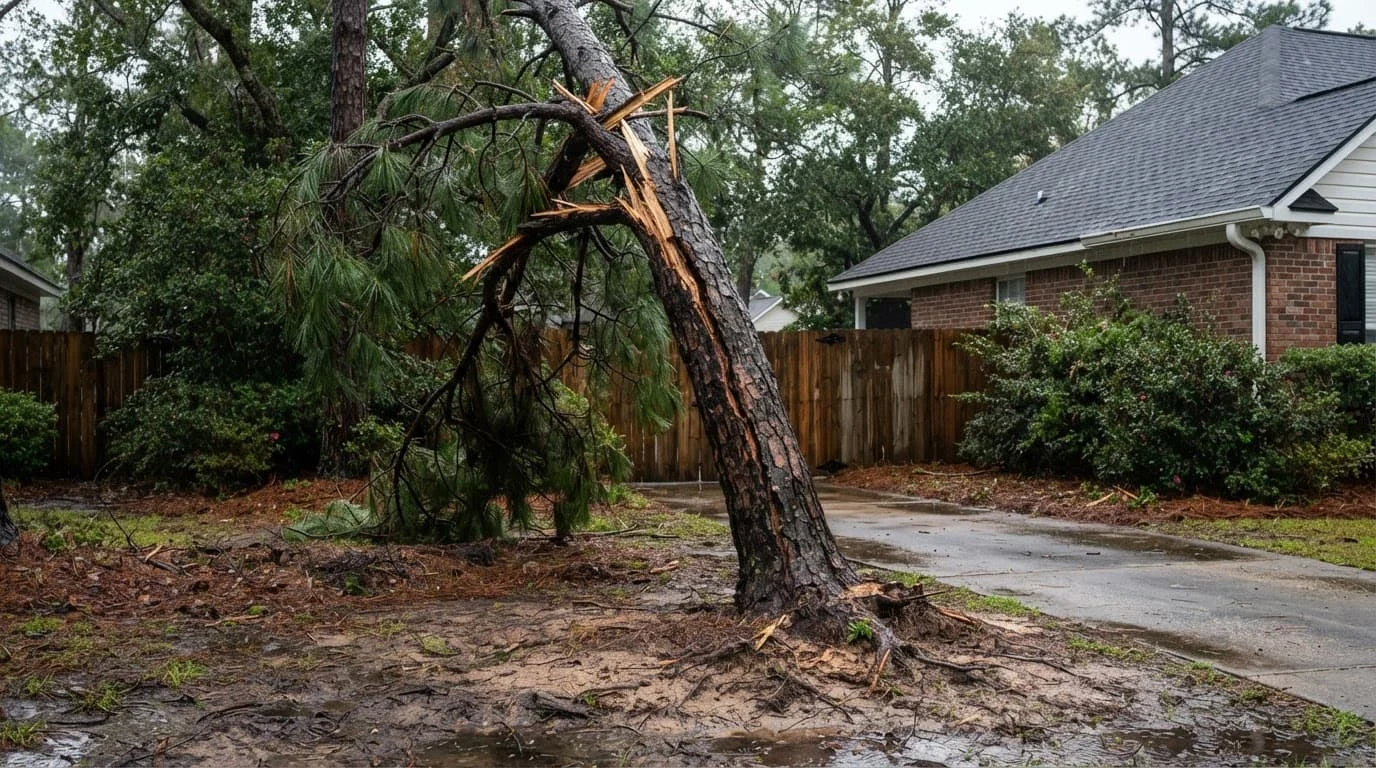
Our local trees deal with more than their share of weather. Loblolly and slash pines can snap high in the trunk or uproot when wind catches a heavy canopy. A tree’s wind resistance depends on its species, canopy weight, root condition, and site exposure. A leaning tree may also develop after storm movement. Large live oaks and water oaks often carry wide limbs over roofs, patios, and driveways.
Changes in soil stability can create different risks. Sandy soil can shift after long periods of rain, while clay-heavy spots can hold water and soften around roots. Root damage from trenching, driveway work, grade changes, or girdling roots may stay hidden until prolonged wetness or the next storm causes root failure.
Summer thunderstorms can arrive fast, and storm damage may expose weaknesses that weren’t obvious beforehand. Hurricane season runs from June through November, and the National Weather Service’s Georgia hurricane guide is a good reminder that wind and flooding can both damage trees and cause property damage. The weather record for the Savannah area also shows a long history of tropical systems bringing damaging winds nearby, as outlined in the National Weather Service tropical cyclone history.
Older wooded lots in Guyton, Rincon, Springfield, Richmond Hill, Pooler, and Savannah can have beautiful older trees. They can also hide root rot, decay, and delayed root problems. On newer subdivision lots, young trees may face exposed roots from soil erosion or changing grades. Check HOA rules before removal, and remember that county permit requirements may also apply in some situations.
Storm Timing Matters More Than a Calendar Date
A leaning tree can become unsafe any time of year. Still, getting it checked before forecasted windstorms gives you more choices than calling after a limb has landed on the roof.
After a storm, treat broken tops, hanging limbs, moving roots, and trees resting on structures as hazards. They aren’t ordinary cleanup jobs. Wet ground and damaged wood can change without warning.
When to Call Us About a Leaning Tree
Call us promptly if you see a new or worsening lean, lifted roots, cracked soil, trunk cracks, visible decay, broken limbs, or storm damage. Call sooner when the tree points toward a home, garage, driveway, fence, road, or power lines.
Mary handles scheduling, estimates, and communication, so you won’t be left wondering what happens next. When an on-site tree inspection is needed, Mike Williams, our lead arborist and operations manager, evaluates the tree, nearby targets, equipment access, and whether preservation or removal is practical.
If the tree is a hazard tree, our recommendation may involve monitoring, pruning, cabling and bracing, removal, or emergency action. We’re a family-owned, licensed and insured company with more than 20 years of hands-on tree care experience. Estimates are free, and there’s no pressure.
If a leaning tree has you looking up every time you pull into the driveway, request a free estimate and we’ll give you a straight answer.
Frequently Asked Questions
Should a leaning tree be removed immediately?
Not always. A stable, long-standing lean may indicate a healthy, well-rooted tree. A new lean, lifted roots, trunk splitting, or a threat to a structure calls for a prompt inspection. Until then, keep people and property out of its fall zone.
Can heavy rain make the tree more dangerous?
Yes. Saturated ground can reduce root stability, especially when roots are damaged, shallow, or exposed. Wet conditions can also worsen root rot in an already compromised root system. Mushroom growth near the base is more concerning when combined with saturated soil, decay, or other warning signs. Watch for fresh cracks, a lifted root plate, or a change in the tree’s angle after heavy rain.
Is it safe to cut branches from the trunk?
Homeowners should avoid it. Removing weight from the wrong area can shift the tree’s balance. Falling limbs create another serious hazard, especially near buildings, roads, and utility lines.
Can a leaning pine or oak recover after a storm?
It depends on root damage, trunk condition, tree size, and the direction of the lean. Young trees may respond differently from large, established trees. Some leaning trees can be managed with careful pruning or structural support, including cabling and bracing in selected situations. Support can’t correct root failure or severe trunk damage. In those cases, taking the tree down may be the safer choice.
A Leaning Tree Deserves a Clear Answer
A lean isn’t automatically an emergency, but a new or worsening lean, storm-damaged tree, or tree facing a fall zone shouldn’t be ignored. Stay clear, avoid risky DIY fixes, and get an on-site opinion when warning signs appear.
Our family-owned, licensed and insured team serves Effingham County and the surrounding Savannah area. If you’re unsure about the tree on your property, request a free estimate and we’ll take a look.