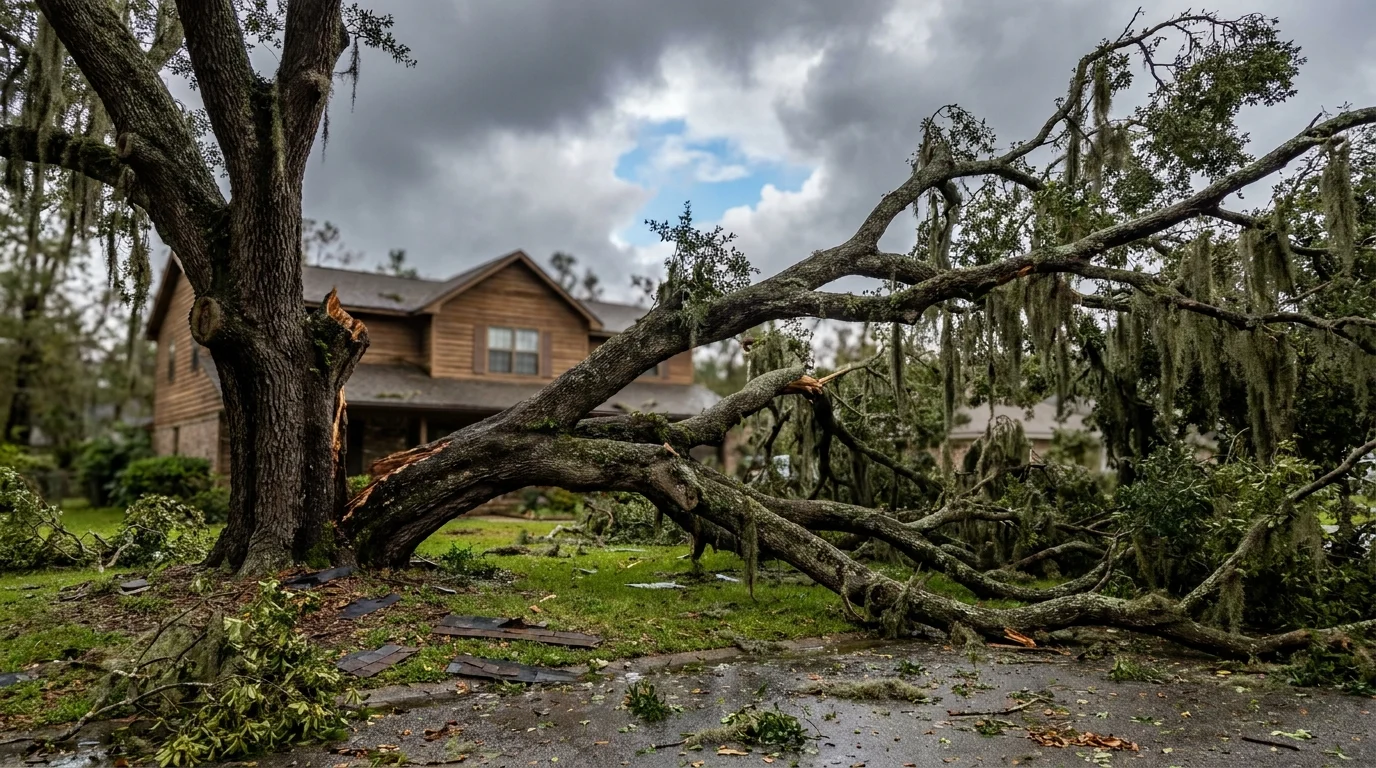
A brown canopy or bare limbs can make your stomach drop, especially when the tree is close to your house, driveway, or power line. Homeowners in Guyton, Rincon, Springfield, Bloomingdale, Richmond Hill, Pooler, and Savannah ask us how to tell if a tree is dead because the answer can mean the difference between a simple pruning job and a serious safety concern.
Tree stress can be reversible, and a stressed tree may recover. A dead or failing tree can come down without much warning. Mike Williams has 20+ years of hands-on tree experience, and we start with the plain warning signs you can see safely from the ground.
Key Takeaways
- A few dead branches do not necessarily mean the entire tree is dead; use seasonal changes and nearby trees of the same species for comparison.
- Warning signs such as widespread canopy dieback, peeling bark, fungal growth, hollow areas, cracks, lifted soil, a new lean, or hanging limbs may indicate serious decay or structural failure.
- Green leaves do not prove that a tree’s trunk and roots are safe, especially for large live oaks, aging water oaks, and pines browning from the top down.
- Do not climb, cut large limbs, drill into the trunk, or investigate trees near power lines yourself. Keep people and pets clear and call a qualified professional for an assessment.
- A struggling tree may be saved with proper pruning, watering, pest treatment, cabling, or bracing, while a dead or badly decayed tree near a home or other target may require prompt removal.
How to Tell If a Tree Is Dead or Just Struggling
A few dead branches don’t mean the whole tree is dead. Trees often lose limbs after storms, drought, pest problems, or old pruning cuts. What matters is the pattern across the canopy, tree trunk, roots, and base.
The simplest check is the scratch test. On a small, reachable twig, lightly scratch a tiny patch of tree bark with your fingernail. Green, moist tissue beneath the bark is living green cambium. Brown, dry tissue usually indicates dead wood on that twig or branch, not automatically the entire tree.
Don’t cut branches, climb the tree, or use a ladder to investigate. Take photos of the full tree, the trunk base, and the worst-looking limb instead.
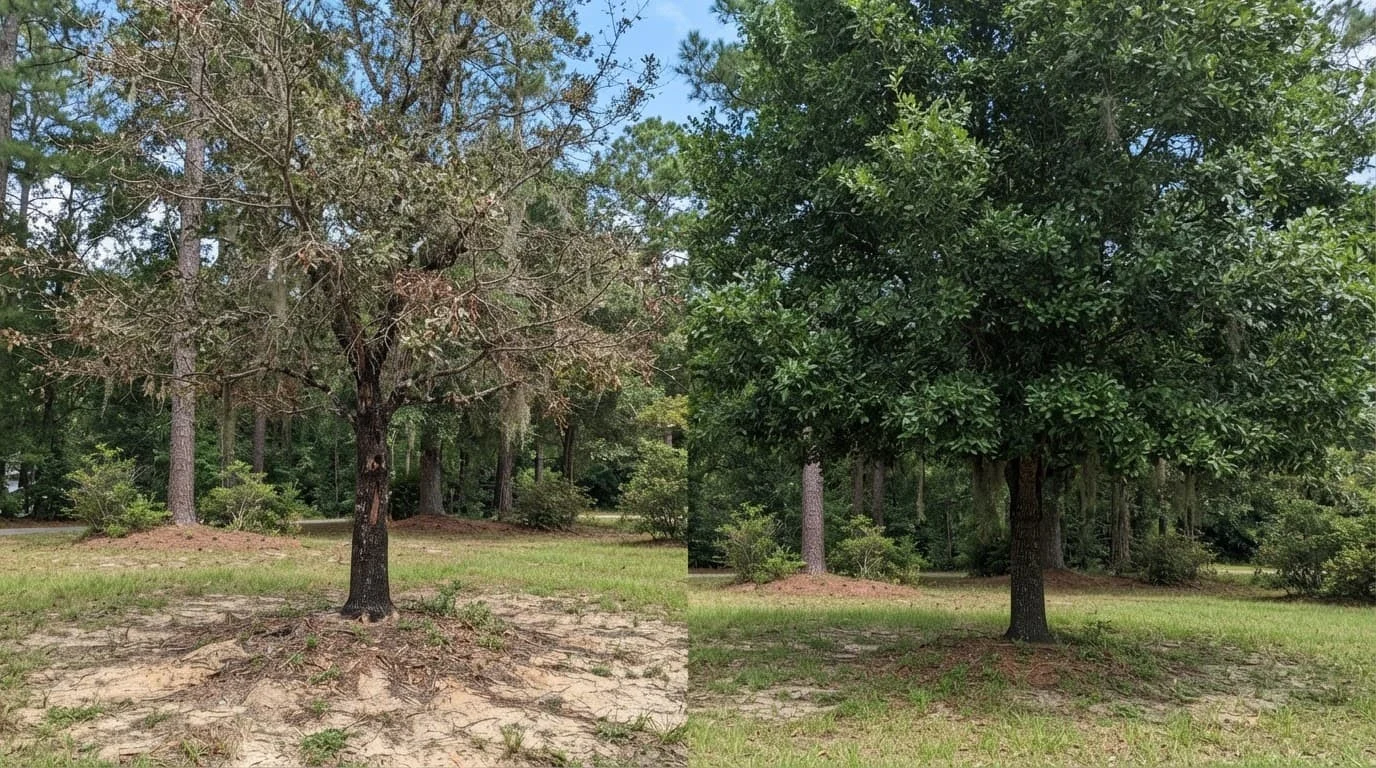
Dead, Dormant, or Seasonally Bare?
A water oak or other deciduous tree may lose leaves during its dormant stage in winter. Live oaks often shed old, dead leaves in spring, then push out fresh growth soon after. That leaf drop can look rough for a few weeks, but it isn’t the same as death.
The dormant stage varies by species, so compare the tree with nearby trees of the same kind. If other water oaks have leafed out and yours remains bare with brittle twigs, there may be a problem. Missing buds can be another clue.
Normal seasonal changes aren’t the only warning signs. Widespread bare or brittle growth across the crown may indicate canopy dieback rather than one damaged limb.
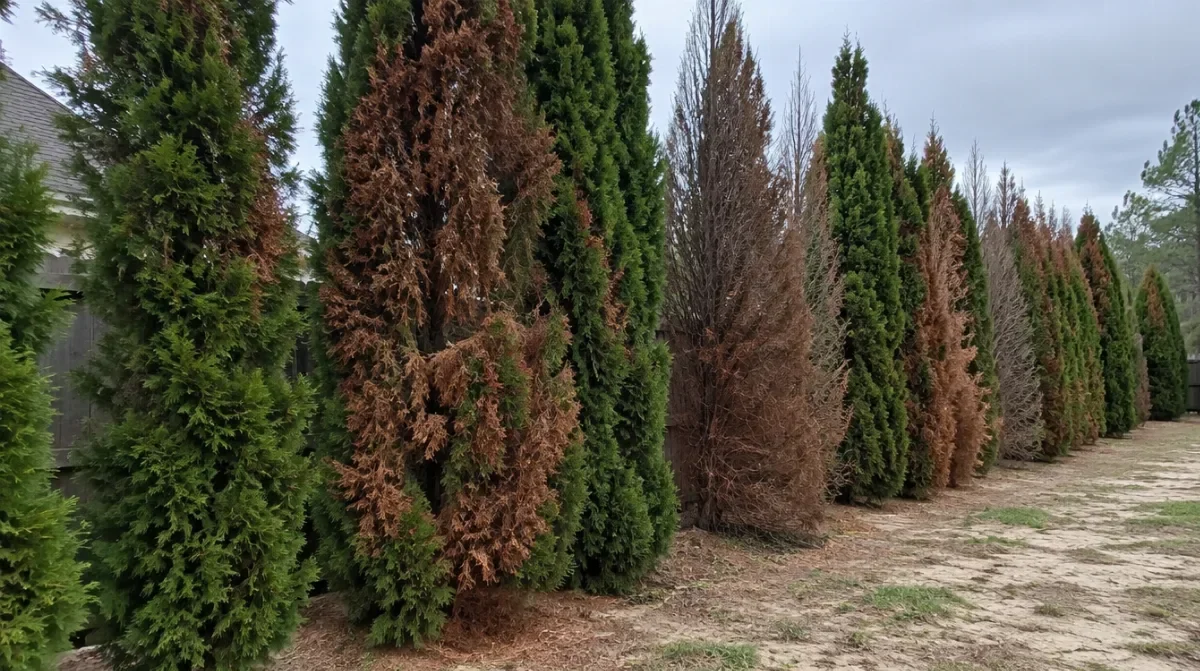
Pines are different. Loblolly and slash pines don’t go dormant in the same way. When needles turn brown from the top down, the tree may be a dying tree. A dead pine can fall within a year or two, so one near a home isn’t a wait-and-see situation.
Signs the Tree Is Becoming Dangerous
Watch for these warning signs: bark that slips off or peels in large sheets, mushrooms or fungal growth around the base, and other visible changes. Fungal growth may accompany decay in the trunk or roots, but it doesn’t provide a complete diagnosis. Woodpecker holes and small piles of sawdust may mean boring insects have moved in.
A hollow sound when you gently tap the tree trunk can suggest internal decay, but it doesn’t show the full level of risk. Dead limbs gathered on one side of the canopy may point to a root, trunk, or disease issue on that side.
The bigger concern is change. A new lean, lifted soil around the roots, cracks in the tree trunk, loose hanging limbs, or a hollow area at the base all deserve a closer look. A tree can still have green leaves and be unsafe if its roots or trunk are failing.
Keep people, pets, and vehicles out of the fall area. Stay well away from power lines. For a dead, dying, leaning, or utility-adjacent tree, professional tree removal is the safer route.
Green leaves tell you the canopy is alive. They don’t prove the trunk and roots are sound.
What Local Effingham County Trees Reveal About Tree Health
Local soil and other environmental stressors can make tree problems harder to read. Sandy ground dries out fast, while heavy clay can stay wet after a hard rain. Both conditions can increase tree stress, especially around homes where grading, driveways, and construction have changed water flow.
Older lots in Effingham County and Savannah often have mature trees with tree roots extending beyond the visible drip line. Newer subdivisions in Rincon, Pooler, and Bloomingdale may have compacted soil, buried roots, or altered drainage that causes root damage.
Check HOA requirements and county permit questions before work begins. A tree may be on your property, but neighborhood or local rules can still matter.
For local tree and pest information, the UGA Cooperative Extension has Georgia-focused resources that can help homeowners understand what they are seeing.
Pines, Live Oaks, and Water Oaks Need Different Clues
Loblolly and slash pines often show trouble at the top first. Brown needles moving downward through the crown, small holes in tree bark, or pitch tubes, which are small blobs of sap, can point to pest infestations. Pine beetles and other wood-boring pests may cause these clues.
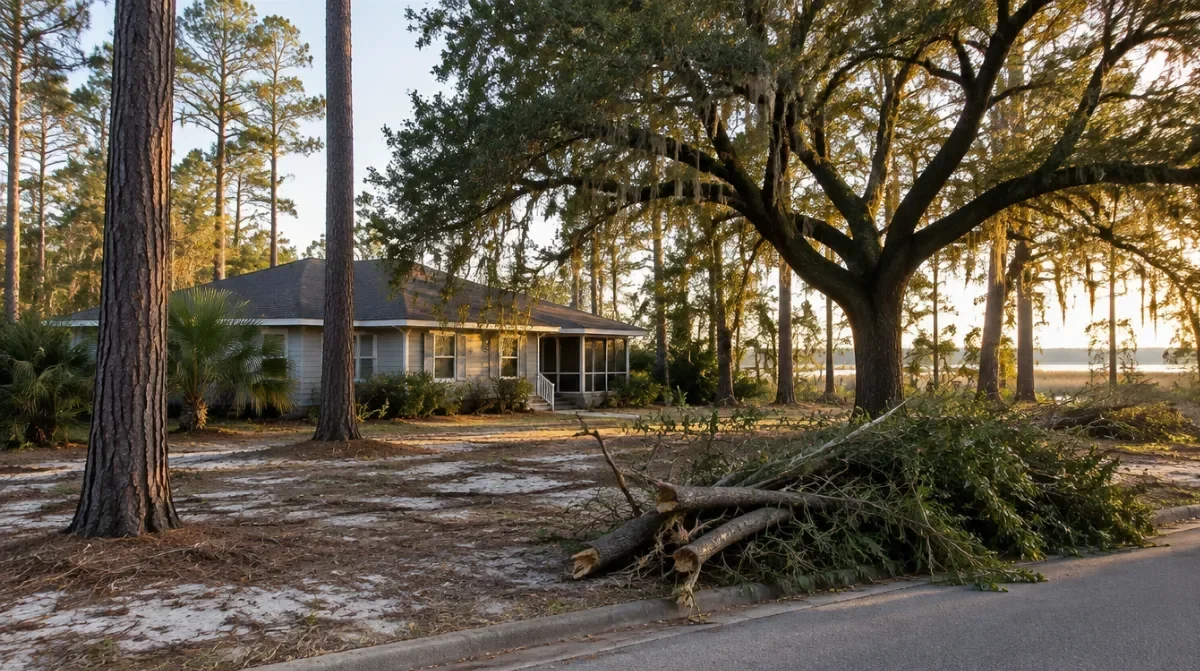
Large live oaks can handle plenty of stress, but their heavy limbs still fail when decay, old wounds, or root trouble are involved. A full green canopy doesn’t make a large limb over a roof safe.
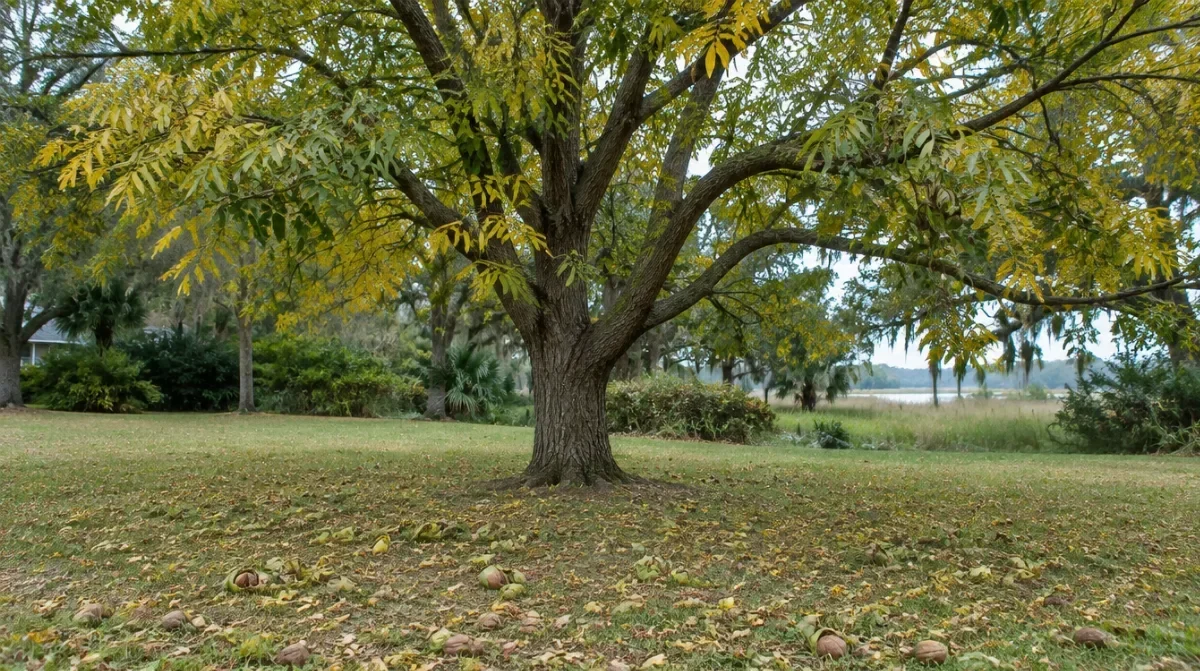
Water oaks are common on older properties. They can grow fast, but they are often shorter-lived than live oaks and may hollow out as they age. Pecan, sweetgum, and crepe myrtle each have their own normal leaf-drop and growth habits, so we don’t judge every bare branch the same way.
How Storm Season Changes the Risk
Hurricane season runs from June through November. Summer thunderstorms can bring strong wind long before a named storm does. Those fast storms can expose warning signs that stayed hidden during calm weather.
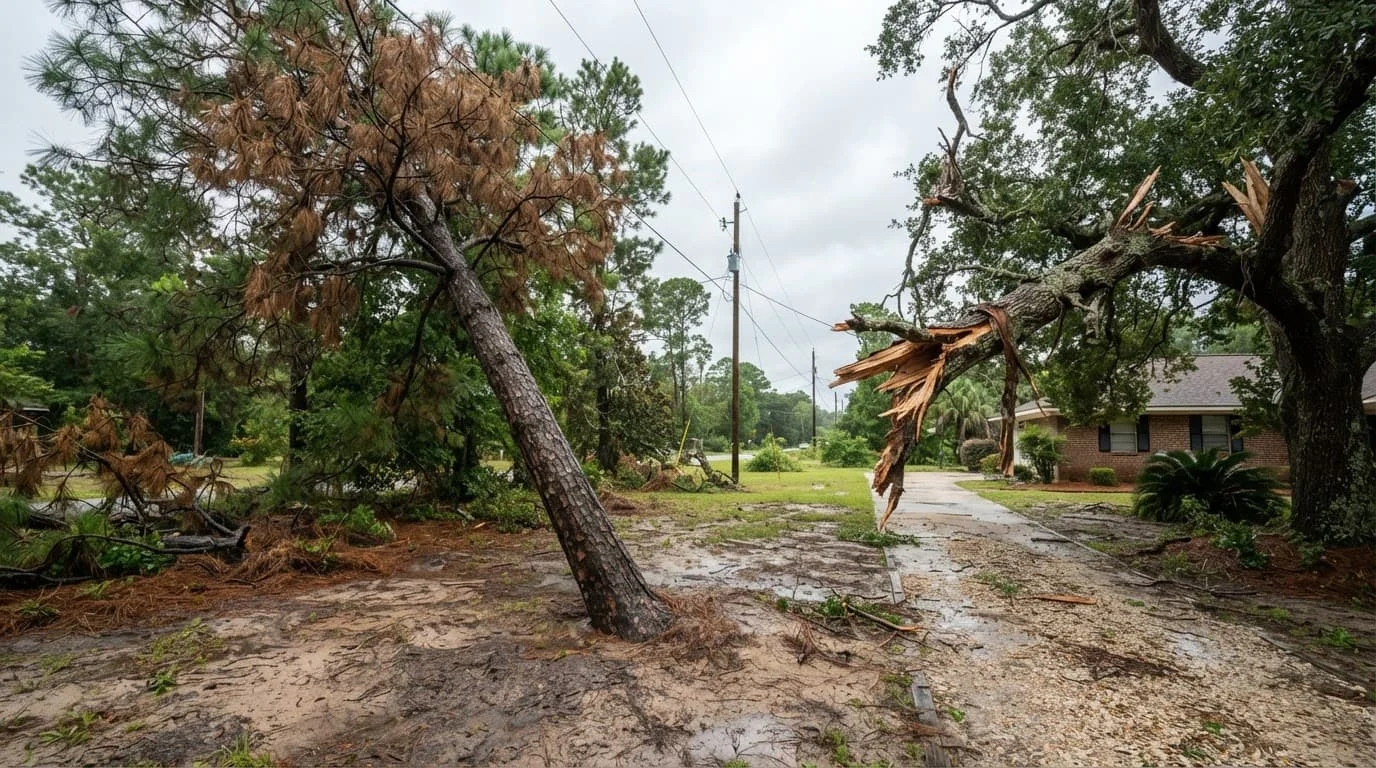
Pines may snap or uproot. Heavy live oak and water oak limbs can break while the rest of the canopy still looks healthy. Check your trees before storm season, but don’t climb or attempt major cuts.
If there is a falling tree, blocked access to your home, or a large limb hanging overhead, call for storm damage and emergency tree service. Keep clear until the situation can be assessed.
Can a Struggling Tree Be Saved, or Does It Need to Come Down?
We’d rather save a good tree than cut it down. A tree with a few dead limbs, early pest trouble, or drought stress may improve with the right tree care. Removing dead branches and other dead wood, watering during dry spells, treating pests early, or supporting a weak branch union may help retain a viable tree.
Careful tree trimming and pruning can remove hazardous limbs while keeping a healthy tree in place. Some trees also benefit from cabling or bracing when structural weakness affects a major limb union.
Tree removal becomes more likely when a tree is dying, the upper part of a pine is dead, the trunk is badly hollow, or internal decay is active at the base. Root damage or lifting tree roots can also make removal necessary. A dead tree close to a house, fence, play area, or driveway needs prompt attention.
The only real number comes from a free on-site estimate. Tree size, access, nearby structures, soil conditions, fences, utility lines, and cleanup all affect the work plan.
Why a Ground Check Is Useful, but Not a Final Diagnosis
A ground check can reveal a lot. You can spot hanging limbs, fungal growth, insect activity, cracks, bark loss, or soil lifting around the roots.
What you can’t see from the ground is the full condition inside the tree trunk, beneath the soil, or high in the canopy. A qualified professional must evaluate hidden decay, tree roots, lean, nearby targets, and access before recommending monitoring, pruning, support, or removal.
Don’t drill into a trunk, cut large limbs, or try to test the lean yourself. Those steps can make a weak tree less stable.
What Happens During a Tree Assessment or Removal
Mike looks at the whole situation, not only the brown branch. We check the canopy, trunk, base, root area, lean, nearby targets, access, and obstacles before recommending work.
If removal is needed, we plan how sections can be lowered or controlled to help prevent property damage. Weather, saturated ground, narrow gates, sheds, fences, and utility lines can affect timing and the plan.
Afterward, we clear the debris and talk through the stump. If it needs to be removed below grade for mowing, replanting, or a future project, stump grinding can be added after the tree comes down.
When to Call a Tree Professional for a Free Estimate
Call a licensed and insured local crew for a free estimate when these warning signs appear. Ask for a certified arborist when appropriate, especially for a dead or dying tree near a home, driveway, fence, utility line, or play area. A leaning tree, lifted soil, major hanging limb, or top-down browning in a pine may signal a safety hazard. Fungus or hollow wood at the base also warrants prompt evaluation.
Urgent storm hazards should be left alone until they can be assessed. A limb under tension or a partly fallen tree can shift when somebody starts pulling or cutting.
When you contact us, send three photos if you can:
- One photo of the whole tree, including the top.
- One clear photo of the base and surrounding soil.
- One photo of the worst limb, crack, fungus, or damaged area.
Include the property location and what changed. LoyalTree LLC works throughout Effingham County, including Guyton, Rincon, Springfield, and Bloomingdale, along with Richmond Hill, Pooler, and Savannah.
Frequently Asked Questions
Can a tree be alive on one side and dead on the other?
Yes. A tree may lose limbs or decline on one side after injury, disease, or damage below ground. The green side can still look healthy, so inspect the entire tree before judging its condition.
Does peeling bark always mean a tree is dead?
No. Some trees naturally shed small pieces of bark. Broad sheets peeling away, dry wood underneath, or fungus near the base are more concerning signs.
Should mushrooms at the base be removed?
You can remove visible growth from the yard, but that won’t address possible decay inside the tree. Take a photo before clearing it away.
Can a leaning tree straighten itself?
A long-standing lean may be normal for that tree. A fresh lean, tilted root plate, or lifted soil after rain or wind needs prompt attention.
Is a dead limb over a roof an emergency?
It can be, especially when the limb is large, cracked, hanging, or moving in the wind. Keep the area clear, and don’t try to pull it down yourself.
A Careful Look Beats a Guess
Dead leaves or bare branches don’t always mean the whole tree is dead. Green leaves don’t always mean the tree is safe. The season, species, trunk condition, roots, decay, lean, and what sits beneath the tree all matter.
We prefer preserving healthy, valuable trees whenever we can. But a dead pine or decayed tree near a home deserves prompt attention.
If you’re concerned about a tree in Effingham County or a nearby community, send photos of the whole tree, its base, and the worst limb, then request a free estimate.