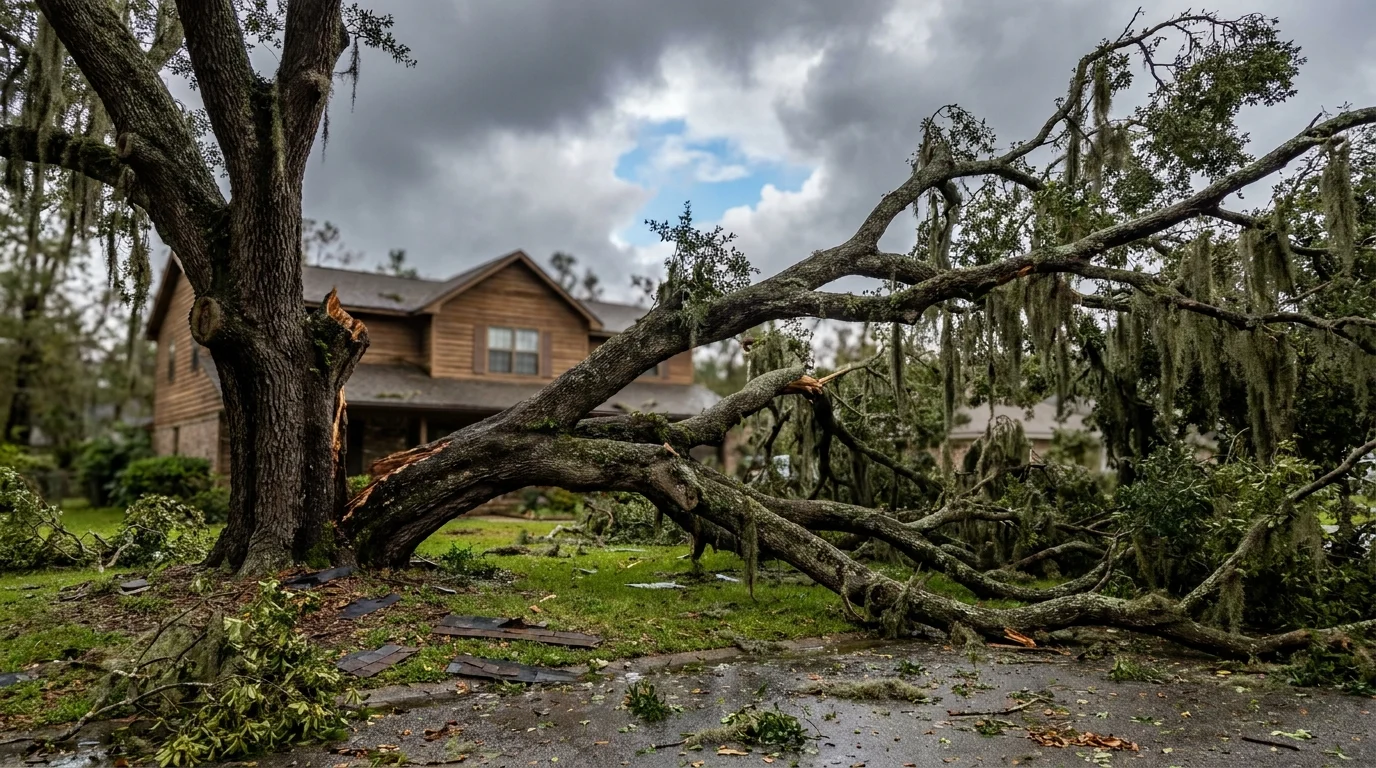
A dead pine near the driveway or a leaning oak over the roof can make one question feel urgent: do you need a permit to cut down a tree before scheduling tree removal?
Georgia doesn’t have one statewide residential tree-removal permit that covers every yard. The answer depends on whether the tree stands on private property, local rules, HOA covenants, property lines, and shared easements.
We’re a tree service, not the permit office. Still, we see these questions often around Guyton, Rincon, Springfield, Bloomingdale, Richmond Hill, Pooler, Savannah, and nearby communities. Local urban forestry rules can vary across these regional municipalities, so a quick check before scheduling work can save trouble later.
Key Takeaways
- Georgia does not have one statewide residential tree-removal permit. Requirements depend on your city or county jurisdiction, the tree’s location and condition, development activity, easements, property lines, and HOA rules.
- Homeowners in Effingham County, Richmond Hill, Pooler, Savannah, and nearby communities should contact the local planning, zoning, development services, or urban forestry office before removing a large or healthy tree.
- Dead, dying, or hazardous trees may qualify for different review procedures, but homeowners should document the condition with photos and ask what approval or replacement planting requirements apply.
- Confirm who owns the ground around the trunk, check for utility easements and boundary-tree concerns, and keep written records of permits, HOA approvals, surveys, and arborist assessments.
- Professional help makes sense for leaning, storm-damaged, hollow, or oversized trees, especially near homes, roads, fences, septic systems, or power lines.
Do You Need a Permit to Cut Down a Tree in Georgia?
The short answer is: sometimes. Georgia leaves most residential tree-removal decisions to local cities and counties. Some jurisdictions require a tree removal permit before cutting. Others may allow removal on an unincorporated Effingham County lot without approval.
Before scheduling tree removal, contact your local municipality’s planning, zoning, or development services office. Ask about your address, the tree’s location, its condition, and whether the work involves construction or land clearing.
In many cities, a large healthy tree gets more attention than a small dead tree in an established yard. Undeveloped lots, commercial sites, new builds, and land-clearing projects often follow different municipal regulations than ordinary yard work.
Georgia cities vary in how they protect their tree canopy, and a rule in one town says nothing about the next one over. That is why homeowners shouldn’t assume every Georgia town handles trees the same way.
A permit question is about more than the tree itself. The address and where the trunk sits can change the answer.
What Effingham County, Richmond Hill, Pooler, and Savannah Homeowners Should Check
Rural Effingham County lots often work differently
In rural and unincorporated parts of Effingham County, a property owner removing a tree from private property often doesn’t need a permit. That can include properties around Guyton, Springfield, Clyo, Meldrim, and Bloomingdale-area lots.
“Often” isn’t a promise. Call the county planning and zoning office before cutting a large, healthy tree. Land clearing, new construction, creek edges, wetlands, and access roads are different situations.
Older lots can make the question harder. A mature water oak may sit along an old fence line as a boundary tree. A pine may be rooted on sandy soil near a septic system. Confirm where your property line is before anyone starts cutting.
Fast-growing cities may have more tree protections
Savannah, Pooler, Port Wentworth, and Richmond Hill have seen plenty of new growth. In many growing cities, a local tree ordinance may protect large or specimen trees, especially on undeveloped property and commercial sites.
Some rules measure tree size by diameter at breast height (DBH). They may also identify a protected species or certain native tree species. Removing mature canopy trees could require replacement planting, depending on the site and local rules.
Your local office is the only one that can tell you what applies to your address. Code enforcement may investigate unauthorized removals and issue fines.
HOA rules are separate from city or county rules. Newer subdivisions around Rincon, Pooler, and Richmond Hill often have covenants that require written approval before removing a visible tree.
Is the Tree Dangerous, or Can It Be Saved?
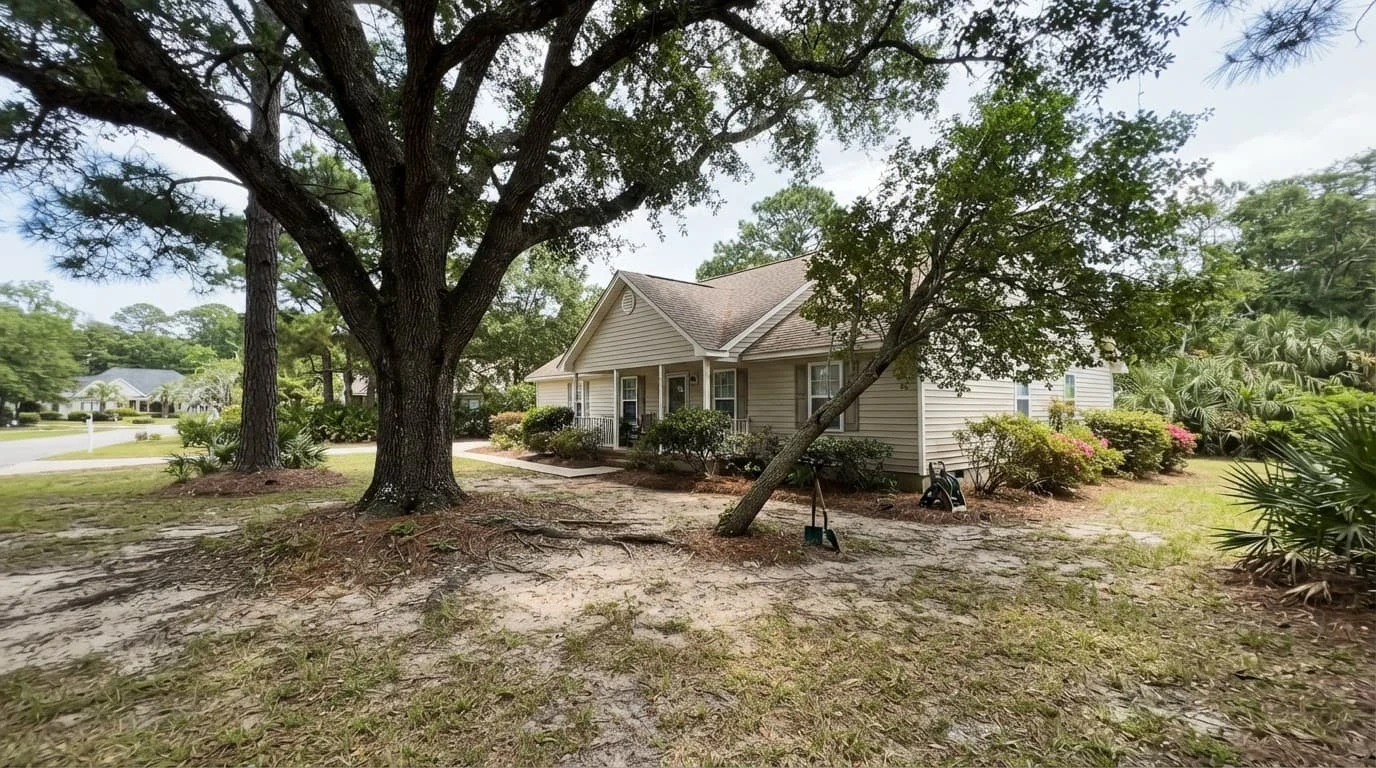
A tree doesn’t have to fall to be a problem. A new lean, lifted roots, a split trunk, hanging limbs, trunk cavities, or major dead sections are all reasons to take a closer look.
Watch the ground, too. Fresh cracks in the soil near the base can mean the root plate is moving. That’s the root system and soil holding the tree upright. Loblolly and slash pines can snap or uproot after high winds, especially when wet ground follows a hard storm.
Dead and hazardous trees may be handled differently
Dead, dying, and hazardous trees are often treated differently from healthy trees. A hazardous tree may qualify for a faster review through a local office or forestry department. Some agencies may also waive replacement planting requirements. Ask what they need from you before work begins.
Take clear photos before work begins. Include the trunk, root area, damage, nearby house or fence, and the full canopy when possible. For a questionable tree, a written tree risk assessment from an ISA certified arborist can help explain why removal is needed.
Some cities separate dead, dying, or diseased tree requests from other removal applications, which can mean a faster review. Local rules still control where you live.
Removal isn’t always the first answer
Some trees can stay with the right care. Tree pruning, including tree trimming and pruning, can remove dead weight, clear limbs off a roof, and reduce wind pressure across the tree canopy.
Cabling and bracing can support a weak union, which is where two trunks or heavy limbs join. It doesn’t cure rot or make every damaged tree safe. When the trunk is hollow, the roots are failing, or a tree is leaning toward a home, removal may be the honest answer.
A Simple Permit Checklist Before Tree Work Begins
A little paperwork is easier than stopping a job halfway through. Before removing a tree, work through these five steps:
- Find out whether your address is inside city limits or in unincorporated county territory. Your mailing address and jurisdiction aren’t always the same thing.
- Call the local planning, zoning, development services, or urban forestry office, or check its current website. Describe the tree and ask whether removal needs approval or a permit application.
- Read your HOA covenants if you live in a subdivision. Get written approval if the HOA requires it, even if the city or county doesn’t.
- Confirm the trunk is on your property. Trees in a public right-of-way, utility easement, drainage area, or shared boundary need extra care. A shared tree may be a boundary tree, and a utility, government office, or neighbor may have a say.
- Keep emails, permit records, photos, survey information, and any arborist assessment. Save approved conditions too, including a possible tree replacement requirement. Written confirmation is better than trying to remember a phone call months later.
When homeowners ask us, “do you need a permit to cut down a tree here?” we first ask where the tree is, who owns the ground, whether an HOA applies, and what shape the tree is in. If we believe approval may be needed, we don’t cut until the homeowner has checked.
DIY work has limits. Hidden decay can change how a tree falls. Chainsaw kickback, overhead lines, roofs, fences, and septic systems don’t leave much room for a mistake.
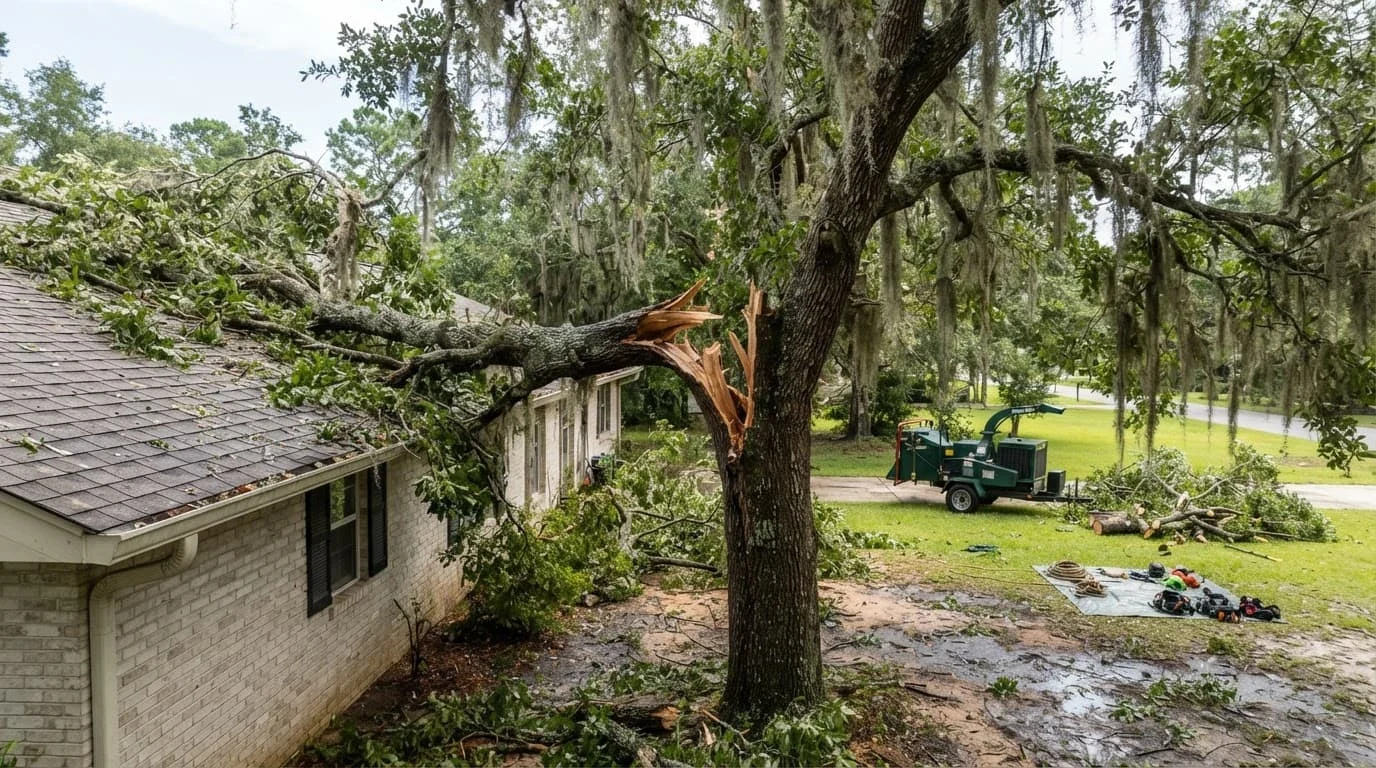
Hurricane season runs from June through November, and summer thunderstorms don’t wait for a convenient time. Check on concerning trees early. If a tree has already fallen, is hanging over a roof, or blocks access, call for emergency tree removal through storm damage and emergency tree service.
After an approved removal, stump grinding can be added if you want the area ready for mowing, planting, or another use.
When a Licensed and Insured Tree Service Makes Sense
Call for professional help when a tree leans toward a house, driveway, fence, road, or power lines. The same goes for suspended limbs, split or hollow trunks, moving roots, storm-damaged canopies, and trees too large for homeowner equipment.
Power lines are their own category. Keep yourself and equipment well away. Contact the utility if a tree or branch is in the lines. Don’t try to pull it free.
LoyalTree LLC is family-owned and based in Guyton. Mike Williams is our co-owner, lead arborist, operations manager, and an ISA certified arborist with more than 20 years of hands-on tree experience. Mary Gledhill runs scheduling, estimates, and communication from the office.
We give a straight answer about what we see. That includes whether tree pruning may help, whether removal makes more sense, how we can protect the property, and what cleanup will look like. We can also help identify municipal regulations that may apply, but the local office is the place to confirm the requirement.
Frequently Asked Questions
Can a neighbor remove a tree that hangs over their yard?
A neighbor can usually address branches that cross onto their side, but they shouldn’t damage or kill the tree. The trunk location matters, and a boundary tree may belong to both owners. Talk with your neighbor before work starts.
What if the tree is near a utility easement?
An easement gives a utility or government entity certain access rights. It doesn’t always mean you can’t remove a tree, but you should check first. Call the utility, forestry department, or local office if the tree is near poles, lines, drainage, or a marked easement.
Does pruning need the same approval as removing a tree?
Often, pruning and removal are handled differently. Removing dead limbs or clearing a roof may not be treated like taking down a healthy mature tree. Ask your local office or forestry department about substantial work, protected trees, or possible replacement planting requirements.
Should a tree be removed before hurricane season?
A dead, cracked, or leaning tree is better assessed before storms start rolling through. Waiting can turn a manageable job into an emergency. Photos and local approval questions are also easier to handle before the weather gets rough.
Can a permit be transferred when a property is sold?
Don’t assume a tree removal permit can be transferred. Permits, approvals, and HOA decisions may be tied to a property owner, a plan, or a limited time period. Check with the issuing office and keep the paperwork with your closing records.
Check First, Then Make a Safe Plan
The right answer depends on your city or county jurisdiction, the tree’s health and location, nearby easements, development activity, and HOA rules. Urban forestry guidelines can vary across Effingham County and Savannah. Ask whether replacement planting is required before making plans. Before hurricane season or any planned removal, call the proper local office and keep written confirmation.
LoyalTree LLC is a family-owned, licensed and insured tree service based in Guyton. We serve Effingham County, Richmond Hill, Pooler, Savannah, and nearby communities. If you’re unsure whether a tree can be saved or requires tree removal, request a free estimate. We’ll look at the tree, discuss your options, and help you identify the right questions for your local office.