A tree on the roof changes the whole feel of a house in a second. For homeowners in Guyton, Rincon, Springfield, Bloomingdale, Richmond Hill, Pooler, and Savannah, the first job is simple: get clear of danger.
If you’re wondering what to do if a tree falls on your house, put people first. Stay away from power and gas hazards, document the damage from a safe spot, call your insurance agent, then call the right professionals. We’re a licensed and insured local tree service, not lawyers or insurance professionals, so coverage and liability depend on the facts and your homeowner’s insurance policy. Talk with your agent about what happens next.
What to do if a tree falls on your house in Georgia: protect people first
If the roof, ceiling, walls, or floor show visible structural damage, evacuate the home. Don’t go back inside for a phone, clothes, pets, or paperwork. A tree can keep settling after it lands.
Look up before moving around the yard. Treat every downed power lines or low-hanging wire as live, even if it isn’t sparking. Keep people, pets, vehicles, fences, and tools away. Contact emergency services and the affected utilities when wires are involved.
If you smell gas, hear hissing, or see a damaged gas meter, leave the area and call 911 or the gas company from a safe distance. Don’t flip switches, start vehicles nearby, or use anything that could create a spark.
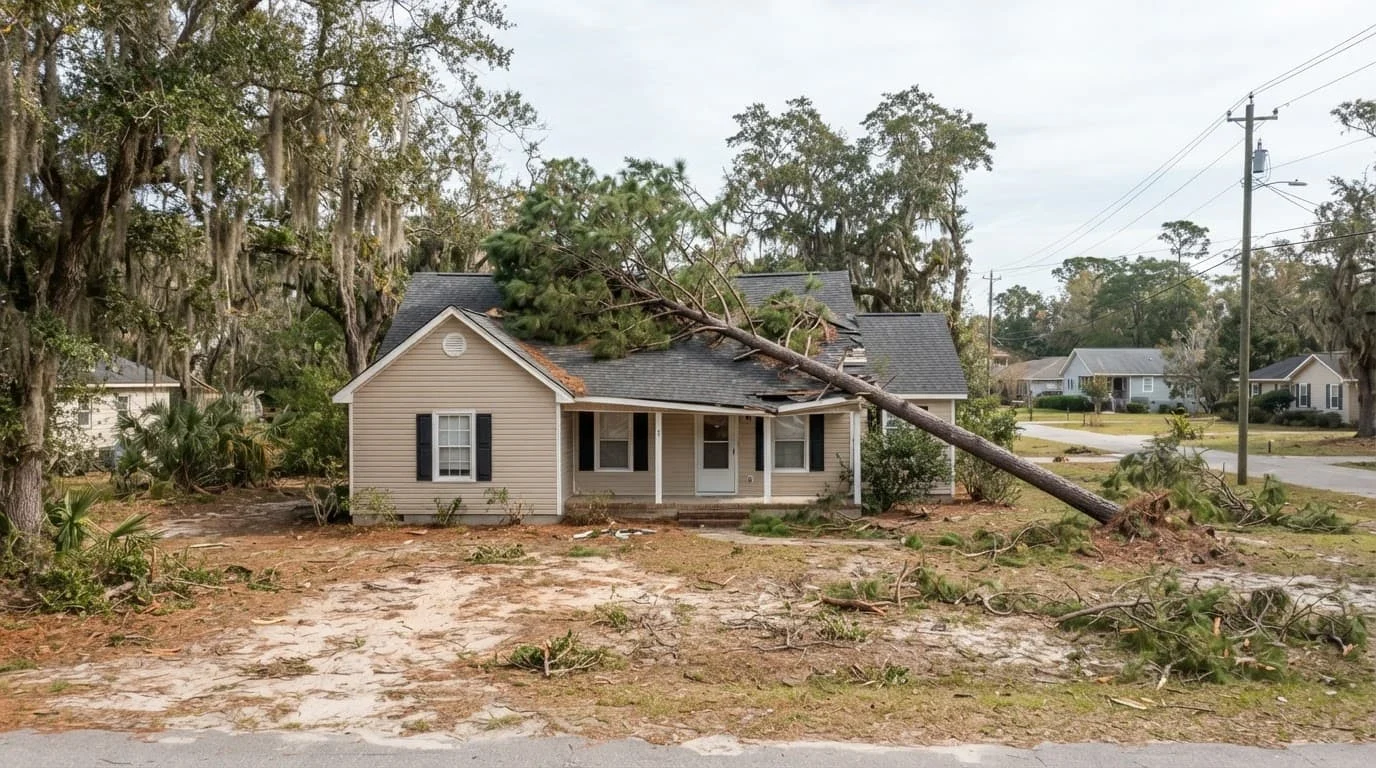
Once the scene is safe, take photos and video from outside. Document holes, broken framing, other roof damage, the whole tree, and lifted roots from a safe location. Begin a homeowners insurance claim, and ask whether an insurance adjuster needs to inspect the scene before anything moves.
After immediate hazards are handled, call a licensed and insured crew for storm damage and emergency tree service. We can stabilize the tree, remove it safely, and point you toward temporary repairs, such as tarp or board-up assistance, when the house needs protection. Temporary protection shouldn’t require approaching an unsafe roof.
Why cutting the tree yourself can make the damage worse
A tree sitting on a roof is rarely sitting still. It may be under pressure, caught on broken limbs, or pulling against framing you can’t see. One cut in the wrong place can drop more weight into the house.
Emergency work starts with stabilizing the tree so it can’t shift. Depending on access, we may lift it with a crane or remove it in controlled sections with ropes and rigging. Rigging means using ropes and equipment to control where the wood goes.
Don’t use a chainsaw near a damaged home, utility lines, or a twisted trunk. Also, don’t pull a tree with a truck or tractor. Moving limbs before photos are taken can make the damage harder to document for your claim.
This kind of tree removal isn’t ordinary yard cleanup. The job is to take weight off the house without adding more damage.
How to avoid storm chasers after a Georgia hurricane
After storm damage, crews may knock on doors and push for a signature at the curb. Some are good workers. Some aren’t. Either way, there’s no reason to rush.
Ask for proof that the contractor is licensed and insured. Get the scope of work, pricing, and cleanup terms in writing. Never let anyone start cutting until utility hazards have been cleared.
A fast answer matters after storm damage, but a rushed agreement can create another problem before the first one is fixed.
Who pays when the neighbor’s tree falls on your house?
In general, the damaged property’s coverage often handles the initial homeowners insurance claim, even when a tree grew on an adjacent lot. The loss to the house is property damage, and coverage depends on the insurance policy, the applicable covered peril, and the circumstances of the fall.
A healthy-looking tree that falls during wind, rain, or other weather is often described as an act of god in insurance or legal discussions. That wording doesn’t guarantee a particular result, and it doesn’t mean the neighbor is always out of the picture.
The question can change if there is evidence they knew the tree had an obvious hazard and did nothing about it. Prior knowledge of decay or another dangerous condition may raise a negligence question. Your coverage terms, the tree’s condition, prior notice, and Georgia law all matter.
The University of Georgia’s guidance on tree ownership and responsibility explains that prior knowledge of a diseased or dangerous condition is a key issue in Georgia tree liability questions.
We aren’t lawyers or an insurance company. Check with your agent about coverage, and speak with a qualified attorney if you need legal advice about responsibility. A report on Georgia tree liability also notes how notice can matter when a landowner knew about a hazardous tree.
When a neighbor may be responsible for a hazardous tree
A hazardous tree has a clear problem that could threaten people or property. That might be major decay, a severe lean, large dead limbs, weather-related injury, cracks in the trunk, or roots lifting out of the ground.
A visible problem doesn’t automatically decide who pays. What matters is whether the owner knew, or had reason to know, there was a dangerous condition. A friendly text, letter, email, dated photos, or an arborist report may help show that the concern was raised before the tree fell.
Save copies of those records. Don’t enter your neighbor’s yard to inspect the tree, and don’t turn an emergency into an argument across the fence.
What to do about branches crossing the property line
Overhanging branches cause plenty of neighbor questions in Effingham County and around Savannah. In general, a property owner may be able to trim limbs back to the property line. The work can’t damage the tree or create a new hazard.
Talk with your neighbor first when possible. Large limbs, live oaks, trees near power lines, and branches under tension aren’t weekend trimming jobs. Safer tree trimming and pruning can clear a roofline while keeping a good tree healthy.
Can the tree be saved, and what happens when a crew arrives?
A tree lying on a house is checked for immediate hazards first. We look at where it broke, whether roots failed, how the trunk is resting, and whether it can be separated without worsening structural damage. If you have never hired a crew for storm work, we walk through what to expect from an emergency tree service, from the first call to the final cleanup.
Some damaged trees can stay if the structure is sound and the damage is limited. An uprooted tree, a split trunk, or a tree pressing hard on the house may need to come down. We don’t promise a tree can be saved before we see the whole situation.
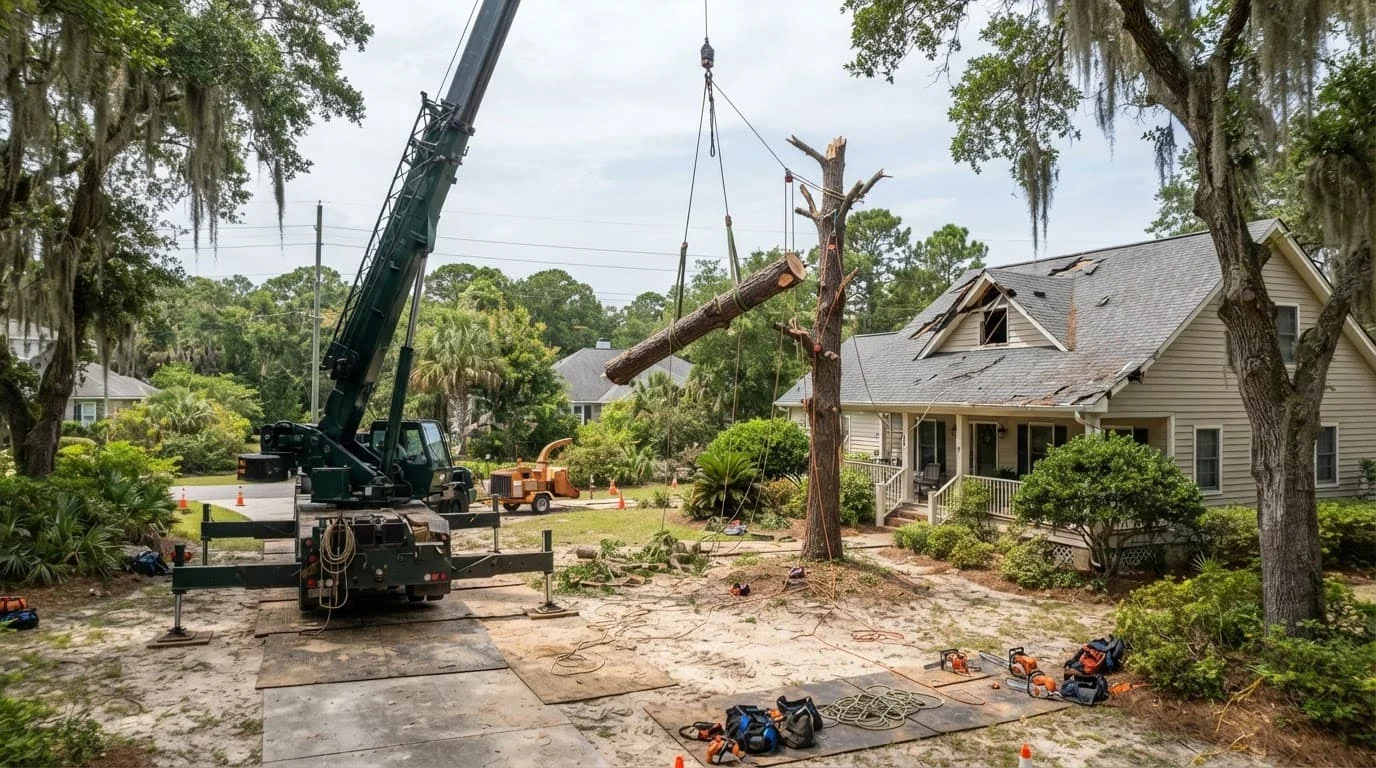
At the work site, we confirm hazards, protect windows and landscaping, plan equipment access, and stabilize the wood. Then we remove the tree in sections, or use a crane when the location calls for it. Cleanup and removal follow stabilization and safe removal. Repairs to the house are handled separately.
The stump is usually a separate decision. If removal leaves a stump where you need to mow, replant, or repair the yard, stump grinding can be added after the emergency work.
Which parts are safe for homeowners to handle
After the area is declared safe, you may be able to move small, loose branches well away from the house. Ask the crew first. What looks like a harmless limb can be holding tension.
Don’t climb on the roof. Don’t cut a leaning trunk, work near wires, or pull wood with a vehicle. A bent limb can spring without warning, and a trunk can roll or settle when weight comes off.
Why Georgia trees need extra attention before storm season
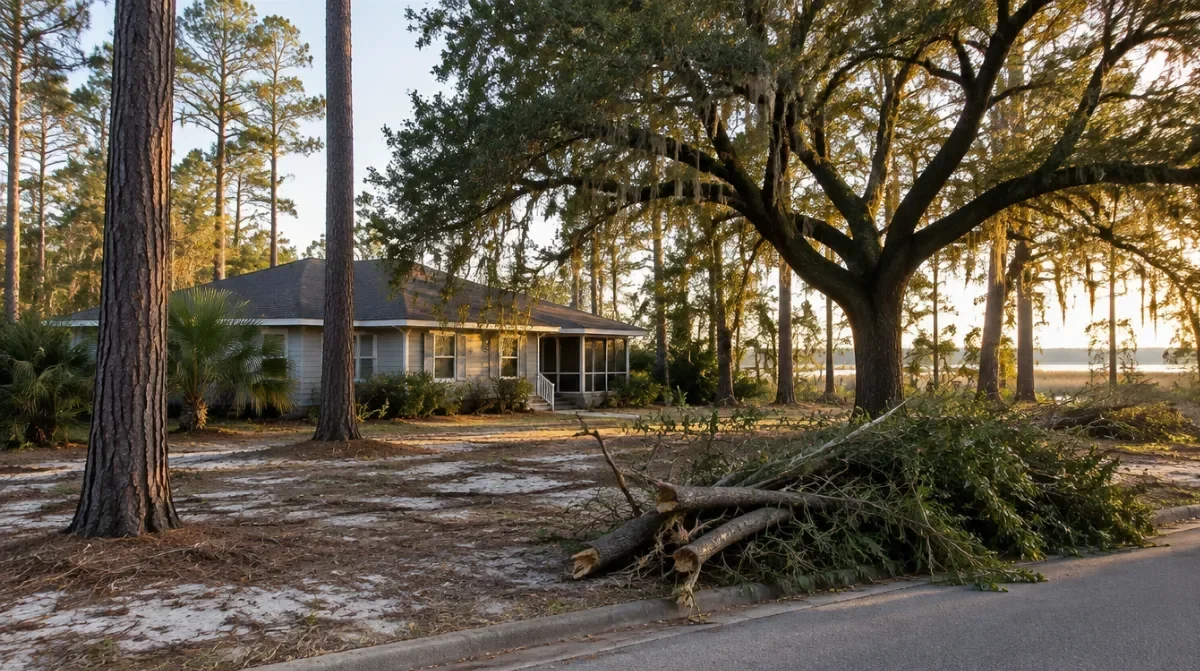
Hurricane season runs from June through November, but summer thunderstorms can arrive much earlier. In Effingham County, Richmond Hill, and the Savannah area, severe weather can snap or uproot loblolly and slash pines.
Large live oaks and water oaks can also drop heavy limbs near a home. Sandy soil may let roots shift after heavy rain. Clay soil can hold water around roots. Older lots often have mature trees that stood long before the house or driveway.
Walk your yard before storm season and look for dead limbs, fresh cracks, cavities, possible root rot, hanging branches, root lifting, and a tree leaning toward the house. Root rot can be difficult to confirm from the ground. Ask about HOA approval in newer subdivisions. Check county permit requirements before taking down a tree when they apply.
How to document a dangerous tree before it falls
Take dated photos from your own property. Make notes about a lean, dead top, broken limb, or changes after a storm. If a tree on a neighboring property threatens your house, send a calm text or letter and keep a copy.
When the condition is uncertain, ask a certified arborist to assess the tree. Inspection, pruning, or removal before storm season can provide sensible preventive measures. The reverse matters too. If a dead or unstable tree on your property could reach a neighbor’s home, arranging an inspection or corrective work now is the responsible move.
When to call us for emergency tree removal or a free estimate
Call a licensed and insured tree service after life-safety and utility concerns are handled. Reach out if a tree is on the roof, hanging over the home, blocking access, split, uprooted, or storm-damaged.
For a tree that hasn’t fallen, don’t wait for the next named storm. A risk assessment or preventive trimming can help around older homes, wooded lots, and trees that can reach a roof.
LoyalTree is family-owned in Guyton. Mike Williams brings 20+ years of hands-on tree experience on site, while Mary coordinates estimates and communication. We serve Effingham County, Richmond Hill, Pooler, Savannah, and nearby communities. Ask what the estimate includes, including cleanup and removal, hauling, brush removal, and any exclusions. When possible, document the scene and check with your insurance agent before work starts.
Frequently Asked Questions
Should a tarp go on the roof before the tree is removed?
Only if the tree isn’t making the roof unsafe to approach. A tree on damaged framing can shift under added weight. A qualified crew can help coordinate tarp or board-up work once the immediate danger is controlled.
Can insurance require the tree to stay on the house for inspection?
Your agent can tell you what documentation they need. Take clear photos and video before removal, but don’t leave an unsafe tree in place if it is causing more damage or threatening people. Keep photos, invoices, and estimates for repairs for the adjuster or agent.
If the home is uninhabitable, ask whether lodging expenses may be available under your policy. Your agent can explain the applicable terms without promising reimbursement.
Does a homeowner’s policy cover removal of the fallen tree?
Coverage depends on the insurance policy and what the tree damaged. Some policies handle removal differently when a tree hits a covered structure than when it falls in an open yard. Ask your agent how the deductible applies before assuming a claim will provide a net benefit.
Can a neighbor force removal of a tree on your property?
A neighbor can raise a concern, especially if the tree appears dangerous. If the tree could reach their house, fence, or driveway, it’s smart to have it inspected instead of letting a disagreement grow. The condition of the tree matters more than who speaks the loudest.
What if the tree blocks the driveway but didn’t hit the house?
Keep clear if wires, leaning wood, or a damaged tree are involved. A blocked driveway can still be an emergency when it prevents access or traps a vehicle. Photos are still helpful before cleanup begins.
Does auto insurance cover a vehicle damaged by a falling tree?
Comprehensive coverage may cover a falling-tree loss to a vehicle, depending on the vehicle owner’s policy and the facts. Check the policy terms before assuming coverage applies.
A Calm Plan for a Bad Day
When a tree hits your home, get people clear, avoid downed lines and gas hazards, document the scene, contact your insurance agent, and hire a licensed, insured crew for dangerous removal.
A neighbor’s tree doesn’t automatically make the neighbor responsible. Prior notice of an obvious hazard can change the questions an agent or attorney needs to review.
Homeowners in Guyton, Rincon, Springfield, Bloomingdale, Effingham County, Richmond Hill, Pooler, and Savannah can request a free estimate when a tree needs a careful look.