If you have a wooded lot you want opened up, a fence line that has disappeared into briars, or five acres you bought and cannot walk across, the instinct is to wait for good weather and do it in the spring.
That is backwards. In our experience the window between December and February beats spring for most clearing jobs in coastal Georgia, and it is not close.
We are LoyalTree LLC, family-owned out of Guyton. Mike Williams has 20+ years of hands-on tree experience and has cleared a lot of Effingham County ground. Here is why winter wins, and what the job actually involves.
Key Takeaways
- Dormant vines and briars are thinner, lighter and far easier to cut and haul.
- With the leaves off you can actually see the ground, the property lines and which trees are worth keeping.
- Firmer winter ground means heavy equipment leaves fewer ruts.
- Snake and yellowjacket activity drops off, though ticks stay active in Georgia all winter.
- Cut-stump herbicide right after the cut is what stops the regrowth, and winter is a fine window for it.
Why Winter Is the Right Season Here
You can see what you are doing
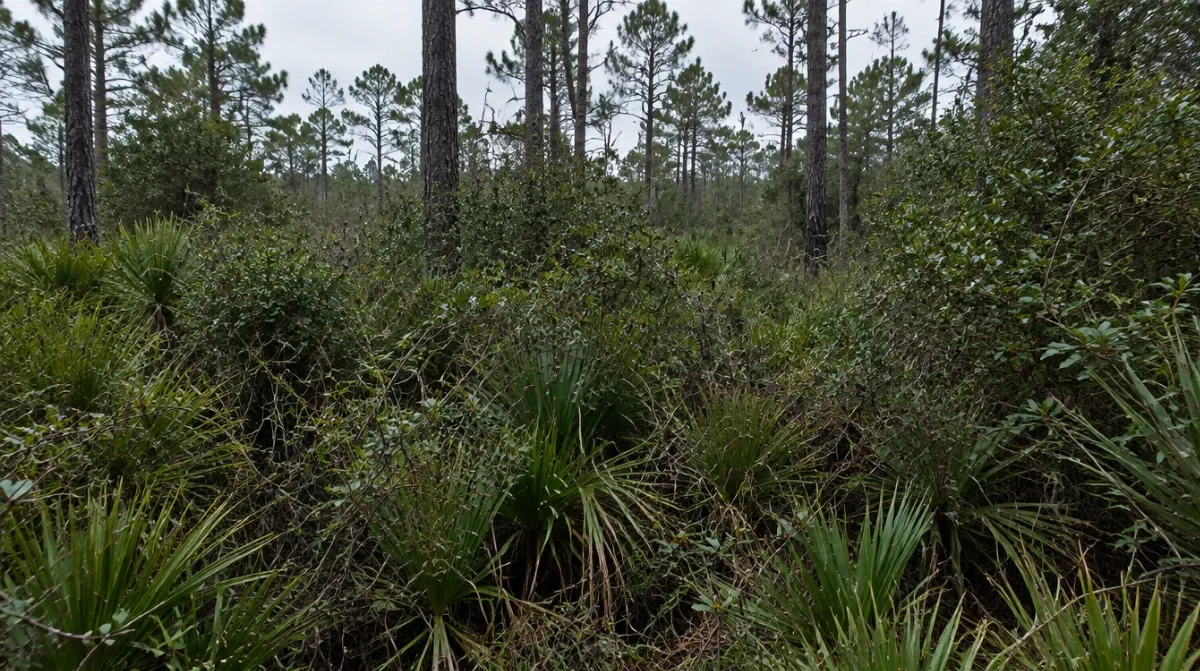
In July a wooded lot is a green wall. In January it is a set of trunks you can walk through. That changes the whole job. You can see the lay of the land, where water runs, where the old fence actually is, and which oaks are worth saving.
That last part matters more than anything. The mistake people regret on a clearing job is taking out a good mature tree they could not see properly. With leaves off, you can pick your keepers deliberately instead of finding out in May.
The vegetation is half the volume
Wisteria, kudzu, Virginia creeper, wild pear and most of what fills a coastal Georgia thicket is dormant in winter. No leaves means dramatically less material to cut, drag, chip and haul. Chinese privet and greenbrier are the holdouts, they stay green through the winter, and that actually helps: when everything native is bare, the privet is the only green thing left and it is easy to find and treat. The same acre is a smaller job in February than in July, and the cleanup is a fraction of it.
The ground holds equipment
Our summer is the wet season. A skid steer, a mulcher or a dump trailer on saturated ground makes ruts you will be filling for a year, and in low spots it just bogs down. Winter ground here is generally drier and firmer, so equipment moves cleanly and the site is not torn up when you are done.
Less is out there with you
Anybody who has hand-cleared briars in a Georgia summer knows about the snakes, the yellowjacket nest you find with the trimmer, and the heat. Yellowjacket colonies die off with the cold and snakes are far less likely to be moving, though they do come out to bask on a warm afternoon. Ticks are the exception and it is worth knowing: UGA entomologists say there is no month in Georgia when ticks are not active, and adult blacklegged tick numbers actually climb in cold weather. Treat your clothes and check yourself in January the same as you would in July.
Stump treatment works better
Most of what you are clearing will resprout if you just cut it. Privet, wild Callery pear, sweetgum, water oak, wax myrtle: all of them come back from the stump, often thicker than before, and the smaller the stem the more reliably it sprouts. Cut-stump herbicide applied immediately after the cut is how you stop that. Winter works well for it. The one window to avoid is early spring, when stumps are pushing sap upward. Your UGA county extension office can advise on the right product and timing for what you have.
What “Clearing” Actually Means
People use one word for about five different jobs, and the scope and the result are nothing alike. Worth knowing which one you want before you call anybody.
Underbrush clearing
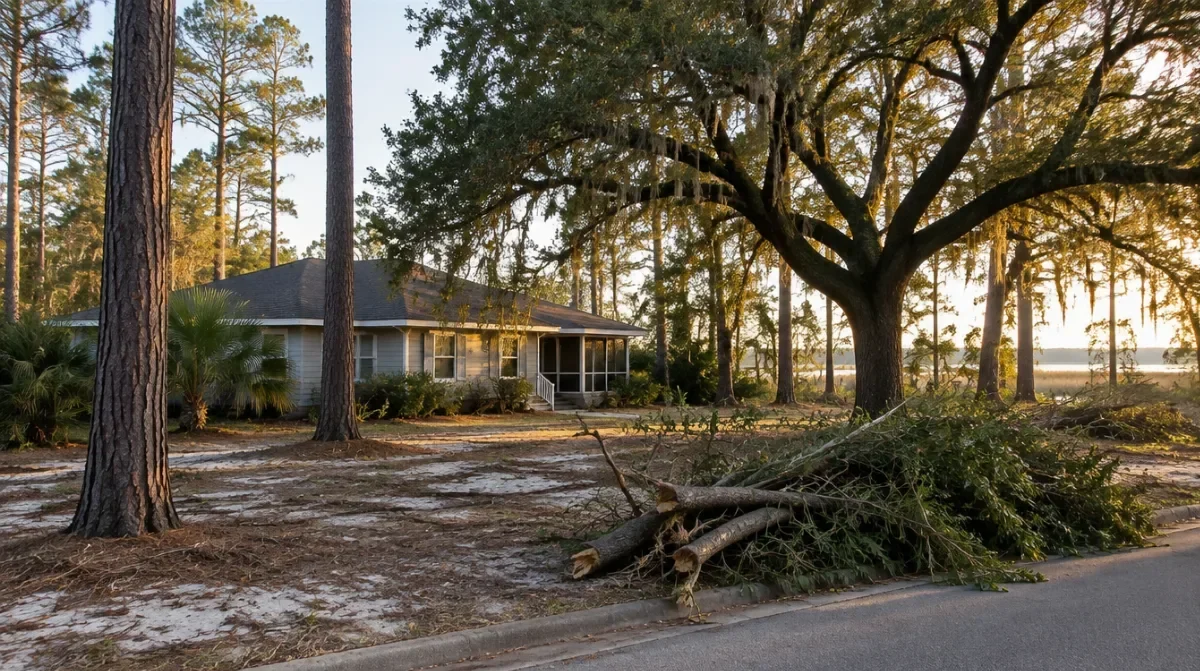
Take out the briars, vines, saplings and scrub. Leave the mature trees standing. The result is a park-like wooded lot you can walk and mow under. This is what most homeowners actually want when they say they want their land cleared, and it is the least destructive option.
Selective clearing
Same as above, plus removing specific trees: the leaning pines, the dying water oaks, the ones in the way of a driveway or a view. You mark the keepers and the rest comes out.
Fence line and right-of-way work
A strip along a property line, a pasture fence, a driveway or an easement. Usually about reclaiming a line that has grown in over ten years and getting equipment access back.
Full clearing to bare ground
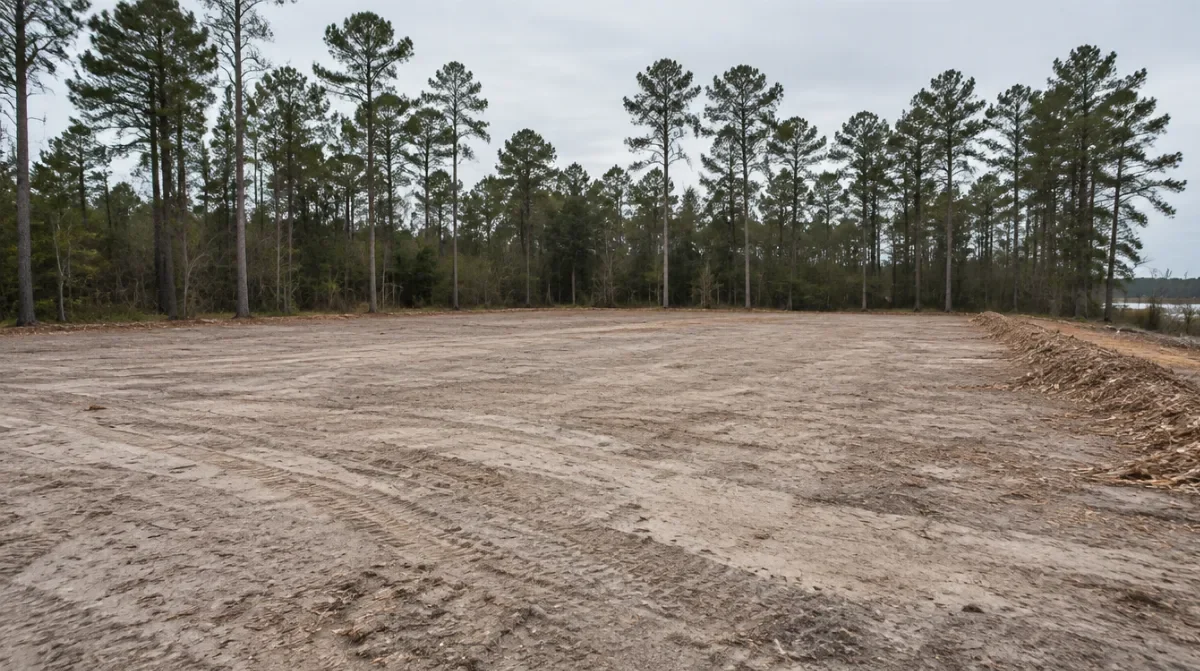
Everything comes off, stumps out or ground down, ready for a building pad or pasture. This is the biggest version and the one that needs the most planning, including where the material goes.
Forestry mulching
A machine grinds standing brush and small trees in place and leaves the material as a mulch layer on the ground. No hauling, no burn pile, and the mulch helps with erosion. It suits underbrush and small stems well. In our experience it is not the tool for large timber, and it does not remove stumps.
All of this is vegetation management work, and which version you need depends entirely on what you are going to do with the ground afterward.
Things to Sort Out Before the Work Starts
- Know where your lines are. Cutting a tree that turns out to be on the neighbor’s side of the line is a serious mistake in Georgia. If the corners are not marked, get them marked.
- Check permits and ordinances. Requirements differ across unincorporated Effingham County, Savannah, Pooler, Richmond Hill and the SC side, and some jurisdictions regulate tree removal, buffers or land disturbance above a certain area. There is more in do you need a permit to cut down a tree in Georgia.
- Check for buffers, wetlands and marsh. Georgia EPD enforces a 25-foot buffer along state waters, measured from the point where flowing water has wrested away the streamside vegetation. Tidal marsh is a separate law, the Coastal Marshlands Protection Act, administered by Georgia DNR Coastal Resources Division. Freshwater wetlands are a federal matter through the Army Corps of Engineers. A ditch may trigger all of that or none of it, so find out before anything moves.
- Call 811 before any digging or grinding. Free, required, and it takes a few days, so do it early.
- Decide where the material goes. Chipped on site, hauled off, or a burn pile. Worth knowing: Georgia dropped the permit requirement for hand-piled yard leaves and limbs in 2021, but land-clearing and machine-piled burns still need a permit from the Georgia Forestry Commission. The state summer burn ban covers 54 north Georgia counties and does not reach Effingham or Chatham. Local ordinances still do.
- Mark your keepers. Flagging tape on every tree you want left standing, before the crew arrives. Do not rely on a conversation.
- Think about erosion. Bare sandy soil on any slope moves in the first hard rain. Plan for cover, mulch or seeding.
What Not to Do Yourself
Clearing brush with a brush cutter and loppers on your own land is reasonable work and plenty of people do it. Where it turns dangerous is when trees get involved.
Felling trees in a thicket is genuinely hazardous. Vines tie crowns together so a tree you cut does not fall where you aimed it, it hangs up in the next one. Spring poles, bent saplings under tension, will take your head off when released. Leaning and dead trees do unpredictable things. And anything near a power line is not a homeowner job under any circumstances.
If there is standing timber to come out, that belongs with a crew that does it every week. Our article on how to choose a tree service covers what to ask before you hire anybody, and hazardous tree removal covers the trees that need real planning.
Frequently Asked Questions
Is winter really the best time to clear land in Georgia?
For most jobs here, yes. Dormant vegetation is a fraction of the volume, visibility is far better, ground conditions support equipment, snake and yellowjacket activity drops off, and cut-stump treatment works well then. Ticks are the one thing that does not take the winter off in Georgia.
Will the brush grow back?
If you only cut it, yes, and often thicker. Privet, wild pear, sweetgum and water oak all resprout hard from the stump. Either treat the stumps at the time of cutting or plan on a maintenance pass.
Do I need a permit to clear my own land?
It depends on your jurisdiction, the acreage disturbed, and whether wetlands, state waters or protected buffers are involved. Check locally before starting, because fixing it after the fact is a lot harder.
Should I leave any trees?
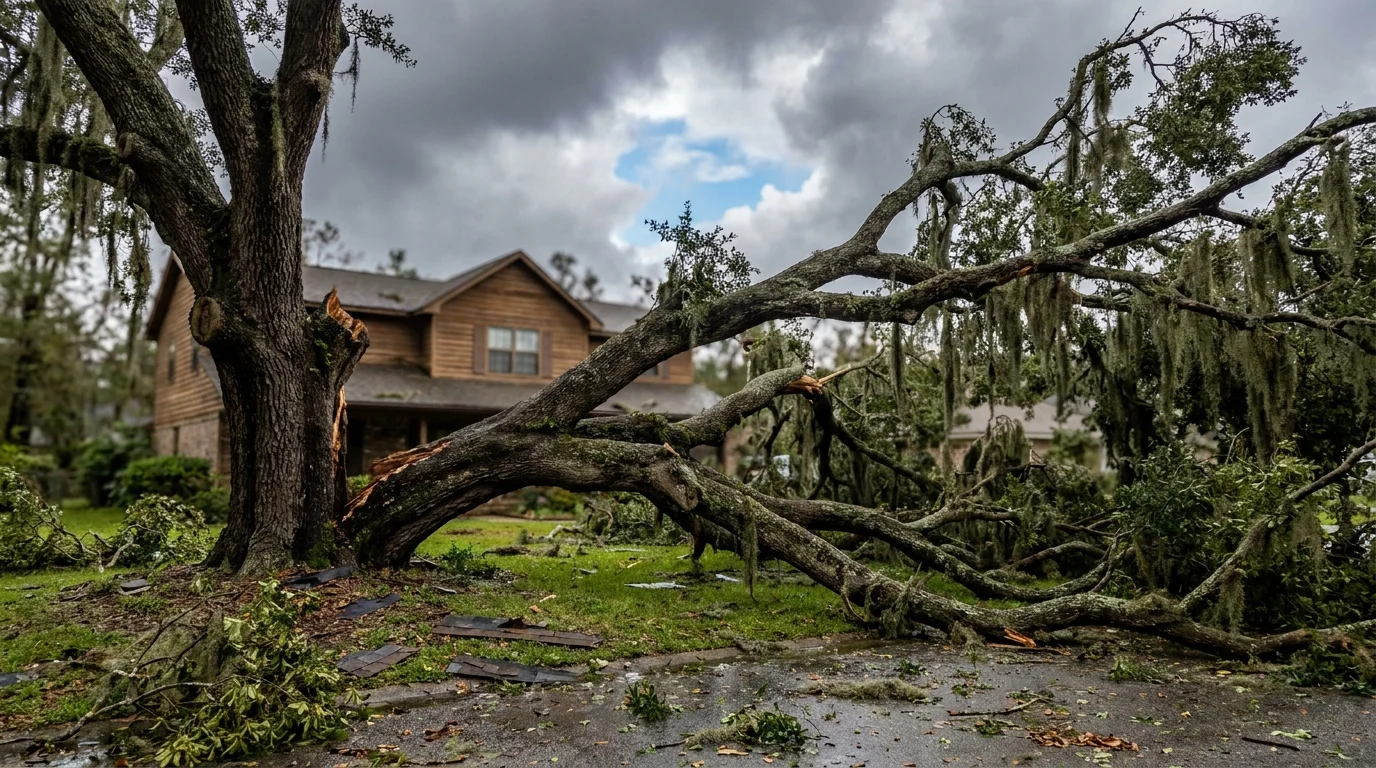
Almost always. Mature shade trees take decades to grow and you cannot get them back once they are gone. Leaving a few good specimens with room around them beats a bare lot every time. Just be aware that a tree left standing alone after clearing is suddenly wind-exposed in a way it never was inside the stand, and we have seen those come down the first hard season.
What happens to all the material?
Depending on the job: chipped and spread on site, mulched in place, stacked for firewood, hauled off, or burned under permit. Decide this up front, because hauling is a real part of the work.
Book It for the Cold Months
Everybody wants their land cleared in April. The crews are busiest then, the brush is at full volume, the ground is soft, and you cannot see what you are cutting.
Do it in January instead, and by the time spring comes you are looking at open ground instead of a schedule.
If you have a lot or a fence line you want opened up this winter, request a free estimate or call (912) 342-0440 and we will come walk it with you.